8 Times Neil DeGrasse Tyson Ruined Your Favorite Films
He said WHAT about Star Wars?

Love him or hate him, you can't deny that Neil deGrasse Tyson certainly has a lot of opinions.
Now, in an age of Twitter and limited critical thinking in schools, everybody has an opinion these days. The difference is that Tyson's fortunately has the added weight of a PhD in astrophysics to back it up (his thesis, for those who are interested, was concerned with the nature of "Galactic bulge". Heh heh.)
Anyway, being the belligerent science nerd that he is, Neil deGrasse Tyson has taken to Twitter and other online platforms to voice his opinions on the state of science in cinema and, unsurprisingly, these often take a disappointed tone.
Whether it's a well loved classic such as Titanic, a new movie aimed at the under-10 market such as The Good Dinosaur or even the unassailable institution that is Star Wars, Tyson refuses to pull punches when it comes to science based criticism. To be fair, Tyson is also the first to praise a movie for displays of good scientific literacy (talk about being fun at parties), and perhaps the critical eye makes this praise all the more valuable?
8. Titanic

Regardless of how salty a cynic you are, Titanic is a magical film and there was definitely room on the door.
Anyway. Over it.
Aside from a certain posh bird's inability to share nicely, Tyson had another, more celestial, problem with James Cameron's 1997 epic: The sky was wrong.
"There she is looking up. There is only one sky she should have been looking at ... and it was the wrong sky! Worse than that, it was not only the wrong sky; the left-half of the sky was a mirror reflection of the right-half of the sky! It was not only wrong, it was lazy! And I'm thinking, this is wrong."
The comments apparently got under Cameron's skin, as he corrected the error to show the star field in the movie's re-release, saying:
"Neil deGrasse Tyson sent me quite a snarky email saying that, at that time of year, in that position in the Atlantic in 1912, when Rose (Kate Winslet) is lying on the piece of driftwood and staring up at the stars, that is not the star field she would have seen,""And with my reputation as a perfectionist, I should have known that and I should have put the right star field in. So I said 'All right, send me the right stars for that exact time and I'll put it in the movie.'"
If you don't ask you don't get, after all.
7. Interstellar
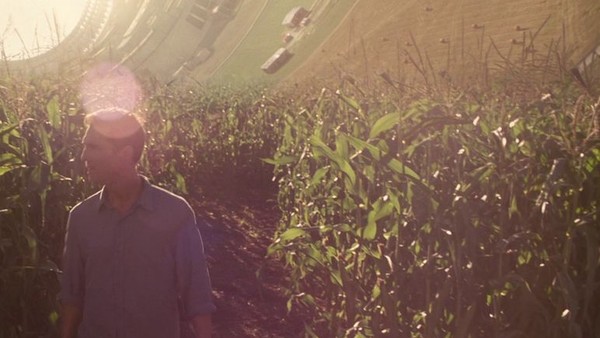
Interstellar has been lauded for its meticulous scientific accuracy, and rightly so as it certainly goes in heavy on the physics.
But, surprise surprise, Tyson still managed to find something to pick at, and this time is was more to do with the logic of the movie's basic premise, rather than its interpretation of the laws of the universe.
Rather than going through the bother of pitching astronauts headfirst into black holes and relocating the human population, we could probably have found a livable habitat closer to home. Something like, I don't know, the Eden-like environment of the Cooper Station that, given we were able to construct such a hospitable habitat in space, we could probably have done it one Earth.
Plus, it would seem that even the most scientifically highbrow films can't help falling back on the odd action trope.
6. Gravity

Again, another Hollywood offering that had its scientific balls to the walls failed to impress Tyson who, again, took to Twitter to flag up a couple of issues.
To be fair, astronauts come from a variety of science backgrounds and those actually living in space, aboard the ISS, for example, need to know how to maintain equipment. To be even more fair, it still doesn't make sense that they would send a biological engineer up on a mission to fix a telescope.
There were a few more glaring issues in there that seemed to irritate the astrophysicist.
Despite all of this, it seems that our Neil did actually allow himself to enjoy it.
There we go, he's not that bad after all.
5. Star Wars: The Force Awakens
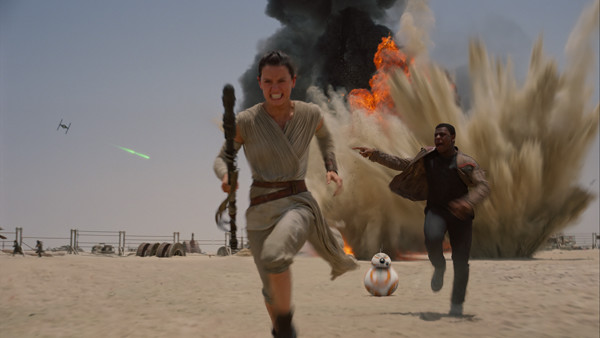
Not even Star Wars, the holy of holies, could escape Neil's nitpicking. Although some might argue that it's actually more along the lines of "space fantasy" and therefore not subject to the more rigorous standards of science pedants, they should have thought about that before they brought midichlorians into it.
Anyway, Tyson had a few things to say. He even picked a fight with everyone's favourite droid:
We also had some basic principles of physics being taken for a ride, specifically the propagation of sound waves through different mediums, and the small issue of storing all the energy produced by one of the universe's biggest nucelar reactors (also, can we talk about just how close Starkiller is to the sun? It'll be like an oven in there):
Then the old fashioned classic of misusing units of measurement, except this time it isn't "light years" but "parsecs". The concept, however is the same, in which non-scientists mistake a unit of distance for a unit of time.
Yes, we're aware that this has been retconned and explained in a number of different ways but, come on, a quick Google wouldn't go amiss when writing a multi million dollar movie.
4. Star Wars (Again)
Sticking with the Star Wars bashing for a little bit, when the question of whether he prefers the Millenium Falcon or The Starship Enterprise, Tyson sided with the Trekkies.
As far as he's concerned "there's no question" that the Enterprise is, not only better, but more realistic. Well, "real fake" as opposed to "fake fake".
He describes the Enterprise as "revolutionary", specifically as it is possibly the first sci-fi ship that was not designed with a destination in mind. He then goes on to make the eloquent point that, in combat, the Enterprise would wipe its a** with the Falcon.
Sorry Star Wars fans. On the plus side, Trekkies can rejoice.
3. Ice Age: Collision Course
Despite the fact that NDT is actually in the fifth film in the Ice Age franchise, he still had apparently zero qualms with dishing out the cold hard facts on this fun, fluffy movie aimed at children (i.e. not astrophysicists).
He points out that Scrat's acceleration in order to get to the moon in 16.5 seconds would probably have reduced him to rodent jam.
The method of deflecting an asteroid using the repelling powers of magnets, however, is actually impressively innovative for a kid's movie. He was also impressed with the way the movie depicted dinosaurs - as fluffy, avian types.
“I applaud the moviemakers, storytellers, illustrators and animators, somebody must have had science in college and liked it and decided to fold it into their professional career.”
So, you can keep your space epics and nearly-scientifically-accurate black holes, if you want to impress Tyson, just get the magnets and the dinosaurs right (and let him be in your movie).
2. The Good Dinosaur
Proving, once again, that he's not above destroying the dreams of innocent children, NDT lays into Pixar's fluffy dinosaur flick (although surprisingly, doesn't lay into the conspicuous lack of actual fluffy dinosaurs depicted).
No, Tyson's problem is one of evolutionary niches. The issue is that, in a world in which the majority of dinosaurs didn't perish in an asteroid impact, the human species would probably never have emerged at all. As a mammal in a dinosaur's world, it would behoove you to stay as small and insignificant as you can to avoid becoming a mammalian hors d'oeuvre.
But what about if we had evolved separately, on isolated continents, and met up as two fully fledged, dominant species in our own rights? Could we coexist? Even communicate?
"Then one day, they sail across the oceans, and meet one another..."
Magical.
"...and the dinosaurs eat us. That's probably exactly how that would play out."
Never mind then.
1. The Martian

The Martian has been rightly applauded for its brilliant portrayal of science (although, rather gushily by a certain pop culture website) because it is, frankly, brilliant.
So, despite the easy shots he could have taken at the famously impossible dust storm at the beginning of the movie - as the Martian atmosphere is only about 1% the density of Earth's, meaning that a tornado-strength storm on the surface of Mars would feel like no more than a bracing breeze - Tyson chose instead to take the opportunity to deliver some snark to real-life politicians and NASA officials instead of the filmmakers themselves.
Ultimately, though, he had to fall in line with the general standpoint that scientists, even the ones who love to hate Hollywood, love this movie.
You could write for WhatCulture Science! Click here to find out how you could get paid to write about what you love.
If science makes your brain box tingle, like us on Facebook or follow us on Twitter to stay up to date.