8 Underrated Films From Famous Directors You Probably Missed
Hidden gems from the greats.
Every great director has a list of bonafide classics you just have to watch. When trying to get into Hitchcock, do you start with his British silent films and work forward though his 50-or-so movies? Of course not; you pick out the big icons - Rear Window, Vertigo, The Birds, Psycho - and use them as a grounding.
That's the only way you can deal with over a century of cinematic development - pick and chooses based on legacy and recommendations. But this can mean you're missing out on some great movies, even those from the same filmmakers you've slavishly watched the classics of, for no other reason than the mass culture doesn't quite appreciate them. Sure, while the films you've missed may not be the out-and-out masterpieces that a director's "essential" films are, that doesn't mean they should be striken from the record.
All but the greatest directors have a couple of blemishes on their filmography (even Hitchcock has some iffy outings), but that doesn't mean all of their forgotten or overlooked films are bad. Quite the opposite; some of them are underrated hidden gems. Here are eight movies from some of the world's most famous filmmakers that you really shouldn't have missed.
8. Insomnia - Christopher Nolan

You can't find a modern director more bankable in the mainstream and yet so beloved by critics than Christopher Nolan. There's been a bit of a backlash against the director recently, as is common with such overwhelming praise and commercial success, but those comparisons to Kubrick aren't far wrong (although I'd say he's more of a Hitchcock).
Nolan's breakthrough was Memento, although real success came with the one-two-three-four whammy of Batman Begins, The Prestige, The Dark Knight and Inception, but between those two sets he made Insomnia, a remake of the Norwegian murder mystery set in a town where the sun never sets.
It's a great little thriller, with Al Pacino an utterly broken, potentially-crooked detective and Robin Williams giving his finest straight performance as a warped, deadly author. Crucially though, it contains a lot of elements that we'd see in later Nolan films - there's direct shot lifts in The Dark Knight and Interstellar, and the themes of loss and guilt run strong - making it an essential part of his filmography.
You should also check out Following, the director's first film; it's an unrefined picture, but like Insomnia contain bears a lot of the stylistic hallmarks of his later movies.
7. Super - James Gunn

James Gunn has become a major Hollywood name after only one film, the refreshing Guardians Of The Galaxy. However, because of that massive hit (and that the further you go back the weirder it gets), discussion of his pre-Marvel career often misses out vast swathes, typically honing in on skin-crawling creature feature Slither (which even gets an easter egg in Guardians). But you should really also consider his previous foray into the superhero genre, Super.
Like Guardians, it takes an alternative slant to caped fighters, sending up convention and injecting realistic character humour into proceedings. Not that they're really all that similar; Super is a down-to-Earth vigilante story where a loner doles out violent justice as a release. It's essentially Kick-Ass, only more irreverent, darker and realistic.
Despite starring Rainn Wilson and Ellen Page, the film didn't get much of a release and, because it scored a rotten rating on RottenTomatoes, doesn't look like one worth checking out retroactively. Which is a massive shame, because it's really great, an intense action movie that doubles as a troubling exploration of mental illness.
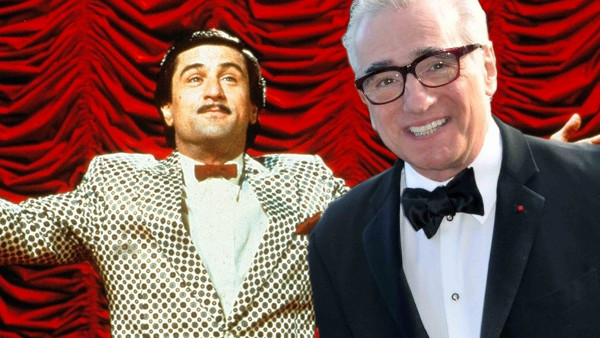
6. The King Of Comedy - Martin Scorsese

From Means Streets to The Wolf Of Wall Street, Martin Scorsese is an unrelenting powerhouse of American cinema who, after forty years at the top is still making biting, difficult movies. Although it's not like he's been riding high for all of that. In the 80s, after Raging Bull, he suffered a dip in notoriety (like many of the New Hollywood lot), with many of his movies snubbed by critics and slipping past audiences.
To this day, many of his films from that decade don't get quite the same widespread recognition as what came before or after. By far the most overlooked is The King Of Comedy, a dark look at the allure of fame through the eyes of Rupert Pupkin, an aspiring comedian-cum-late night host who kidnaps Jerry Lewis to blackmail his way to his fifteen minutes. Dark, comic and with an incredibly unsettling final shot, it's one of Scorsese's absolute best, yet remains sorely underseen.
What's so crazy about the film is that, like similar media satire Network from a decade previously, it only feels more truthful now. In the 80s, the idea of a man sacrificing everything for a shot at fame was a fanciful subject, today it's an everyday occurence. Perhaps that's why it passed so many people by; it was only decades later we could appreciate the truth of it.
5. Tetro - Francis Ford Coppolla

Scorsese wasn't the only director to fall in the 80s; Francis Ford Coppola likewise suffered a knock and, regrettably, has never returned to mainstream appreciation. He's still well-regarded and did some well-known projects after (Peggy Sue Got Married, The Godfather Part III), but he's never quite hit the same 70s peak after Apocalypse Now.
But don't let that make you think he's just stopped making movies; his latest feature came out just last year. As such, some great work has been completely overlooked. One you owe it to yourself to check out is Tetro. A crisp, sleek, black-and-white drama about two brothers reuniting in Argentina, he goes back to his roots and explores the ideas family and film in a touching, artistic manner.
It's recently become more of a must-see as the guy who played the younger brother has just been cast as the young Han Solo (yes, that's Alden Ehrenreich). And isn't that a sad state of affairs when someone cast in a Star Wars spinoff coming out in three years is more of a reason to see the film than one of the greatest directors of the 20th Century?
4. The Hudsucker Proxy - The Coen Brothers

The Hudsucker Proxy is widely cited as being the Coens at their most mainstream, so there's something ironic about how the film flapped about in 1994 and is rarely discussed in their storied filmography. Sure, it doesn't rank alongside the likes of Fargo, No Country For Old Men and Inside Llewyn Davis (what does?), but it's a fun little yarn that shows early on in their career how their distinct style can apply to any genre or story.
90s man Tim Robbins is a simpleton brought in to be CEO of Hudsucker Industries to tank the stock price and make all the exec board rich, but he accidentally invents the hula hoop and finds widespread success. It's all framed in a very kooky, faux-40s style that tries to send up the American Dream with toothy-grinned cynicism.
It's hammy, but it's hammy on purpose. Again, it's not a masterwork, but it's a good, fun movie.
3. Duel - Steven Spielberg

Steven Spielberg is such an iconic, prolific filmmaker that it's incredibly easy for his films that only qualify as "great" to be lost in the shuffle. This is especially true of films that came before he broke out in the biggest possible break-out possible with Jaws. And especially, especially true when we're dealing with a 60-minute TV movie that was only expanded to a full, theatrically-released feature for international release.
Those origins don't speak anything of Duel's quality though; it has all the signs of the industry-changing talent in a tight story. Dennis Weaver is chased by a manic truck driver trying to run him off the road in an intense, grimy, endlessly inventive game of cat-and-mouse on the roads. The ways the young director constantly changes up the approach to the action allow the film to run the full range of the idea and ensure (like Jaws) it remains engaging all these years later.
The best element is the evil truck itself. A striking Peterbilt 281 tanker covered in grime, oil and rust that roars (literally) along the highway with such relentlessness you begin to imagine it's indestructible, it's enough to make you want to take up a trucker's life.
2. American Graffiti - George Lucas
Yes, he became obsessed with "perfecting" the original trilogy and surrounded himself with yes men for the Star Wars prequels, but don't let his later, business-inclined career indiscretions get in the way that George Lucas is (was?) a great filmmaker. The original Star Wars was an effects spectacle enabled by Ralph McQuarrie's vision and saved in the edit, but it was ultimately his brainchild, and that's saying nothing of his earlier films.
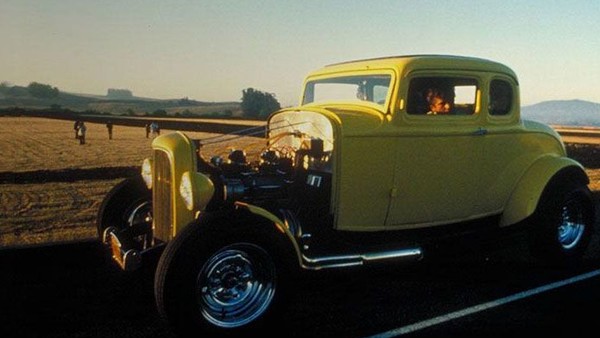
A big hit at the time that was instrumental in getting his Flash Gordon homage off the ground in the first place, American Graffiti has been somewhat forgotten by modern audiences turned against Lucas and viewing him as a sci-fi guy (something the director would have hated at the time, being as he was the most purposely pretentious of the New Hollywood ilk).
It's essentially Dazed & Confused for the characters in Dazed & Confused, a throwback to 50s cruising culture telling of a bunch of teens grappling with the end of youth as college looms. The setting is just impeccably recreated and Lucas' characters are so strongly written they add depth to the archetypes; a big sign of what was to come.
1. Noah - Darren Aronofsky

A massive blockbuster movie based on the story of Noah's Ark, Darren Aronofsky's long-standing passion project was always going to struggle to find an audience; religious types would find it sacrilege and non-believers preachy no matter what the product was like. There was a massive pre-release debate over who would get final cut - director or studio - with Paramount wanting to lean into the former group (who would be more pre-disposed to large shows of distaste). However, likely in response to a greatly parsed down version, complete with hymns, received iffy test screening results, they relented and gave the visionary director creative control. The end result did fair by all accounts, but deserved so much more.
The film he delivered isn't really a Biblical epic in the vein of The 10 Commandments at all; it takes the grand, well known tale and treats it as a high fantasy mythology, rather than a real origin of species. We're only a few generations away from the Garden of Eden and the pre-flood world is a black wasteland of incest cults and rock monsters. The flood is a brutal, seismic act of God rather than just heavy rain. And all this culminates an excellent creation sequence that sets the Big Bang and evolution against the opening of Genesis, a striking marriage of faith and science.
It's a completely realised vision that gets to the deeper heart of the story beyond simple spiritualism, dissecting the ark-builder's mental state and exploring the very idea of faith. If you missed it, check it out.
What other great films from famous directors are underrated? Share any more down in the comments.