8 Very Thoughtful Films About Alcoholism
 Alcohol can be great fun - just to get drunk as a fart and have a laugh or merely to relax at the end of a working day with a nice cold beer. However, for some people, alcohol can encroach upon their wellbeing whenever they drink to excess. Alcoholism snatches away happiness, forces the drinker to do terrible things to maintain their habit and in some cases hide their habit. It wrecks relationships and family bonds and is generally a harbinger of doom. I have picked eight thoughtful movies about alcoholism which treat the subject seriously and with good insight into the condition. I hope that you enjoy them.
8. 28 Days (2000)
 Gwen Cummings makes a complete drunken arse out of herself at her sister's wedding. She ruins the reception and the wedding cake, and in attempting to put things right, she crashes the wedding limo in her drunken state. When faced with jail time or a 28 day rehab programme, she opts for the latter, thinking it is the easy way out. When she is at rehab, she refuses to join in with the activities, reasoning that she isn't an alcoholic. However, after getting to know the inpatients, she accepts that she does indeed have a pretty bad drink problem. She has to face the complications of her long time boyfriend Jasper and how he impacts on her drinking. Gradually, Gwen begins to see the appeal of an alcohol free lifestyle and resolves to give sober living a try. Sandra Bullock shows that she can tackle the meaty roles if she tries hard enough. There is very good ensemble acting In the film - but it is full of all of the rehab stereotypes. It is, nonetheless, an entertaining look at rehab. People expect rehab and mental hospitals to be dour places, but they are in fact packed with blackly comical situations as 28 Days shows. It is a good example of how functional alcoholics operate. Gwen has a high powered career as a newspaper columnist but still spends her life p*ssed up. It is a very slick film which plays out just like a TV movie but nevertheless, if you want a bit of alcohol based drama it is adequate enough to satisfy.
7. Withnail And I (1987)
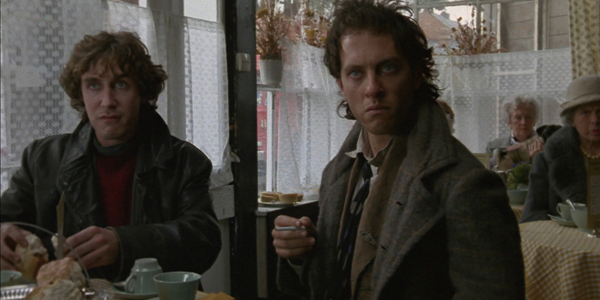 The tale of two struggling actors who live in a grotty flat while they wait for their careers to take off. Withnail is a flamboyant alcoholic who is disgusted at life and its injustices. He rails and rants the entire film. Marwood (the narrator) is Withnail's fellow actor buddy who lives with him and tries to mitigate his worst excesses. They go to stay in a cottage owned by Withnail's eccentric homosexual uncle Monty where Marwood narrowly escapes Monty's attentions. Withnail just keeps on drinking his uncle's fine wine. Called back to London for Marwood's audition, on the way back home Withnail is discovered driving while intoxicated. Marwood gets the job and Withnail gets the bottle. Withnail and I is considered to be one of the greatest British cult movies ever made. With lots of quotable dialogue and an hysterically funny turn from Richard E Grant as Withnail, the film is a terrific comic experience to watch. It is, however, due to Withnail's alcoholism, quite a sad story too with lots of pathos - such as Marwood disappearing off into a better life and Withnail left with his wine bottle. He quotes Hamlet at the end of the movie, which makes Withnail a figure of tragedy and he knows it. Alternately funny and melancholy.
6. Barfly (1987)
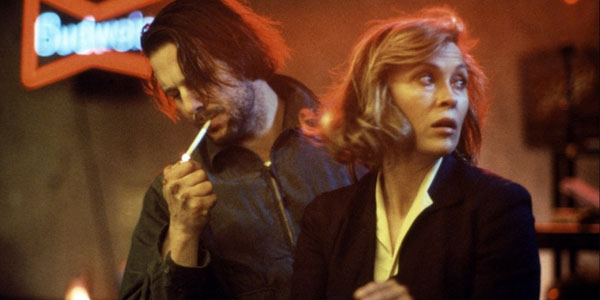 Henry Chinaski is a total and utter drunk who lives in a rundown apartment in LA and spends his life drinking in bars. He also happens to be very intelligent and a writer of short stories and poems. He frequently antagonises a tough barkeeper called Eddie, who one night throws him out of the bar for his drunken tomfoolery. Henry goes to another bar where he meets fellow drunk Wanda who is a kept woman and buys loads of booze with her lover's money and invites Henry back to her apartment. Henry is obsessed with Eddie. This ends up in fights between the two being staged outside the bar, with patrons betting on who will win. Acrimony breaks out when Henry finds out Wanda shagged Eddie. Nevertheless, Henry and Wanda live and drink together and he submits his manuscripts to publishers. Tully Sorenson, a wealthy female publisher, tracks down Henry to see about publishing his work. She gives him a $500 advance and they sleep together. Tully is of a different class to Henry and he thinks about the upmarket life he could have if he went along with her, but ultimately that is a betrayal of his true self - a barfly. He goes back to Wanda who beats up Tully when she comes looking for him. Tully realises she is wasting her time on Henry and sods off. Henry buys everyone in the bar a drink and reignites his feud with Eddie. The end of the film shows them in another fight. Mickey Rourke gives one of his best turns as Henry Chinaski. He is not exactly sinking desperately into alcoholism - he is positively embracing it and wallowing in dipsomania. Barbet Schroeder interprets Charles Bukowski's work in a manner that displeased the great author but made an icon of his character Henry Chinaski. Henry cannot stand conformity and it is this which propels him to drink and seek out low lives. As a barfly he feels right at home. Chinaski nearly celebrates alcoholism as a way of life - as being the only authentic way to live one's life. No matter what a wretched being he is, he can always summon up a wisecrack. A more realistic picture of the bad side of drinking - puking and ghastly hangovers would have made the film more realistic.
5. My Name Is Joe
 Joe is a likeable unemployed Glaswegian man who happens to be an ex-alcoholic. His pride and joy is the football team he assembled from poor, mainly unemployed men. He meets Sarah, a health worker and the two start a tentative relationship. Sarah finds it hard to adapt to the poverty of Joe's lifestyle. He helps out a football team mate - Liam - who owes a heroin dealer a substantial amount of money. In the process, he sees everything that he built up since his last drink fall down around him. A realistic approach to poverty, alcoholism and drug addiction, Ken Loach, as usual, packs a lot of heart breaking action into the film. Joe is an intensely likeable guy and you really want him to succeed as he goes around with his football team, injecting a bit of happiness into the dour lives around him. The ending - dealing with relapse - shows what a blight alcohol is in people's lives. Had Joe been sober, he would not have treated Liam in the way that he did leading to Liam's suicide. The whole thing is a terrible tragedy fuelled by the demon that is alcohol.
4. When A Man Loves A Woman
 Alice is a high school counsellor and her husband Michael is an airline pilot. She has a child from a previous relationship and a child with Michael. Although she is inherently a good person, alcohol makes Alice do stupid things. One day she comes in drunk, slaps one of her kids and falls through the glass pane of the shower. Her husband is alerted and when she is in the hospital, Michael insists Alice goes to rehab. Michael takes over the household duties and Alice flourishes in rehab. In her new sober role, Alice is less dependent on Michael and she is stronger and more assertive. The rest of the film deals with the rebalancing of Michael's and Alice's relationship. The ending is upbeat and positive. Andy Garcia and Meg Ryan grapple with some pretty intense emotions and actions in this film which is a lot better than I expected it to be. It avoids the facile approach to alcoholism - I am sober therefore everything is happy and okay in favour of dissecting relationship dynamics between the two leads in a more honest and affecting way. It is also refreshing to see Meg Ryan as not just some goodie goodie sweetheart who farts candyfloss - but in a meatier role where she slaps her kids around, drinks in work, tells the neighbours to "f**k off" and hoards prescription medication! Andy Garcia is excellent in his role as the put upon husband - his performance is very nuanced and complex. A thoughtful film about co-dependency.
3. The Lost Weekend (1945)
 Directed by Billy Wilder, this film was the first Hollywood movie to feature alcoholism as a major component of a film. Don Birman is packing to go away for the weekend with his brother Wick. He reels in a bottle hanging outside the window. Yes folks, he is a drunk. His girlfriend Helen arrives. Don loves Helen but the relationship has serious problems due to his drinking. Don is thrust into a hellish weekend trying to get money to sustain his habit. This leads to thorough degradation. After he falls down the stairs, he is taken to hospital where he sees at first hand the horrors of alcoholism. Eventually, Don decides to stop his drinking. Ray Milland gives a tremendous performance as Don. He transforms himself into a raging addict and he is not scared to show the desperation and seediness of the alcoholic's existence. Drinking habits lead to darkness, despair and destruction. In 1945, this would have been a very shocking film, alcoholism was something that went on behind closed doors, it wasn't discussed in the open. Billy Wilder portrayed accurately the inability of the alcoholic to pull himself together and also the problem of enabling the alcoholic through protecting him from the worst excesses of his problem (for example, paying his rent and his bills). A darker film than most of Wilder's output, The Lost Weekend is an honest and daring movie.
2. Days Of Wine And Roses (1962)
Jack Lemmon plays Joe Clay - a PR guide who falls in love with Kirsten (a secretary played by Lee Remick). Joe introduces Kirsten to the joys of social drinking, they get married and have a daughter named Debbie. Unfortunately Joe cannot keep his drinking to social drinking. His habit escalates until he is a full blown alcoholic and gets demoted at work for shoddy performance. Kirsten similarly finds refuge in booze and nearly burns the house down. The pair are desperate to be sober and they manage sobriety for a while until the lure of alcohol makes them drink. Joe goes to rehab and joins AA. The road is not easy - he has many lapses. But he is determined to work and look after his child whilst Kirsten is totally lost to the bottle. The ending of the film shows her entering a bar. Kudos to the film for being realistic in its portrayal of alcoholism. It shows the many attempts a lot of drinkers have to go through before they achieve sobriety - it is not an easy road as Joe's travails demonstrate. And further kudos to the film for its depiction of Kirsten's relentless addiction - there isn't always a happy ending with alcohol. The film does much to demystify the attraction of alcohol - showing how stupid drunk people really are when they think they are being clever and witty. The chemistry between Jack Lemmon and Lee Remick is incredible and makes the film all the more depressing as a warped love story. Probably one of the best films by director Blake Edwards.
1. Leaving Las Vegas (1995)
 Ben is a Hollywood screen writer who has lost everything due to his affliction with alcohol. He heads to Las Vegas to drink himself to death and while he is there, he forms a relationship with Sera, a street prostitute. They come to an uneasy pact - Ben is not allowed to mention Sera's line of work, and Sera is not allowed to get in the way of Ben's drinking. Director Mike Figgis is careful never to make a moral judgement about his characters. They are who they are and that is their choice. The film never sinks to sentimentality. It is a graphic and honest display of alcoholism and those who have lost all hope. Nicolas Cage really deserved the Oscar for his role of Ben - he manages to convey self destruction and doom in some agonising acting. The chemistry between him and Elizabeth Shue is amazing, and she gives a fantastic performance as a woman trapped in a terrible situation, yet totally accepting of its ramifications. Bleak, realistic and depressing, but a fascinating film.