8 Ways The DC Movie Universe Can Outshine Marvel
 It's really a tale of two time periods. In the space of 30 years, the superhero movie has grown. The DC comics characters of each era (the Batman of the 90's versus the Batman of the 000's) are so distinguishable from one another that they probably belong in different genres. Though Warner has only produced four live action servings of this form of story-telling, there is no end in sight for the dark, serious and realistic tone of superhero stories, and films 95% tragic and 5% hope now seem to trump comedy, fantasy and victory. Christopher Nolans massive Dark Knight Trilogy was a financial gold mine. The Dark Knight Rises itself grossed over a billion dollars, keeping close but not near enough to The Avengers. Marvel has been immensely successful in its creation of a franchise that brought us individual films before bringing the characters together in an ultimate superhero team up. DC has the potential to overtake Marvel, however they have to be careful. Marvel had a plan, and executed it near perfectly. They gave us each character in their own solo outing before throwing the characters together for 'Avengers'. They established their universe over the course of a few years and reaped the rewards. However, DC has their own healthy stock of superheroes, a list that could arguably gain more support from audiences than Marvel's. DC is in a rush to give the world their superhero team-up tale. However, they have taken a completely different course of action. The tone and feel of their movies has never been more in contrast to one another, keeping a memorable distance between the two rival companies. If DC is the toddler at this stage, then Marvel is the father that the toddler doesnt want to grow up to be like. But they want the success that Marvel has enjoyed, and there is a lot of work ahead to be done. So what is working for DC's young line of modern films, and what needs improvement, if they are to become the best, live action comic book franchise?
8. Reality And Tone
The early Batman and Superman films had comedic elements, at the same time as they were accepting of the supernatural and unrealistic elements of the characters - just as Marvel have done in recent times. Now, DC have made their characters sit in a realistic world that, at times, reflect real world issues. Christopher Nolan revolutionised the superhero film, and all of his Batman villains were soaked in realism, cleansed of all supernatural elements to the characters comic book iteration. And the reality is that Warner has so far hit a gold mine. They continued the same trend on Man of Steel, by reflecting how a world would truly react to the appearance of a man that isnt realistic at all. DC and Warner continue to move further and further away from the fun, popcorn superhero film, which is no longer what audiences expect when they walk into a cinema for a comic book flick not a DC branded one anyway. It is the key distinguishing factor between DC and Marvel and could be the key to DC outshining Marvel. A different, darker and realer tone could outdo Marvel's style simply because of how different it is. Marvel has been incredibly successful - and maybe it's a smarter idea for DC to maintain the completely opposite tone they've set in order to set them apart.7. The Title Character
 Any one of Nolans Bat-flicks could have been called Bruce Wayne. The final film in the trilogy could be called Bruce Wayne Rises, and would apply almost more-so than the title given. It is Bruce Waynes story, not Batmans. Its a tale of a man who wants to create a symbol, and wants to inspire change before he can finally find peace and move on. Man of Steel spends half of the movie establishing that Clark Kent is as human as it is possible for him to be. It shows a boy subject to bullying, and a boy who is trying to come to terms with who and what he is, both to himself and to the world. The action seems secondary compared to the character study, and in fact the action was the least interesting part of Man of Steel in my opinion. What helped both characters is the fact that they were played to a tee by their respective actors. The most inspiring scene in Rises isnt Batman saving the city from a bomb its Bruce Wayne climbing out of the pit. I believe the most successful factor in regards to the modern DC film is the firm focus on the character, and the development of a character that goes beyond the basic elements of the comic book character we were once taught to expect. The films humanise their main character, but it doesnt stop at the title character. Another thing Nolan did so well, and what Snyder may perhaps need to work on, is making the secondary characters feel so integral that we want them to succeed just as much as the main protagonist.
6. The Secondary Characters
 The best films develop the secondary characters around the titular one. The Dark Knight Trilogy was filled with an extremely impressive cast, and each of these characters was crucial. At the same, time, we also cared for them almost as much as the titular character. Michael Caines portrayal of loyal butler Alfred brought sly, humanised examples of humour, and at other times would break our hearts with his sterling performance in the situation Alfred was placed in. Morgan Freeman was another character who we watched and cheered for, and each of these characters, as well as the others, were given personalities. We knew these characters, but we never needed to be told who they were. Lucius Fox was intelligent, and he had to have known Bruce Wayne was Batman. But he never said so. Man of Steel tried the same thing, though a little less effectively. The military soldiers and the journalists were given screen time that suggested we need to care about them. However, it simply wasnt interesting to watch two nameless men try and free a nameless woman from a trap. Lois Lane, however, was developed well in an age where the strong, female character is a joy to behold on the screen. The old superhero films had much fewer characters given time to grow on screen. 1989's Batman was all about Batman and included a Joker origin story. There were other characters, but none that we grew to particularly care about. The Dark Knight trilogy gives us a Jim Gordon to barrack for, an Alfred to sympathise with and a Lucius Fox to simply enjoy on the screen. And, notably, the characters had flaws. A character that makes mistakes is one that an audience can immediately feel more attached to, because the most realistic thing a film can portray is the human ability to make errors. For instance, Alfred burning the letter from Rachel in 'Dark Knight' had severe ramifications in the sequel, and can be seen as a questionable act that instigates a chain of events crossing over the two films. A strong secondary character list propelled the Dark Knight trilogy and if 'Man of Steel' can improve on it's own use of secondary characters and set the standard for future DC films, then they may just go from good films to great films.
5. The Villains
 The villains have been cut and cropped to fit into a realistic world. Bane isnt a venom filled monster, but a visionary mercenary wearing a pain relief mask. Ras Al Ghul isnt a demon warrior who is immortal thanks to his Lazarus pits. Nolan knew how to cut back on some of the extreme elements of the characters, but he was also very good at making sure the audience knew he didnt forget about them. His Ras Al Ghul wasnt immortal, but his scene with Bruce in the makeshift Lazarus Pit in Rises has him asking Bruce whether or not he believes that Ras could be. In Man of Steel, it was a harder concept to grasp, but they made a valiant effort. General Zod is an outer space alien who wants to take over earth, at his core. Though, how he is portrayed, he is nothing more than a military General. What both directors have achieved has been making villains that are not simply one dimensional villains. Zods motivation is to reinvent his lost home planet, and while his actions are antagonistic, his intentions are (in his eyes, and Clarks had the idea been a little less destructive) noble. The Villains are what excites comic book fans the most, essentially. What these film makers did was create a story and bend and twist the villains so that they could fit into the story in a way that wasnt totally outrageous. Nolans villains were perfect for his story and Snyders villain was essential. To give the villains an established criteria, a deeper meaning and purpose (I'll have to disregard the Joker here), it creates villains that could almost just as likely be the protagonist if the story went the other way. Ra's Al Ghul's agenda was to rid the world of corruption and evil, without realising that he was corrupting the world with his own evil. Fans may be divided on how they feel about a realistic approach to their favourite villains but the fact remains that audiences fell in love with Heath Ledger's Joker, and the film didn't rely on a fictional laughing gas for its climax. Bane was a monster, but a realistic one. There was not much to complain about, but will the realistic, grounded villain grow bland? Can they even maintain it for superheroes like the Flash, Green Lantern and Wonder Woman? Zod seemed to be of the same mold as the Dark Knight's enemies, but, looking at Superman's rogues list, there aren't many that can be given the same treatment. Will DC be happy to limit the use of characters who have a lot of potential on the big screen, simply to continue the trend that's been set? It may be worth the risk to continue maintaining a unique look and feel to their franchise.
4. Modern Technology
 Its obvious that technology has aided in the quality of the action in films today, however this doesnt make a better story. Many films today put story behind special effects and big action set pieces, but Nolan put story and character first. Yes, the old films had some corny scenes due to the fact that they simply didnt have the technology we have, and at the time they were released they werent corny at all. Man of Steel, however, spends a lot of the film making good use of technology, almost to the extent that it was suffocating. I just wanted to take a breath during the non-stop action of the second half of the film. It almost seemed like Snyder and co. simply wanted to show off what they could do with a superhero that could fly and shoot lasers from his eyes, and I hope that, now that that part is out of the way, story will trump action in the sequel. Whats fascinating is the way modern technology is used in the films. It is, essentially, a story telling device. The films exist in a world where technology has grown and grown, and so the characters within the movies have access to, and in Supermans case must oppose, new technology. Batmans arsenal of gadgets expands beyond the basics, and superman faces a military so far advanced from the early days of superhero film making. It makes for a change in style, and a change in whats accessible to the characters its enough to be intrigued in seeing what the film makers can add to each generation of superhero gadgets. It's fascinating to watch modern superheroes go up against, and use, modern technology, and is what can keep the films unique and stand out against the 80's and 90's films. However, special effects must make way for story telling, and that's where 'Man of Steel' let down in it's second half. Hopefully, they're well aware of it. 'The Avengers' used special effects to it's complete extent, and it worked. I get the feeling that, if DC choose to go in the direction they have been going, then overuse of special effects and lack of story will be more obvious, and be easier to criticise. The right mix of special effects and story and DC could find themselves looking down the ladder at Marvel, with the likes of Green Lantern and Wonder Woman just waiting for the opportunity to shine on the big screen.
3. Music
 It could be a cross-generational argument, a battle between those that grew up with the popcorn superhero flicks, and those that experienced the caped crusader for the first time while watching 'The Dark Knight'. 1989's 'Batman' gives the Joker a musical number to music by Prince. 2008's Joker incarnation had him surrounded by the haunting sounds of Hans Zimmer's composition. While it's a matter of opinion, I would much rather listen to Hans Zimmers deep compositions than listen to AC/DC in the background of an Iron Man film. Rock music just doesn't seem to belong on the screen, especially alongside a superhero film. The distinctions are so easily symbolized by the vast contrast between the soundtracks. The Batman and Superman themes of the 80's and 90's films became the iconic sound of each respective character. There is something incredibly heroic and memorable about each of those themes. It's uplifting to hear, even when wandering into the Superman cue for his ride at 'Warner Bros. Movie World' on the Gold Coast, Australia. Again, it's a question of generation. Hans Zimmer has crafted themes for DC's poster boys that have become equally and instantly memorable, and may in a few years time be the iconic sounds of the two famous comic book heroes. You will always have an idea of what to expect from a Hans Zimmer soundtrack, but that doesn't make it any less impressive. The eery, dark and gloomy themes that have been set in recent times have set a standard, and his work on 'Man of Steel' had the right amount of darkness and hope mixed in. It might be a good idea to book him in for future DC films in the coming years.
2. Expanding The Universe
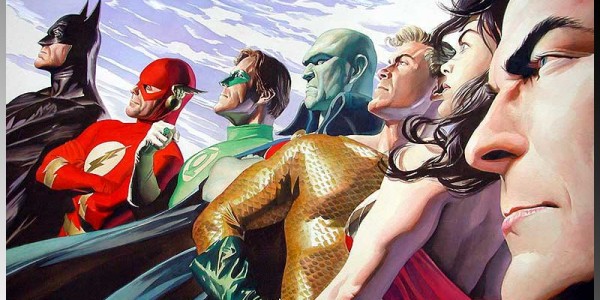 It's the obvious one, but it seems to be the one element that has caused the most trouble. Marvel are two steps ahead of DC, granted, but there is such a limit on DC superhero offerings that it threatens to bore movie-goers in the near future. They plan on creating a Justice League movie, but history shows theyve rarely felt confident enough to travel outside the money making fan favourites. Swamp Thing was given two films in the 90s, and Watchmen was given the big screen treatment only four years ago. Green Lantern was released in 2011, though not to great success. Of 25 DC superhero films given live action treatment to date, 19 have been Batman or Superman films, or based on characters within their respective universes. Those not related to the two top dogs of DC comics have been failures to the extent that they simply havent been able to match up. Of 31 Marvel releases throughout history, 14 characters have been given on screen treatment, including three team up stories ('X-Men', 'Fantastic Four' and, of course, 'The Avengers'). Warner needs to give us more heroes to cheer on, and if done well then DCs line of superhero films can excel beyond Marvels standard. DC need to introduce us to the rest of its list, whether thats in the Justice League film or before it, they need to expand and put the time and effort into the franchise before they can gain the widespread respect and success that Marvel has drawn. Theoretically, they should have already introduced us to these other characters. Non-comic fans probably haven't ever heard of some of the characters DC has hidden away beneath the surface that is its top-tier heroes. That they are reliant on Superman and Batman is an understatement - they can not keep putting their faith in the two most popular superheroes if they want to create a franchise much larger than either individual. It's an issue that seems to have plagued Warner Brothers since claiming DC, but there is potential in all of the characters. The right script and direction will see the problem vanish. Is it really as difficult as it seems to be?
1. Story Telling
 A lot of people had a lot of things to say about The Dark Knight Rises, and one of those things that came up frequently was that it took itself too seriously. Some people were unimpressed that Batman wasnt part of the story for a large part of the film. The film, however, had depth. It transcended the typical superhero film and dipped itself into themes that had never been explored by a hero in a cape before. Nolans final Batman film drew inspiration from A Tale of Two Cities by Charles Dickens. That was confirmed through Jim Gordons speech at the grave site of Bruce Wayne. Taken directly from the book, the speech was heartbreaking and fitting for the story, and it was the prime example of Nolan looking beyond the comic book sources to try and make a film that doesnt necessarily belong under one category. Similarly, The Dark Knight was a crime thriller as much as a superhero film, and told a tale of chaos while Batman Begins told the tale of corruption and raised questions about civilisation. Man of Steel could have been like all Superman films before it, but Nolan, Snyder and co. decided that they needed to look both at Clark Kents internal struggle as he grew up without fitting in, and a world that had to come face to face with a man who was not one of their own. And because of the course the stories have taken, another unique element has been crafted. These characters have faced and are facing issues never before shown to us on the screen, and it makes for a very entertaining product. The 90's Batman films were fairly generic. The Dark Knight trilogy gave a new depth to an old character. And if 'Man of Steel', is any indication, then the same can be said for Superman. It's an exciting prospect both for the currently exposed characters and future characters to come. DC and Warner have a lot going for them, and the few issues they have don't require a lot of fixing. The real issue is that, with the Dark Knight trilogy over and done, there is essentially only one DC film to tie into a Justice League film at the moment. They need new characters, and they can't afford to rush. Working out a game plan and expanding their output is the most important thing to do - the hard part is doing so without feeling pressured - quality is greater than quantity, in a measure of years. If all the pieces come together, then DC can climb above Marvel in near future. All we can do now is speculate about what is to come, and time will tell. What do you think DC need to do to rise above Marvel? Do you think it's possible? Share your thoughts below!