9 Actors Who Made Better Versions Of Previous Films
The best kind of rip-off.
There are countless examples of actors who have typecast themselves into oblivion starring in awful movies echoing their earlier hits, but what about those rare instances where actors not only recapture their prior glory, but actually exceed it?
These 9 actors did just that, appearing in movies which felt like roundabout remakes of their prior efforts, but against all the odds, the new movie actually built upon what came before.
That's right, these 9 films may crib their core premise from an existing movie starring the very same actor, but thanks to a wealth of smart creative choices and a little luck, their act of imitation proved very much worth it.
Hollywood is littered with examples of actors cashing in on their fame with ersatz knock-offs, so it stands to reason that these 8 movies are enormous rarities in the annals of cinema and therefore the exceptions that basically prove the rule.
In many cases both movies are actually worth watching, though, so that's neat...
9. Bruce Campbell - The Evil Dead & Evil Dead II

Sam Raimi's classic 1981 low-budget horror flick The Evil Dead helped make Bruce Campbell a household name while putting director Raimi on the map as a filmmaker to watch.
After Raimi's 1986 follow-up Crimewave was a colossal box office disaster, the director was convinced to write an Evil Dead sequel, which ultimately ended up being as much a remake of the original as it was a sequel.
Evil Dead II was released the very next year, and much like the first film, it sees Ash (Campbell) facing off against an accidentally-summoned supernatural force in a remote cabin in the woods. And there's a rapey tree and stuff.
Considering the absurdity of Ash going back to the cabin after the horror of his first outing, it's clear that the Evil Dead series isn't slavishly committed to an especially rigid or sensible continuity.
Campbell has himself called Evil Dead II a "requel" - a portmanteau of remake and sequel - in that it incorporates many elements of the original film into a follow-up.
Obviously the sequel has a more comedic tone and a ten-fold budget, but at its core it's effectively a more ambitious do-over of the original. Though some prefer the low-fi charm of its predecessor, Evil Dead II is a loonier, more ambitious and simply better-crafted film.
8. Ben Stiller - Heavyweights & DodgeBall: A True Underdog Story
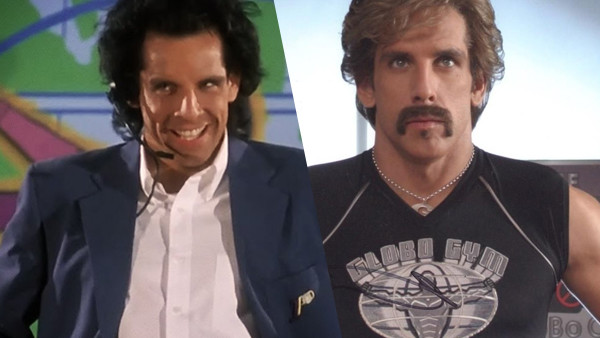
If you don't remember the 1995 comedy Heavyweights, don't feel bad. Barely anyone does. The film takes place in a fat camp, where the kids staying there are terrorised by a malevolent fitness guru played by Ben Stiller, who to make matters worse has bought the camp.
Naturally Stiller's villain is eventually foiled by the ragtag team of overweight misfits, and a post-credits scene reveals that he now works as a door-to-door salesman selling homeopathic "healing" crystals (or as he calls them, "transformational facilitators"). Oh dear.
DodgeBall, released almost a decade later, once again casts Stiller as the pantomime corporate honcho, who this time purchases the flailing, down-to-Earth gym owned by Peter LaFleur (Vince Vaughn).
Stiller's baddie, White Goodman, is wrecked by a team of weirdos in a dodgeball tournament, and the end of the movie reveals that he's now become grossly overweight and curses the day he ever met Chuck Norris.
Stiller even puts on the same deep, gruff bad guy voice in both movies, has awful hairdos and pulls a lot of the same demented faces. The fact that the shell plots are incredibly similar and his character trajectory is bafflingly identical is just the icing on the cake.
DodgeBall is an unmistakably better film, but Heavyweights has its charming moments also. They make for an intriguing double bill, honestly.
7. Sean Connery - Thunderball & Never Say Never Again
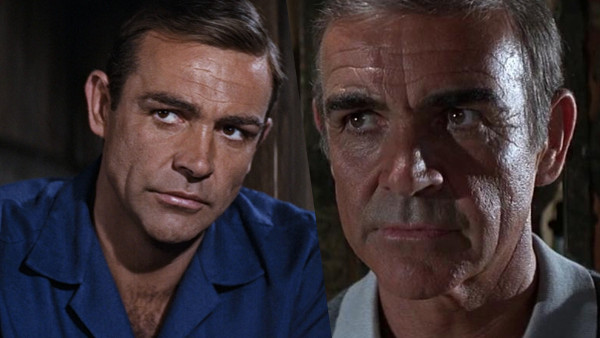
Sean Connery took up the James Bond mantle for the fourth time in 1965 with Thunderball, an adaptation of Ian Fleming's novel of the same name.
It's neither a great Bond flick nor an especially bad one: there's a weird bit where 007 casually rapes a woman and the underwater action drags on too long, but Connery received plenty of praise for his reliable performance, and it's generally accepted to be a solid entry into the canon.
Connery reportedly wasn't particularly satisfied with the film, however, and 18 years later, he appeared in a re-adaptation of Fleming's novel, though because it wasn't produced by Eon Productions, it doesn't count as an official Bond movie.
Never Say Never Again was released in 1983, 12 years after Connery's last official appearance as Bond, and saw a 52-year-old Connery bringing a unique, aged grit to the role. Far from the embarrassment of Roger Moore's later Bond films, Connery doesn't try to mask his age, instead leaning directly into it.
It doesn't hurt that Klaus Maria Brandauer is a vastly superior Max Largo, and fresh off directing The Empire Strikes Back, Irvin Kershner's filmmaking chops trample all over Terence Young's work on Thunderball.
Though the unofficial remake may not be a "real" Bond movie, Connery's heart was actually in it this time, it's a technically superior movie in many areas, and it lacks Thunderball's oppressively lethargic pacing, tone and feel.
6. Christian Bale - 3:10 To Yuma & Hostiles
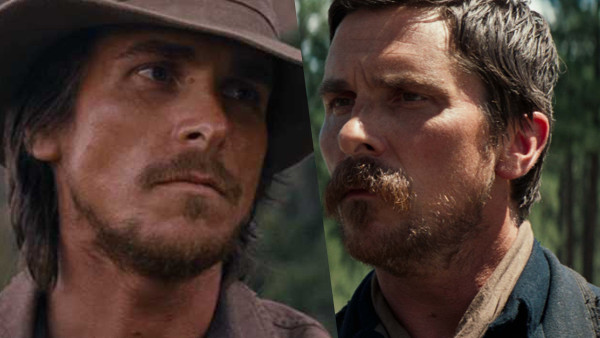
James Mangold's highly entertaining western remake 3:10 to Yuma stars Christian Bale as Dan Evans, an impoverished rancher who accepts a mission to transport a dangerous outlaw, Ben Wade (Russell Crowe), to a train, after which he will be hanged for his crimes. However, Evans also has to contend with Wade's gang, which is now led by deranged criminal Charlie Prince (Ben Foster).
A decade later, Bale starred in Scott Cooper's criminally underrated western Hostiles, playing war veteran Captain Joseph J. Blocker, whose final task before retirement is to escort a terminally ill Cheyenne war chief (Wes Studi) home to die, despite his own bloody history with the chief.
In both films, Bale's protagonist teams up with a group of comrades to transport a man whose death is seemingly imminent, while contending with ambushes and the unforgiving terrain of the old west. Both movies also feature Ben Foster as a hammy secondary antagonist who ends up shot and killed, and by the end of both movies, the hero has begun to identify with the rogue they're escorting.
Quality-wise there's actually not much between the two, but for those prepared to get on-board with Hostiles' slower-paced existential musings, it's ultimately the more rewarding and memorable of the pair. Yuma is the giddy, popcorn-munching version, and Hostiles tells a far bleaker and less forgiving rendition.
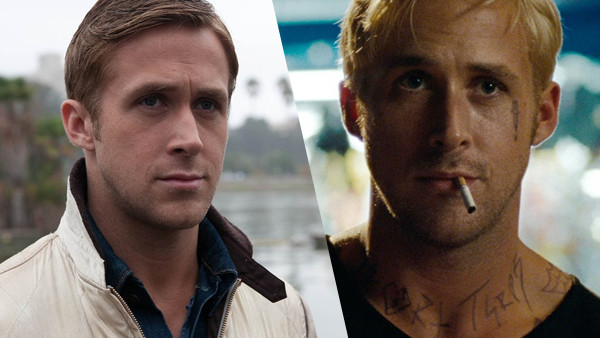
5. Ryan Gosling - Drive & The Place Beyond The Pines
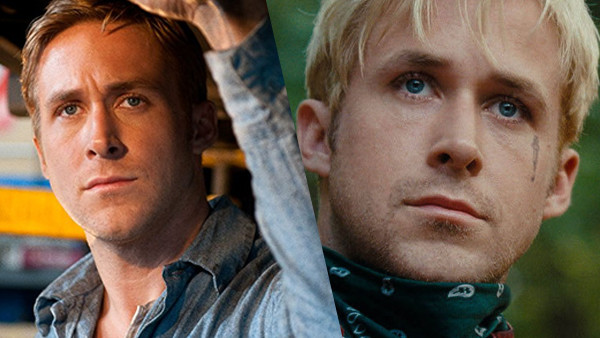
Nicolas Winding Refn's cult hit Drive casts Ryan Gosling as an unnamed stuntman who moonlights as a getaway driver, while also working a side-job as a mechanic. Gosling's protagonist then falls in love with a woman (Carey Mulligan) who is already in a relationship, and the movie ends with his life precariously hanging in the balance (though the popular interpretation is that he survives).
Gosling played an eerily similar role in Derek Cianfrance's crime drama released the very next year, The Place Beyond the Pines. His protagonist, Luke, is similarly a stuntman (this time on a motorcycle rather than a car) who ends up seduced into a life of crime, while working as a mechanic on the side.
Meanwhile, he gets romantically entangled with a former lover (Eva Mendes) who isn't single, and let's just say things don't go too well for Luke by the end of the movie (or long before the end, in fact).
There are undeniable tonal, stylistic and structural differences between the two films, but the similarities are too numerous to ignore. Many will attest that Drive is the better movie, but as entertaining as it is, the core of the story and characters aren't particularly memorable.
The Place Beyond the Pines packs a far more haunting and affecting punch, with another entrancingly stoic Gosling performance at the forefront.
4. Liam Neeson - Non-Stop & The Commuter
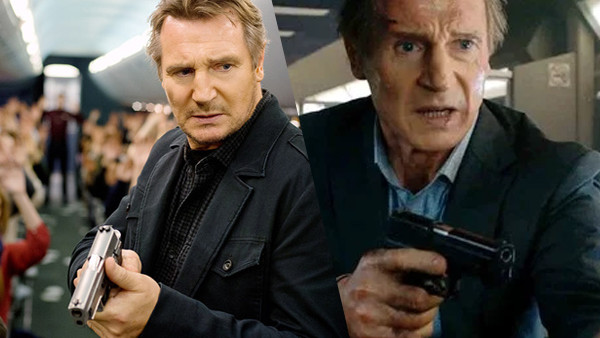
Released in 2014, Non-Stop is the second of Liam Neeson's Hitchcockian collaborations with director Jaume Collet-Serra, starring Neeson as a down-on-his-luck Federal Air Marshal who must locate the terrorist plotting to kill a passenger aboard his plane every 20 minutes if he isn't paid $150 million.
It's a functional, serviceable thriller that's rife with red herrings, amusing villain reveals and a grizzled Neeson doing his thing. Earlier this year, Neeson and Collet-Serra re-teamed for the suspiciously similar thriller The Commuter.
Mockingly billed as "Non-Stop on a train", the film again casts Neeson as a sad sack family man who finds himself embroiled in a murder plot, this time attempting to stop the assassination of a key murder witness on-board the train. Again, there are false flags all over the place, a secret villain emerging from the shadows, and Neeson improbably leaping away from a giant explosion at the end.
There are obvious differences in the twisty narratives of each, and though The Commuter was criticised for playing a little too similar to Non-Stop, it's actually a bit of an improvement thanks to its more consistent tone and some unexpected social commentary.
3. Al Pacino - Scarface & Carlito's Way
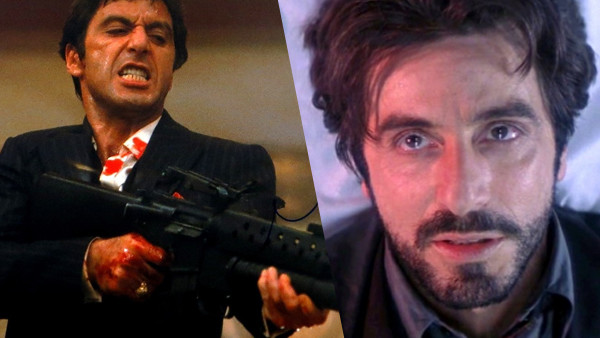
Scarface gave Al Pacino one of the most iconic roles of his career as Cuban refugee-turned-drug-lord Tony Montana, in a ferocious rags-to-riches crime thriller that's become an undeniable pop-culture mainstay.
A decade later, Pacino re-teamed with director Brian De Palma for Carlito's Way, which also cast Pacino as a Latino man released back into "polite" society, who quickly gets involved in blood-soaked drug deals, amasses a pile of money while pining for a better life, gets involved with a beautiful blonde (Penelope Ann Miller this time instead of Scarface's Michelle Pfeiffer), and is ultimately murdered by a ruthless rival.
As unforgettable as Scarface is, it also devolves into downright self-parody at times and hasn't aged all that well. Pacino's over-the-top performance is wildly entertaining, but his work in Carlito's Way has far greater staying power and emotional resonance. While not as iconic, Carlito's Way is a more thoughtful and gritty stab at the same type of movie.
2. Nicolas Cage - Ghost Rider & Drive Angry
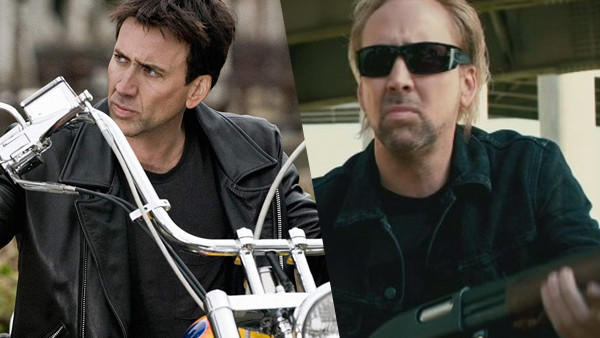
Shortly before he committed himself to tirelessly starring in straight-to-video schlock, Nicolas Cage headlined the 2007 superhero movie Ghost Rider, playing Johnny Blaze, a man who falls foul of a pact with the Devil (Peter Fonda), gets help from a veteran character actor (Sam Elliott), battles one of the Devil's illegitimate sons, Blackheart (Wes Bentley), and retains his demonic powers at the end of the movie, much to the Devil's chagrin.
Four years later, Cage appeared in Drive Angry, playing Milton, a criminal who escapes from Hell and invokes the wrath of Satan after stealing his prized gun. This time Milton finds himself facing off against the Devil's underling The Accountant (William Fichtner) while trying to protect his granddaughter, being assisted by another popular character actor (this time David Morse) and eventually going back to Hell amid an uneasy relationship with Satan.
The similarities between Drive Angry and Ghost Rider: Spirit of Vengeance, which released the very next year, are even more potent, with Cage again venturing to protect a child from becoming part of a demonic ritual.
Drive Angry may not be great cinema nor have the stonking $110 million budget of Ghost Rider, but it dabbles in a similar sandbox and delivers a far more self-aware and giddily entertaining time. If Cage wasn't enough entertainment value for you, William Fichtner's also a total blast in it.
1. Sharlto Copley - Alive In Joburg & District 9
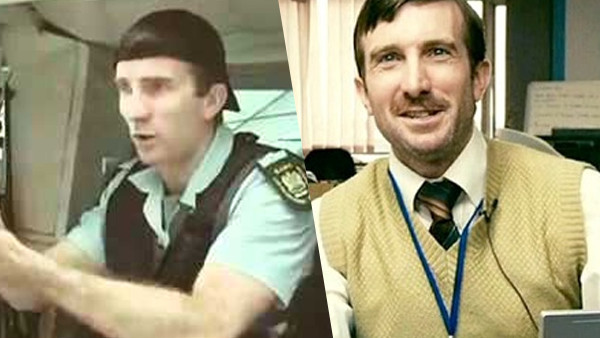
Alive in Joburg is a 2006 short film created by District 9 director Neil Blomkamp, and effectively served as a proof-of-concept for the 2009 movie eventually getting the greenlight from producer Peter Jackson.
The short, which you can watch here, is a mockumentary about alien refugees arriving in South Africa, causing massive tensions with the locals, and drawing easy parallels with the country's history of apartheid. District 9's eventual star, Sharlto Copley - who co-produced the short - even cameos as a sniper interviewed about the situation.
District 9 ambitiously expands the concept into a feature-length film, replicating the same faux-doc style, deepening the political allegory and even bringing Copley back to star as protagonist Wikus van de Merwe.
Nominated for four Oscars - including Best Picture - District 9 is perhaps the quintessential example of a movie brilliantly capitalising on a compelling foundational idea and doing so much more with it.
Which of these improved versions of previous films is your favourite? Got any others to add? Shout them out in the comments!