9 Criminally Underrated 2013 Films You Probably Missed

You probably watched Movie 43, but none of these. Shame on all of you.

Given how many films are released every year, it's impossible to see, and love, all of the films that deserve it. But when audiences flock to see risible bilge like Movie 43, or anything that even remotely resembles a Twilight film, it becomes obvious that there's something fundamentally wrong with the wider cinema-going public. Some of the greatest films of 2013 won't even have been seen by a fraction of the audiences who merrily paid to see the latest Texas Chainsaw Massacre reboot-sort-of-thing, or who were suckered into seeing the awful, insistent garbage that was Only God Forgives. And though they will complain at the resulting experiences, they'll never learn, and next year we'll inevitably be looking back at more films that should have been far more appreciated in 2014. Sometimes under-appreciated doesn't necessarily mean under-seen: both Man Of Steel and The Lone Ranger were ripped to pieces by critics, and even the venom directed towards Star Trek Into Darkness was slightly over-blown, but at least all three of those were actually widely seen by mainstream audiences (which is apparently the only mark of success that counts these days.) The films on this list are the under-appreciated and under-seen films that audiences simply did not respond to in justified fashion: whether because expectations got in the way, or the films simply weren't marketed well enough. In every case, they deserve to have been seen, and loved by a lot more people than did in actuality. First up, a Michael Bay film. Seriously.

9. Pain & Gain

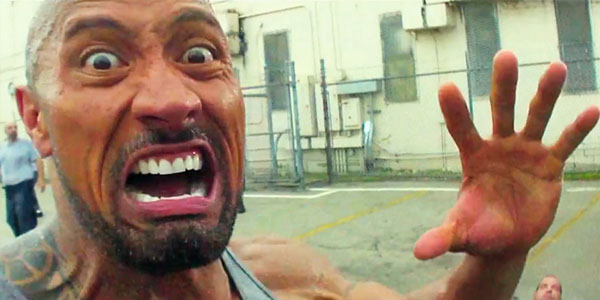
As difficult as it might be to accept, Michael Bay's Pain & Gain was far from the unlikable, vascular mess that it probably should have been (if expectation was anything to go by). But then that didn't stop critics sticking the boot in on expectations, or assumptions alone. No matter how much you might have wanted to hate Pain & Gain, the film was actually incredibly charming. Yes it was muscle-bound, and the decision to make the criminals - all based on real, very bad people - sympathetic figures was something of a bitter pill to swallow, particularly by victims, but the film was actually a rip-roaring and entertaining action comedy. And dare it be said, it seemed to suggest that Bay might actually have some semblance of self-awareness to him. Why You Didn't See It Probably because of the Michael Bay label on it, and the over-riding suggestion that it was going to be yet another muscle-bound exercise in mysoginy from the man who brought us such rampant sexual objectification as the Transformers movies (a heady accomplishment in that he managed to make films about giant alien robots feature gratuitous fetishism of the female form.)

8. The Act Of Killing

Important films are often rejected by audiences as being somehow less entertaining than disposable thrills and engaging story-lined, and regardless of how critically acclaimed they are (and The Act Of Killing pulled an almost perfect score) the simple fact is that the nature of the beast means that a fraction of an audience who will see a Transformers movie will go and seek out any doc. Part of that also comes down to ticket sales and marketability - Cineworld are unlikely to give a documentary like The Act Of Killing the same sort of screening life as the latest animation, even if it's a million miles ahead in terms of quality - because audiences will be duped into thinking its a Sly Stallone actioner, and we'll see another debacle like the idiots who went to see The Artist and walked out complaining it was silent. But documentaries like this deserve more audiences, to match their universal acclaim. Critical success is one thing, but it should matter more to a politicised film for as many people (and not just the most verbose) to see it. This film reenacts a particularly bleak part of Indonesian history in which thousands were killed, with film-maker Joshua Oppenheimer inviting two of the leading killers to re-enact some of the killings. The result is ferociously affecting, and utterly nightmarish, with an unlikely pay-off when a killer is invited to play the part of one of his victims. Why You Didn't See It Documentaries naturally end up with less viewing figures than anything starring real life explosions and massive A-Listers, regardless of how worthy or important they are, and unfortunately for such film-makers those latter terms themselves can be deemed an impediment to mainstream success. As long as documentaries are picked up by niche broadcasters like BBC 4 in the UK, they will not have the sort of saturation they deserve, despite the vehement approval of that committed micro-audience. The Act Of Killing deserved to transcend its medium, but it was never, ever going to.

7. The Crash Reel

2013 was a big year for visceral documentaries. While The Act Of Killing took a lot of plaudits (though not necessarily from audiences - or at least not as many as it deserved,) the HBO-made The Crash Reel didn't attract nearly as much attention. The film follows a horrific, near-fatal 2009 crash by American snowboarding champion Kevin Pearce, who came about as close as anyone to knocking friend and living legend Shaun White off his pedestal as the greatest star the sport had ever seen. Ahead of the 2010 Winter Olympics, Pearce suffered a massive head trauma which left him in a coma, and with a permanent disability. This is a story of defiance, and of painful acceptance ultimately - Pearce struggles with his new reality, and with the limiting revelation that he won't ever get to the stage he once was thanks to his injury, as well as with what he sees as the ignorant and reductive concerns of his over-dramatic family. Crucially, the film shows both sides of the argument, of a family deeply worried about the very real threat of death - which is horribly reinforced when one of Pearce's friends dies midway through the film in a similar accident - and of a huge talent limited and trapped in a broken body. At times it makes hard viewing, but it is easily one of the best documentaries - and in fact, one of the best films - of the entire year. Why You Didn't See It It was aired exclusively on TV, but that doesn't make it any more of an astonishingly profound, and wholly gripping film. You might reconsider your extreme yearnings, but it's a hugely important film that deserves to be seen by a lot more people. That is, in fact, an understatement.

6. Best Man Down

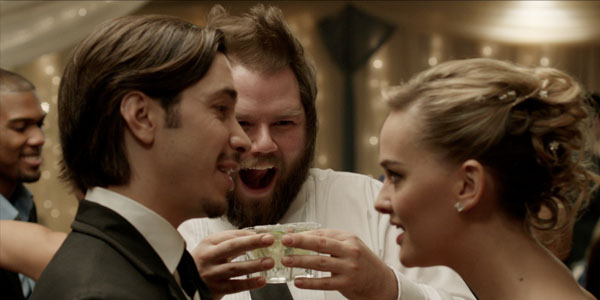
In the long list of unseen films, Best Man Down is undoubtedly one of the most unjustly ignored of 2013. Originally made in 2012, the film didn't see release in the US until November 2013, and even then it was only on a limited basis. Quite why the studio didn't have faith in the film remains a baffling mystery for those who have seen and enjoyed it: it's not the most wave-making film of this or any year, but it is a slow-burning success of well-drawn characters and strong story-telling, even if it has a little darkness at its heart. The tone wanders a little, but the "twist" at the end, which comes as no surprise in itself, but which is framed as a shock because the rest of the film insists that the narrative is heading in another direction, is a great moment of under-appreciated writing. Critics unfairly panned the film as sloppy and confused, but the film's biggest crime seems to have been that it was never essential viewing, and that its studio had no faith in it whatsoever. It follows the death of the unfortunately named Lumpy (Tyler Labine) whose best friend (and the groom to Lumpy's best man) must go on a journey, both metaphorical and actual to tell the people he knew of the death, rather than going on his honeymoon, as well as discovering what Lumpy's life has become in their estrangement. When other indie films are proclaimed master-pieces simply by being gentle and ponderous, it is a tragedy that Best Man Down - a genuinely emotionally affecting film - was ignored entirely. Why You Didn't See It It was released with pretty much zero fanfare, and an audience can't have massive expectations when a film is made one year, and released right at the end of the next.

5. Shield Of Straw

The reality of Cannes film festival is not what you might think: instead of lounging around drinking martinis in the blazing sunshine and catching next year's Hollywood blockbusters, attendees are instead herded like sheep into dark cinemas showing horrors and circus freakshows that will never actually see a release, and for good reason. And there are usually lots of erect penises. But occasionally in amongst the field of oddness and genitals that make up the screening schedules, there are genuinely entertaining movies. This year, Only God Forgives was not one of them, but Takeshi Miike's tension-filled Shield Of Straw certainly was. Both of those films came with expectant baggage - Winding Refn's of good prospects, and Miike's of suspicions of silliness - but it was the latter which was the superior, and by some distance. It probably shouldn't have been up for the Palme D'Or, but Shield Of Straw is probably Miike's most commercial and conventional movie, following a special police force's attempt to transport a high-profile (and brilliantly evil) murderer cross-country to his trial, with corruption and internal deception standing in their way at every turn. It's hugely entertaining, and it's an absolute travesty that the film hasn't yet been introduced more broadly to Western audiences, especially given that Miike already has a fanbase here. Why You Didn't See It It hasn't seen a major US or UK release yet, which is baffling.

4. Reality

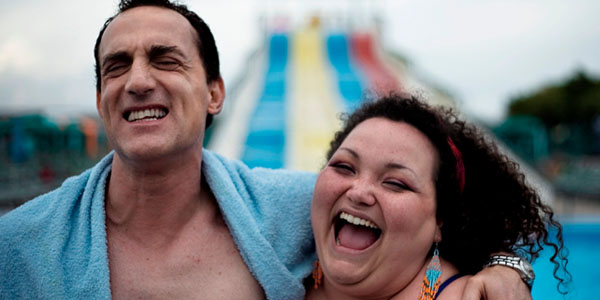
Matteo Garrone's funny and disarmingly touching take on the pantomime of fame, and especially the disposable fame of reality TV was a left-field success story from Cannes 2012, winning the Jury Grand Prix (a baffling accolade that presumably means the Jury liked it the best, but not enough to give it one of the bigger awards?) and drawing some reasonable reviews. But those reviews apparently weren't quite good enough (despite a high approval rating on Rotten Tomatoes,) and it took almost a year before the film was given US and UK releases, to which not enough audiences flocked. The problem was that Reality was not Gomorrah, and nor was it ever going to be. Both films are bleak, but in entirely different ways, and a film about the dangers of disposable fame, and its promise of short-lived glory was never going to be deemed a suitable follow-up to a gangster flick Why You Didn't See It It was a fairly obscure release, pushed into the early months of the year and probably overshadowed by the industry's grotesque fascination with the Oscars. Plus, it's in a "foreign language," which for some is still completely off-putting.

3. Behind The Candelabra

Few 2013 movies were as aptly cast, or as brilliantly acted as Steven Soderbergh's apparent swansong, Liberace biopic Behind The Candelabra, and few were as unjustly ignored. Part of that no doubt comes down to the fact that it was made for TV, and thus wasn't able to be given the traditional marketing kick that its phenomenal cast deserved, and the other part might well be that Liberace's story isn't exactly the kind that immediately demands the attention that say a Mandela biopic (however poor) would. As the titular flamboyant star, Michael Douglas was incredible, playing grotesque and ultra-camp without ever compromising on charm or that irresistible, sometimes intangible star quality that has run so richly through his career. As a portrait of excess and demonisation, his Liberace sits nicely, hand-in-hand (or hand-cheekily-on-backside) with Gordon Gekko, but the climactic act of the film, in which everything appears to have spiralled out of control, showed the other side of the character, and allowed Douglas to show off his more relatable side. In support, Matt Damon and particularly Rob Lowe shone almost as brightly, and the film was very much the excellent sum of its exceptional parts. Why You Didn't See It Despite the fact that "made for TV' no longer has to mean "don't watch this EVER," the label still carries some stigma, and the idea of a Liberace biopic (even with the genius cast) was always going to be a difficult sell.

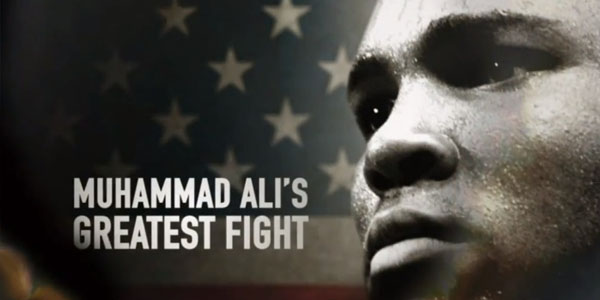
2. Muhammad Ali's Greatest Fight

Stephen Frears' portrait of the high court case following Muhammad Ali's refusal to answer the Vietnam draft on religious grounds is not the easiest film to watch. It is wordy (to a fatal degree for some audiences looking for something less substantial) and weighty, and Frears chose not to cast anyone as Muhammad Ali in a film that should have been about him, but the truth is, the film was hugely rewarding, and was a triumph of excellent casting and restrained, intelligent writing. The cast was phenomenal, pitting the likes of Christopher Plummer, Frank Langella and Danny Glover against a new breed of actors led by Benjamin Walker, and the story, which is complex and confounding in places, but which just about avoids crossing too far into court room procedural fog, is ultimately very entertaining. Plummer in particular is brilliant, particularly when his personal story is peeled back a little more, and the use of archive footage of Ali proves an inspired move. Why You Didn't See It It was another Made For TV movie, and it was probably a tough sell (if not as much as Behind The Candelabra) considering its bias towards more loquacious scenes, and less on eye-catching drama.

1. White House Down

There's absolutely no mistaking the fact that White House Down was too expensive. $150 million is a lot of money to spend on a movie that should, and could have come in a lot cheaper, considering how self-consciously genre it was (perhaps it's wrong to assume that means films should be cheaper, but that's the way it feels) and the film was hamstrung with a big hefty price tag stigma around its neck. Yes, Roland Emmerich isn't exactly the best film-maker currently plying his trade, but his White House/Die Hard amalgam was the better of the pair of near identical actioners released this year, and with consummate (and entirely unexpected) ease, the director who gets way too much criticism made not only a great action movie, but also one that bore the hallmarks of non-genre movie greatness. Okay, so greatness is perhaps an over-extension, but White House Down in no way deserved to be the box office "failure" it will now forever be called. The characters were great, thanks in part to great lead acting performances from Channing Tatum and Jamie Foxx, and even more thanks to the chemistry they built together. It is far more modern feeling (and dare it be said, is smarter) than Olympus Has Fallen, and it has actual dialogue, instead of a cavalcade of angry t-shirt slogans, and while some will inevitably call it a pay-check movie, that is unfair and too reductive by far. Why You Didn't See It Perhaps you were lured in by the grimmer ultra-violence of the other White House-based action movie - Olympus Has Fallen - or perhaps you were just plain confused that two movies with almost identical premises were released within months of each other - either way, it seems very few people went to see the superior of the two. Which other 2013 films do you think deserved more attention? Share your picks below in the comments thread below.

Contributor
Contributor

WhatCulture's former COO, veteran writer and editor.