Ever have the experience of when you trip, and it takes forever to reach the ground? It's a commonly-held belief that when bad things happen, they happen slower, for our brain is that much more aware of what is going wrong at the time. It is in this principle that movies developed the use of "slow motion".
It's understood without a doubt that slow motion is one of the great film cliches of all time drawing out an action or dramatic beat to a crawl is a great way to increase tension and make a money shot stand out like nothing else. However, like any cliche, it has amassed a strong number of cynics over the years. It is impossible to take a film seriously when every frame is overcranked to the point of silliness, so modern uses of the technique must be well justified or cleverly employed for them to be accepted by a modern moviegoing audience. It is frankly hard to enjoy a man running from an explosion as it billows out behind him anymore thanks to the over-use of that particular cliche (sorry Michael Bay, but that ship sailed long before you were even at the harbor) so if they are to be loved, movies must use slow motion the way they use action sequences sparingly, and with creativity. For your reading pleasure, I have compiled a list of film scenes and moments that epitomize why well-used slow motion can be a timelessly effective movie technique...
9. Watchmen Opening Credits
The slow motion in Watchmen is, for the most part, a mixed bag. More often than not, it disrupts the flow of action scenes more than it helps, and the over-stylization of the movie becomes distracting at several key moments. But it is in the opening credits sequence that Zack Snyder (a man whose fetish for slow motion knows no bounds) displays the most artful use of very gradually moving imagery. The opening credits of Watchmen are the only instance in the film where the slow motion really worked perfectly with the material - the historical vignettes are arranged in such a "ripped from the tabloids" fashion, that they evoke both a period aesthetic while simultaneously depicting how glorified the old days of Superheroes were. The soulful vocals of Bob Dylan provides an excellent backing to this scene, creating a the nostalgic yearning for days long by felt throughout this film. Additionally, the juxtaposition between the heroic images of the start, and the increasingly cynical ones that lead into the actual film blend eerily well through the intermittent flashes of period cameras. While Snyder's film and especially his use of slow motion are hit and miss throughout this postmodern superhero film, the opening credits are the time when his aesthetic and the source material feel perfectly in sync, and it's glorious.
8. The Wolf Of Wall Street Quaaludes
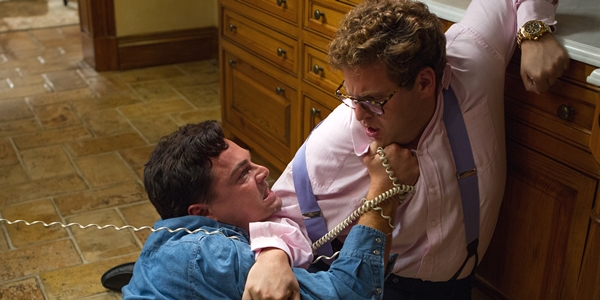
Sometimes Slow Motion is more than just a stylistic flourish. Sometimes it is an obstacle for the characters. In The Wolf of Wall Street, Jordan Belfort spends a great deal of time under the influence of every drug from cocaine to the now-infamous Quaaludes. The scene I am referring to, of course, is the major comic highlight of the film, but the best use of slow motion occurs much earlier when Jordan Belfort's narration introduces the Quaalude to the audience. At a specific point of the movie (one of the lesser debaucherous parties across the hectic 3 hours) the entire scene freezes and starts to go by at a crawl, as Belfort wryly remarks, "looks like those 'Ludes are working their magic on Donny right now". Not only is the painfully slow motion of this scene hilarious, but it serves as excellent setup for when Donny & Jordan are nearly completely incapacitated by several powerful Quaaludes at the key point in the plot. As Jordan describes the Quaalude in detail, Scorsese allows the audience to linger on the motion of everyday items, as viewed through someone who's brainpower is inhibited by some very powerful drugs. Slow motion is also employed at sparse intervals throughout the rest of the film to indicate similarly drugged-out perspectives, but no scene comes as close to capturing the humour and fascination of the Quaalude as when Belfort first introduces us to his second favourite drug (after money, of course).
7. The Untouchables Union Station Gunfight
Putting a baby in danger is often looked down upon by screenwriting critics. It's easy to see why: it's an absurdly obvious way to gain audience investment. But this sequence works for many reasons aside from the baby carriage. It all works because it is so meticulously set up: when ambushing Al Capone's accountant en route, Elliot Ness (Kevin Costner) finds himself in the Union Station stairway with a bunch of gangsters, civilians, and the aforementioned baby carriage. Violence inevitably ensues, but rendered mostly in stylized slow motion. The effect of the slow motion in this scene is to maximize suspense. When you have so many aspects to keep track of in one scene (five gangsters, two lawmen, many civilians, one baby...) it is easy for the audience to get lost if the scene plays in real time. However, Brian De Palma's choice to shoot it in slow motion allows the audience to anticipate the results during the action scene itself, allowing the actions from the protagonists to be that much more impressive when successful. On top of that, the gradual rolling of the Baby Carriage toward the bottom of the stairs works as something of a timer, measuring how much time Ness & George Stone have to accomplish their objective, and still save the baby. This scene walks a very fine line between tense and over the top, fortunately staying on the right side for the most part (the one exception would be the woman melodramatically crying "My Baby!" in slow motion, which comes off as a little funny).
6. Dredd "Slo-Mo"
Dredd is a science fiction action film that takes the Quaalude effect to its logical extreme: the primary MacGuffin of this 'Die Hard meets Dystopian Dirty Harry' flick is a drug that is literally referred to as "Slo-Mo". When under the effects of this drug, the user experiences life much like an over cranked camera: everything is ridiculously bright and over-saturated, and all movement takes ages to accomplish, like they're all encased in invisible molasses. While the scene from the Untouchables was slowed down to clarify and intensify, the use of Slo-Mo in Dredd has the complete opposite effect: the goal is to put the camera behind the eyes of a bunch of drugged-out gang bangers who aren't thinking clearly enough to comprehend what's going on. When Dredd's bullets pierce through the bodies of the gangsters, the images are so detached from regular motion, they become almost beautiful. In retrospect this scene plays out as if Jordan Belfort and his cohorts were street level thugs getting attacked by the eponymous Judge. But it becomes evident by the end of the film that the stylization and colour palette of these "Slo-Mo" scenes make them some of the most hauntingly gorgeous violence in modern cinema.
5. Django Unchained Death Of The Brittle Brothers
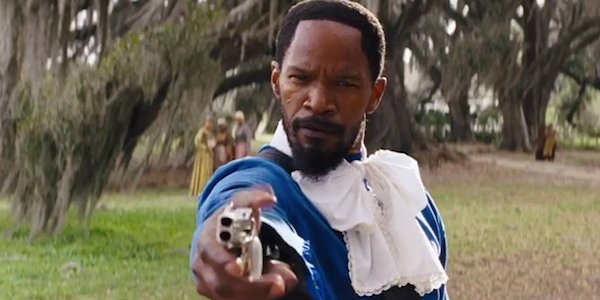
There are many scenes from this Spaghetti Western Slave Revenge Epic I could choose for this list including a scene that uses slow motion to emphasise a piercing moment of suspense before all hell breaks loose at Candyland. However, the most effective use of slow motion in this film bar none comes toward the end of the first act, when Django takes on his first bounty: The Brittle Brothers. Although Django Unchained is a film that is concerned about depicting brutality, it is more concerned with sweet, sweet, revenge. This scene is the first time Django has the freedom (and weaponry) to fight back against white slavers, and his execution of the Brittle Brothers (particularly his whipping of Roger Brittle) is devilishly satisfying. The use of slow motion allows the audience to savour the power and triumph of Django's first bounties, paving the way for his complete re-invention as the baddest bounty hunter in the South. A particular shout out in this scene goes to a shot that epitomizes the mission statement of the film: Ellis Brittle is shot from his horse, and as he falls, the camera lingers on his blood slowly splattering across the cotton field. Stylish, hard-hitting but also vicariously satisfying, this is the shot of the movie.
4. The Hurt Locker IED
In a sense, explosions have lost their danger in modern Hollywood. Too many pretty CGI fireballs have rendered us numb to the reality that a real explosive is dirty, loud, and dangerous. So Kathryn Bigelow, upon making a movie about real-life bomb defusal, needed to re-establish the IED (Improvised Explosive Device) as the principal antagonist of her film. This 2009 Best Picture Winner is festooned with scenes of exquisite suspense involving the protagonist Sgt. First Class William James (Jeremy Renner), but none of these scenes would hold any weight if the cold open doesn't work as well as it does. When the first bomb goes off, cinematographer Barry Ackroyd captures the dirt lifting off the ground in extreme slow motion, allowing the audience to watch in horror as the placid road comes to life with death, killing the explosives ordinance officer nearby and sending his squad-mates into panic. Not only are the shots in this scene visually striking and terrifying, they also serve a distinct thematic purpose showing how violence, especially the sudden and unpredictable violence of the Iraq war, disrupts and disturbs the entire world around it.
3. Bonnie & Clyde The End
When a character is killed, there is always a sense of shock. Whether it be in slow motion, regular motion, or even offscreen, the loss of a main character is always a hard blow to the heart whenever the character has been well-developed. The scene I am referring to in Bonnie & Clyde (I would be very surprised if you have remained unspoiled for this one since 1967) takes the effect of murdering two well-established characters to its logical extreme, submitting the audience to the brutal slaughter of its protagonists. The ambush that concludes this 1967 classic refuses to justify its Law-abiding antagonists in favour of complete sympathy for its outlaw heroes. The two infamous criminals are not even armed when their car is blown to pieces by a posse of policemen. By cutting back and forth between slow motion and normal speed, the execution is rendered as painfully as possible, no doubt inspiring Sam Peckinpah along the way. As one of the most violent films of its time, the closing scene of the film is unapologetically bleak, and undoubtably memorable. The most devastating aspect of this scene is how director Arthur Penn chose to separate Bonnie and Clyde (Clyde being outside of the car at the time), openly defying any pretension toward a tragically romantic end as well. There is no way they were ever going to die in each other's arms.
2. The Matrix Bullet Time
If there is a list of "best slow motion scenes" without this film listed, I have not found it. It goes without saying the 1999's The Matrix, while not inventing the camera technique (its predecessors include 1988's Akira, and several of Michael Gondry's music videos), it pioneered the use of slow motion movement, fast motion camera, and state of the art visual effects to bring Bullet Time to the big leagues. If there is anything to be proven by the many fast moving Vampires that haunt TV and Film, it is that extreme speed always looks silly when portrayed outright. Thus, when the Wachowski siblings approached the first Matrix, they needed to show their main character dodging bullets, but still convey how difficult and unreal the movement is. This moment (and no doubt you know which moment I am referring to) is a key part of Neo's growing self-awareness of his role as "the One", and remains one of the crowning achievements in visual effects, shooting, and editing. All that said, let's be honest: this shot is most remembered just because it is such a cool shot. There are quite a few other stylish bullet time sequences in the climax, but none are quite as impressive as this first impression.
1. Inception Dream Levels
Film time is always a tricky thing to manage balancing how long a certain sequence is supposed to span in movie time vs. real time is a challenge directors face daily. In that regard, Inception is nothing short of a masterful high-wire act. I call this film one of the best uses of slow motion for a number of reasons, but the first and most important of them is how any and all slow motion is relative between dream levels. This is probably the most heavily stylised Christopher Nolan movie, but Nolan is nothing if not excellent at justifying his stylistic choices in the narrative. As the mind sinks further and further into dream levels in this universe, the brain works at faster and faster speeds, expanding time within itself like a bizarrely reversed Russian nesting doll. The slow motion (and inversely, the fast motion) is used to transition between dream scenes, and contextualise the relative speed at which they're all taking place. It is an impressive achievement in editing that not only do these transitions work, but they flow almost seamlessly from one to the next, amplifying the tension and stakes. The crowning moment of slow motion in this film is the one that connects all the dream levels: The van falling off the bridge. This moment ties the entire second half of the movie together, becoming an active measure for how much time they have left to accomplish their mind-heist. It works similarly to the Untouchable's baby carriage, but unlike that one, it has to provide tension for an entire heist, not just a single gunfight.
Self-evidently a man who writes for the Internet, Robert also writes films, plays, teleplays, and short stories when he's not working on a movie set somewhere. He lives somewhere behind the Hollywood sign.