9 Famous Movie Facts (That Were Never Actually True)
Separating movie fact from Hollywood fiction.

9. Fargo Is Based On A True Story

Fargo is an entirely fictional story, straight from the twisted minds of the Coen Brothers. According to urban legend, this didn't stop one young Japanese woman from searching for the buried money from the film though. The 28-year-old from Tokyo reportedly froze to death, after believing that the briefcase containing $1 million was genuinely buried somewhere in North Dakota. It later emerged that the woman had actually gone to Minneapolis in a bout of depression, committing suicide with an overdose of sedatives and alcohol.
The commonly misheld belief that Fargo is non-fiction is thanks to the title card shown at the very beginning of the film. The card reads, "This is a true story. The events depicted in this film took place in Minnesota in 1987."
In reality, the Coen Brothers merely took small aspects from several true stories as inspiration. The brothers also believed that if audiences thought they were watching a true story, it makes some of the more bizarre elements easier to accept.
8. An Early Lumière Brothers Film Caused Audiences To Run In Fear
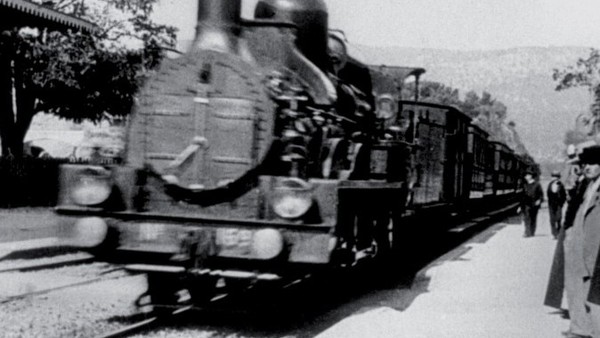
L'arrivée d'un train en gare de La Ciotat, known in the UK as Train Pulling Into A Station, is an early 50-second silent film by cinematic pioneers Auguste and Louis Lumière. Showing a steam locomotive as it pulls into a French train station, the film is one of the more well-known examples of the Lumière brothers' work.
A common legend associated with Train Pulling Into A Station, is that audiences at the first screening were completely overwhelmed by the illusion of a life-sized train approaching towards them. The story goes that audience members screamed and ran away from the projected image, in fear that an actual train was about to crash into the room. This claim has long been cast under doubt, due to the muddying of a number of facts.
For starters, Train Pulling Into A Station wasn't actually part of the brothers' first screening in 1895, and was instead shown in public in early 1896. A common theory is that the accounts were mixed up with a screening in 1935, wherein the Lumière Brothers showed a reshot version of the film in stereoscopic 3D, making it literally appear as if it was coming towards audiences.
7. Tinker Bell Is Modelled On Marilyn Monroe

Tinker Bell is the fairy companion that appears in Disney's Peter Pan animated feature film, who has proven to be an endearing side character (even spawning her own spin-off movies). Her distinctive appearance, with the blonde hair and curvy features, has led many to compare her to a certain iconic movie star.
Such is the apparent resemblance, that many publications have printed that Disney's Tinker Bell was directly modelled on Marilyn Monroe, as if it's a confirmed fact. However, Monroe wasn't actually particularly iconic while Peter Pan was in production, and didn't have anything close to the fame she gained later in her career.
In reality, the character of Tinker Bell was based in appearance on actress Margaret Kerry.
6. You Never See The Knife Puncture Flesh During Psycho's Shower Scene

Alfred Hitchcock's legendary horror film Psycho is famous for a bunch of reasons. For starters, it's a very well-made, effective film that manages to consistently crank up the tension throughout its 109 minute runtime. It also subverts expectations of narrative structure, thanks to the iconic shower scene in which the main character is killed off halfway through the film.
A frequent claim is that during the shower scene, Hitchcock never actually shows the knife puncturing flesh. Instead, the violent effect is achieved entirely through clever cuts and the mind filling in the blanks. This isn't true. As shown in the above still, there is a single shot in which the knife is visibly penetrating the abdomen of Marion Crane, though it only appears for a brief moment.
5. A Munchkin Actor Committed Suicide While Filming The Wizard Of Oz
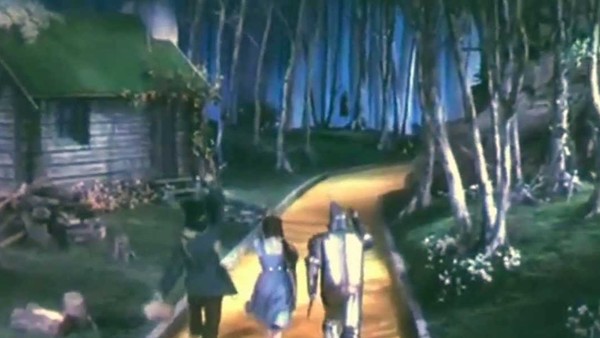
A common myth surrounding pioneering movie The Wizard Of Oz is that a depressed actor portraying one of the munchkins took his own life on set. Furthermore, it's often claimed that you can see the actor after he hanged himself in the final film, in the background of the shot above.
Okay, so this one isn't generally regarded as a movie 'fact,' but it's still something that's regularly brought up as a piece of movie trivia. No such thing ever happened while filming The Wizard Of Oz, and a hanging was certainly never accidentally included in a shot. During the scene in question, no munchkin actors had even arrived on set, and detailed scans reveal the shape to be a large bird spreading its wings.
4. Deliverance's Most Famous Scene Was An Accident

In one of Deliverance's most iconic scenes, businessman Drew starts playing the guitar in competition with an inbred, hillbilly child. The resulting duel is widely known even outside people that have watched the film, with the song "Duelin' Banjos" a famous piece of cinematic music.
One of the most interesting facts about the scene, according to multiple magazines, online publications and general discussion, is that it came about as a result of an accidental meeting. The makers of Deliverance accidentally came across the kid, with his incredible banjo skills, and spontaneously decided to shoot a scene with him.
In reality, "Duelin' Banjos" had already been recorded before production started, and the kid was played by actor Billy Redden. It's not even Redden playing the banjo - a musician named Mike Addis played it by reaching around Redden, disguised by clever camera angles.
3. A Stuntman Was Killed While Filming Ben-Hur's Chariot Race

A commonly cited piece of trivia surrounding the production of 1959 cinematic epic Ben-Hur is that one of the stuntmen was killed during filming of the famous chariot race sequence. Naturally, an accompanying rumour is that the take in which he died was included in the final cut. Despite this 'fact' being featured in a number of publications about the film, it has been repeatedly confirmed to be false.
The only reported injury was by Heston's double Joe Canutt, who received a gash on his chin after being flipped out of a chariot. It's thought that the rumour came about due to an actually fatal accident that occurred during the making of the 1926 Ben-Hur, when a stuntman was thrown in the air and died of internal injuries after landing.
2. Florence Lawrence's Fans Tore Her Clothes Off After Finding Out She Was Alive
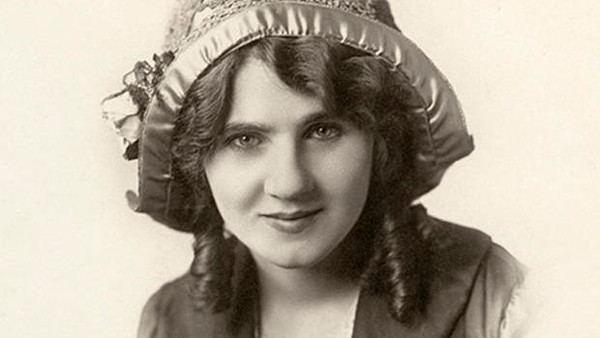
Back in the early days of the movie industry, marketing and promotion wasn't quite as regulated as it is today. Florence Lawrence is often considered to be one of the first movie stars ever, appearing in a number of popular films in the 1910s. Universal founder Carl Laemmle invented a rumour that Lawrence had been killed by a street car in New York City. After the fabricated story gained a huge amount of media and public attention, he revealed that it was a lie, and part of the promotion for upcoming movie The Broken Oath.
After already making the actress the centre of attention with this lie, Laemmle wen't one step further with a fabrication that still permeates film history books and movie trivia to this day. He claimed that Lawrence's fans in St. Louis were so excited to learn that the actress was alive, that they mobbed her and tore her clothes off in a frenzy. It was partially thanks to this story that Lawrence became such a star, despite being completely false.
1. Marilyn Monroe Was A Size 12-16
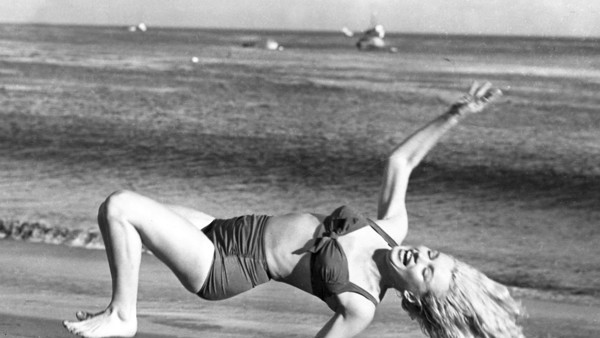
The exact size changes depending on who's saying or printing it, but there's an ongoing myth that Marilyn Monroe was between (U.S.) sizes 12 and 16 - roughly the same as an average American woman today. Actress and comedian Roseanna Barr once outright claimed Monroe was size 16, while Elizabeth Hurley stated that "she was very big."
The misconception seems to have come about due to a change in how the sizing system works in the U.S., along with the fact that Monroe had a distinctive hour glass shape. While Monroe's weight did fluctuate a bit over the years, she consistently remained what would be considered slim today. The famous white dress Monroe wore in The Seven Year Itch was found to be too small for even a size 2 mannequin, proving the claims that Monroe was up to size 16 are totally ridiculous.
Are there any other common movie myths that you want dispelled? Did you used to believe any of the 'facts' listed here? Let us know in the comments below!