9 Films "Based On True Stories" That Missed Out The Best Part

Sometimes fact really is more unbelievable than fiction.
We've all become a bit jaded by the phrase "based on a true story". When it's not being flat out used to deceive us (Fargo, Blair Witch and Texas Chainsaw Massacre are three high-profile examples that pulled the phrase as a blatant lie), a heavy use of dramatic license can leave us with a sequence of events that bears little resemblance to the truth. It's understandable why filmmakers choose to do it - sometimes real life just isn't exciting and a bit of added fictionalised conflict is required - but it makes it impossible to tell what actually occurred. Even films that are highly regarded as being accurate can still, thanks to a subjective viewpoint or incomplete knowledge, end up telling us about events that never happened. Zodaic, which went to pains to recreate the attacks as close to survivor's accounts, is based off a rather subjective book and its conclusion on the identity of the killer rubs some followers of the case up the wrong way. What's strange is that sometimes, instead of changing something to get it suitable for the big screen, a film will actually cut out elements of real events, in essence only presenting us part of the story. And this isn't just things that aren't relevant; we'll see today sometimes what could have been an essential plot point is completely ignored. Here are nine movies of those movies that left the best bits from reality off the screen.

9. Karen Was Having An Affair - Goodfellas
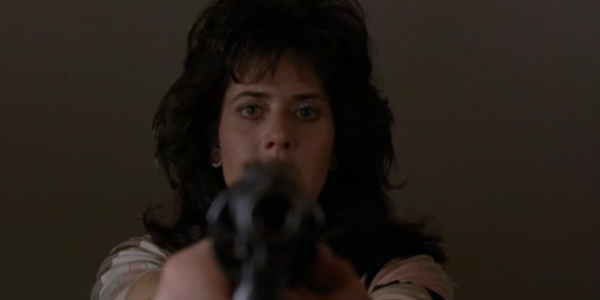
Despite chronicling the fall of an entire contingent of the mob Goodfellas is a highly personal story. Charting his journey from plucky upstart working at a gangster owned cab stand to FBI rat hushed into witness protection we're constantly kept on the same side as Henry Hill; when he idolises mobsters, we idolise then; when he's treating mixing cocaine and selling gun parts with the same importance as a pasta sauce, so do we. Because the story's almost entirely from his perspective it means we go easier on him than the ever-professional Jimmy or psychopath Tommy. The one area where the film really condemns Henry is how he treats his wife, Karen. Divorcing shortly after entering witness protection, their relationship was always tricky; Henry had multiples girlfriends on the side and it's often with her when his calm facade comes dowm. She's clearly meant to be semi-sympathetic, which is probably why the film completely ignores that she was having an affair with Henry's boss. That's right - the real Karen Hill was sleeping with Paul Vario, the character Paul Cicero is based on. Puts everything in a different light, doesn't it. Especially when it's suggested in a later work by Henry that it was Paulie's feelings for Karen that led to the death of Tommy (in the film played by Joe Pesci), who had allegedly tried to rape her.

8. The Aftermath - 127 Hours

The end of 127 Hours is the whole reason you watch the film. As fascinating as seeing a man trapped under a rock go through a life-changing experience is, if you're sat in the film it's because you know Aaron Ralston's going to hack his arm off using a blunt pen knife. Which is probably why what happens after he frees himself from his prison after five days is treated with a bit of brevity. Contrary to how the film presents it (abseil, drink, walk, people, helicopter), Ralston's journey wasn't over after the first 127 hours. After drinking from that muddy pool Ralston got lost in another canyon and ended up having to walk seven miles to get from first contact with the outside world to actual safety. He's also said that it was only after he escaped that he got to relieve himself for the first time since the whole ideal started, setting up a scene that could have rivalled director Danny Boyle's Worst Toilet in Edinburgh from Trainspotting. Ralston said that Boyle's film was, one swimming case of dramatic licence aside, painfully accurate to his real experiences, but it would have added an extra sense of realism for the film to add in the post-arm-severing bits. There's an alternate ending of the film that, as well as expanding on his family, sees some of these omitted bits included.

7. Luttrell Had To Crawl For Miles After The Ambush - Lone Survivor
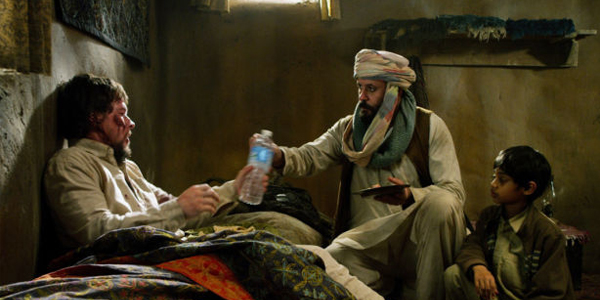
Lone Survivor had one of the most spoilerific advertising campaigns in recent memory; that title and a poster featuring nothing buy Mark Wahlberg's face pretty much gives away what's going to happen come the end. The film has plenty of action and character moments to make the intermediate events interesting, although at points it does feel at points it's almost too Hollywood an idea. If you felt that then you're onto something. Much of the film is accurate to our understanding of the experiences of Marcus Luttrell, a Navy SEAL ambushed in Afghanistan, but certain bits for some reason are enhanced. After the ambush that kicks the action into full gear Luttrell found himself unable to walk, having to crawl for miles (Wahlberg has a spring in his step), while the film's finale was in fact a much less bombastic attack. It's the usual Hollywood pomp to make things feel more action heavy, but we can't help but feel things would have been tenser if it'd stuck closer to the truth. The true story on which the film is based already has some strong elements of contention; the real Marcus Luttrell increased the number of Taliban he went up against from twenty to two-hundred between initial reports and publishing his account of events, so twisting events isn't anything new.

6. The Californian - Titanic

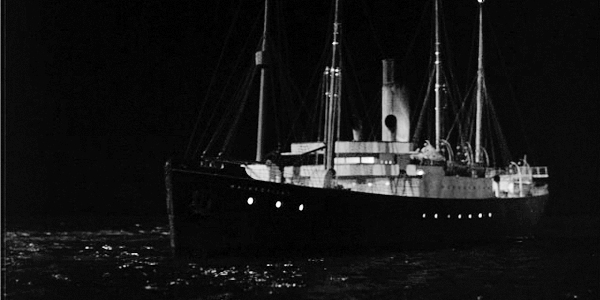
Everyone knows the story of Titanic; big ship hits iceberg and sinks, killing most of those on board. There's a long sequence of events leading up to that, with a lack of binoculars for the lookouts, small number of lifeboats and weaker rivets being used to make the ships bow all contributing to the tragedy. But there's one big element that often gets overlooked; there was a ship within sight of the sinking. The Carpathia turned up at the site of the sinking hours after Titanic had slipped towards the bottom of the ocean, but the Californian, a small steamer, was close enough that it could see the rockets firing from sinking ship. It's a popular "what if" to suggest that had she moved to the doomed liner straight away then more people would have survived. Why she didn't was a subject of major conjecture at the time, with new wireless tech, the colour of rockets and pure bad luck in sleeping times all building to the crew not realising what had happened until it was too late. The Californian's captain, Stanley Lord, was the focus of much controversy in the months after the sinking, with him taking much of the blame for the severity of the disaster. Given the level of contention of his parts in events many films steer clear of the whole Californian issue, including the biggest of the lot. Scenes set on the ship were shot for James Cameron's Titanic, but where cut to keep the running time down, which is a shame as it would have brought the whole issue to a massive audience.

5. The Killers' Motives - The Strangers
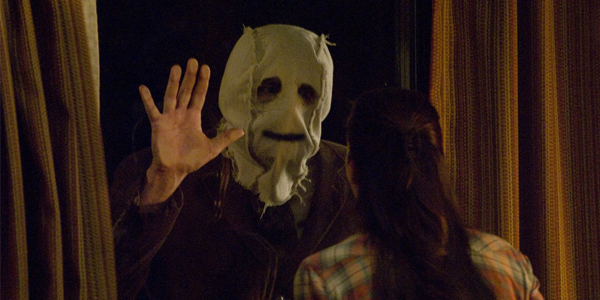
The Strangers is a film that comes with the vague claim of being "inspired by true events". In this case that means a corroboration of different home attack stories, with the most sinister aspects from each being brought together. You have burglars knocking on doors to ask if a random person is home to find which houses are empty, along with a bunch of the usual serial killer stuff, chief amongst them the crimes of Charles Manson. One of the creepiest parts of The Strangers was how little was given about the motives of the three killers who terrorise a married couple. Wearing masks the whole time and stating their only reason for doing it was "because you were home", it's kept hunger for a potential sequel high and helps make the unprovoked terror cut a little closer to home. Of course, with an inspiration like Manson the motivations could have been even more unnerving than the unknown. Convinced there were hidden messages in The Beatles' 'White Album', Manson believed a race war named after one of the songs on the album, Helter Skelter, would soon break out, which he attempted to help start by having his followers commit a series of grisly murders. If that's not franchise material we don't know what is.

4. A Disclaimer - JFK

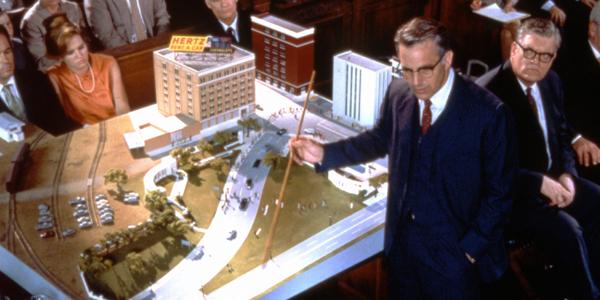
According to a recent poll, the majority of American's still believe that the assassination of JFK was part of a larger conspiracy and not the actions of lone gunman Lee Harvey Oswald. A theory that has existed pretty much since the death of the President in 1963 (mainly based off armchair investigation and a misunderstanding what happened with the Zapruder film), it was made strikingly relevant for a new generation with the release of Oliver Stone's JFK, which presented a lot of damning evidence pointing towards a massive conspiracy. Unfortunately the evidence that's presented in the film is unanimously fabricated, misrepresented or otherwise false. That doesn't stop vast swathes of people stating its arguments as pure fact, in some cases ignoring real evidence in favour of what's in the film. Stone is a long standing believer in the theories and clearly didn't have any qualms in grossly and purposely misrepresenting history to get people engaged with his point of view. A key part of this is how the film presents itself, shot as a conventional period thriller with no hint of any based on true story/conjecture card leaving any verification up the audience. And while the idea of a successful attempt to kill POTUS is fascinating, it can't quite match the fight between the idea that everything is controlled from up on high and that one crazed man can kill the most powerful person in the world.

3. Niki Lauda's Wife Struggled With His Disfigurement - Rush
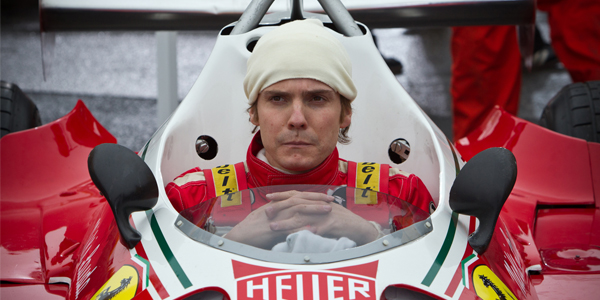
As a general rule sporting biopics tend to twist more of the facts than your usual dramatisation, exploding slight disagreements into all out rivalry and omitting plenty of events that work contrary to the film's argument. Rush, Ron Howard's F1 movie that looks at the James Hunt-Niki Lauda rivalry, is no different. Obviously the central conflict, which was played up massively by the press coverage at the time, is exaggerated for dramatic effect (although not as extreme as in some cases) and the scene where Hunt beats up a reporter is obviously fabricated (it works narratively, but feels rather out of character), but that's all in service of the story. And when the film so perfectly replicates the thrill (or rush, badum-tish) of racing its inaccuracies that are easy to overlook. One element that would have surely improved the emotional punch of the movie that was ignored was a further look at Lauda's relationship with his wife, Marlene. Not only is their divorce after the film's end completely skirted over, but in real life she initially struggled with the disfigurement Lauda received after his famous crash at Nürburgring. Given how much focus was put on the personal lives of the two protagonists it seems like an odd thing to cut out. Maybe it was to give film Lauda more of a happy ending.

2. "The Ship Has Sailed" - Saving Mr. Banks
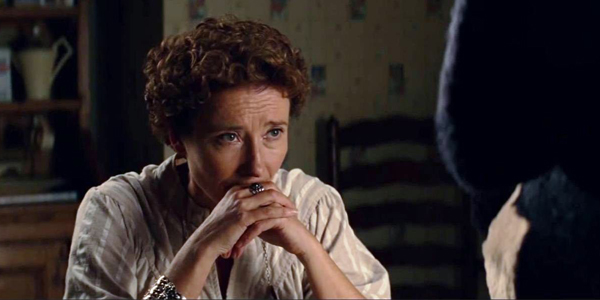
Showing Walt Disney drinking and implying he was smoking was a surprising move in Saving Mr. Banks. Produced by Walt's studio, it didn't shy away from showing their founder not as a pure, squeaky-clean God (although they didn't go as far as to even hint at recognition of his anti-semetic views). It was a move that made the film more than just an attempt to increase the DVD sales of Mary Poppins; it was, for the most part, a probing look at P.L. Travers that didn't over-simplify the clashes she had over the famed adaptation of her beloved novel. The one part where it begins to stumble is the premiere of Poppins, which Travers has been convinced to attend by Disney himself; in a complete reverse of the popularly accepted version of events she is reduced to tears by how the film kept the main theme of Mr. Banks (and by proxy her father) alive. It smacks of corporate led revisionism, which the rest of the film had so successfully avoided. That works within the film; we know Travers found elements of the film that she liked, albeit later on. But what's annoying is that one of the best parts of her showdown with Disney wasn't featured. Finding the animation obnoxious she told Walt he had to remove it, to which he replied "Pamela, the ship has sailed". Dismissive and almost unfulfilling, it's a more downbeat sense of compromise that would have tied up the themes of the film, but was probably too much for the studio.

1. The Worse Stuff - The Wolf Of Wall Street
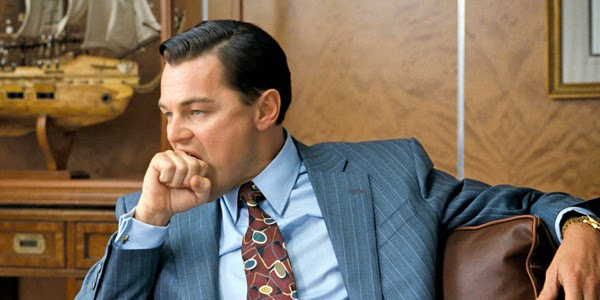
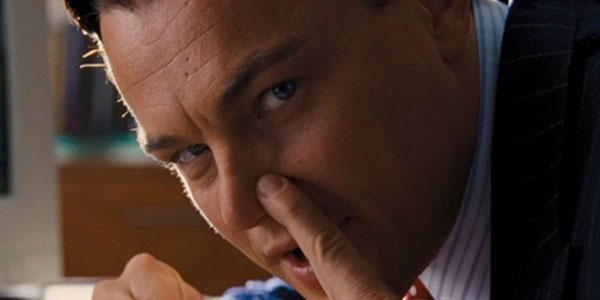
The Wolf Of Wall Street boasted heavy drug use, more uses of the f-word than any other non-documentary, multiple overtly sexual scenes, a protagonist who beats up his wife and a shot of a quaaluded up Jonah Hill masturbating. It's fair to say it was pretty extreme. There was some of the typical Oscar controversy surrounding the film claiming it glamorised the lifestyle of Leonardo DiCaprio's Jordan Belfort, with some critics finding its idolising of the criminal obscene. That's a little far when it's clear the film is playing the old Goodfellas bait-and-switch (see point ten) and aiming the finger directly at the people who aspire for that lifestyle. But, according to the real Belfort himself, things could have been "much worse". In an interview with The Hollywood Reporter, the stockbroker-cum-prisoner-cum-motivation speaker stated that while there was the odd bit of dramatic license the film is not only accurate in its depiction of his lifestyle, but in some regards Scorsese held back. Given that he sounds genuinely remorseful about the darker parts of his past it doesn't sound like this is school-boy posturing. Which begs the question - what was left out? From what he says it sounds like it was mostly drug-related. Whatever it was, it seems that a film that contains the phrase "cerebral palsy stage" could have been even more OTT. Which of these moments would you have like to have seen on screen? Join the discussion in the comments below.

Contributor
Contributor

Film Editor (2014-2016). Loves The Usual Suspects. Hates Transformers 2. Everything else lies somewhere in the middle. Once met the Chuckle Brothers.