9 Major Retcons That Saved Iconic Movie Franchises
Changing the fabric of the universe to pretend X-Men 3 didn't happen? Worth it.
Despite how easy Marvel Studios makes it look with the MCU, weaving together one cohesive storyline across a movie franchise isn't easy. No matter whether it's comprised of three movies or 22, a series' trajectory is always bound to change. New directors and writers might come in and decide they don't like the tools they've been left to work with, or bankable characters and plot threads producers thought would be instant hits might not resonate with fans - nothing is ever set in stone.
Retcons are an easy way to change the course of a franchise's trajectory though, allowing filmmakers to wave away prior developments in favour of new ideas that completely reshape previous movies. Admittedly, this approach to filmmaking can make franchises feel a little slapdash, and sometimes it even retroactively ruins parts of the prior movies, seen in the boneheaded decision to make Sandman Uncle Ben's real killer in Spider-Man 3.
Once in a blue moon, however, the filmmakers will come up with a retcon that actually solves a problem that could have tanked a franchise if not addressed, even if it's as brash as pretending as entire films didn't happen.
9. Only The First Halloween Movie Happened - Halloween (2018)

The Halloween franchise's continuity is an absolute shambles. Or, perhaps more aptly, it was a shambles. What started off as a pretty straightforward slasher story continued to pile on the narrative developments, with Laurie and Michael Myers being revealed as brother and sister, Myers himself being the focus of a cult which used magic to make him murder, and at least two soft reboots which told you to ignore some things (but not everything) from the previous flicks.
In a sensible movie, the recent Halloween instalment decided to just put all that baggage to one side and pick up where the first movie left off. In this new timeline, Michael and Laurie aren't related, Michael himself is still human and he's spent the past 40 years locked up. By returning to the simplistic formula established by the first flick, the filmmakers were able to hone in on what made it so compelling in the first place. Consequently, Michael's mystique was recaptured, and Laurie Strode was given the strong follow-up storyline so many writers had tried and failed to give her before.
It's not the first movie in this franchise to make amends for past mistakes, and the inevitable sequels might ruin the mythology yet again, but for now, it's in the most promising place in decades.
8. Thanos' Motivation - Avengers: Infinity War

Thanos had so much to live up to in Avengers: Infinity War. His presence had been teased for six years, with Marvel constantly talking about how he'd be the big bad to end all big bads, far scarier than anyone the superhero team had faced before. They had a bit of an uphill battle to make this a reality though, as the studio not only needed this character to be compelling enough to justify six years of teasing, but also to rectify Marvel's so-called "villain problem".
Somehow, they pulled it off, and Thanos' story and characterisation was the surprise draw of 2018's blockbuster. Interestingly, they achieved this by moving away from the character's comic-book origin, which they originally set up all the way back in The Avengers. In that post-credit sequence, it's said that to face The Avengers would be "to court Death", which seemingly referenced his comic-book motivations to wipe out half the universe in order to impress the female embodiment of death. Yeah, it was only inferred, but the dude was practically winking at the camera for fans to go nuts over the prospect of this happening.
Of course, Thanos has a far more personal reason to be doing what he's doing in Infinity War, to the point where many fans even sympathised with his plan. That probably wouldn't have happened if his main end goal was to get laid.
7. Jason Isn't Dead - Friday The 13th Part 6: Jason Lives

Horror movies of the 70s and 80s lived or died by their main villain. This golden era birthed horror icons that still persevere to this day, to the point where, even if you haven't seen the original films, you've probably considered dressing up as either, Jason, Michael or Freddy for Halloween.
For some reason though, the studios who owned these characters always tinkered with the idea that the franchises could exist without them. In the case of Friday the 13th, that mentality resulted in Jason being killed off "for good" in the fourth movie. The sequel focused on a copycat killer, firmly establishing that the original machete-wielding maniac was very much dead and buried, and ending with a tease that Tommy - Jason's killer - would now be the one behind the iconic hockey mask.
Of course, fans didn't take well to these cheap imitators. Although he wasn't even the first antagonist in the franchise, he'd become intrinsically tied to it by this point, and the sixth movie brought him back from the dead in glorious fashion. Ignoring the Tommy storyline from Part 5, this instalment was all about Jason's revival, finally acknowledging the killer's supernatural abilities.
6. A Nightmare On Elm Street Being A Fictional Movie - New Nightmare

As most slasher franchises tend to do, A Nightmare on Elm Street completely went off the rails in its final few instalments. Though it started out as a terrifying-as-all-hell group of films that, yeah, did have a wise-cracking murderer at the helm and featured actual dream wizards, by the end the films ventured so far into the fantastical that they were closer to comedies than anything else - and not in a good way.
Fortunately, New Nightmare capped the series off in a way that made sense of all those missteps. Original director Wes Craven returned to save the series from Freddy Krueger being remembered as someone who featured in Wizard of Oz parodies and killed his victims with a Nintendo Power Glove, by putting him in the real world. The flick retconned all seven prior flicks - even his seminal original - as being actual movies, events which happened in a fictional universe.
A chunk of the actors reprised their roles as fictional versions of themselves, forced to face off against the real Fred Krueger, whose spirit had been confined in the franchise but was now free. It was meta as all hell.
While throwing away decades worth of story was contentious, New Nightmare effectively saved this iconic horror villain from himself.
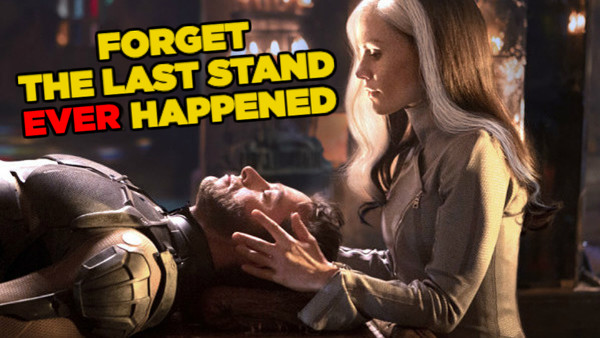
5. Writing The Last Stand Out Of Existence - X-Men: Days Of Future Past

In era where the MCU has (almost) flawlessly created an interconnected franchise of characters and stories that all function together in the same seamless continuity, Fox's X-Men series has continued to struggle at even getting direct sequels to make sense with each other.
It's always been a bit spotty, but it was X-Men: The Last Stand and Origins: Wolverine that really confused things. The former wrote the series into a bit of a corner, with big characters like Xavier, Cyclops and Jean Grey being killed off and a bunch of mutants including Magneto and Mystique being stripped of their powers. Origins: Wolverine made things even more confusing, acting as a prequel that muddied Logan's backstory to the point where it didn't line up with what we'd seen previously.
Throw in a prequel series that further confused matters (Why is Mystique a good guy now, and Charles' adopted sister when they barely speak to each other in the original trilogy?) and there needed to be some kind of major solution before it got totally out of control. Fortunately, Days of Future Past was up to the challenge.
Blending the original trilogy cast with the new prequel stars for the first time, the movie ended with a timeline reset that wrote the entirety of X3 out of continuity. It solved the problems of the mainline series, but it's a testament to how messed up everything was that the characters had to change the fabric of the universe to pull it off.
4. The Death Star's Fatal Flaw - Rogue One

It was a long running joke in the Star Wars community that the Death Star was taken out pretty easily for a weapon which could literally blow up planets. A bit like a video game boss, the idea that there was such a large, obvious weakspot waiting to be exploited felt a little bit contrived, and an oversight that the Empire would never have made.
In perhaps the best bit of retroactive continuity ever however, Rogue One made that slight goof the entire point of its plot. The Star Wars spin-off is all about how the Rebels got the secret codes to the Empire's new super-weapon, and the legacy of the man, Galen Erso, who was forced to build it. It turned out that the Death Star's weakspot wasn't just an unlucky accident, but actually an act of sabotage on behalf of Erso, who conveyed the information to his daughter before dying.
Recontextualising the entirety of A New Hope, this added detail imbues that movie with even greater significance, and solves one of the most infamous "plot holes" in cinema history.
3. The Secret Apprentice - Jigsaw

The Saw series kind of ended unceremoniously. After seven movies, the finale to this winding horror narrative was supposed to take place over two films which were condensed into one, with the final reveal showing that Gordon, the original Saw survivor, was the "true" mastermind following John Kramer aka Jigsaw's death.
In classic horror movie fashion the series returned for another instalment a few years later, this time an apparent soft reboot that would act as the base for even more sequels. While it was confirmed that Kramer would appear in some form - potentially even back from the dead - nobody had any clue as to how closely the new flick would follow the original timeline.
Focusing on the first ever Saw trap, the twist was (because there's always a twist) that the movie actually took place across two different timelines, one set after the events after the last film, and one set prior to the very first. Kramer was still dead, and it was actually his secret apprentice (seriously, how many does this dude have?), a man he took pity on during his first ever attempt at a "game", who's adopted the Jigsaw moniker.
It was just as convoluted as anything from the previous series, but it kicked the franchise into gear enough to justify another upcoming sequel - even if it didn't make any sense as to why this character had never even been mentioned before now.
2. Tokyo Drift Being A Prequel - Fast And Furious

Fast and Furious is one of the few movie franchises to actually get better with each subsequent sequel. It only really kicked into gear with the fifth film, Fast Five, after transforming from a series all about street racing into a bona-fide action phenomenon starring some of the biggest names in Hollywood. Even better, it fully embraced its weird continuity, bringing back bit characters and turning them into stars, while crafting one of the most charmingly convoluted storylines in action movie history.
But Fast and Furious probably wouldn't have been able to achieve any of that without first deciding after the fact that the third film should be a prequel, rather than a sequel. Tokyo Drift was a damn fine film considering it starred none of the original actors and at one point was even considered to be shipped out straight to DVD. While mostly ignoring the other flicks, it did continue the story in its final scene, which showed Vin Diesel returning to seek justice for the death of one of the movie's major characters, Han.
Because they'd written themselves into a little bit of a corner, the filmmakers jumped back in time from the fourth movie onwards, which allowed them to bring back characters, play with the story and fill in the blanks. Watching all the Fast movies in chronological order becomes a nightmare, but at this point - like with franchises such as Saw - figuring out what happens when is part of the fun.
1. Restarting The Franchise - Bumblebee

After five Transformers movies, it's perhaps unsurprising that the series' mythology ended up a little... messy. By the time it got to the last Michael Bay-helmed flick, the Transformers themselves were shown to be part of humanity's most significant historical moments, helping construct the pyramids and even being involved in World War 2. What started out as a (relatively) simple story about two warring robot factions who could transform into sick cars and jets eventually became about grand inter-galactic wars and secret government conspiracies.
By that point, the mythology had become so bloated it was hard to keep track of, something which the recent Bumblebee attempted to resolve. Focusing on a single Autobot this time around, the spin-off effectively worked as a soft reboot of the mess Bay had made by the end of his run, re-establishing a timeline where Bumblebee was the first contact humans ever had with these otherworldly beings.
It wrote out the weird alternate history the last movie revelled in, bringing the story back to Earth and thus making the Transformers themselves feel personal again for the first time in over a decade. From the tone to the story to the action, it's clear Travis Knight and co. were trying to distance themselves as much as possible from the mainline flicks, and taking the post-credit scenes into account, clearly establish a new timeline that the franchise can build from.