9 More Films "Based On True Stories" That Missed Out The Best Part
Truth is often stranger than fiction, and sometimes it's just better, too.

In Hollywood, the idea of truth is a very fluid term. It's now got to the stage where movies that carry the formerly reassuring "based on a true story" or "inspired by real events" is fake news. Audiences know full-well that artistic licence trumps commitment to the fact and it really doesn't help matters that what qualifies "based on" and "inspired by" has become increasingly tenuous.
It used to be the case that when you're watching The Rock barbecue human hands in Pain & Gain and a message comes up reiterating that really, this definitely happened, you'd believe it. And the film-makers knew as much, just as they knew that making such claims sounds an awful lot better than "this kind of, sort of happened with another guy in a different way." Upselling on reality is just part and parcel of making a compelling story, and the truth should never get in the way.
But what about those films that do the opposite, setting up a story that actually misses out key details that would fully improve their version of events. And though you'd think that was a rare thing, but we've been here before, and there are far more examples out there of writers and directors taking liberties that leave you scratching your head.
Truth is often stranger than fiction, and sometimes it's just better, too.
9. Frank Abagnale's Last Escape - Catch Me If You Can

The finale of Catch Me If You Can already includes one daring - and barely believable escape - when Leonardo DiCaprio's Frank Abagnale escapes a plane, but the real life story featured a plot by Abagnale so ridiculous it was left out entirely. After all, nobody would have believed it.
Because he was generally in the charge of moron, Abagnale fortuitously had his detention commitment papers forgotten and was mistaken for an undercover prison inspector and given privileges and food far better than the other inmates. Naturally, he took advantage and instructed a friend to pose as his fiancée and smuggle him a business card belonging to "Inspector C.W. Dunlap" of the Bureau of Prisons she'd procured.
She also gave him another business card of the FBI agent in charge of Abagnale's case that she had doctored with her own phone number. Abagnale then "revealed' that he was indeed an undercover prison inspector (he had the card to prove it) and asked to speak to the FBI agent urgently, handing over the doctored card.
Naturally, the phone number rang his accomplice rather than the agent and the pair were allowed to organise an unsupervised meeting, which led to Abagnale fleeing to Washington. He even survived another near miss capture by again posing as an FBI agent when he was recognized by a motel registration clerk. Why that part of the story was left out is anyone's guess.
8. Doss' Heroism - Hacksaw Ridge

If you watched Mel Gibson's surprisingly excellent Hacksaw Ridge, you would have been struck by not only the ultra-violence and unflinching portrait of the horror of war (which is a TINY bit fetishised for the sake of drama), but also by the extent of Desmond Doss' heroism.
The conscientious objector - played by Andrew Garfield in full Oscar-fishing mode - infamously saved 75 wounded soldiers under the nose of an enemy desperately defending the ridge, despite refusing to use a weapon. His was a compelling, disarmingly humanist story that deserved telling and it's actually done justice to by Gibson.
Still, it cut out some of the extent of his heroism. Doss was actually injured four times in Okinawa (including an injury that ended his career as a carpenter post-War), and took seventeen pieces of shrapnel to his body. But it takes more than bullets and white hot metal to shake the commitment of a man like this.
In the wake of saving his comrades from a grenade - which caused the grievous shrapnel injuries - Desmond was being carried away on a stretcher through an enemy tank attack. But he spotted another soldier injured, so rolled off the stretcher and crawled to him to help treat his wounds. For his efforts, he was rewarded with a Japanese sniper's bulelt, which shattered his left arm and forced him to crawl 300 yard unfer fire using a splint made from a rifle stalk.
Gibson apparently left it out because it would have been too unbelievable.
7. It Could Have Been Fixed - Battle Of The Sexes

There's a lot about the central match in Battle Of The Sexes that sounds like it's too ridiculous to be true - particularly in terms of the ludicrous pageantry of the event and the rampant, cartoonish sexism on show - but if anything, the film actually played down how silly it all was. With a little more commitment to reality, it might have been even more enthralling, in that respect.
But more egregiously left out was the fact that the match may have been fixed, which changes the dynamic of the story entirely. Sure, Bobby Riggs admitted after his defeat to Billie Jean King that he underestimated his opponent, but a Tampa golf instructor called Hal Shaw later revealed that he had overheard renowned mob attorney Frank Ragano discussing a plan to fix the match with crime bosses Santo Trafficante Jr and Carlos Marcello.
Riggs - whose son admitted he had ties to people involved with the mafia - allegedly had major gambling debts and Shaw's allegation also suggested that he would have had them paid off in return for throwing the game, to allow the mobsters to win handsomely.
King, has since dismissed the fixing claims as the vengeance of bruised masculine ego, but not even entertaining the idea vaguely cost the film some quality.
6. Ron Woodruff's Bisexuality - Dallas Buyer's Club

In Dallas Buyer's Club, Matthew McConaughey plays something of a red-neck version of Ron Woodroof, the hard-drinking, racist, homophobic good-old boy who contracts AIDs from a junkie prostitute. He then goes on a journey of enlightenment and ends up being significantly less of a dick as he helps smuggle drugs into the US to help fellow sufferers.
It's a compelling image and the idea of him being "as racist and homophobic as they come," in the words of screenwriter Craig Borten for the purposes of drama and personal growth, but it changed history. According to multiple accounts of friends, his ex-wife and his physician, he was bisexual
The film didn't need to be about him learning not to be a sh*t - it should have been about the extraordinary lengths a normal, bisexual man went through to get on and to help. That's a far better story and it deserved to be told.
5. Amon Goeth Was Too Evil For The Nazis - Schindler's List
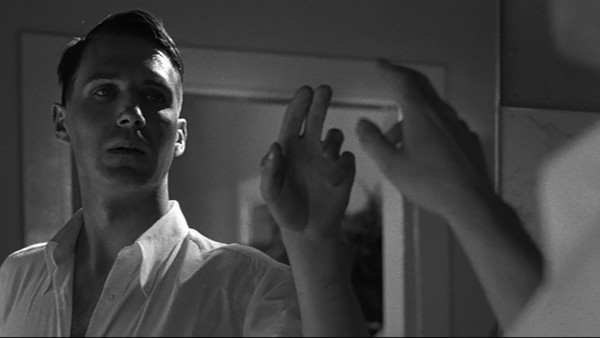
Watching Ralph Fiennes' stunning performance as Nazi camp commandant Amon Goeth is an ordeal in itself: he's a monstrous, terrifying figure who rules his camp with a devastating iron fist, sadism and a callous disregard for humanity. He's seen killing Jewish prisoners without a second thought, sniping a couple from his balcony and killing a boy for cleaning his house poorly.
But Goeth was actually worse in real life than his depiction in the film. He was a sadist of untold capacity, notoriously torturing and killing daily and murdering 50 Jews on Yom Kippur in 1943. He reportedly also set his dogs on prisoners, watching them eaten alive.
The key missing point about him in the film expresses just how unthinkably evil he was. Though he claimed during his trial that he was only carrying out orders, Goeth was no longer in charge at Płaszów when he was arrested. He has been relieved of his position in 1944 for mistreatment of prisoners (among other crimes), which the film ignored despite how much more it sold him as a villain of such unthinkable magnitude.
4. The Aftermath - To Hell And Back
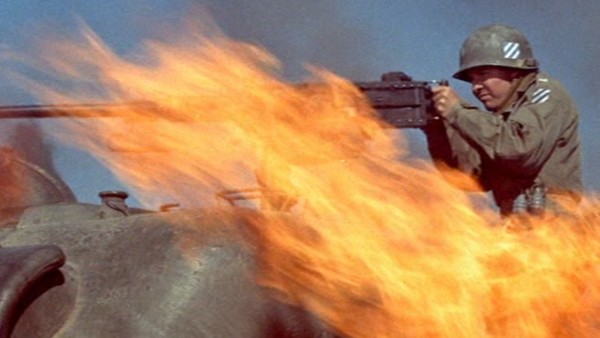
The story of Audie Murphy's heroic stand against the Germans was famously captured in To Hell In Back, which starred Murphy himself. Like Hacksaw Ridge, his tale began with derision - he was a tiny, lightweight man whose military credentials were met with scourn - but turned into incredibly heroism through his acts.
Having already cemented his reputation as a bad-ass with one one-man stand against several Nazi machine gun nests, snipers and infantry, Murphy earned his stripes in the Colmar Pocket campaign shown in the film. But the events were downplayed at his insistence - including the fact that he had malaria the whole time - as he didn't want anyone to think he was making it up to look cool.
It's a stunning story, but it's arguably not as important as what followed the war. He was diagnosed with Shell-Shock and admited to sleeping with a loaded gun under his pillow. Struggling with depression and insomnia, he became addicted to the prescribed medicine and beat it by locking himself in a motel for a week and going cold turkey.
And not content with already being a hero, Murphy then set about becoming one for veterans in his position, advocating for PTSD in soldiers and calling for the government to research the emotional impact of combat experiences, and to extend health care benefits to war veterans. That really ought to have been part of his chronicled story.
3. General Mulan - Mulan

In Disney's Mulan, the drama of the titular character's deceptive infiltration of the army in place of her father is amped up thanks to an undercurrent of sexism that oppressed women as secondary citizens. That's why it's such a disgrace when her deception is discovered and why it's absolutely fine for her to be left to die of her injuries as a traitor on a mountainside.
Eventually, she's accepted when she thwarts the evil Shan Yu's plan to assassinate the Emperor and defeats him in single combat and the city's inhabitants bow to her, breaking the patriarchy for a moment.
The reality is that Chinese society was not as oppressive of women at the time and there was no law calling for execution of any woman impersonating a man to serve in the military. The real legend of Mulan actually painted her as much more of a bad-ass, whose discovery was met with a cool response from the army.
In fact, Mulan had risen to the rank of general by that point and saved the empire already before she VOLUNTARILY revealed herself, which is definitely a better story.
2. Edward The Nazi Sympathizer - The King's Speech
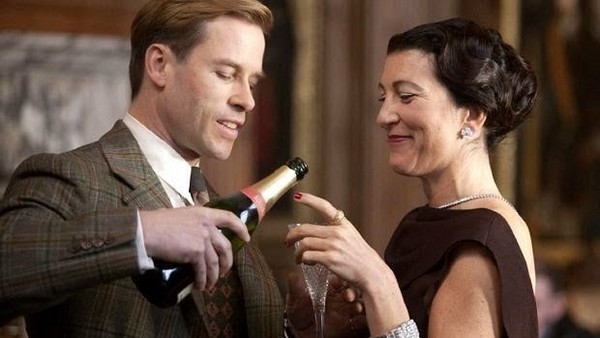
It's pretty good that King Edward VIII didn't stay on the British throne for longer. By all accounts, he was in fact, a pretty big sh*t. And a Nazi-fancying one at that.
He's positioned as something of a villain in The King's Speech as it was his teasing that partly led to his brother's speech problems escalating (as well as the innate stress of being a royal and having to accept the advances of radio technology as an increasingly large part of his role).
Other than being a bit of a selfish rogue and tease, Edward is otherwise mostly harmless aside from mentioning some support for Hitler's government. Not enough to cause much more than a bit of a pained gulp, though.
Real life Eddie was WAY more problematic, and the film missed a trick to really show the complexity of the contemporary perception of the Nazis. He was actually a full-blooded fascist who dined with Hess, met Hitler, discussed overthrowing his brother when Hitler successfully beat his enemies and allegedly wanted Britain to be bombed effectively to bring an end to the war he blamed on “the Jews, the Reds and the Foreign Office.”
Such a barbed portrait probably wouldn't have fit with the film's royalist spirit, to be honest.
1. The Heroes Were A Bit Rubbish - Zulu

Zulu was an incredible film that we should all thank for giving us Michael Caine in a heroic role that would propel him to stardom. Its story - of 150 British soldiers (some of whom were wounded) holding off the entire Zulu warrior army at Rorke's Drift in 1879 - is pretty much the archetypical heric last stand movie.
According to that movie, the heroes were typically impressive specimens: tall, chiseled and handsome. But in reality, they were a rag-tag group who would have actually fit with Hollywood's usual fascination with quirky underdogs sticking it to the man.
Caine's character Lieutenant Gonville Bromhead was a deaf cast-off, Colour Sergeant Bourne was a 5 feet 6 inch 24-year-old and Private Henry Hook was a Methodist preacher and teetotaler rather than a drunk. How this group of chancers fending off the combined might of the Zulu army wasn't more of a story is beyond logic.
Which other untold stories belong on this list? Share your picks below in the comments thread.