9 Movie Mistakes & Plot-Holes Confirmed By The Creators
Star Wars directors admitting their mistakes?! Whatever next?!

Most of the time, even the worst films tend to be defended by those who have a vested interest in them. Sure, after some time has passed and they no longer to stand to make any money from it some actors might change their tunes to accept the films possibly weren't their best work, but it's rare they'll ever be specific.
Film-makers or writers are even more protective of their past work. A director might unconsciously admit a mistake by making changes in a Director's Cut, but they'll rarely acknowledge a mistake or a plot-hole. That's like a confession of your own shortcomings as an artist.
Still, it's not entirely unheard of...
9. Riot Doesn't Drain His Host - Venom

As surprises go, Venom's performance at the box office in 2018 was pretty incredible. Even with the early hint of its popularity in the record-breaking number of views its first trailer picked up, precisely nobody could have predicted that it would have made almost $900m, particularly after the critics basically savaged it.
Several issues were suggested as potentially ruinous, with particular focus on the script, which sways between absolutely ridiculous and a little boring, to be honest. Tom Hardy is great and when he's most off the chain, he's even more rewarding, but it's a performance that glosses over some holes.
At least Ruben Fleischer can admit one of his biggest mistakes though. As fans had pointed out, Fleischer admitted that he dropped the ball with villainous symbiote Riot. According to the rules established immediately, symbiotes can only bond with a host for a limited time before the host is drained completely and they have to hop to another one.
Somehow, though, the old Asian woman Riot bodyjacks somehow survives for six months through a time jump, and Fleischer held his hands up:
"Our idea was that Riot was using up the life force of whoever he took, and then he jumped ship when he'd consumed them and then find a new host to carry him further on his journey... That's one of our few – hopefully – few logic bumps."But we had to have a passage of time in order to show Eddie's downfall, and that was the one thing that doesn't entirely track."
8. Leia Hugged The Wrong Person First - Star Wars: The Force Awakens
People love to nitpick Star Wars these days. It's fair enough, blame George Lucas for it. But sometimes the complaints are entirely earned, which probably isn't the kind of thing Rian Johnson wants to hear.
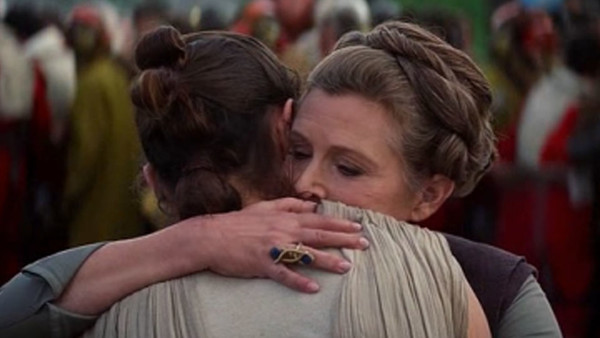
It was actually his predecessor who held his hands up on a mistake in The Force Awakens though. In the wake of Han Solo's emotional death, we see Rey, Finn and Chewie morosely return to the Resistance base where Leia awaits. Like the good, supportive mother that she is, she gives them hugs to share their pain.
The problem is that she does it in the wrong order, choosing to hug Rey, who she's never met, before Chewie, who she fought actual star wars alongside. Abrams spoke to SlashFilm to admit his foul-up, despite explaining that Chewie was busy helping Finn get medical aid and that Leia and Rey would have known about each each:
“That was probably one of the mistakes I made in that... Had Chewbacca not been where he was, you probably wouldn’t have thought of it. But because he was right there, passed by Leia, it felt almost like a slight, which was definitely not the intention.”
At least he's got a medal now though, eh?
7. The Continuity Mess-Up - Guardians Of The Galaxy Vol 2

We can thank James Gunn's activity on social media for a few things - some good, some bad - but if it wasn't for it, we wouldn't have had the entertaining Q+A sessions he was so happy to put together answering questions about his MCU work candidly.
In one such session, Gunn copped to messing up his timeline in Guardians Of The Galaxy Vol 2. In one of that film's many mid-credits sequences, it's established that Stan Lee is indeed a Watcher, confirming a fan theory, and explaining all of his cameos.
Lee is seen explaining his different "characters" to the Watchers and mentions being a FedEx delivery man. The problem, as Gunn admitted, is that Vol 2 came before Civil War, where that particular cameo appeared, in the timeline:
"...Yes, I know I made a mistake. I'll own up to my mistake because Guardians of the Galaxy 2 theoretically happens in 2014... And Stan Lee in the movie says, 'That time I was the FedEx guy,' which is what he is in Civil War. I screwed up; I wasn't thinking, But I'm going to say that probably Stan Lee used the guise of a FedEx guy more than one time."
6. How Did McClane Recognise That Hans Was A Terrorist? - Die Hard

The most interesting plot-holes in cinema are the ones that are opened by a careless editing mistake that leaves evidence of a deleted sequence or subplot. Consider the mention of the Giant Squid in the finale of The Goonies, which was cut and subsequently makes Data look like a fantasist as well as a bit of a weirdo.
The same sort of thing happens in Die Hard and screenwriter Steven E de Souza admitted to the mistake decades after it was released. In the scene that sees John McClane meet Hans Gruber, who pretends to be Bill Clay, the former somehow knows out of the blue that he's one of the terrorists.
How did he do that? Was it incredible police work? Magic? Nope, it was because of a mistake as de Souza confessed that the terrorists all wearing the same watches was key as McClane worked out they were important.
But a key scene that showed they had the same watches and had syncrhonised them at the start of their plan was cut because the script was changed to include the ambulance for the terrorists' escape plan. When that scene was shot, there was no ambulance, so it had to go.
“[Director] John [McTiernan] says to the editor, ‘Get the scissors in there. Cut as soon as you can when they get off the truck so we don’t see there’s no ambulance.’ Now without ‘Synchronize your watches’ all of these moments where Bruce looks at these guys’ watches makes no sense.”
That's how McClane knows to take the bullets out of the gun, he spots the Tag Heuer, but we were never to know:
“When Bruce offers the cigarette to Alan Rickman, Bruce sees the watch,” de Souza said. “You see his eyes look at the watch. That’s how he knows that he is one of the terrorists.”
5. Over-Reaching (And Using The Wrong Characters) - Spider-Man 3

This is not so much a plot-hole as the reason why the plot didn't entirely work.
Somewhat infamously, Sam Raimi had plans for Spider-Man 3 (and indeed the abandoned 4) that didn't come to fruition. After he'd made the incredibly popular, incredibly brilliant Spider-Man 2, Raimi was pressured by the studio to make an even more fan-friendly, marketable movie and he made some creative decisions against his better judgement.
For years, it was assumed that Sony had tied Raimi's hands, insisting he had to make their ideal version of Spider-Man 3, but eventually, the director admitted that it was his fault in trying to up the ante.
"I think [raising the stakes] was the thinking going into it, and I think that's what doomed us. I should've just stuck with the characters and the relationships and progressed them to the next step and not tried to top the bar. I think that was my mistake."
Raimi was apparently told to include Venom by the studio, and while it's hard to argue with your paymasters on any front, Raimi accepted the mistake of using characters he simply didn't care enough for:
"... It's a movie that just didn't work very well. I tried to make it work, but I didn't really believe in all the characters, and so that can't be hidden from people who loved Spider-Man. If the director doesn't love something, it's wrong of them to make it when so many other people love it."
4. The Editing Was Poor - Star Wars Episode One
There's some suggestion that George Lucas thought that The Phantom Menace was somehow his modern magnum opus. That he'd meticulously constructed his ideal launch-point for the new Prequel trilogy and every brush stroke was carefully placed. That's why he gets so much heat for Jar Jar Binks and the very conscious decision to appeal to younger, more willing to spend audiences.
But it turned out after The Phantom Menace that Lucas knew he'd made a mistake. He should probably have realised he'd made several, to be honest, but a start's a start. As captured in a making-of featurette included on The Phantom Menace DVD, Lucas reacted to seeing a rough cut of the movie by saying he "may have gone too far in a few places."
Ordinarily, that would be fine, but by this point, it was too late. After editor Ben Burtt talks about how jarring it is to go from lamenting Qui-Gon Jinn's death and watching Queen Amidala escaping to Jar-Jar Binks being goofy. It's a lot to take, which Lucas seemed to agree with:
"It's a little disjointed. It's bold in terms of jerking people around. I may have gone too far in a few places."
He goes on to say that while it's supposed to be intense, it's done "a little more extremely than I have done it in the past... if it's intense for us, a regular person is going to go nuts."
Baiscally, he spends the period after the screening lamenting the issues with the editing, while admitting it's too late to do anything about:
"It boggles the mind. I have thought about this quite a bit, and the tricky part is you almost can't take any of those pieces out of it now, because each one takes you to the next place. And you can't jump because you don't know where you are."
You can see the screening sequence in the featurette below at the 54:42 mark:
3. The Mystical Nonsense - Transformers: Revenge Of The Fallen
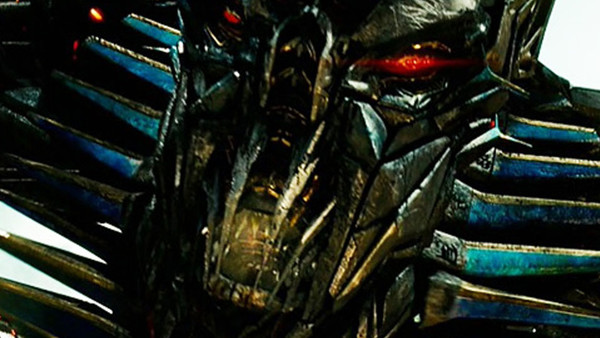
If there's a mistake in the second Transformers movie you'd probably like Michael Bay to apologise for or even admit, it'd probably be either putting robo-testicles on a Transformer or the introduction of racist stereotypes Skids and Mudflap. But at least he showed some self-awareness for the first and worst sequel.
It took him two years, but he admitted to Empire that at least one thing about it was "crap":
"We made some mistakes. The real fault with [Transformers: Revenge of the Fallen] is that it ran into a mystical world. When I look back at it, that was crap. The writers’ strike was coming hard and fast. It was just terrible to do a movie where you’ve got to have a story in three weeks. I was prepping a movie for months where I only had 14 pages of some idea of what the movie was. It’s a BS way to make a movie, do you know what I’m saying?"
Famously, screenwriters Roberto Orci and Alex Kurtzman were locked in a hotel room to write the script by their own admission, which is never a strong foundation. But this is probably the easiest one for any film-maker to admit, considering how successful Revenge Of The Fallen was at the box office. If anything, the shoddy writing process gave Bay and his team even more room to neglect usual, good film-making practices without compromising audience reaction.
2. Screwing William McMaster Murdoch - Titanic

Talking of movies that made an eye-watering amount of money, you'd be forgiven for thinking that there'd be very little James Cameron would regret about Titanic. But his fascination with the ship and the disaster means that it's a creative itch he can never stop scratching.
Even decades after it was released, Cameron continued to return to the wreck, both physically and spiritually, and special featurette Titanic: 20 Years Later With James Cameron explored his continued fascination and his quest for answers to some of the things he'd assumed to fill in gaps in the real story:
"I think they wanted something that was more movie-centric, and I was happy to continue with some of the forensic stuff we had never really resolved. So we decided that the framework of the documentary would be, ‘What did we get right and what did we get wrong?'”
It turned out that Cameron was wrong in a few details, but none he'd really remake the film for. But he did also concede that his treatment of the ship’s first officer, William McMaster Murdoch, who was seen to shoot a passenger and then himself, was a regrettable misstep:
“That still remains controversial. I suppose I took a creative liberty with that particular character, who wasn’t a character — he was a person and had living descendants at the time the film was released. I think it’s important to remember that this was relatively recent history, and there are still people affected by it.”
1. The Joker Should Have Been The Villain - Suicide Squad

The ire with which a certain element of DCEU fans react to any criticism of the earlier releases is sometimes pretty exhausting. This is a community unwilling to accept that anything at all is wrong with Batman v Superman, Suicide Squad or Justice League (at least in the imaginary form of Zack Snyder's Cut, anyway).
And yet, one of the DCEU's film-makers doesn't agree. David Ayer, who directed Suicide Squad (albeit while negotiating serious studio "suggestions") confessed after it was released that he made a flawed movie, even if the critical mauling it got hurt him.
He responded to a fan on Twitter who called it a "masterpiece" to concede that he should have made the Joker his main villain and given the characters "the stories they deserve." He's right, no matter how divisive Jared Leto's performance as Mr J was.