9 Movie Plot Holes Confirmed By The Creators
Homecoming's timeline makes no sense at all.

In the age of online film discourse, a movie doesn't need to be out in the wild for more than a day before fans are eagerly breaking down every single narrative thread in pursuit of apparent "plot holes."
And while this will often result in over-enthusiastic film buffs wringing their hands over unexplained details which, in fact, are anything but plot holes, there are certainly times where the evidence is undeniable.
Though most directors, writers and producers won't even bother addressing these issues, every so often a filmmaker will take on the challenge, usually by way of ass-pulling an excuse out of nowhere to cover their hides.
But rarely, we'll actually see a major creative force behind a movie fall on their sword and concede that, yes, their movie is saddled with an undeniable plot hole.
Now, for the most part these holes aren't so overwhelmingly obvious that they destroy one's ability to enjoy the movie on its own terms, but the moral victory of convincing an artist they screwed up speaks for itself...
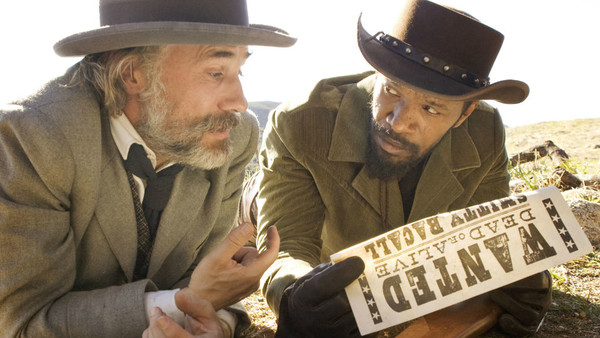
9. Django & Schultz's Needlessly Convoluted Plan - Django Unchained
The Plot Hole
HuffPost Entertainment’s Mike Ryan wrote a review of Quentin Tarantino's Django Unchained in which he noted the "convoluted" nature of Django (Jamie Foxx) and Dr. Schultz's (Christoph Waltz) plot to rescue Django's wife Broomhilda (Kerry Washington) from the clutches of Calvin Candie (Leonardo DiCaprio).
Ryan quite successfully argued that Django and Schultz took a number of unnecessary risks by pretending to be Mandingo trainers in order to infiltrate Candie's plantation and liberate Broomhilda. Above all else, the least-risky option was probably to simply offer to buy Broomhilda straight-up.
The Confirmation
Tarantino caught wind of Ryan's review and ended up inviting him to meet for an interview, in which the director initially brushed off Ryan's argument, insisting that there would be no natural "in" for the men to meet with Candie.
But Ryan quite ingeniously fired back, "Schultz is German. He heard on the street that there’s a German-speaking woman being prostituted and now he’s interested. Something like that?"
At this point, a slightly flabbergasted Tarantino let his guard down and, for just a moment, confessed that Ryan actually had a point. He said, "No, no, no … that, you know, I mean … that … could work. That could work. Here’s the thing: you’ve got to think of who Schultz is. I see where you’re coming from. But it does sound like you’re thinking what you would do. You have to think about how Schultz would respond."
So while Tarantino ultimately defends the end result as a behaviour consistent with Schultz's character, he nevertheless accepts that Django and Schultz cooked up a far more theatrical plan than was really necessary.
And as long as Ryan shall live, nobody can take that away from him. Bravo.
8. Why Didn't Ariel Write Prince Eric A Note? - The Little Mermaid

The Plot Hole
In Disney's classic animation, mermaid Ariel makes a deal with sea witch Ursula to receive a human form for three days, at the expense of her voice.
If she can receive true love's kiss from Prince Eric within this period of time, she'll become a human forever, but if not, she'll revert to mermaid form and belong to Ursula forever more.
Naturally, winning someone's heart is much more difficult without the ability to speak, but did it never occur to Ariel to, you know, write things down for Eric?
It sure would've streamlined her quest, and given that we see Ariel write her name when she signs the initial pact with Ursula, we know that she's not illiterate.
The Confirmation
Former Disney animator Tom Sito eventually chimed in on the matter, stating that shortly after the movie's release, a child asked him the very same question, prompting the animators in attendance to all nervously smile at one another and swiftly move things on.
That's as glaring an admission of guilt as you've ever going to get from the production itself. Ultimately it comes down to "because movie", which given the film's considerable charm is basically fair enough.
7. DNA Evidence Would've Solved Everything - Basic Instinct

The Plot Hole
Paul Verhoeven's legendarily smutty 1992 erotic thriller revolves around Catherine Tramell (Sharon Stone), a serial killer with a knack for slaughtering her lovers mid-coitus.
And yet, despite DNA testing being routinely deployed in crime scenes since almost a decade before the movie's release, there's not even a whisper of it during the investigations of Tramell's murders.
Had the cops simply asked for a DNA sample from Tramell, she would've been easily linked to the opening murder of rocky Johnny Boz (Bill Cable), given her intimate involvement with Boz at the time of the killing. Done and dusted.
The Confirmation
Screenwriter Joe Eszterhas actually wrote the movie in the early 1980s, back when DNA wasn't yet a prominent part of criminal investigations, and he later admitted that not doing so resulted in a major plot hole.
6. The Timeline Mistake - Spider-Man: Homecoming

The Plot Hole
Early on in Spider-Man: Homecoming, a title card indicates that the bulk of the film takes place eight years after The Avengers' iconic Battle of New York.
And yet, given that The Avengers takes place in 2012, this would place Homecoming as transpiring in 2020, some four years after Captain America: Civil War (set in 2016), which clearly isn't the case. So, what gives?
The Confirmation
Numerous parties have since come out and acknowledged that this date was wrong.
Avengers: Infinity War co-director Joe Russo called the stated time jump "a very incorrect eight years", while co-producer Eric Carroll said of the timeline, "It will be a little off. There will be some awkward chronology in that the movie comes out almost two years after Civil War, but we’re playing it like it’s a few months after Civil War. It hasn’t been years since Tony called him back. It came down to one of things we wanted to do was keep him in high school as long as possible."
In the fallout of all the confusion, Marvel Studios honcho Kevin Feige also came out and assured fans that an official canon timeline would be released in the near-future, and that it was last year.
The timeline confirmed that Homecoming indeed took place in 2016, a few months after Civil War. And with that, relief...
5. The Confused Origins Of The Joker's Grills - Suicide Squad

The Plot Hole
This is an especially interesting plot hole because it's one created not strictly by the movie itself, but by pre-release marketing.
Before Suicide Squad hit cinemas, writer-director David Ayer confirmed that the reason for The Joker (Jared Leto) wearing dental grills was that Batman (Ben Affleck) had punched them out after the Clown Prince of Crime murdered Robin.
Seems simple enough, right? Except, Harley Quinn's (Margot Robbie) title card in the movie briefly notes that she was an accomplice in Robin's murder at The Joker's hands, despite the movie plainly showing us that The Joker already had his grills when he was first introduced to Harley as psychiatrist Harleen Quinzel.
It's ultimately just another of the many messes this movie cooked up, but a frustrating lapse in logic all the same.
The Confirmation
A fan asked David Ayer about this on Twitter last year, and to his credit, he actually responded, noting that "the timeline was changed later after filming."
Given that the film was notoriously edited into oblivion with only limited input from Ayer himself, it's probably safe to say that he's not terribly thrilled about the creation of this plot hole either.
4. The Illogical Time Travel Mechanics - Looper

The Plot Hole
In fairness, the vast majority of time travel movies suffer with logical issues if you think about them hard enough, and Rian Johnson's (mostly brilliant) sci-fi thriller tries to hand-wave the perceived plot holes by basically telling the audience not to over-think things and just enjoy the ride.
But of course, over-thinking is what the Internet and sci-fi fans do best, so there are a few moments throughout the movie which stick out as just a tad too liberal with the laws of cause and effect.
The body of Seth (Paul Dano) being mutilated in the past and continually re-configured in the present is one such issue, but surely the most egregious plot hole concerns the marital status of Old Joe (Bruce Willis).
After meeting with Young Joe (Joseph Gordon-Levitt) in a diner, Old Joe notices a scar on his arm spelling out the name "Beatrix", a waitress who works in the diner. Young Joe carved the name into his own arm to prove the causality to his older version, despite the ramifications this would have for Joe's future life.
For starters, wouldn't Joe's eventual wife see the name Beatrix scrawled into his arm and maybe think twice about getting into a relationship with this man? That's what we call a red flag, folks.
The Confirmation
In an interview about the movie, Johnson was asked about the tricky nature of constructing a time travel narrative and gave a fairly diplomatic response, conceding the importance of tight character logic over pure A-to-Z storytelling coherence. He said:
"If you think about the classic photo thing in Back to the Future, it really makes no sense at all. If you are changing the timeline and your brother wasn't going to be born, it's not like he wouldn't start disappearing limb from limb from the photo, suddenly another reality would exist where that photo never would have been taken and the piece of paper would vanish. But that doesn't bug me in the slightest, because when you're watching it, you understand what's going on, and it makes sense to you. Even if thinking about it, it seems not logical, makes sense on a storytelling level. And that at the end of the day is what matters."
He's clearly talking about his own movie as much as he is Back to the Future, and it's honestly a pretty solid defence.
3. The Literally Nonsense Plot - The Snowman

Yes, that's the face of a man who knows he's in a movie that just about nobody - director, actor, editor or audience - can make sense of.
The Plot Hole
This isn't so much a singular plot hole as it is a movie that's rife with narrative inconsistencies and literal gaps in its plot.
Despite being helmed by Tomas Alfredson (Let the Right One In), boasting an enviable cast including Michael Fassbender, Rebecca Ferguson, Charlotte Gainsbourg, JK Simmons, Val Kilmer and Toby Jones and being adapted from a hit Jo Nesbø novel, The Snowman landed an abominable (sorry) 7% on Rotten Tomatoes.
This is a rare film where almost nothing makes sense, beyond the initial hook of Fassbender's boozy detective Harry Hole hunting down a serial killer.
Scenes don't connect to one another properly - especially a baffling subplot involving a heavy re-dubbed Val Kilmer - and it's clear to anyone watching that the end result has been hacked to pieces in the editing room.
And that's exactly what happened.
The Confirmation
Shortly after the film was released, Alfredson stated that the production was rushed, and up to 15% of the movie wasn't actually shot due to scheduling issues.
He said, "Our shoot time in Norway was way too short. We didn’t get the whole story with us and when we started cutting we discovered that a lot was missing...It’s like when you’re making a big jigsaw puzzle and a few pieces are missing so you don’t see the whole picture."
That's a pretty apt description of the final cut, which plays out with all the grace of a small toddler trying to force puzzle pieces to fit together.
2. Why Didn't NASA Train Astronauts To Become Drillers? - Armageddon

The Plot Hole
Michael Bay's legendarily bombastic sci-fi disaster flick sees NASA sending a team of working-class deep-core drillers into space to destroy an asteroid before it collides with Earth.
Armageddon never purports to be a smart movie, but its endearingly nutty premise does nevertheless require the audience to overlook one glaring logical deficiency.
Why on Earth would NASA train a squad of drillers to become astronauts rather than, you know, train a group of astronauts to become drillers?
Clearly one of those things is less physically and mentally taxing than the other, and given the limited time window available, would be far easier to achieve.
The Confirmation
On the hilarious DVD commentary for the movie, Ben Affleck actually mentions that he illustrated this plot hole to Bay, who promptly urged him to "shut the f*** up."
If that's not an admission of wrongdoing, what is?
Again, this is one of those high-concept "because movie" plot holes, and because the film's overwhelming stupidity accounts for 90% of its entertainment value, it's more-or-less forgivable enough.
1. Who Killed The Chauffeur? - The Big Sleep

The Plot Hole
Despite being consistently regarded as one of the greatest film noirs of all time, Howard Hawks' 1946 classic The Big Sleep is also accepted to be one of the most flatly nonsensical great movies ever made.
You see, The Big Sleep is all about its style, its deliciously witty dialogue, its characters and its smouldering performances - especially Humphrey Bogart and Lauren Bacall - while narrative logic is clearly much less of a concern.
In possibly the only time in human history that anyone will ever compare this movie to The Snowman, it similarly leaves gaping holes wide open in its story, particularly pertaining to the murder of chauffeur Owen Taylor.
The audience quite reasonably expects this mystery to be resolved by film's end, but it ultimately gets swallowed up by the narrative's headache-inducingly confusing nature. And though this might seem like an intentional flourish on the part of Hawks and his screenwriters, it formed a major bone of contention during shooting.
The Confirmation
While filming The Big Sleep, Hawks noted the bizarre, unsatisfying lack of resolution with regard to Owen's fate, and so he along with screenwriters William Faulkner, Leigh Brackett and Jules Furthman attempted to come up with their own solution to the murder.
Hawks even went to the trouble of sending the original novel's author, Raymond Chandler, a telegram asking if he could shed some light on the situation, for despite the novel also not revealing Owen's fate, a 1946 movie adaptation would certainly have been expected to dispense with the ambiguity.
Chandler said of receiving the message, "They sent me a wire, asking me, and dammit I didn’t know either!"
And so, Owen's unresolved death formed yet another legendarily confusing part of a movie that hasn't let a loose grasp on coherence stop it from becoming one of the most beloved genre films of all time.
What do you make of these plot holes? Were the filmmakers right to admit it? Shout it out in the comments!