9 Movie Prequels That Created Massive Plot Holes
Did they even watch the earlier movies?

When the sequel pool has dried up and it's too soon for a reboot, the go-to trick to extend a movie franchise is a prequel. It's a money man's dream - an origin story for a beloved character shedding light on familiar events allows a studio to take a property in a new direction without having to make any drastic creative decisions.
Got a troublesome actor? Recast them with a younger alternative. Worried about the film making money? You can just pander to the same people who loved what came before. Not got an idea for a plot? Don't worry - having the original movie as an end point excuses a lack of narrative purpose. Perfect!
Of course, because they're rarely born from a genuinely creative place, most prequels fail to escape the original's shadow. Every element of their being is down to a previous success, and more often than not they're happy to bask in that familiarity. By far the most sinful example is The Thing, which purported to show what happened at the Norwegian camp briefly visited in John Carpenter's classic, but wound up being little more than a retread of the original's plot.
Oh, there's exceptions, but they really are special cases. Better Call Saul is already a solid example of how to get the balance of pleasing fans and providing a new experience - featuring cameos and feeling very much in the same world, while still charging forward with a new story - but that that's remarkable highlights how far off the mark most precursors are. And, at the end of the day, even good prequels can make that biggest of errors - plot holes. The originals set a timeline and hint a backstory, then these earlier stories barge in and mess it all up.
Here nine crazy examples of prequels that unwittingly made massive continuity errors.
9. Kirk's Multiple Birth Dates - Star Trek
Because it starts with time travelling Romulans making a reality alternate to the timeline Trekkies had obsessed over for decades, J.J. Abrams reboot of Star Trek is for the most part pretty impenetrable to plot holes. Any continuity snafus can be simply explained as a part of the butterfly effect of red matter and wormholes and sci-fi mumbo jumbo.
Why is everyone impressed by Kirk beating the Kobayashi Maru in The Wrath Of Khan if he very publicly cheated? F**k you, time travel. Why does Spock show interest in Uhura at all in this version? F**k you, time travel. Why does Khan de-age and develop kung-fu skills? F**k you, time travel.
Of course, this go-to explanation doesn't work for moments that occur before the timeline divergence. And even thought that only amounts to a couple of minutes of screen-time, a major inconsistency rears its head.
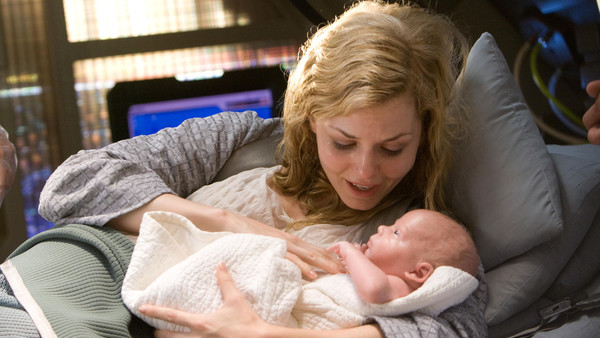
In the Prime Universe (the Shatner version) Kirk was born on Earth on March 22, 2233, but in the alternate reality he's born in in space a couple of months earlier. Sure, he's born after Nero attacks and the timelines split, but his mother was going into labour before - this isn't some premature birth started at the time splinter point (if that baby was born two months early then the kid in American Sniper looked real).
So even though he created an in-universe reason to allow him to mess with the canon as he pleased, Abrams still wound up mucking up the carefully crafted Star Trek world.
8. The Jedi Hide Wearing Their Normal Clothes - Star Wars Episode I: The Phantom Menace
For all the bitching and moaning about the not-as-bad-as-you-think Star Wars prequels, there are comparatively few plot holes in Episodes I-III. There's plenty of moments where George Lucas tinkers clumsily with the mythology (Jedi can't have relationships, Anakin made C-3PO) but for the most part they don't discredit anything that was stated before - they just subvert fan expectations.
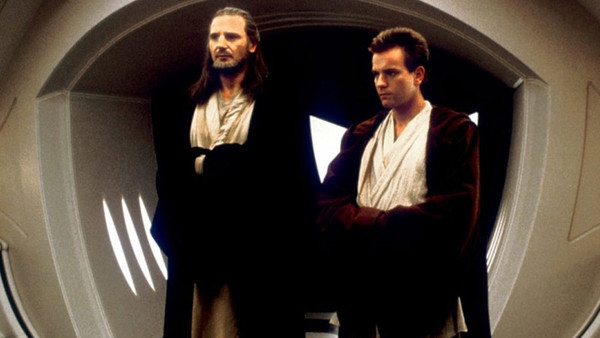
Still, this flippant approach to the mythology isn't without damage. One of the most accepted additions to the Star Wars canon the prequels made was that the standard Jedi garb was the moth-eaten cloths worn by Yoda and Obi-Wan whilst in exile. This kinda makes sense (they are space monks after all), even if it stopped the movies providing some more exciting costumes in favour of pre-existing, and thus audience-friendly, designs, but it creates a pretty major issue - when the Jedi Order is attacked and the few survivors have to go into hiding, why do they continue to wear their Jedi robes?
Obviously Obi-Wan wore what has been ret-conned to be Jedi robes in A New Hope because he wanted to blend in on Tatooine, but now it looks both incredibly coincidental (the poorest people in the galaxy dress like their greatest warriors) and pretty dumb; surely the first course of action when going into exile would be to not look like Jedi.
7. What's Up With All The Different Bishops? - Alien Vs. Predator
Alien's "haunted house in space" plot is kicked into action by a typically current idea - corporate interference. The nefarious Weyland-Yutani company are hunting a perfect alien organism for military gain, putting their everyday space workers on the chopping block for it.
Alien Vs. Predator takes a big dump over that idea, revealing Yautja were breeding Xenomorphs on Earth back in the early 21st Century. But that logic leap pales in comparison to this doozy, all brought about because Lance Henriksen needed a paycheck.
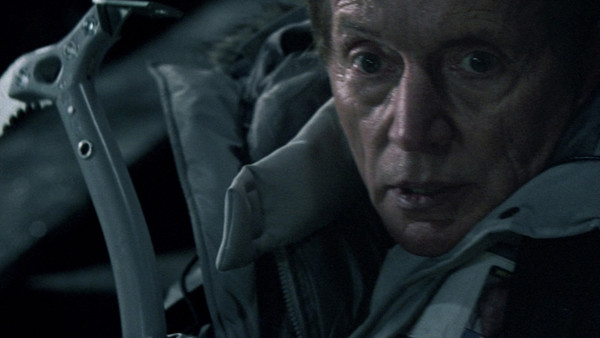
Henriksen first appeared as Bishop, the series only nice and unannoying android, in Aliens, then popped up at the end of Alien 3 as Bishop II, the human creator of his earlier character. That's already a bit tenuous, but fits the timeline thereabouts. Ten years later, he became the only cast member from the original run of either Alien or Predator to play a part in the dismal franchise versus. Here he was playing Charles Bishop Weyland, founder of the Weyland corporation, a role whose in-joke potential couldn't make up for all the questions it made.
Why was a regular android designed on and named after a CEO from centuries ago? Why did Bishop II bleed when smacked with a pipe if he wasn't a human? How did Henriksen go from The Terminator and Aliens to this?
You could argue the movie, and it's somehow worse sequel Requiem, aren't canon, but that betrays all the clear effort put in to make the events gel with both series' established continuity. Prometheus furthered the whole confusion, throwing in an unconvincingly aged Guy Pearce as Peter Weyland. But as, by Ridley Scott's own admission, that film was a prequel to only his original Alien, disregarding anything that came after (even Aliens - there's no Yutani), that's more a ret-con that a plot hole.
6. Mike Forgets When He Met Sully - Monsters University

The biggest mistake a prequel can make is to view the original movie as the most important adventure, being concerned more with building to that film's beginning instead of offering up a fun experience on its own.
Monsters University doesn't have that problem. Although it plays a little with audience expectations (oh look, baddie Randal started off as a geek) and sows seeds fans know are paid off later on, the central story itself - Mike and Sully's misadventures as college - is standalone and feels like an arc that can work independently of what everyone knows that follows. That doesn't mean a few plot holes aren't created along the way to its frank and realistic conclusion (turns out trying your best isn't all that's needed for success).
In the seminal Monsters, Inc., one-eyed ball Billy Crystal quips to purple-haired kitty John Goodman that he's been jealous of his good looks "since the fourth grade." And, when University kicks off with a fourth grader-age Mike on a school trip, it appears like the film's going to pay off on this throwaway line. Except it doesn't. The pair meet as college freshmen and no Elementary School antics (although would the mega successful Sullivans have sent their kid to the same school as Wazowski) are mentioned. What gives?
Director Dan Scanlon actually addressed the fan uproar over this minor inconsistency, stating original helmer Pete Doctor gave him the go-ahead to twist the pre-existing events for the good of the story. Although, knowing that wouldn't fly, he did provide an alternate explanation - the fourth grade line is a common monster phrase. Yeah, right.
5. Who Built The Motel? - Psycho IV: The Beginning
A prequel to Psycho is totally unnecessary. Alfred Hitchcock's horror masterpiece more than satisfyingly explains how Norman Bates became a killer without ever slipping into flashback. Any origin story needs to go full-out reimagining (see Bates Motel) or resign itself to being pointless.
Predictably, when the rebooted franchise (two straight-up slashers were made in the eighties) halted, the fourth movie decided to explicitly show those roots, told by a rehabilitated yet fearful Norman Bates calling up a radio show (yeah, if that first draft idea didn't give you a clue, it's not very good). The film dramatises all the spiel from the psychiatrist at the end of the original (domineering mother, murdering female visitors and all that), but there's one mistake that suggests the filmmakers forgot to check the rest of the movie for hints at backstory.
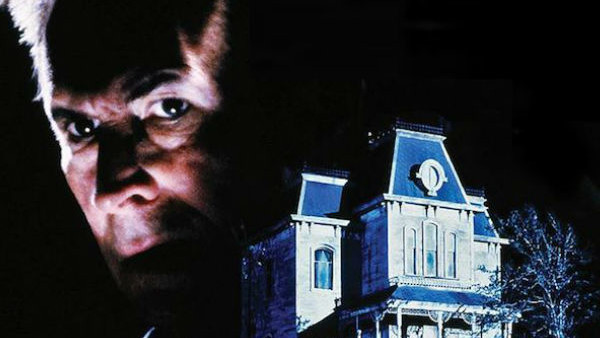
In Psycho, when chatting with future-victim Marion Craine, Norman reveals it was his mother's lover's idea to build the motel, yet when the boyfriend turns up in The Beginning the worst place to stay in the tri-county area is already up and running.
On a side note, the made-for-TV movie completely disregards Psychos II and III, with no mention of the love-triangle between Norman's parents and his aunt, although given how dire things were by the third film that's less of a crime.
4. Skynet's Plan Knows About Kyle Reese With No Explanation - Terminator Salvation

Substantiating plot holes in The Terminator series is hard. The mechanics of its time travel changes from movie to movie (the first three films say it's a Grandfather paradox, that the future can be changed and that the future can only be postponed, respectively) and so any issues across the franchise can be brushed aside with ease. It's somewhat ironic, then, that the film that presents an irrevocable plot hole is the one that doesn't engage with the whole time travel conceit that makes the series so cool.
Salvation, simultaneously a prequel and sequel to the earlier movies, spent much of its time trying to convince the world that Sam Worthington was interesting, but the film's actual plot dealt with Skynet kidnapping Kyle Reese. It at first seems to be an attempt to kill him and erase future son John Connor from existence, but a third-act twist reveals he's actually serving as bait in a complex scheme to kill the resistance fighter.
Now the idea of tricking John's all well and good, but that's an impossible sequence of events in the Terminator timeline - Skynet don't know Kyle Reese is John's father. If they did, why would they keep insisting on sending robots back before Sarah Connor is impregnated, essentially creating their nemesis. That's been an accepted fact throughout the series that's suddenly replaced without an attempt at an in-film reason.
It gets even worse when you look at the broader strokes. If Skynet know about their time travel future, then why are they even bothering trying to kill John in the future (something they did at the start of Rise Of The Machines, with minimal impact).
Getting rid of Kyle, or even moving towards their typical killing method, would have a much bigger impact on the war.
3. How Did This World Become The World Of The Original Trilogy? - X-Men: Days Of Future Past

Continuity was such a major sticking point in the X-Men series that Days Of Future Past was ostensibly there to eject the extraneous elements and present a more freed-up story. Given that the series ran on the same timeline since the first movie kickstarted the superhero genre back in 2000, that the various prequels created some major plot holes along to way is somewhat forgivable.
Strangely, in getting rid of those, Days Of Future Past introduced its own confusing logic leaps - there's no explanation of why Magento retained his powers, how Wolverine got his metal claws back or why Professor X is alive in his own body - although it's the historical elements that create genuine plot holes, rather than simple unanswered questions.
Before Wolverine jumped back to alter the flow of events, it's implied events were heading towards the world seen in the original trilogy. But how? Charles is a powerless recluse, Magneto is in an impenetrable jail and Mystique is starting a genuine war, three situations that have no sign of abating in a way to lead to the calm-ish world of the original trilogy. Seriously, are you meant to believe the Sentinels were active during all of Magneto's misadventures, yet were never called upon?
Some things are even more confusing; between the seventies and the present Bolivar Trask goes from being a dead Peter Dinklage to an alive Bill Duke (obviously the latter appearance is just an easter egg, but, given Marvel did Infinity War based off the Gauntlet appearing in the background of one shot of Thor, that's no excuse).
There's plenty of other disparities present across the X-Men movies (particularly Origins: Wolverine and First Class), but as Days Of Future Past was trying to clear it all up, making more mistakes stands out.
2. Rafiki Teaches Contradictory Lessons - The Lion King 1½
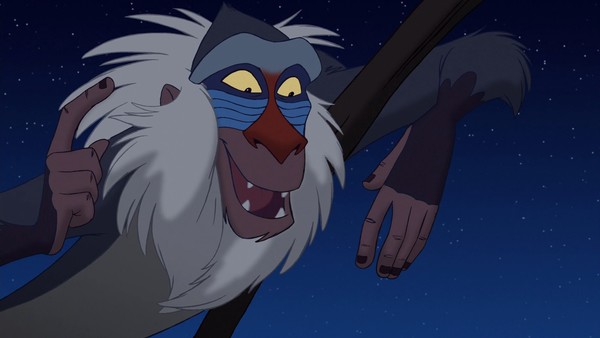
Ah, Disney sequels. The rushed straight-to-video cash-ins from the nineties and noughties that saw the Mouse House desecrate the legacy of their animated classics. It's so hard to treat these films as anything other than a depressingly unfunny joke - The Fox And The Hound 2 sees Todd and Copper join a band of singing dogs and try and win a talent contest - but out of the lot, The Lion King is the one that comes across the most sincere.
The second actually widens the mythology of lion politics, while the third acts as an alternate take on the original events with a sense of reverence. Well, for the most part.
The Lion King 1½ is Rosencrantz And Guildenstern Are Dead to The Lion King's Hamlet, detailing the lives of Timone and Pumba before they met Simba, seeing them unwittingly interact with earlier events in the movie. Like Star Wars, it changes assumed facts - the duo only been living in their oasis home for a short time before the lion cub shows up - but one key plot point goes too far and mucks the whole series up.
Turns out Hakuna Matata, the catchy manta that totally waylays Simba from facing his past, was given to Timone by Rafiki, the same baboon who'd later convince an older Simba it was the wrong outlook on life.
Does he just go around throwing out random, contradictory philosophy to anyone who'll listen?
1. Gandalf Is A Forgetful Idiot - The Hobbit Trilogy
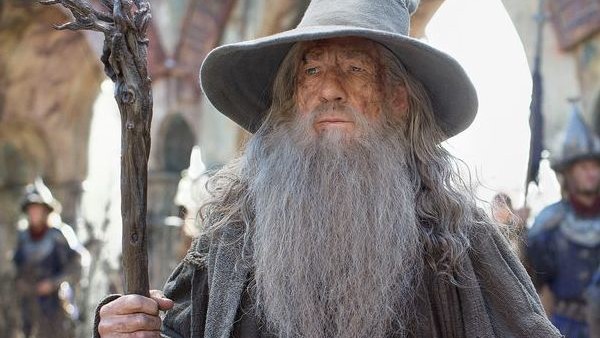
Even thought there were plenty of The Lord Of The Rings characters not in Tolkien's original book present in The Hobbit films, for the most part that didn't mess with their later appearance (bar Legolas being sent to find Aragorn). In fact, the character Jackson bungled the most was one of the few who actually plays a prominent role in both stories and shouldn't require any contrivances to adapt.
At the start of The Fellowship Of The Ring, Gandalf has to rush off to Minas Tirith to research Bilbo's One Ring and comes to the shocking conclusion that Sauron has returned. Which really shouldn't be all that surprising, given he faced the Necromancer in The Desolation Of Smaug, correctly identifying him as the Dark Lord.
Sure, Saruman said he was going to take care of him in The Battle Of The Five Armies, but, after Galadriel at full power could only banish him, shouldn't Sauron's survival have been a major possibility? Although to get to that point he's already shown some uncharacteristic stupidity.
In his final scene of The Battle Of The Five Armies he reveals to Bilbo he knows he has a magic ring (because one more nod to The Lord Of The Rings was needed) and clearly doesn't buy the hobbit's claim of losing it, yet shows genuine surprise when Mr. Baggins whips it out sixty years later at his birthday. Did he just forget everything that happened with the Lonely Mountain?
Gandalf isn't an all-knowing being, shown to have his vices and logical oversights in the original trilogy, but after The Hobbit it looks like he followed Radagast's lead and spent the intervening years eating memory-altering mushrooms.
Which other prequels created terrible plot holes? Share yours down in the comments.