9 Movies That Helped Solve Real Life Crimes
Movies usually depict crime, but every once in a while, they help solve them...

Movies about crimes, crooks, detectives, and scammers are some of the most interesting to watch, as they often detail the steps taken to pull off a crime or catch a criminal. Hollywood has known this for years, and there's no shortage of fictional tales of daring detectives and conniving criminals.
Then there are the movies, documentaries, and series that deal with true crime. For many people, those are far more fascinating because they cover something that actually happened. Typically, these sorts of projects detail solved cases and can include killers' confessions and other material not widely available to the public.
For the most part, all of the crimes have been solved, and the bad guys have been locked away in prison. It's fascinating, but it doesn't do much to help the victims of those real-world crimes. It would be far better if such a documentary or film helped solve a crime instead of only describing them.
It's incredibly rare, but documentaries about various criminals and their crimes have influenced the courts. Cases have been overturned and new evidence has been revealed from a rare interview or background shot. These ten films helped change the outcome of the criminal justice system, and hopefully, they won't be the last.
9. The Thin Blue Line (1988)

The Thin Blue Line is a 1988 documentary made by Errol Morris about the trial and conviction of Randall Dale Adams for the murder of Texas police officer Rober Wood. Morris became interested in the case and wanted to document it for its numerous "inconsistencies, incongruities and loose ends."
The documentary is different from most, as it features no narration whatsoever. All it does is show interviews with those associated with the case, evidence, and reenactments reconstructing events as they are described by a witness.
The title of the film was chosen, as it "refers to what Mr. Morris feels is an ironic, mythical image of a protective policeman on the other side of anarchy." The movie ultimately came to a different conclusion than the trial, and it features an admission of innocence made by the original suspect, David Harris.
By the time The Thin Blue Line was released to prove Adams' innocence, he had "spent 12 years in prison before his conviction in the murder of a Dallas police officer was thrown out largely on the basis of evidence uncovered" in the documentary.
8. Paradise Lost: The Child Murders At Robin Hood Hills (1996)

In 1993, three youths were charged in the sexual mutilation of three prepubescent boys for an alleged satanic ritual in West Memphis, Arkansas. The three who were charged became known as the West Memphis Three, and their story was documented in the 1996 film, Paradise Lost: The Child Murders At Robin Hood Hills.
The film follows the trials of the three, beginning with Jessie Misskelley Jr. due to his confession. The documentary covered the trial while emphasizing the point that the confession was likely coerced. The trial resulted in Miskelley's sentencing to life in prison.
The film then follows the trial of Damien Echols and Jason Baldwin with a similar narrative, using interviews with the defendants, their families, and attorneys. The victim's families were also interviewed. While the film was being made, the stepfather of one of the victims gave the filmmakers a knife with blood on it.
The filmmakers turned the knife over to the police, but the DNA was determined to be inconclusive. Following the film and its sequels, a decision was made by the Arkansas Supreme Court regarding the nature of the uncovered DNA evidence.
The West Memphis Three made a deal with prosecutors to enter Alford pleas (pleading guilty while insisting on one's innocence), making it possible for their release with time served.
7. Inside Job (2010)

Inside Job is a documentary covering the late-2000s financial crisis. It was instrumental in highlighting several corrupt business practices and policies at Columbia Business School that directly affected the U.S. economy and others overseas. Before the movie, the school was exempt from disclosing consulting deals — even toxic ones.
The film explores the changes made in the policy environment, as well as banking practices that gave rise to the financial crisis. At its core, the documentary is about "the systemic corruption of the United States by the financial services industry and the consequences of that systemic corruption."
In terms of the documentary's standing as a film, it was widely regarded as a critical success. Roger Ebert described it as "an angry, well-argued documentary about how the American housing industry set out deliberately to defraud the ordinary American investor," and it won several prominent awards, including the Academy Award for Best Documentary Feature.
The movie's effect in helping to solve a crime stems from shining a light on the corruption and toxic business practices that resulted in the financial crisis. Because of this, the movie effectively forced Columbia to disclose all of its deals, no matter how bad they might be for business.
6. Tales Of The Grim Sleeper (2014)

Tales Of The Grim Sleeper is a 2014 documentary about Lonnie David Franklin Jr., better known as the Grim Sleeper. Franklin was responsible for at least ten murders, one attempted murder, rape, and sexual violence. He earned his nickname after taking a 14-year break in his killing-spree between 1988 and 2002.
Franklin was arrested in July 2010 as a suspect, and he remained in custody until his trial was set following several delays. His trial began in February 2016, and by May of that year, he was convicted for killing nine adult women and one teenage girl, though he was believed to have more victims.
Tales of the Grim Sleeper focused on the deaths of young African American women in Los Angeles and was highly critical of the Los Angeles Police Department. The film suggested that Franklin was able to kill as many women as he did because the LAPD ignored and failed to investigate the deaths.
The movie managed to help uncover previously unknown victims, which helped to speed up the trial. There was little doubt Franklin would be convicted for some of the murders he was charged with committing, but the film did help provide information that reinforced the verdict and got there quickly.
5. The Staircase (2004)

The Staircase is a French TV miniseries made by Jean-Xavier de Lestrade, which documents the trial of Michael Peterson, who was convicted of killing his wife, Kathleen. Filming for the series began shortly after Peterson's indictment, and Lestrade was given a wide birth to interview numerous people while also placing cameras in the courtroom.
Peterson's case stemmed from his wife's death, which he described as an accident following her tumble down the stairs. Investigators instead believed that he bludgeoned her to death with a blow poke, which was missing from the home. Peterson was found guilty of murder and sentenced to 98.5 months in prison.
The film was incredibly detailed, and it included interviews with jurors following the conviction and their belief that the blood-spatter evidence was the incriminating factor in their decision. The details uncovered by Lestrade were compelling, and the film helped to raise awareness, leading to an appeal.
The judge ruled that a critical prosecution witness gave misleading testimony regarding the "strength of bloodstain evidence." Peterson submitted an Alford plea (a guilty plea while still asserting innocence) to a reduced charge of Manslaughter. At the conclusion of his appeal, he was sentenced to time already served and was set free.
4. Gimme Shelter (1970)

Just about every movie that helped solve a crime or overturn a wrongful conviction is a documentary, but that can't be said of 1970's Gimme Shelter. The movie follows the Rolling Stones on their 1969 tour, as it was filmed by Albert and David Maysles, and their cameras captured more than music.
When the Stones were closing out their tour, they hosted a free concert at Altamont Speedway, and it was a nasty day. Fights broke out during performances, and Mick Jagger was punched in the face soon after arriving. Additionally, Jefferson Airplane's male singer, Marty Balin, was knocked out by a Hells Angel.
Things continued to worsen from there, and when several people attempted to rush the stage, Merideth Hunter was stabbed multiple times by a Hells Angel. He was killed as a result, the cameras caught everything, and the clip made it into the final cut.
The captured video revealed that Hunter had a handgun and was stabbed twice in the back by Hells Angel, Alan Passaro. Because Hunter pulled a gun, Passaro's subsequent trial ended in acquittal on the grounds of self-defense, but had the video not recorded evidence of the handgun, he almost certainly would have been convicted.
3. The Jinx (2015)

The Jinx: The Life and Deaths of Robert Durst is a 2015 HBO docu-series about Robert Durst, a New York real estate heir accused of murder. The series was made by Andrew Jarecki, Marc Smerling, and Zac Stuart-Pontier. Jarecki had previously directed All Good Things, and Durst was a fan.
After all, the film was based on his biography, so Durst reached out to Jarecki for an interview. All-told, Durst sat for more than 20 hours over the course of several years, which helped provide a great deal of content for the miniseries. It was the first time Durst had cooperated with a journalist.
The series covers the unsolved disappearance of Durst's wife Kathie in 1982. More recently, the 2000 execution of writer Susan Berman, and the death and dismemberment of his 2001 neighbor Morris Black. In all cases, Durst was suspected but maintained his innocence in the first two and "self-defense" in the third.
Through the production, the filmmakers uncovered evidence implicating Durst in the crime. Before the final episode aired, he was arrested. The series helped provide the evidence needed to finally convict him in the form of two letters. Still, it didn't hurt that they caught him saying, "What the hell did I do? Kill them all, of course," when he thought his microphone was off.
2. A Death In St. Augustine (2013)
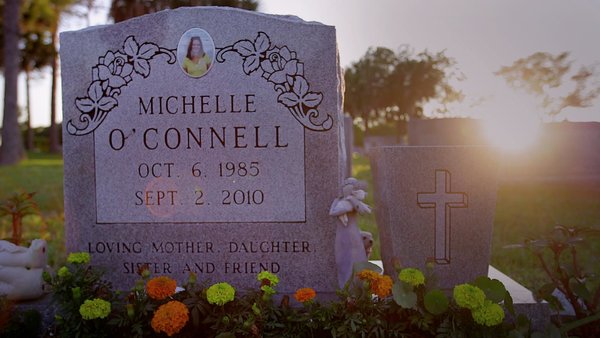
A Death In St. Augustine is a 2013 episode of the hit series Frontline, which details the death of Michelle O'Connell in 2010. She was found with a gunshot in the mouth in the evening she broke up with her abusive boyfriend, who was a police officer.
His gun was found next to her body, and the Sherrif's office concluded that the death was from suicide. Questions lingered over the likelihood of suicide while suspicion lingered around her ex-boyfriend, but because the investigation concluded with that ruling, the case was pretty much closed.
O'Connell's sister said that "The word suicide was thrown around right off the bat without any investigation." Furthermore, the investigation only amounted to around three hours of work, and the family wasn't buying it. The lack of clarity over the case helped elevate it to the attention of Frontline.
When the episode "A Death in St. Augustine" aired in 2013, it directly impacted the case. When the episode and the event were brought to the attention of then-Florida Governor Rick Scott, he ordered the case of Michelle O'Connell to be reopened.
Further evidence strongly suggested her death was a homicide, but various missteps by investigators didn't result in charges being filed. As of late-2020, that remains the case, though the O'Connell family continues the fight in any way it can.
1. Capturing The Friedmans (2003)

Capturing the Friedmans is a 2003 documentary from HBO that focuses on the 1980s investigation of Arnold and Jesse Friedman. The father and son were convicted of child molestation charges, which landed the pair in prison. The film began as a short, but after filmmaker Andrew Jarecki began investigating, it blossomed into a 107-minute documentary.
The film features videos taken by the Friedmans while working on their defense, including family dinners, various conversations, and arguments. The trial focused a great deal of attention on the father, Arnold, who confessed to greater charges to spare his son a harsher sentence.
Following the movie, a federal appeals court urged prosecutors to reopen the Friedman's case, indicating that there was a "reasonable likelihood that Jesse Friedman was wrongfully convicted." The Nassau District Attorney's office launched a three-year investigation, which upheld the conviction, but new details emerged as a result.
Several victims recanted their testimony, indicating they had been coerced to lie by the district attorney's office. Additionally, Jesse Friedman admitted to confessing to avoid a sentence of life in prison. Jesse was released in 2001 after serving 13 years of his six to eighteen-year sentence, and he continues to proclaim his innocence, as does Andrew Jarecki.