9 Movies That Were Responses To Other Films
Don't like a movie? Just retcon it out of existence.

There are a lot of movies out there that are deemed "spiritual successors" to other films, but in the case of these 10 projects, they didn't just settle for cheekily homaging their cinematic forebears: they offered up a full-bodied response to whatever movie they trained their focus on.
From franchises desperate to shake loose their prior baggage, to standalone films cashing in on their clear resemblance to an existing cinema classic, these movies are the undeniable product of whatever preceded them, be it for reasons subtle or totally, blindingly obvious.
Audiences aren't stupid, of course, and it didn't take long for the creative intent to come to light in each instance, either by way of the filmmakers themselves admitting it or the subtext basically flashing up in neon.
Though not every film on this list is a classic or even particularly successful in its response, each nevertheless has a pointed intent, to riff on that which came before it...
9. Revolutionary Road Perfectly Exploited Titanic's Fairytale Romance

Though the Richard Yates novel on which this movie is based predates James Cameron's Titanic by almost 40 years, it's tough to deny that Leonardo DiCaprio and Kate Winslet were intentionally cast as a warring married couple to cannily reflect the sweeping, saccharine romance from Cameron's Best Picture-winning epic.
If Titanic saw the couple in a dreamlike fairytale - albeit an ultimately tragic one - Revolutionary Road was the cold snap back to reality, with the pair deeply dissatisfied over their boring suburban family life, before Winslet's April eventually dies after performing a botched abortion on herself. Lovely.
Considering that Titanic's Rose (Winslet) is not an entirely dissimilar character - a well-off woman unhappy in comfort - the parallel feels even more potent and deliberate.
It's too perfect to be accidental, and you can bet the studio saw nothing but dollar signs when the pair signed up (yet Revolutionary Road was ultimately a modest box office success.)
8. Lost In Translation & Her Are About Sofia Coppola & Spike Jonze's Marriage

Though directors Sofia Coppola and Spike Jonze have stopped short of confirming it, it doesn't take much reading between the lines to figure out that their 2003 and 2013 movies Lost in Translation and Her are thinly-veiled tales about their own marriage from 1999 to 2003.
It's been widely speculated that Scarlett Johansson's inattentive boyfriend John (Giovanni Ribisi) from Lost in Translation is actually a stand-in for Jonze himself, and Coppola later admitted that she was still working through their marriage while writing the film.
Conversely, it's theorised that Her's protagonist Theodore Twombly (Joaquin Phoenix) is Jonze, his soon-to-be-ex-wife Catherine (Rooney Mara) is Sofia Coppola, and the OS Samantha (Scarlett Johansson) represents Jonze's career, which gets in the way of their marriage.
The connection only becomes even more poetic and convincing given that Scarlett Johansson is cast in a core role in both movies, and while the filmmaker exes will probably never remove all doubt, the truth seems pretty damn clear.
7. Modern Times Called Out The Jazz Singer & The Sound Era
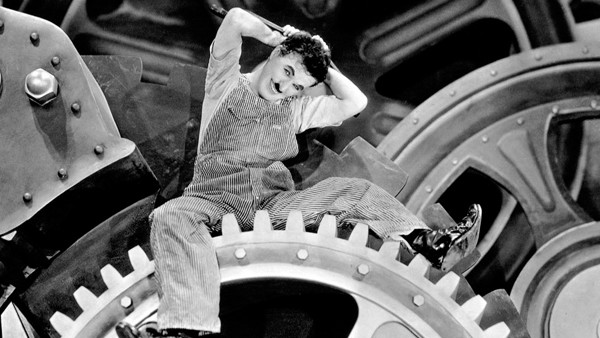
Charlie Chaplin's indelible 1936 classic Modern Times was the filmmaker's final silent film, and a not-so-subtle protest about the end of the silent era, with Chaplin anxious that the advent of "talkies" would cause much of his comic style to become lost.
The movie's early scenes depicting the over-the-top nature of the factory where the Tramp (Chaplin) works feel like a pointed thumb of the nose at major technological progress, which in filmic terms occurred almost a decade earlier with the release of the first sound movie, 1927's musical The Jazz Singer.
Modern Times is clearly a case of Chaplin throwing the gauntlet down to Al Jolson and everyone who followed, even though the death of the silent movie was all but inevitable. To his credit, Chaplin transitioned into sound movies slickly enough, with 1940's The Great Dictator enduring as one of the star's very best films.
6. Justice League Tried To Clean Up Batman V Superman's Mess (And Failed)
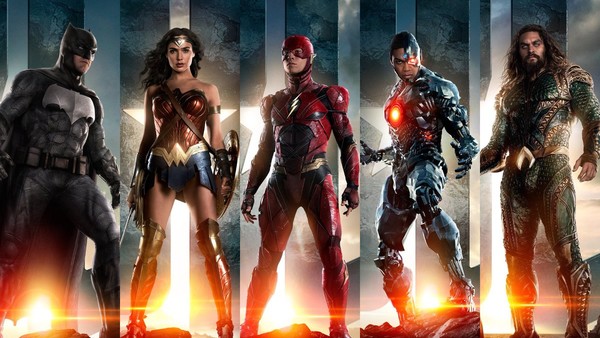
Now, all movie sequels and follow-ups are by definition responses to whatever came before, but in the case of last year's Justice League, it was more than just a sequel to Batman v Superman: it was an attempt to salvage the flagging DC Extended Universe from the embers of disgrace.
In direct response to the negative fan and critical reception to BvS' bloated runtime, overabundance of subplots, melancholic tone, lack of colour and questionable depictions of Batman (Ben Affleck), Superman (Henry Cavill) and Lex Luthor (Jessie Eisenberg), Justice League was heavily re-jigged in post-production to broadly appeal to, well, just about everyone.
The differences between this and BvS were numerous: it clocked in at just two hours, stripped away the driftwood plotting, added in more humour - courtesy of Joss Whedon - splashed the screen in red, toned down Batman's murderous tendencies, made Superman less of a mopey bore and even relegated Lex Luthor to the post-credits scene.
The end result was a woefully bland, generic superhero romp that, ironically enough, lacked the forthright vision of Batman v Superman - flawed though it was - and felt like a movie devised by a studio supercomputer rather than a product of actual human creativity.
Nice try, Warner Bros., but no dice.
5. Raging Bull Was Conceived As A "Feel-Bad Rocky"

After Rocky hit it big in 1976 by becoming the year's highest-grossing film and winning the Best Picture Oscar, a frantic run on boxing movies kicked off, during which Robert De Niro convinced Martin Scorsese to direct him in a biopic of boxer Jake LaMotta, Raging Bull.
The film was conceived as an attempt to create an "anti-Rocky" movie far away from its inspirational tone and likeable lead character. All while easily digestible studio boxing movies like Matilda, The Main Event and The Champ were being churned out, De Niro and Scorsese were busy prepping a darker, edgier response to Rocky and its deluge of imitators. Even the black-and-white cinematography was in part an attempt to make the film stand out from its genre brethren.
Ironically, Raging Bull needed Rocky's help to actually get made, though. Irwin Winkler, who produced both the original Rocky and Raging Bull, threatened United Artists that Rocky II wouldn't get made without their commitment to Scorsese's movie.
Holding Rocky hostage worked: UA fully funded Raging Bull (which bombed at the box office but won two Oscars) and Rocky II was released to solid acclaim and a huge $200 million box office. Everyone wins.
4. The Visit Was M. Night Shyamalan's Apology For After Earth

M. Night Shyamalan is a textbook example of a filmmaker who peaked too early, earning two Oscar nomination for 1999's The Sixth Sense, and effectively living in its shadow ever since.
Shyamalan's output became increasingly terrible and desperate throughout the late 2000s as he tried to salvage his career with bigger-budget gambles, culminating in the hideous 2013 Will and Jayden Smith-starring sci-fi bomb After Earth.
After this, Shyamalan smartly took a minute to examine his career and decided to return to his lower-budget roots, rebounding with the 2015 found footage horror flick The Visit.
With a largely unknown cast, mere $5 million self-funded budget, general lack of CGI bombast, more pared-down approach to thrills and a less outrageous plot twist, The Visit was a firm rebuke to not just everything wrong with After Earth, but pretty much everything that defined all of the director's post-Sixth Sense failures.
Was it a great movie? No, but he demonstrated some real self-awareness by figuring out what was going wrong for him, delivered a solid effort and then followed it up with an even better film, last year's terrific Split. Who doesn't love a redemption story?
3. Rio Bravo Was Made After Howard Hawks Saw High Noon (And Hated It)

Fred Zinnemann's 1952 Gary Cooper-starring western High Noon may have won four Oscars and been nominated for three more, but you know who sure didn't like it? John Wayne and his frequent collaborator, the legendary director Howard Hawks.
High Noon is widely-remembered for its left-learning politics and fairly transparent allegory of McCarthyism, which prompted Wayne to call it "the most un-American thing I've ever seen in my whole life" and expressed no regret for helping its writer, Carl Foreman, be subsequently blacklisted from Hollywood for his apparent Communist sympathies.
Wayne and Hawks then teamed up to make 1959's Rio Bravo, which took a similar premise - a lawman bravely squaring off against a gang of vicious killers - but imbued it with a more traditionally "masculine", right-wing mindset, where men don't have emotions or any internal conflict and just get the violent job done as efficiently as possible.
Hawks flat out said, "I made Rio Bravo because I didn't like High Noon", and though they're both great movies, it's hard to ignore that Wayne and Hawks basically made an entire film motivated by passive-aggressiveness.
2. X-Men: Days Of Future Past Retconned X-Men: The Last Stand Out Of Existence

While 2014's X-Men: Days of Future Past was on the surface just the latest entry into the mutant superhero franchise, it was crucially Bryan Singer's first time helming an X-Men movie since 2003's X2, and boy, he wasn't happy about the state Brett Ratner left the place in.
Days of Future Past was as such created as a direct response to The Last Stand and the rampant fan criticism surrounding it flagrantly disregarding the source material and making countless unsatisfying creative calls (namely killing Cyclops (James Marsden) off-screen and stripping Rogue (Anna Paquin) and Mystique (Rebecca Romijn) of their powers).
By introducing time travel elements, the movie was able to effectively retcon The Last Stand totally out of existence, with the end of the movie creating a new continuity where those events never happened - along with most everything else in the franchise - and are now nothing more than a fading memory for long-tortured fans.
Days of Future Past set a precedent, that time travel can be a useful tool for franchises to reset and retool their continuities when things get out of control. Expect it to be used a hell of a lot in the coming years.
1. Morgan Creek Couldn't Decide Which Exorcist Prequel They Wanted...So They Made Both

Alright, brace yourself for this one, because it gets a bit confusing.
Production company Morgan Creek initially hired Taxi Driver screenwriter Paul Schrader to helm an Exorcist prequel, Exorcist: The Beginning. However, when he turned in largely bloodless footage against their wishes, they fired Schrader deep into production and hired Die Hard 2's Renny Harlin to shoot a whole new version with some major script changes.
Harlin's version of the movie was released in the summer of 2004 and thoroughly pilloried by critics and audiences alike, bombing at the box office before landing two Razzie nominations.
The studio was apparently undeterred by already blowing $80 million on the entire production and gave Schrader another $35,000 to edit his original footage into a second movie, another prequel project eventually named Dominion: Prequel to the Exorcist. It made just $251,495 worldwide, bringing the two movies' combined profit to just shy of the $80 million price tag. All that effort for nothing.
So, to recap: an Exorcist prequel started production, but it was scrapped and a new movie was created in response to it. When the new movie sucked, they reconstituted their original version in response to that one. Just...why?
What do you make of these cinematic retorts to other movies? Got any of your own to add? Shout them out in the comments!