9 Reasons Batman Begins Is Better Than Man Of Steel (And 1 Why It Isn’t)
 Man Of Steel hits DVD and Blu-Ray in the UK next week and has already arrived in America, making this the perfect time to look back objectively at one of the summers divisive films. Its box office was large, if not quite what Warner Bros. were expecting, while audiences and critics were polarised. Personally I found the film a big disappointment after some brilliant early trailers and enticing promises from all involved, but waited on casting full judgement until Id watched the film a second time. Now I have, I can sit comfortably in my initial reaction; Man Of Steel is a muddled film of completely crossed purposes. As Batman and Supermans cinematic future seem intrinsically link for the foreseeable future, now is a good time to take stock and compare their respective modern reboots. In doing so one thing is clear; Batman Begins is much, much better. Heres nine reasons why (and one where Man Of Steel actually wins some points back).
The One Why It Isnt - Theres No Annoying Extras
 Im a massive fan of Christopher Nolans Dark Knight Trilogy and am always happy to overlook (or in some cases flat out defend) some of the more common criticisms. But every single time I watch Batman Begins (the problem is less prominent in the later films, assumedly because there was less studio pressure to play down to the audience) I can't help but wince at the Water Mains Controllers. Delivering poorly written lines melodramatically, their sole purpose is to reiterate the key elements of the plot. Over and over again. And once more in case you weren't up to speed. Man Of Steel, thankfully, has no such standout extras. However, that may be a silver lining to a very black cloud, as Ill discuss next...
9. Batman Begins Has A Supporting Cast
 For a film that has a global threat and mass, 9/11 level destruction, the character scale of Man Of Steel is shockingly small. Kal, his two fathers, Ma Kent, Zod and Lois Lane are the only people who have anything beyond passing development (and it's really only slight with the latter three). In the final battle it felt like Laurence Fishburne's plight to save Not Jimmy Olsen was incredibly important, yet the film hadn't cared to make them anything more than a background presence before this point. Directly contrast that to Begins (and the rest of the trilogy) where fan favourites (Jim Gordon), as well as niche references (Falcone) all felt fully fleshed out. Even young Joffery felt like he had a three dimensional character. This is best highlight with a taste of what might have been. Empire Magazine published a cracking, if misleading article on the film that spent a fair bit of time elaborating on Faora and her motivations. 'Who?' youre probably wondering. She was the female Kryptonian who fought with Zod, although the script puts her as his second in command with her own, personal motivations. So the background characters clearly did have some effort put it into them. Just none of it ended up on screen.
8. Man Of Steel Was More Of The Same
 It used to be the case superhero films wanted the origin out of the way quickly so we could get to the actual story as soon as possible. Sam Raimi's Spider-Man has Peter Parker bit within ten minutes, Tim Burton's Batman comes at the start of a narratively second chapter and X-Men didn't mind having Basil Exposition pop up. Batman Begins changed things (to the point there was no going back, haha) with a whole film defining the character and a villain plot that tied directly into the origin. Some imitators got it right (for all its simplicity, Iron Man managed to make the whole film feel connected), but many started out attempting this, then around the halfway point baulked and threw in a generic villain vaguely related to events. The Amazing Spider-Man did it last year and in 2013 the chief offender was Man Of Steel; take Zod out of the story and theres a nice, lean ninety minute picture that would easily cover the same general character beats. Nolan was doing something incredibly daring in not putting Batman in the film until halfway through, but when Snyder did the same with Superman it felt like sticking to the mould.
7. Nolan Is More Suited To His Chosen Hero (And Tone)
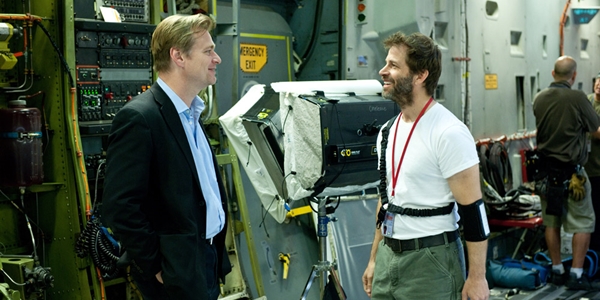 Christopher Nolans filmography is one defined by its recurring themes. His protagonists are always grieving from the loss of a close person, normally a mother or lover, with the films exploring how they deal with that grief. If that doesnt sound like a perfect fit for Batman I dont what does. Before Man Of Steel, all Snyder had done was looked at a pre-existing product, taken some visually interesting elements and wrapped them round a diluted, flat plot (aside from Sucker Punch, which was basically the same, except the source was teenage fantasy). While that works well for something simplistic like 300 (although not the dense Watchmen) and in theory would be a good way to approach Superman, that isnt what Man Of Steel was going for. And that ultimately leads to a muddled final product. On the one hand you have this story that comes from David S. Goyer and has all the sense of a fresh, grounded take, but then the direction goes against this up with an over the top approach (and washed out visuals for some reason). The film is as much about creative types warring as it is about how Superman learnt to fly and fought a lot of people.
6. Everyone Expected Man Of Steel To Be Good
 Thanks to its trailer, the promised new approach and Nolan stamp of approval Man Of Steel came with unexpected levels of hype. It was really a situation where we needed a The Dark Knight level product to match what we all expected. Praise needs to go to the advertisers; Sucker Punch had audiences (and presumably Warner Bros. executives) worried about Zack Snyders suitability for the film, but when we all sat down to watch those ninety minutes of brooding awesomeness it that was no longer an issue. Begins arrived with much, much less hype. Of course, it looked like bandwagon jumping attempt by DC after Marvel's initial success with the burgeoning genre and had an indie director at the helm, but most importantly, at that point Batman wasn't cool. Now the mere mention of Bruce Wayne may have James Bond at his suavest shaking, but in the early naughties the most recent Bat film was Batman And Robin. And before that was Batman Forever. Who's excited for a follow up (even if it is a new direction) from them? Those exposed to Nolan through Memento may have been curious to see what hed do with a big budget, but for the most part people were surprised when Begins was the powerhouse it was.
5. Relatable Action
 When Clark Kent, beginning to learn how to fly, smashes through a mountain I laughed out loud (both times). It was a moment of overblown ridiculousness in a film that had kept its Earth elements small scale thus far. By the end of the film (both times) I felt a bit sickened at my chuckle. Rather than a one off joke this ended up setting the tone for the next two hours; every following action scene had Kryptonians being thrown through buildings of all description as if it were rocks and paper. But not only is it repetitive to have the same gimmick relentlessly trotted out, when it goes out of the constraint of an uninhabited tundra things become messy. Theres something symbolic about trashing Smallville after how much of an effect the TV show has had on modern audiences view of Clark Kent, but theres a niggling voice question the probable high numbers of civilian casualties. This is only accentuated in the final Metropolis fight, where skyscrapers housing hundreds are brushed aside. The film made a big point about how Superman would kill if there was no other way to save innocents, but its hard to take that seriously when hes been a cause of likely millions of deaths. Why is Begins better than that? Because even though the film has mass gassings, it never forgets to show the human side (and even explains the aftermath); it cares.
4. Begins Teased The Future
 With the recent announcement from Sony they intended to use The Amazing Spider-Man Quartet/Quadrilogy as a jumping board to a wider world, its clear the full impact of Marvels Cinematic Universe is beginning to be fully felt; the preferred method of doing superheroes now is to have them as part of something bigger. A Justice League movie has been on the cards for years (it was even mooted what is now Batman Vs Superman was going to be the big team up), so youd think Man Of Steel would be brimming with potential clues. Not the case. Theres plenty of easter eggs, sure, but these mostly homage Supermans history, instead of providing hints for the future. This is clearly an attempt on DCs part to distance themselves from Marvels interlinked films and it helps keep focus on the film at hand, but because the end goal is set it leads to a piece unwilling to look into the future; seeing the Infinity Gauntlet in Thor makes that Phase I MCU entry still feel relevant. Because Nolan was uncertain he (or anyone else) would return to Gotham after his first visit, he wasn't afraid of putting in groundwork. Not only is there that awesome Joker tease, but the characters arent afraid about musing the future; it's not being coy.
3. Purposed Flashbacks
 This is an extension of the genres repetitive aping of the Begins origin formula, but is such a crucial flaw in Man Of Steel it deserves its own entry. Throughout the film we experience/endure out of order flashbacks to Clarks childhood that seem to be there to fill in the gaps of character motivation, but end up falling flat. Do we need to see Clark being bullied? Yes its a nice way to slip in a Plato reference, but referencing that dropped plot thread isn'tt worth five minutes. Batman Begins used flashback liberally for much of its first half, juxtaposing the early days of Bruce Wayne with his League of Shadows training, but with Man Of Steel its random, normally to fill a narrative hole; if we distract audiences for five minutes they wont realise this doesn't make sense. Thats all fine if it adds something, but given this is a film with only one driving plot and a small roster of characters that comes in at almost two and half hours its like treading water in a swimming race. Theres another, worse side effect of this. If a film has to keep jumping around to explain itself, all it looks like is the writer doesn't think the audience can keep up without gentle reminder. Now were back to the extra territory.
2. Change Things For A Reason
 Nolan did change a lot of things in the process of bringing Batman to the screen, essentially putting the title of the World's Greatest Detective to rest, but it always felt in service to the realism of the world; Batman Begins set out to bring the Dark Knight back through the shadows and into the new world of realism and any changes made (so long fantasy villains) were to aid that. Man Of Steel had no such general aim. Pre-release hype suggest it was going to reverse the Dark Knight formula - instead of showing how a hero would come out of the real world, it was how the real world would react to an actual super - but the inconsequential mass destruction severely weakened that claim. Yet Snyder still deemed it worth messing with pretty much every set up element of Superman lore, mixing together countless different origins (and his own stuff just for good measure). However, none of it felt genuine to the story, instead coming across as a desperate attempt to distance this version from the Richard Donner films (and more importantly the drivel that came afterwards). You can't criticise Man Of Steel for not being a new revision of the character, but I think youd struggle to find someone whod praise that for being purposeful.
1. Batman's Better
 Ultimately the reason Batman Begins was a better film than Man Of Steel comes down to one simple, unavoidable fact; Batman's better. It's a universally accepted truth that Superman is a boring hero, lacking any identifiable personality and being way too overpowered for stories to contain genuine peril. He can be made interesting, but it's always held back by these inherent flaws. And of course there's the glasses; a major, forever ridiculed element of Superman lore, I find it unbelievable that amongst every change made these escaped unscathed. They're so much of their time, presenting a world totally unaware of superheroes. Batman's a different story. He's certainly evolved with the times (the comics now are as different from his early Detective appearances as Nolan's version is from Adam West's), but the base concept is itself incredibly enticing. The millionaire element is only there to explain his resources; Bruce Wayne's story at its heart is incredibly relatable. 2015's sequel to Man Of Steel, which pits Batman against Superman because the first film wasn't as big a hit as hoped, may end up with the heroes on more of a level footing, but in fan's minds (be it in the playground, on message boards or down the pub) there's only ever one victor. Disagree with any of these points? Got any more to add? As usual let it all out in the comments.