Ad Astra Review: 7 Ups & 3 Downs
A flawed yet mesmerising sci-fi epic.
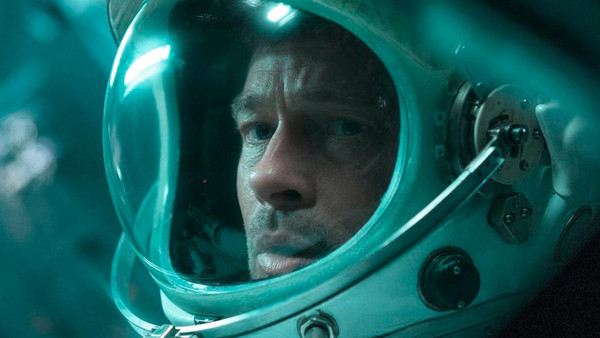
Brad Pitt's long-awaited sci-fi epic Ad Astra is finally hitting cinemas, and critics have so far been roundly praising the ambitious, expectation-defying genre effort from James Gray (The Immigrant, The Lost City of Z).
And indeed, there's plenty to praise about Gray and Pitt's film, a unique sci-fi offering that has plenty on its mind and, while not always executing its vision perfectly, finds a firm compromise between populist blockbuster filmmaking and something a little more thoughtful.
Though it seems unlikely that the film will pick up enough momentum to become a major Oscar player outside of its stunning technicals, there's sure to be a passionate campaign for Brad Pitt's stellar lead performance, and Gray is nothing if not a director with a committed fanbase.
But like last year's First Man, Ad Astra feels destined to befuddle as many as it dazzles, and is probably set to become one of the most divisive tentpole movies of the year.
Yet for those craving thrills that venture slightly outside the box, it certainly delivers the goods...
Downs...
3. The Totally Pointless Voiceover Narration
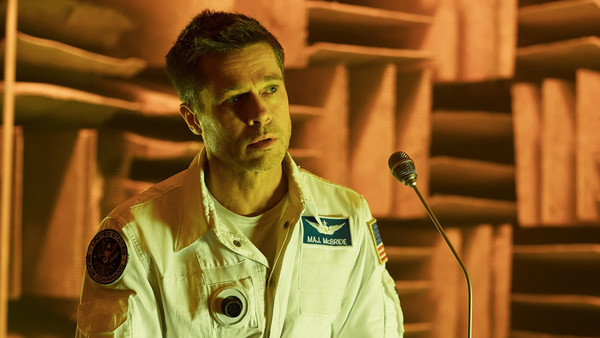
Despite the film's clear attempt to be a subtle, art-house riff on typical space-faring adventure stories, Ad Astra is frustratingly accompanied by an intrusive voiceover narration from Pitt's protagonist Roy McBride, over-explaining almost every facet of Roy's mission, his feelings and the film's themes.
It's tough not to watch the film and wonder whether the studio, terrified at the prospect of this $90 million movie bombing, decided to add the narration in post-production.
It leaves so little room for audiences to think for themselves and occasionally overpowers the beautiful imagery to such an extent that it actively detracts from some of the movie's more contemplative moments.
There aren't any scenes in the film that are especially enhanced by the narration, and so one has to wonder why it's even there at all. At best it's unnecessary, and at worst downright patronising.
2. It Feels Emotionally Distant
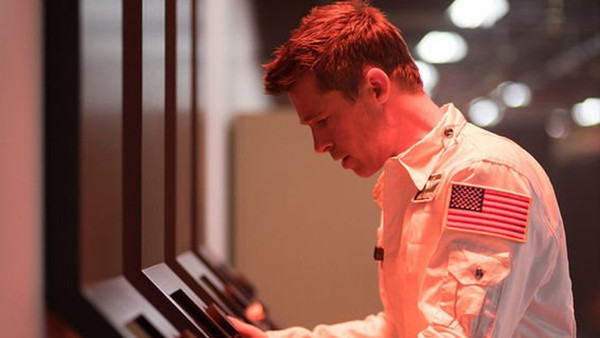
Though Pitt's McBride is presented to audiences as an initially stoic character, Gray takes both McBride and the audience on a journey that's supposed to unlock their emotions as it explores the fraught relationship - or lack thereof - between Roy and his absentee father, Clifford (Tommy Lee Jones).
Despite strong efforts from both Pitt and Jones, and an admirable effort to avoid the excessive sentimentality of a film like, say, Christopher Nolan's Interstellar, Ad Astra ultimately ends up feeling rather emotionally neutered.
The film reaches its apparently heartfelt crescendo a little too eagerly, and as a result may leaves audiences feeling a little colder than they'd like. Were this Gray's clear intent it wouldn't be a problem, but he evidently wanted us to leave the cinema-misty eyed, and so didn't quite stick the landing.
1. It Gets Pretty Silly At Times

Despite James Gray's reputation for being an "arty" filmmaker and this film's relatively serious and somber tone, it does indulge in its fair share of ridiculousness throughout.
Much of the plot is propelled forward by coincidence or straight-up implausibility, and one major sequence of peril is so perfunctory in its mayhem that it turns out more comical than horrifying as it's clearly supposed to be.
By the third act, Gray fully swings for more typical blockbuster thrills, with a number of fist-pumping, action-adventure-styled moments that clash quite harshly with the more subdued tone of the rest of the film.
It's hard not to see these moments as an attempt to ensure the movie doesn't entirely alienate the mainstream, but in doing so Gray may turn away those game for a headier experience.
These gripes aside, though, there's a lot to like about Ad Astra, and here's everything it gets right...
Ups...
7. Brad Pitt's Low-Key Brilliant Performance

Even in its worst moments, Ad Astra is held firmly aloft by Brad Pitt's terrific performance as McBride, delivering a subtle, guarded performance that couldn't be much further from the effervescent sort of turn you'd expect from an A-lister lead performance in a movie this expensive.
In the early stages in particular, Pitt is forced to internalise a lot of information and play his cards close to the chest, and as his mission becomes increasingly dangerous and desperate, he gradually emerges from his emotional shell.
Between this and Once Upon a Time in Hollywood, Pitt's had quite the summer, and while his turn here may prove a little too reined-in for Academy voters, there are sure to be those passionate cheerleaders who will be gunning for him throughout awards season.
6. The Stunning Visual Effects & Cinematography
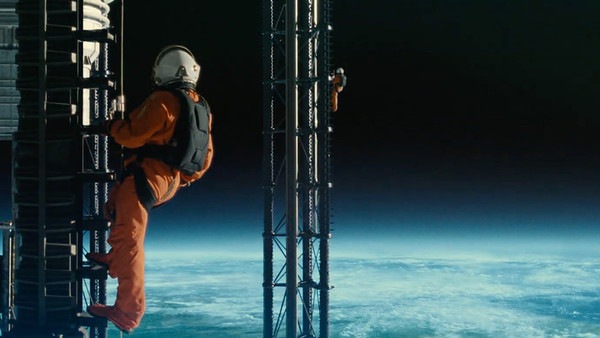
In conjunction with Pitt's magnetic work, this is an absolute visual marvel of a film, and it's staggering that the final budget was less-than-half of a typical summer blockbuster.
For starters, the visual effects are sublime throughout the production, presenting an entirely believable rendition of space that never lets the facade flip.
A great care has clearly been taken to present a photo-realistic vision of the expanse beyond Earth, and never once does it draw attention to its own artifice.
Almost equally fantastic is the film's cinematography, which comes by way of Hoyte van Hoytema, who of course did such a marvelous job shooting Christopher Nolan's Interstellar.
Together, these elements create one of the year's most impressive visual feasts to date, and one well worth seeking out on the biggest screen possible.
5. Its Refreshingly Philosophical Tone

Though there's considerable pressure put upon any expensive sci-fi movie to broaden out its themes and place a bigger focus on the spectacle, Ad Astra is often at its best in its introspective and contemplative moments.
When the iffy narration isn't busy spoonfeeding everything to the audience, there are some thoughtful riffs on human nature, family, the sins of the past, the possibility of intelligent life in the universe and so on.
While none of these ideas are especially fresh on their own, they're presented in a unique and disarming way that, again, may alienate audiences hoping for something more strictly sentimental.
4. The Moon Chase Sequence Is Incredible

No spoilers here, but by far the film's standout set-piece is a first-act chase sequence on the Moon, a technically sublime action beat which manages to be action-packed, horrifying and artful all at once.
Though a lunar car chase might sound conventional enough on paper, Gray ratchets up the tension and takes full advantage of the Moon's unique atmosphere to ensure it's anything but.
After all, this is the director who gave us one of the best car chases of the last 15 years in We Own the Night, so he knows a thing or two about staging a tense chase.
Throw in some absurdly convincing visual effects, palpable stakes and a dash of brutality, and you have one of the year's most distinctive action sequences for sure.
3. Tommy Lee Jones & Donald Sutherland's Supporting Performances
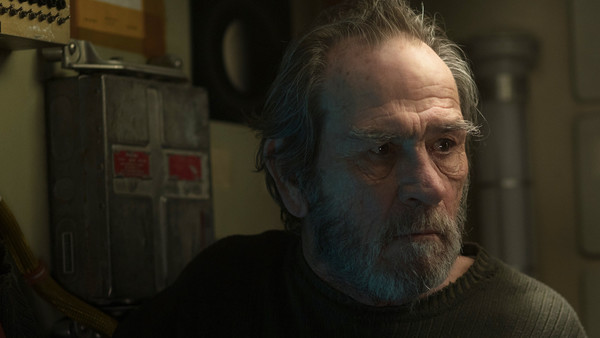
Though the majority of the film's supporting players have relatively piecemeal roles, there are two who clearly stand out from the pack.
First of all, there's Donald Sutherland, who has a small but significant part early in the film as Colonel Pruitt, a former colleague of Roy's father.
Sutherland doesn't grace our cinema screens nearly enough these days, but brings a grandfatherly grit every time he's up to bat, and sure doesn't disappoint here.
Then there's the ever-reliable Jones, who while also having a minor role in the film overall, makes the killer best of his screen time - though the less said about the specifics, the better.
It's fundamentally Pitt's show, but these two supporting performers add some welcome aged grit to the mix, no matter the relative brevity of their parts.
2. It's Brilliantly Paced

The film being something of a compromise between the mainstream and the art-house is perfectly reflected by its pacing, which is neither breakneck nor meditative.
In that sense, Ad Astra should keep most audiences engaged yet not exhausted: it's well-calibrated for those who want a breather between set-pieces, yet perhaps found Blade Runner 2049 too slow.
Clocking in at "just" 123 minutes, the film clips along agreeably, with Gray knowing when to hold a beat and when to move along.
Considering how most movies of this sort tend to bring a wealth of bloat to the table in the quest for an epic ride, it's relieving to see Gray showing a little more restraint in this regard.
Given that the film was whittled down in editing for almost two years, the concise approach makes sense.
1. The Fantastic Musical Score & Sound Mixing

And finally, in addition to its spectacular visuals, this is a beautiful-sounding movie.
First and foremost, the musical score from Max Richter - whose work on last year's Mary Queen of Scots should've been Oscar-nominated - is dynamically gorgeous, vacillating from a quietly tense electronic hum to the more bombastic orchestral work you'd expect from a film with this scale.
Then there's the sound editing and mixing. Like First Man last year, a great emphasis has been placed on the unnerving creaking metal of the various vessels depicted throughout the film, and repeated, dreamlike dialogue is often cleverly mixed to take full advantage of your cinema's speaker set-up.
Aside from its probable nomination for a Best Visual Effects Oscar, Ad Astra also seems likely to earn some awards love for its remarkable sound work.