The Amazing Spider-Man 2: 24 Easter Eggs, References & In-Jokes You Need To See

15. Peter Parker's Bedroom
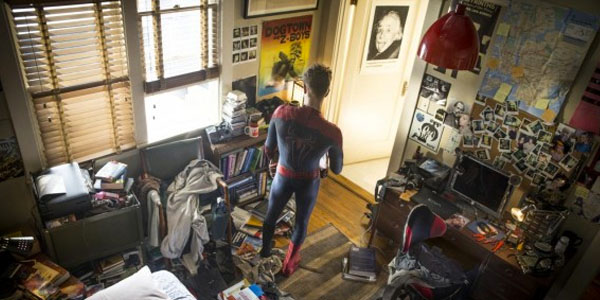
Peter's bedroom is once more littered with pop culture reference points that hint at his greatest artistic and political influence. There's Shepard Fairy's "Freedom To Lead" poster featuring Aung San Suu Kyi, the album cover for Diiv's Oshin (in two separate places), a poster for Spacedog (probably the experimental electronica band), a Ramones poster, and movie posters for skate classic Dogtown And Z-Boys and the controversial Blow Up. The posters paint a picture of a politicised punk, with a love of extreme sports (which is all but ignored in the film) and eclectic, mostly odd musical taste. And if you look a little closer, the cover for Oshin - designed by inuit artist Kiakshuk - features a fearsome bird attacking a prone man (Vulture?) and the Ramones of course covered the Spider-Man theme as a hidden bonus track on the vinyl version of their 1995 album ¡Adios Amigos!

14. Avi Arad's Cameo?

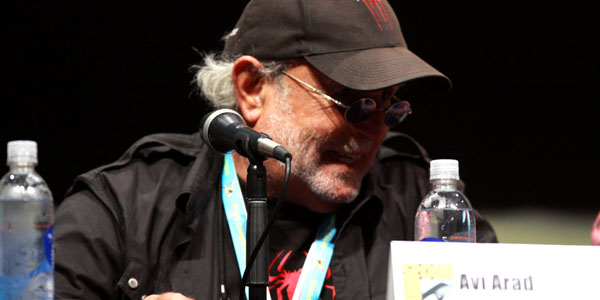
As Electro makes his way to Time Square before Spider-Man confronts him, we see several establishing crowd shots of collected New Yorkers noticing his powers and reacting. One of those New Yorkers carries a TV camera, and though he is only on screen for a moment, he has the same long hair and facial hair of the supremo behind Spider-Man's movies, Avi Arad - though not the iconic John Lennon-like sunglasses. It's hard to immediately tell whether it is Arad, but the similarity is striking.

13. Ravencroft & Dr Kafka

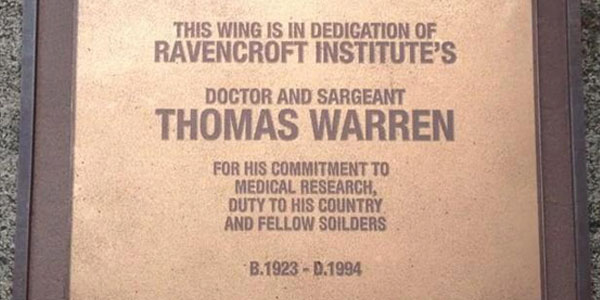
Ravencroft Institute for the Criminally Insane plays a major part in the movie, as it has in the past in the comic book iteration of the character - as the equivalent of Batman's Arkham Asylum. At one stage or another, all of Spidey's rogues' gallery have spent time there. The institute, which houses Electro when he is captured, is run by Dr Kafka, a recast male version of Dr Ashley Kafka, the founder in the comics, who may be more than he seems. The set photo above also revealed that there's a plaque at Ravencroft dedicated to Thomas Warren, who some have suggested links to Miles Warren, better known as Spider-Man villain The Jackal.

12. Doc Ock

Doc Ock There are a number of references to the presence of Doctor Octavius in Webb's Spider-Man universe. First and most notable is the presence of his mechanical arms, as spoiled rather unceremoniously long before the film was released. The second reference comes in the information that Norman Osborn gives to his son, as one of the Easter Egg heavy files is called Experiment OCT 32A. And finally, it seems that Dr Kafka's inclusion is something of misdirection: while Kafka exists in the comics, this version seems to be setting up a transformation into Ock, given that his first appearance opens on an incriminating close up of some very familiar looking glasses, plus his German accent is irresistible, and you could choose to see his restyling of Kafka as literary hint at his transformation (based on Franz Kafka's Metamorphosis).

11. "Does Whatever A Spider Can"

As well as the theme tune musical Easter Egg, there's also a nod to the actual words of the Spider-Man theme, as we hear mention of the properties that Spider-Man has picked up from the enhanced spider DNA. "He does whatever a spider can... like self-heal," which Harry Osborn identifies as the reason to get his hands on Spidey's blood. In another self-referential nod, the film also establishes exactly why it's called The Amazing Spider-Man. When Max Dillon - prior to his Electro accident (which is taken a step further than the comics thanks to the involvement of electric eels) - waxes lyrical about Spider-Man, calling him "amazing," he utters the line: "That's what they should call him. The Amazing Spider-Man."

10. Kraven The Hunter?

Kraven appears in the Amazing Spider-Man 2 video game, though as an ally of Peter Parker, as opposed to an antagonist, and some over-zealous fans took that as indication that he might be set for a cameo in the film. That is not quite the case, but there are hints to the character in there. First there's the golden-toothed sabre-tooth tiger skull that appears in the board-room of Oscorp, which definitely feels like a reference to Lord Of The Savage Land Ka-Zar, the primitive hero who once battled Spider-Man, and who battled Kraven memorably, and whose narrative revealed how Kraven came to be a Hunter. Notably, Ka-Zar has a sabre-toothed side-kick in the shape of Zabu. And secondly, Norman Osborn's secret Oscorp files include one called the Australia Project - perhaps a reference to the fact that Kraven was rebranded as an Australian (rather than Russian) in the Ultimate Marvel universe.

9. Spider-Man Does A Batman

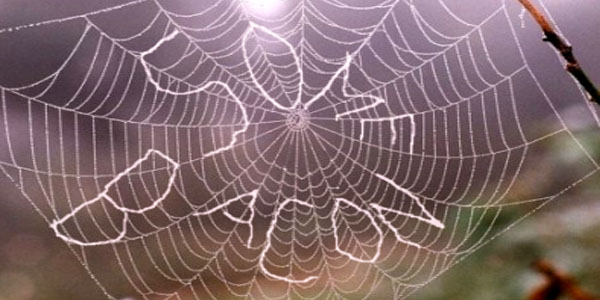
As the film comes to its conclusion, and Peter Parker realises how much Gwen Stacy means to him, he interrupts her move to England (to work at Oxford University) with a grand display of love. The moment, in which he emblazons "I Love You" across one of New York's bridges feels remarkably similar to Batman's statement of intent in The Dark Knight Rises, when he also chooses graffiti as a means to send a message. He wasn't the first however, as the awful 2004 The Punisher did it first. Those might be accidental references, but they're a lot cooler than saying Spider-Man ripped off Charlotte's Web. His choice of venue is also telling, given that he takes Gwen up to the top of the bridge to admire his declaration, though it isn't the famous George Washington Bridge that she is thrown from by the Green Goblin in the comics before Spider-Man unwittingly kills her. It's definitely a call-back moment though.

8. There's No Black Cat... Yet

When Felicity Jones was cast as Felicia Hardy, Spidey fans' tongues began to wag about the possibility that Black Cat was about to appear, which was further supplemented when Jones seemingly confirmed to Collider that she would be in costume for the film. But even then there was no confirmation of her character name, which came later, hyping the chance of Black Cat appearing even more. That appearance hasn't come yet, as Felicia is merely introduced as Harry Osborn's assistant, and not a jewel thief, so presumably, if they are going to change her into the anti-hero, she's going to have a different origin.

7. Alistair Smythe

Alistair Smythe Anyone who is currently revelling in the fact that Marc Webb seemingly ignored the lesson's of Sam Raimi's over-stuffed Spider-Man 3 will no doubt have rubbed their hands with glee at the revelation that the film contains not just the three villains that have long been known (Green Goblin, Rhino and Electro) and Norman Osborn, but also several others (as hinted by pre-release Easter Eggs). But that's not the end of it. The film is double-stuffed with references to other villains, and adding to the list of Venom, Black Cat, Vulture, and Doctor Octopus who are hinted at are Donald Menken, the villain to the villains, his underling The Man In Black, Dr Kafka, and also Alistair Smythe (BJ Novack). Smythe might not be the most notable of villains, but he is noticable, given that he became the Ultimate Spider-Slayer in the comics - the controller of an army of anti-Spider-Man robots. The viral marketing campaign behind the movie released two Daily Bugle articles mentioning his father Spencer Smythe as the head of the engineering division of Oscorp, the first saying he is working on significant advancements in robotics and the second revealing that he was fired and replaced by his son, Alistair.

6. Tiananmen Square

Spidey Tiananmen Following on from Peter Parker's support of Burma (via the poster in his room,) there's another message relating to Asian political history in the finale of the film when Spider-Man faces off against the suit-wearing Rhino. With Spider-Man off the grid after the devastating events that precede Rhino's escape, a small boy who he inspires earlier in the film steps out to take on the hulking mech in his place, symbolically showing New York's plucky human spirit. The moment is very reminiscent of the iconic Tank Man image from Tiananmen Square in the wake of the 1989 protests, which cannot be accidental given the framing.

Contributor
Contributor

WhatCulture's former COO, veteran writer and editor.