Ant-Man & The Wasp: 17 Things We Learned From The Director's Commentary
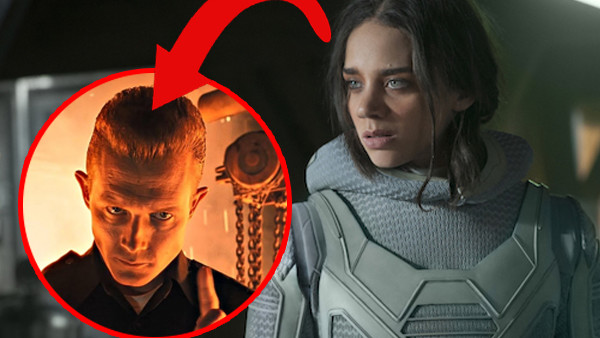
Ghost is the MCU's T-1000.
Ant-Man and the Wasp begins its Blu-ray roll-out this week, and as is always the case with the Marvel Cinematic Universe, it's fun re-visiting these movies accompanied by commentary from the director.
Peyton Reed may not be one of the more illustrious or decorated filmmakers in the MCU's roster, but he nevertheless proves himself a smart and insightful talent as he extensively details Ant-Man and the Wasp's complex production.
From calling out Easter eggs, cameos and references we all missed to running down the technical details of some of the movie's most ambitious sequences and even discussing how the events of Infinity War affected the end result, it's clear that a ton of thought went into the film even if it's a fairly unambitious, down-the-line sequel.
If you had a fun time with the movie and are desperately counting down the clock until the release of Captain Marvel next March, Reed's thoroughly intriguing commentary is certainly worth a listen. Or if you want to save yourself two hours, here are the most fascinating takeaways...
17. Scott's Bathrobe Is A Nod To The Big Lebowski

When Hope (Evangeline Lilly) scoops up Scott (Paul Rudd) at the very beginning of the movie, he's of course serving out the final days of his house arrest, and as such is just lounging around in his bathrobe.
Rather than give him time to get changed, Hope simply tranquillises and effectively kidnaps him.
Peyton Reed confirms in the commentary that this was an intentional nod to The Big Lebowski, reflecting both The Dude's (Jeff Bridges) own choice of laid-back attire in the Coen brothers' classic comedy, and the idea of a man in a bathrobe being "passively yanked into this adventure."
16. This Is The Visual Effects Supervisor
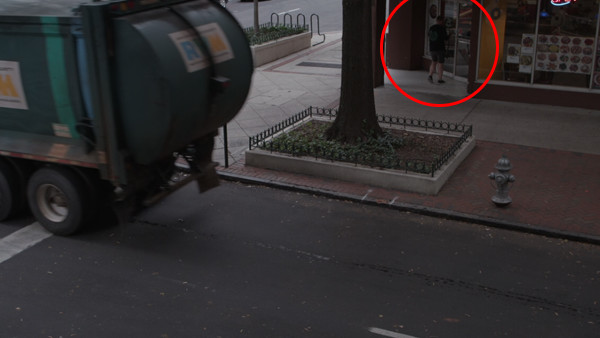
After it's revealed that Hope and Scott are actually inside a miniature car in the middle of a street, we see a garbage truck pass over the pint-sized vehicle, and in the next shot, a man can be seen opening the door to a restaurant of some kind.
There's no way you'd be able to tell, but that's actually the movie's visual effects supervisor Stephane Ceretti, who has also previously worked on the likes of Captain America: The First Avenger, Guardians of the Galaxy and Doctor Strange (even receiving Oscar nominations for his work on the latter two).
Reed calls it his Hitchcock moment.
15. Hank Pym's Lab Is The Largest Physical Set In MCU History
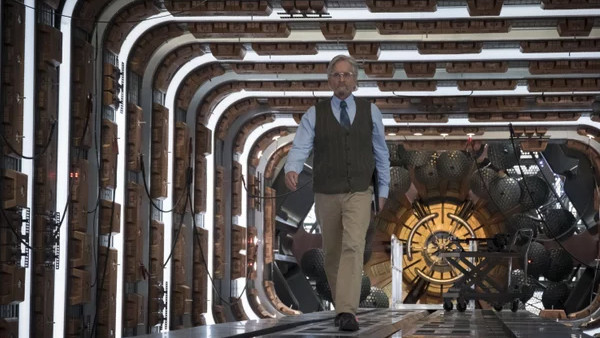
After Hope brings Scott to the Pym lab, Reed reveals that the lab is in fact the largest physical set that's ever been built for a Marvel movie.
The director had enormous praise for production designer Shepherd Frankel, before joking about the irony of an Ant-Man movie of all films having the largest physical set in the entirety of the MCU.
Reed also adds that the size of the set allowed him a great amount of freedom to experiment with how scenes were staged and blocked out. Also, the set featured far greater detail than is actually shown in the movie with regard to the various enlarged objects scattered around the lab.
14. Peyton Reed Is A Laurence Fishburne Fanboy

In addition to being a massive Black Goliath fanboy, Reed is also a big fan of Laurence Fishburne, and frankly, who isn't?
The director was delighted when he met with the acting vet and he agreed to sign on, while commending him for being an extremely well-versed comics fan and spending much of his downtime on-set reading obscure graphic novels.
Hilariously, Reed gloats that he got to ask "Fish", as he calls him, tons of questions about both The Matrix and Apocalypse Now, and what filmmaker in his position would honestly be able to resist?
13. The School Heist Was The Most Technically Complex Scene

For all of the many technically complicated scenes in the movie, the high school heist sequence apparently turned out to be the most challenging to execute, despite appearing relatively simple in the final product.
Reed adds, "the higher mathematics that went into the visual effects of this were mind-numbing", explaining that shots had to be designed extremely specifically in order for motion control cameras to be programmed correctly on-set and maintain a consistent sense of scale.
This was especially tricky during the brief moments where Hope and a shrunken Scott directly interact as they retrieve the prototype Ant-Man suit.
Due to the time required to program the cameras for the complicated shots, Evangeline Lilly and Paul Rudd also had to spend a long time sat around in their suits, made all the worse by the 100% humidity of the Georgia shooting location.
12. Reed Included A Tribute To His Favourite Teacher
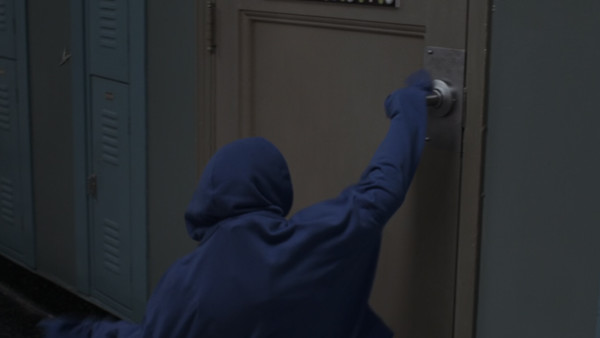
If you thought you'd discovered every single Easter egg the movie had to offer, think again, because here's another one you'd never be able to catch without a little help from the director himself.
Scott finds the Ant-Man suit inside Mrs. Broadwell's classroom, and that's not in fact some random name plucked out of thin air. Mrs. Broadwell is actually Peyton Reed's own beloved eighth and ninth grade English teacher, and as such he decided to pay homage to her in the movie. Ain't that sweet?
11. Marvel Studios Organises Additional Photography For All Their Movies

One of the most interesting things about these director's commentaries is hearing filmmakers talk about the fairly mysterious nature of their dealings with the big-wigs at Marvel Studios and the general process of actually getting an MCU film made.
Reed says that while there's every intention to get the script as tight as possible before shooting, he personally allows for a lot of improv among his cast, and praises Marvel Studios for actually allocating additional photography for all their movies from the outset.
Reed adds that this allows filmmakers to re-write the film on-the-fly, and to "affect change pretty quickly", presumably without having to worry too much about continuity being bungled in the edit, as it can all be ironed out in those pre-planned sessions of additional shooting.
It's clearly a set-up that works splendidly for the MCU, and it's probably something other studios and cinematic universes could learn a thing or two from.
10. Ghost's Phasing Effect Went Through Countless Iterations

Though it ends up looking fairly simple in the final film, Ghost's (Hannah John-Kamen) phasing effect was actually the result of "a lot of visual effects R&D", and it apparently took an incredibly long time to settle on the final visual.
Early iterations of Ghost's molecular instability apparently looked "too glitchy", "too digital" and "like an episode of Max Headroom from the '80s."
Reed especially enjoyed the idea of the subtle ghosting effect surrounding Ava's movements, for which he often incorporated pieces of alternate takes to give the phasing an especially off-kilter quality.
9. Peyton Reed Is A Huge Fan Of The Smiths
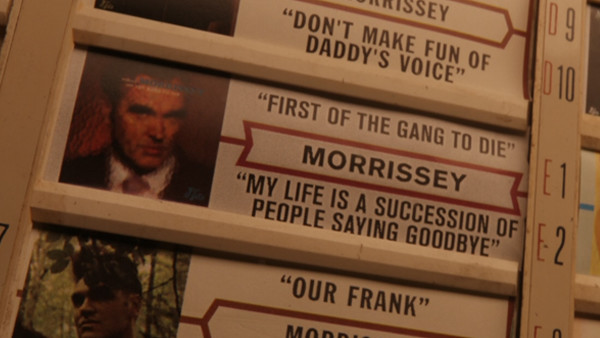
One of the more memorable gags in the movie is Luis' (Michael Pena) love of Morrissey. He randomly explains that his grandmother had a restaurant with a jukebox that only played Morrissey songs, and later on his ringtone for Scott is the singer's tune "Everyday Is Like Sunday."
Rather unsurprisingly, Reed is himself a huge fan of The Smiths, and goes on to explain that he used to be the drummer in a Smiths cover band called Louder Than Bombs.
He eventually found out that there was a "rival" all-Latino cover band in L.A. called Sweet and Tender Hooligans who were much better than his band, at which point he realised that Morrissey had a surprisingly strong following in the East L.A. Latino community.
As much as it might seem like a throwaway recurring gag for Luis, it actually has an odd amount of thoughtful specificity to it.
8. The Quantum Entanglement Scene Is Based On A Steve Martin Movie
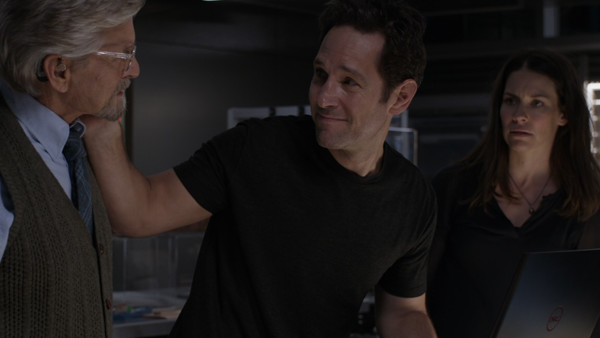
The movie's memorable quantum entanglement scene, where Janet van Dyne (Michelle Pfeiffer) inhabits the body of Scott, went through a lot of workshopping before the cast and crew arrived at the final version.
According to Reed, the primary inspiration for the hilarious scene was the 1984 Golden Globe-nominated Steve Martin comedy All of Me, in which Lily Tomlin plays a dying millionaire who transfers her soul into Martin's surly lawyer with outrageous results. Reed opted not to go quite so broad with his homage to it, but the influence is still evident.
Reed also confirms that Scott channelling Janet was all down to Paul Rudd's comedic brilliance. Michelle Pfeiffer was originally going to take a pass at the scene first so that Rudd could simply work from her performance, but it was ultimately decided that Rudd was talented enough to pull it off on his own, and that he certainly did.
7. Infinity War Influenced The Movie's Runtime

With the movie releasing just a few short months after Avengers: Infinity War, it's not terribly surprising that the climactic superhero epic had a distinct influence on this more pared-down, almost standalone offering.
Reed states that from the outset he wanted to ensure that Ant-Man and the Wasp ran less than two hours in length, clocking in at 118 minutes as it does, for two main reasons. Firstly, he knew he would be following the mammoth outing that was Infinity War, and he also didn't want the action-comedy concept to outstay its welcome.
Considering most critics praised the movie as a welcome "palate cleanser" after Infinity War, it's safe to say the director's mandate was most certainly a sensible one.
6. Evangeline Lilly Insisted On Hope's Ponytail

Reed had a lot of kind words for Evangeline Lilly throughout the commentary, praising her commitment to the part and how involved she was in finessing the finer details of the Wasp, both character and design-wise.
Lilly insisted on Hope not looking glamourous with flawless nails and coiffured hair following fight scenes, and helped the production settle on the decision to give her a functional ponytail while she's suited-up as the Wasp.
Considering how much general hate there was for Lilly's awful wig in the first movie, it's a good thing for everyone that the actress pushed hard to have major input on how Hope was depicted in the sequel.
5. Ghost Was Modelled On The T-1000

As Ghost relentlessly pursues the gang in search of the Pym lab, Reed explains that the intent was always to fashion her as a character similar to the T-1000 (Robert Patrick) from Terminator 2, especially while pursing Scott through an abandoned building.
This obviously belies the fact that a real human being actually exists beneath the suit, but of course, Ava's desperation to prevent herself from evaporating out of existence forces her to become a ruthlessly, doggedly determined hunter.
She may ultimately be nothing on the T-1000, but you can certainly appreciate why Reed would seek such an influence.
4. Stan Lee's Cameo Was The First Scene Filmed

Stan Lee of course makes a cameo appearance as an old man whose car is hit by one of the Wasp's shrinking discs, at which point he says to himself, "Well the 60s were fun, but now I'm paying for it."
As it turns out, this was the very first thing shot for the entire movie, and Reed adds that he felt like it was a good luck charm to film Lee's scene first, given that Ant-Man was co-created by him and all.
He also notes that there is something of a friendly rivalry between MCU filmmakers to try and top previous Stan Lee cameos.
3. The Car Fight Was Influenced By The Raid 2
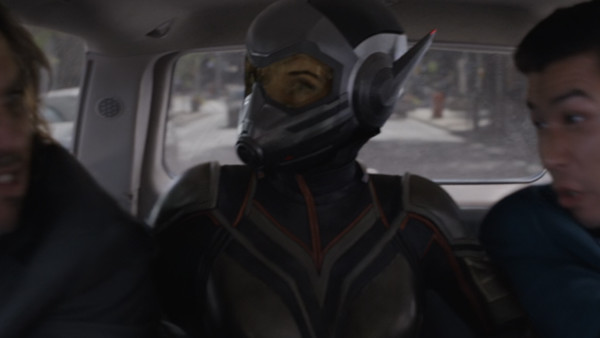
The film's third act car chase homages a number of movies, most prominently the Steve McQueen classic Bullitt and the screwball comedy What's Up, Doc?, both of which feature chases set in San Francisco.
A more surprising and contemporary movie however influenced Reed's decision to have Wasp using her powers to fight Sonny Burch's (Walton Goggins) men inside their own vehicle: The Raid 2.
Reed loved that movie's incredible, confined fight scene inside a car and relished the idea of reworking it with the Wasp's abilities in mind, and the result is one of the movie's coolest action beats, brief though it is.
2. The Third Act Almost Had Quantum Creatures Invading San Francisco

Reed had extensive discussions with the movie's lead writers Chris McKenna and Erik Sommers about what exactly the third act of the film would build to, and at one point they did consider a finale where the quantum tunnel opens and quantum creatures start taking over San Francisco.
Ultimately the idea was dismissed, however, as Reed and co. felt that it would become too much about the spectacle and these anonymous creatures rather than the characters, which the final movie's more modest conclusion keeps firmly in mind.
It's an interesting idea to consider, especially given how fascinating Hank's (Michael Douglas) brief trip into the quantum realm was, but Reed probably made the right call here to keep things simple and tethered closer to the characters.
1. Reed Tries To "Spoil" Avengers 4...But "Marvel" Stops Him

Directors often cut their commentary off as soon as a movie's end credits roll, but Reed actually stuck around to wax more about the movie, and jokingly talks about the viewer expecting him to drop some Avengers 4 news.
Hilariously, Reed performs a bit where he pretends to read the script for Avengers 4, but just as he's about to explain how Scott escapes from the quantum realm, static interrupts the audio feed, neatly obscuring all the "spoilers".
Reed then attempts to spoil the fates of the "dusted" Avengers and talk about Ant-Man 3, though someone - presumably a Marvel executive - opens the door of the recording booth and apparently tells him he can't say anything.
The director then awkwardly starts talking about the Planet of the Apes movies, Star Wars and jokes that Altoids gave him a lifetime supply of the breath mints after featuring them in the movie, before the credits finally come to an end.
So, no, Reed doesn't drop any new Avengers 4 info, unless that Planet of the Apes reference is hinting at the film's much-rumoured time travel plot? But that's probably a reach, right?
What did you make of these tantalising Ant-Man and the Wasp titbits? Shout it out in the comments!