James Dean, Life And Leaving Photography Behind - Exclusive Interview With Anton Corbijn

We chat with the famed director.

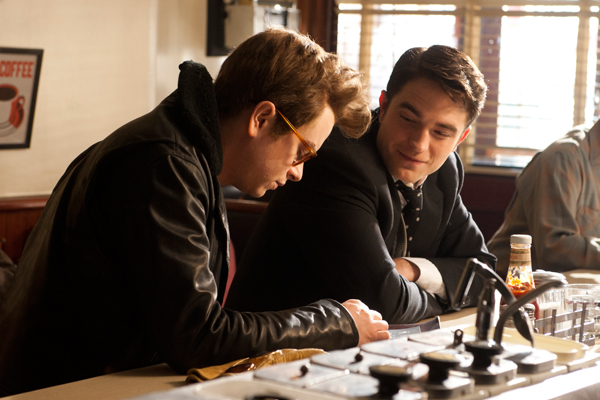
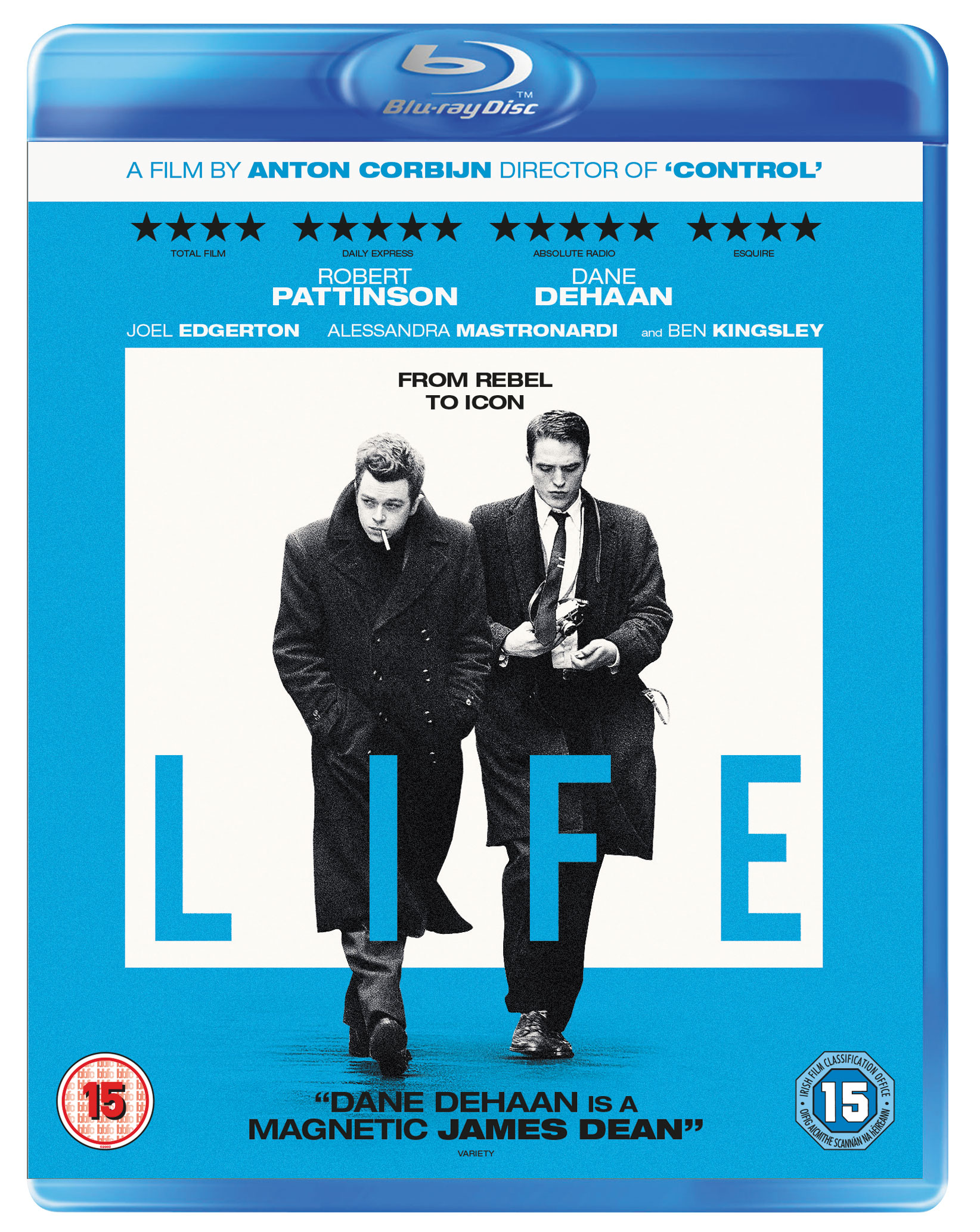
Anton Corbijn may be one of the most unassuming film directors out there. A world-renowned photographer who by his own admission never intended to make the jump into movies, he's been behind some of the most exciting movies of the past ten years, including Joy Division biopic Control, George Clooney thriller The American, John le Carré adaptation A Most Wanted Man (which featured Phillip Seymour Hoffman's final lead role) and last year's incredibly underrated Life, which documents the story behind the iconic photographs of James Dean. To celebrate the home video release of Life (available in the UK from February 1st) we got a chance to chat with Corbijn about another late icon on film, as well as his recent career move into cinema. When I interviewed Anton, it was mere hours after the announcement of David Bowie's passing. He'd worked with the singer during his time as a photographer and the shock death hung over the mood of the conversation. He'd declined comments to the press, and it wasn't something that we discussed beyond a moment of shared admiration for the singer. Instead, we both willingly moved onto Life and the topic of James Dean. He started off by dryly saying, "I haven't seen the movie for a long time, but let's go for it", although you wouldn't be able to tell from his in-depth, engrossing and rather enlightening answers. Click next to start the full interview or use the contents here to jump to key talking points. On Applying His Photography Experience On The FilmOn Dane DeHaan As James DeanOn Dealing With James Dean's DeathOn His Filmmaking ProcessOn The Difference Between Cinema And Photography

On Applying His Photography Experience On The Film

WhatCulture: What I really liked about Life was how it wasn't just a James Dean movie; it was also about photography and the idea of how a photo is almost a skewed view on reality. You've got these iconic images of Dean and then you've also got him really troubled off camera. With that in mind, how much of your own experience as a photographer did you put into the movie? Anton Corbijn: Well of course as a photographer it was one of the reasons I was interested in film, because of the perspective of the photographer, so, yeah, some of my own feelings about it or experience came through. The moment, for instance, when they take the famous shot in Times Square. People think "Oh, that must be a very big moment for the photographer because it became one of the most iconic images of the last century", but as a photographer you have no idea at that moment. Especially when someone passes - when they die soon afterwards these pictures are perceived in a different light and get a life of their own that as a photographer you don't have a lot to do with any more. WC: Yeah, that scene - it feels very big because we all know that photo that he's taking is very important, but in the film itself it just kinda happens. AC: Yeah, exactly. When I looked at the complex sheet there were only six pictures or so that he took . Nowadays people take a hundred pictures because they shoot digital. on film and it was in the rain, it was like snapshots. He was documentary photographer, Dennis Stock, and that's his strength.

On Dane DeHaan As James Dean

WC: One thing I'd really like to talk about it your casting of Dane DeHaan as James Dean. I thought he was brilliant, but not quite a conventional choice for the role. What drew you to him to embody this iconic figure? AC: I think that Dane is one of these actors that becomes character. He goes really deep into it and he preapres really well. I felt that the physical resemblance only goes so far, so you need an actor who can, through his acting, make it go further and make you believe that he is a person. I liked what Dane did and he does different things. He just not just one type of actor one kind of roles. I heard that James Dean was a very big inspiration for him, apparently his big hero, so he was reluctant to meet with me because he didn't want to do it at all. But we managed to meet in the end through the intervention of a mutual friend, and I'm really happy that he did it. WC: Ah, I didn't realise how big a deal it will have been for him. Was there any particular role of his before that made you, when you watched it, "Oh this is going to be James Dean"? Were the elements that you wanted in a performance of James Dean present in an earlier role of his. AC: No it's more cumulative I guess. And then meeting him made me want him even more. He has a very striking face, you know. It's not exactly the James Dean look, but you want to look at his face. He's very interesting, unusual, you know? WC: His performance was very striking because he didn't just capture the role, but he had this angst that almost seemed to infect the film. The character looked like he was trying to get out of frame and forcing the camera to follow him; the movie almost shaped around him. How did you develop that? AC: Well, Dane came very well prepared and felt the person already. But I also felt that a lot of artists who are very well known there's a duality to their fame - they like it and they don't like it - and so there's that struggle inside, like you know how far you let go of yourself to further your career. I thought that's the struggle I wanted to have with James Dean's portrayal because obviously he does like fame and he struggles with it at the same time. And I thought Dane did it really well.

On Dealing With James Dean's Death

WC: And that's sort of amplified with the film ending as he gets the role in Rebel, long before he becomes a super super star and before his death. Was that very concious decision to keep it reigned in so you could look at his apprehension, as opposed to his reaction, to fame? AC: Yes, it was. Obviously, because we know how his life was cut short soon after, the plane journey is a lot more meaningful that it actually is. In that scene you use the knowledge of the audience to fill in the blanks, because we don't actually let on in the film that he passes away soon after, but everybody feels it. That becomes a much more emotional ending than it would have been had he not died, without us telling without putting a finger on it. WC: It's like the scene in Times Square; the scenes that as an audience you know so much about that you bring stuff into it. So the film presents it and you infer meaning. Like a photograph in many ways. AC: Yeah, yeah. exactly. The film was structured around photographs that Dennis Stock taken so you know these events have happened, but how we lead up to these events or what happens at these events you have to fill in because there's no record of it. So that's how we constructed the film, around these photographs. But there's also these pictues of him in coffins that Dennis Stock took, but I didn't want to use those because it felt too on the nose

On His Filmmaking Process

WC: Just going away from Life to the broader things you've done feature film-wise. You've made two thrillers made on acclaimed novels and two dramas that delve into creative people struggling with their emerging fame . What's drawn you to these two rather different types of movies; the thrillers and the dramas. AC: It's not a deliberate path. The first one came about in a certain way and that was, I felt, the only way I could ever make a film; I make an emotional connection to it and I always thought it would be my one and only film. I actually had no plans to become a movie director. But because I got so much good feedback after Control and people offered me films I felt that maybe I should see what was there for me - what adventures there may be. And then with The American i was deliberate in doing a movie that was different to Control. You know, genre, colour versus balack and white, studio versus independent, American actors versus English actors. And then I was looking around and I came across this John le Carré book that somebody had sent me and I felt it was good to do something that was relevant to all our lives, the 9/11 situation. It was more from than point of view than thinking of a thriller in that sense. And then with this film I felt I was now going to make films instead of focusing on photography and because of that I was quite interested in the subject of a photographer and photographing somebody who was in the public eye, because i have been doing that my whole life. It wasn't so much for James Dean because he hadn't meant much in my life. The next film is a film for Lionsgate. It's called The Devil In The Grove, which is based on a book by Gilbert King, and that I feel again is relevant to our lives; it deals with racial issues in America. We are casting at the moment. WC: So you're quite happy sticking with film now, becoming a film director instead of just a photographer. AC: Yes. I feel that it takes so much of your energy and time to make a film that there's very little you can do aside. I still take some pictures but my focus is really on filmmaking.

On The Difference Between Cinema And Photography
WC: One thing I do want to ask about in terms of the difference from photography to film is how different is it working with actors in a dramatic movie to musicians in a music video or photography subjects. What's been the big difference between those different areas of your career? AC: Yeah, well, big. It was not an easy step. Though some people think it's just a logical step forward, it wasn't for me because because as a photographer I work very solitarily and as a filmmaker you can't. As a character I'm more introverted and as a film director you can't be, so it was not easy. I had no experience in proper directing actors. I sometimes used an actor in one of my videos, but I had to learn a lot. Samantha Morton has been very helpful - she was in one of my videos that I did with U2 and that's how she was asked to be in Control. WC: And you have worked with some amazing actors; Clooney, Hoffman, DeHaan. In terms of casting, has your casting approach changed as you've worked with more actors and you know more what you want? AC: Well, I like to think I got better at feeling what actors can do what because that's a whole new thing for me: to imagine what actors can do so you don't typecast them for roles they've already done. And, you know, George Clooney I liked it when he was very dark. He's more comfortable when he's playing the George Clooney we know because he's great at that, but the darker roles don't come naturally to him. That's why I liked him in the dark role because it's not something he normally does. And it was a revelation to work with to work with Phillip - I learnt a lot from him. So I've been very blessed to work with some great people. WC: One final difference between photography and movies I'd like to ask about is how criticism and reviews are done. Some of your movies have proven divisive with the mainstream film press. How've you found that criticism varies between stuff like still photography and cinema? And have you found that impacts your process? AC: Well you know it's never easy to be a public figure in that sense. In photography it's not an industry. I guess you sometimes get criticism, but it's different. With film it's so pushed out in the open there's no way to avoid criticism and I've become much easier with it. You just have to make a film you want to see yourself and not try to please people. So inevitably there is criticism, and with some films more than with others. Sometimes it baffles me and sometimes I think "Oh maybe they have a point", so it's something I've learned to accept much easier than for the first film, first two films I guess.
Life is out on DVD/Blu-ray/Download from 1st February

Contributor
Contributor

Film Editor (2014-2016). Loves The Usual Suspects. Hates Transformers 2. Everything else lies somewhere in the middle. Once met the Chuckle Brothers.