Avengers: Endgame - What Does The Ending Really Mean?
The end of Endgame - and the MCU as we know it - explained.

Here we are. After 11 years, 22 movies, almost 50 hours, TV shows, one-shots, and countless laughs, tears, shocks, and cheers of joy, the Infinity Saga that has defined the first three Phases of the Marvel Cinematic Universe is over.
The end could hardly have been more fitting. Avengers: Endgame is an affair that manages to be epic in scale and intimate in its character moments. It's a bit messy and silly, but it's also thrilling, hilarious, and emotional. It's everything about the MCU - both good and bad - distilled down into one three-hour (and 58 seconds) movie.
Following on from that stunning conclusion to last year's Infinity War, Endgame finds the Avengers struggling to move on from the Decimation, and instead formulating a plan to defeat Thanos and undo the snap that wiped out exactly half of the entire universe. The original team are back together, there's time travel, and there are things you absolutely won't see coming, all building to one hell of a climax that ties together over a decade's worth of storytelling - but what happens and what does it all mean?
It goes without saying, but MAJOR spoilers for Avengers: Endgame from this point onwards.
12. What Happens: The Snapped Heroes Are Back, Battle Of New York II
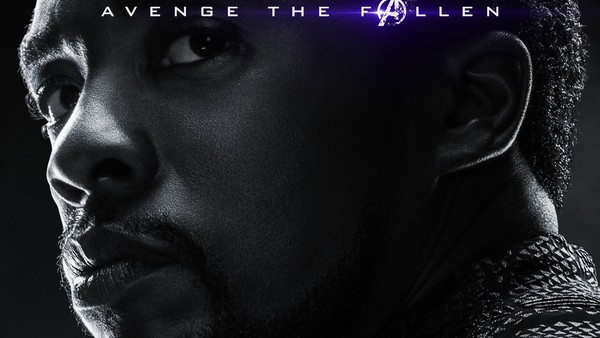
After Avengers: Infinity War, even when the shock of its ending still lingered, we all knew that one way or another those heroes snapped out of existence would be back. There were LOTS of theories as to how it'd happen, and in the end it comes down to the fact the Avengers have a Hulk.
With the Banner/Hulk hybrid donning the makeshift Infinity Gauntlet and clicking his fingers, all lost life is restored to the universe, including Spider-Man, Doctor Strange, Black Panther et al. As we learn from Spidey, they remember the dusting, but have no memories of anything that comes afterwards.
The heroes had to come back in some way, and this might be the best option: it doesn't completely avert the Decimation, in the sense that the heroes do still know they disappeared and the memories of those five years for the ones left behind linger, but it still ensures the MCU has a mostly full roster going forwards.
Hulk's snap, meanwhile, coincides with Thanos' arrival on Earth from 2014 (it's... best not to overthink it), the destruction of the Avengers Compound, and one last huge fight to save the planet. The dead heroes arrive in time to form the biggest collection of superheroes we've ever seen, making the Battle of Wakanda seems almost small scale in comparison. Almost everyone gets a moment, from Peter and Tony's hug to that incredible A-Force moment and, of course, Cap wielding Mjolnir.
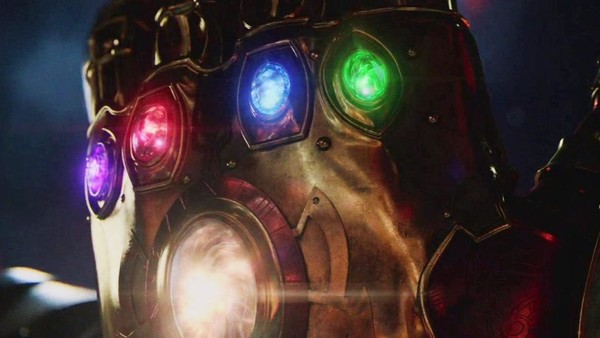
It all comes down to the Infinity Stones once again, with various heroes trying to get the Gauntlet away to a safe place, and ultimately it comes down to Iron Man and Thanos. Iron Man, with the help of his nanotech, gets the Stones, snaps his fingers, and saves the day.
11. Thanos Is Dead (But Could He Return?)

When Thanos snapped his fingers, he wiped out half of the universe. When Professor Hulk did it, he brought them all back. So what happens when Tony Stark does it?
He doesn't destroy half of anything, instead killing all of Thanos' army: the Outriders, the Black Order, all of them die, and then there's the Mad Titan himself. In a fitting reversal of the end of Infinity War, we get to see Thanos turning into dust, and the overarching villain of the MCU has indeed gone. The 'other' Thanos, the one who existed in the present, is gone too, having been beheaded by Thor. Whichever one you want to take as the 'main' Thanos, he is dead. Given this is the end of the Infinity Saga, it makes sense that he had to go, since he's effectively the Infinity Villain - but could he return again?
Josh Brolin has said his contract is done on a movie by movie basis, so it really could be the end. However, The Eternals - which will form part of Phase 4 - have links to Thanos (in short, they're like his ancestors), and that could open the door for more appearances from him earlier in the MCU timeline, since we know they're going to be exploring different periods going forward.
10. The Stones Are Gone - But What About Doctor Strange?

There were a lot of questions about how the Avengers would attempt to either undo or reverse the Snap in Endgame, with various ideas tossed around regarding the fate of the Infinity Stones in particular. Would they be destroyed? Would the Avengers find a way of keeping them safe?
Instead, they go into the past to retrieve the Stones, and then at the very end, Cap goes to put them back into the moment in time they were taken from. So the Soul Stone goes back to Vormir, the Aether goes back to Asgard in 2013, the Tesseract back to 1970 and so on.
That means the Infinity Stones are where they need to be, and can't be used in movies set in the present or future of the MCU. Their journey will end with them being destroyed, but it also means they could be revisited, should Marvel ever decide to, in those in-between movies. That seems unlikely given this was the Infinity Saga and it has now wrapped up, but it's still possible, yet even their absence will have a major impact on one movie in particular.
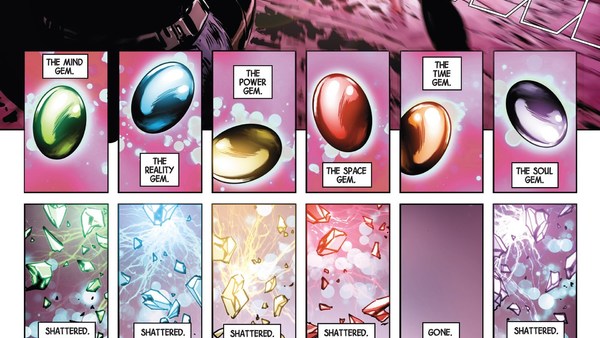
Doctor Strange was the guardian of the Time Stone, like the Ancient One before him. The Time Stone was crucial to his solo movie and indeed his powers, so if he's not going to have it in Doctor Strange 2, what does that mean for the would-be Sorcerer Supreme? Well, interestingly, there is a comics precedent for the Time Stone surviving while the others are destroyed, which comes from Jonathan Hickman's 2013 Infinity storyline (which was an inspiration for Infinity War), so there's a chance the Time Stone does come back after all.
9. What Happens With Captain Marvel?

For all her arrival in Endgame was well-hyped by both the post-credits scene of her own movie and the trailers for this one, Captain Marvel isn't in Avengers: Endgame all that much. She plays a key part in the first act, as she rescues Tony and Nebula from space and goes to help defeat Thanos, and then re-emerges in the battle towards the very end, but is otherwise missing from the film.
When she does return, she takes the fight to Thanos and attempts to take the Gauntlet off him, something she almost succeeds in before he takes the Power Stone and punches her away. That leaves a lot of ground to cover in her sequel.
For starters, there are gaps in what she was up to while the rest of the Avengers were travelling through time. There's a big five-year gap where she was off being a Space Avenger, and was doing something presumably so important she didn't or couldn't return until later in the battle (or simply didn't get the memo), which could be filled in, much like the time between her solo movie and Endgame.
Another question is how she takes her part in the battle. She tried to stop Thanos, and he beat her away. Will she see that as a defeat? And if so, how will that impact on the character - given her incredible confidence throughout the movie - going forward?
8. Queen Valkyrie For Thor 4

Just last week, Tessa Thompson revealed that Taika Waititi had held discussions with Marvel for a fourth Thor film, and after Endgame we have a much clearer idea of what kind of shape that would take - with its focus not actually on Thor, but Valkyrie instead.
We see New Asgard founded during the movie, albeit one a far cry from the opulence of the original version, and ruled over by a Thor who has been completely changed by his guilt over not killing Thanos and so many people being dusted. By the end of the movie, he's in a place where he can simply accept who he is, rather than trying to be who he is meant to.
That means he goes off on his own journey, and doesn't have to carry the weight of being King of Asgard. That honour, then, now falls to Valkyrie. She says she's going to make some changes, and it wouldn't be a surprise to see an Asgard that more closely reflects her own personality, and quite likely is set up on a different planet - it's such a cosmic setting that it would feel a shame to keep it on Earth. And since Phase 4 is going to be more cosmic, it'd make sense for Asgard to go back into space.
7. Asgardians Of The Galaxy: Where/Who/Why Is Gamora?

With Valkyrie now ruling over Asgard, Thor is free to do his own thing, and that means giving us something everyone's been hoping for since early in Infinity War: Asgardians of the Galaxy (which is also a recent comic run).
It was recently confirmed that James Gunn would indeed be back for Guardians of the Galaxy Vol 3, and it looks like he's going to have Thor along for the ride alongside the rest of the crew, all of whom are back. That leaves the lineup of the Guardians now as: Thor, Star-Lord, Drax, Rocket, Groot, Nebula, and Mantis.
We also get a huge clue as to what the plot of Guardians 3 will be too: the search for Gamora. While Endgame didn't undo her death from Infinity War, it did bring the Gamora of 2014 into the present timeline. While Tony snapped Thanos' army out of existence, Gamora wasn't among them, which can only mean that she escapes somewhere (otherwise they'd definitely show her dying with them). When Thor then joins the Guardians, we see Quill looking at an image of Gamora that simply reads 'Searching...'.
So we can take it she's essentially going to be the MacGuffin of that movie, and that fits for Gunn's ethos: this is a Gamora who doesn't know the Guardians, who is now out on her own, and it's about bringing her back to her family. That's a fitting way to close out the trilogy.
6. Steve Gets His Last Dance, And Captain America Lives On

Captain America has long been a man out of time, and with a date that he didn't make. Avengers: Endgame is able to rectify both of those things beautifully, with Steve Rogers, after putting the Infinity Stones back, choosing to stay in the past and get to live the life that'd previously been put on ice. In a moment many Marvel fans have long been hoping for - myself included - he finally got that dance with Peggy Carter, with the pair then going on to live a fully and happy life together.
It's a perfect conclusion for what is arguably the MCU's strongest character arc. There is some confusion regarding how Old Man Cap - aka Not Clint Eastwood - ends up on that bench is the present, and whether there's a split in the timelines, but given he put the Stones back then, as per the Ancient One, we can assume the timeline straightened itself out, with Cap living his life and making his way to that bench. But really, the character work here is so strong and emotional that it doesn't matter about the logic of the time travel.
While Steve gets his last dance, there's also a passing of the torch. Or rather, shield. It's not to Bucky, as fans have long expected, but instead to Sam Wilson, aka Falcon, who can now take on the mantle of Captain America. This has happened in the comics too, and the challenge for Sam now is to live up to that legacy, which is something we'll be seeing play out in his Disney+ TV show with Bucky.
Again, there'll be a question of why Bucky and not Sam, but it's been made apparent in this both this movie and previous ones. In this film, there are little moments between them that suggest Bucky knows exactly what Cap's doing, and that they've said all the goodbyes they need, so it's with Sam he needs to share that final scene. Plus, Bucky doesn't need to become Captain America, because he's been given a new identity already as the White Wolf.
5. Iron Man's Perfectly Fitting Ending

Heading into Endgame, there was a big question over who would die out of the MCU's two leaders: Captain America or Iron Man? And now we know. Steve Rogers gets to live his life, while Tony Stark dies, and that's the ending he absolutely needed to have.
This is the end of an era, and it's an era built by Tony Stark. That's why the post-credits 'scene' is the sound of him making his first Iron Man suit. He built this universe, and has left it in a much stronger place. In the film, Iron Man saves the world, and leaves it - with Thanos gone and all the heroes back - in a much stronger place.
The MCU is, in part, defined by its father figures, and Tony is the father of the MCU. he's the father figure to Peter Parker and, in the movie, the actual father of Morgan Stark (who is absolutely class and will hopefully still feature). He even gets to resolve some issues with his own father, Howard, in a really touching sequence. And father figures in the MCU can't last. They are what the heroes grow beyond. Iron Man has laid down the template, and everything now moves beyond him in honour of his legacy.
His taking the Stones, saying his classic "I am Iron Man" line before snapping his fingers may kill him, but that wraps up his whole arc. His thing was, in Cap's words, not being the guy to lay down on the wire. Him making the sacrifice play has come to define his journey, and doing it here - not as a moment of sheer recklessness, not because he has nothing to lose, but because it's what HE needs to do and because it's about things so much bigger than him - is the most fitting way possible to end the story that started it all.
4. The Timeline

Being a time travel movie, there's a lot of stuff in Avengers: Endgame that has opened up a whole can of worms regarding the timeline, and the potential splitting of it, because this is a film that sees heroes diving into the past and meddling with it.
By the end, however - and this is being deliberately simplistic - things are more or less set. The Ancient One and Hulk's conversation explains that when the Infinty Stones are placed back in their rightful place in time, then the branch universe created by removing it will solidify with the main timeline. Since Cap replaces all the Stones, we can assume that's what has happened, with at least one exception in the form of Loki (since he took an Infinity Stone, he's off in a different timeline, which will almost certainly form the basis of his own Disney Plus show).
But the other point to address here with regards to the timeline is just when the MCU is now set. The MCU did, mostly, work on the basis that movies were set in the year of release, although that was changed when Fury's Big Week suggested most Phase 1 films took place in the course of seven days. It was made more confusing by Spider-Man: Homecoming, which was supposedly set eight years after The Avengers, placing it in 2020, which seemed impossible (and was an error).
Thankfully, Marvel cleaned it up, sort of, with the release of a timeline last year in the book Marvel Studios: The First 10 Years, which corrected that Homecoming was only four years after The Avengers, and Infinity War took place in, interestingly, 2017, not 2018. This movie then picks up five years (and a few weeks) after Infinity War, which would place it in 2022. However, when we go back to 2014 and find Nebula, Gamora, and Thanos, they see the events of the future and state they're happening nine years from now. So even there we have some little deviations, but with just about enough wiggle room to have it work, and means that the 'present' of the MCU is now 2023. That means, going forward, any 'present' MCU movies will be set in our future.
3. So, What About Far From Home?

One of the more immediate implications of the time jump and bringing everyone back falls upon Spider-Man: Far From Home, which releases in July and will be the final movie of Phase 3 (when it was previously expected to kick off Phase 4).
It's previously been stated that Spider-Man: Far From Home takes place immediately after Endgame, but this film leaves some big questions about that. If it is after, then that means it's taking place in 2023, which is seven years after Homecoming. That should mean a lot of Peter's friends have already graduated, but we see him reunite with Ned here, who hasn't aged. If it is set after Endgame, then that means they're going to have to explain that all of Peter's friends - not necessarily the whole school, but all those who matter - were Decimated. Which isn't impossible, but is... convenient.
The alternative is that this is actually set before Infinity War. That would explain why he doesn't have the Infinity War/Endgame suit - although he might simply stop using it because of Tony's death - and would get around the timeline issues. It's what they did with Ant-Man and the Wasp, which came out in the equivalent time slot last year, so is a real possibility, and it's not like Marvel have never lied before. Still, the idea of seeing Peter having to deal with the death of Tony Stark means they should set this after Endgame, even if it requires more explanations of what's happened.
2. Does The Avengers Still Exist?

Steve Rogers is back in the past, and an old man in the present. Tony Stark is dead. So too is Black Widow, in a death that, because of the rules of the Soul Stone, cannot be undone (although she'll be back in a prequel solo film). Hawkeye gets a happyish ending with his family, Thor goes off with the Guardians, and Hulk has nicely found a balance between his two sides (and is injured).
In other words, the Avengers are no more. The original team is gone, and it can't be pieced back together. However, the ending of the movie brings together a LOT of heroes. So many, in fact, that Marvel could pick and choose to create whatever roster they need for another Avengers movie. But also so many that you can ask whether there even NEEDS to be an Avengers team anymore?
There's Black Panther in Wakanda. There's Doctor Strange and Spider-Man in New York. Captain Marvel and the Asgardians in space. Wherever you turn, there's a hero, who can call upon one another if and when needed, but it's too many to really feel like a 'team'. It's like it has now outgrown that idea. Everyone's an Avenger, so no one is an Avenger.
1. The MCU As We Know It Is Over
And so that's it. After eleven years and 22 movies, the Marvel Cinematic Universe is over. At least, from the standpoint of how we know it, because things can never be the same again.
The MCU has been led by Iron Man and Captain America (as in the Steve Rogers version), and they're no longer around, for different reasons. Black Widow's gone. Thanos is gone. The Infinity Stones are gone. At the same time, though, there are some big expansions too: there are more heroes than ever before, and the universe feels larger too. With Captain Marvel and the Guardians, it can go for more cosmic in scope. With Doctor Strange, and the issues of different timelines here, it could dive into the multiverse. It can get weirder and bolder, because of what's been established by Tony Stark and Steve Rogers, its two most human superheroes.
The MCU without either of them is going to be particularly strange to see. But knowing that it should mean things being so different and new, it's also incredibly exciting too. The MCU is dead. Long live the MCU.
What did you think of Avengers: Endgame's ending? Let us know down in the comments.