Avengers: Infinity War - Did Agents Of SHIELD Solve A Giant Doctor Strange Plot-Hole?
Did HYDRA predict Infinity War's ending?
It might make ALL the money and delight countless fans, but the MCU has a bit of a problem with plot-holes. It has such a problem with them, in fact, that there have had to be conscious attempts to retcon some of them out of existence. Fake Infinity Gauntlet, anyone?
But some of the plot-holes are simply left to fester, like Spider-Man's terrible "8 years later", or Tony Stark not having a magnet in his chest for at least half of Iron Man's run-time (despite him needing one to live) or Doctor Strange turning up on a superhero threat watchlist when he was a surgeon and not an actual Sorceror.
That last one could have easily been dealt with if Scott Derrickson had simply set Strange's solo debut slightly earlier (which would have usefully given him more time to train as a Sorceror and made his abilities a little more believable), but he chose to go modern and ignore the mention during Captain America: The Winter Soldier.
It's a point of frustration for cynical fans (aren't we ALL that?), but it looks like we might finally have an answer to why an arrogant, conceited brain surgeon who wouldn't bother himself to help anyone without an obvious personal gain would be considered a threat to HYDRA's attempt to take over the world. And it's thanks to Agents Of SHIELD's recent retconning.
So here's the convoluted way Agents Of SHIELD may have solved a long-term question from the MCU's past...
3. HYDRA And Thanos

The fifth season of Agents Of SHIELD has tied itself into Infinity War in a surprising but not entirely unprecedented way, as it was revealed that HYDRA has been working with the Confederacy - a group made up of alien races who promised to save humanity from an unknown major threat. In episode "The One Who Will Save Us All", that threat was revealed as Thanos.
So how did they know? Well, the thousand-year-old Confederacy has been manipulating races to their own devices for generations and they knew that Thanos would return to Earth (presumably because of the Infinity Stones' presence there) and offered to save Earth if HYDRA delivered resources including empowered individuals. They were seeking a smash and grab before Thanos arrived, basically.
They came into contact with HYDRA when the organisation had procured alien technology left over after the Battle Of New York and had managed to get a communication device working and connected with the Confederacy. That's how they found out about Thanos, basically, and that's why they decided to come out of their hiding place for The Winter Soldier, to enact Project Insight - to save the world from itself, in effect.
So why Project Insight?
2. The Triskellion Targets
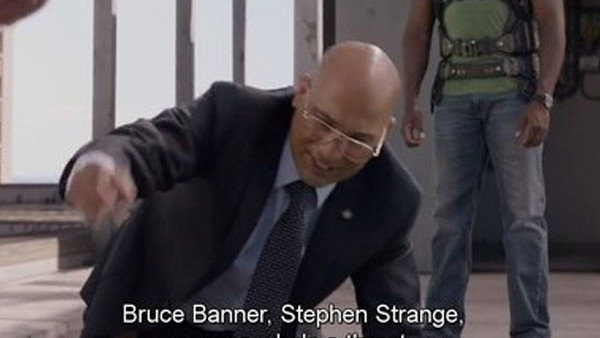
As Captain America: The Winter Soldier established, Project Insight's goal was to identify any threats to HYDRA taking over the world (and they meant ANY threats) and wipe them out in one swift go. That included the obvious candidates like Bruce Banner and the other Avengers, but in total, Jasper Sitwell had calculated that it would leave 20 million people dead. That's a lot of threats.
So why the urgency? Well, the knowledge of Thanos changed HYDRA's plans entirely: they had been happy to operate under the radar but they were forced to step “out of the shadows, and into the light" when the world they were seeking to conquer was under threat from an even bigger conqueror. So they looked to fortify their own position, hedging their bets on the Confederacy (wrongly), but also looking to get their house in order before Thanos arrived.
They were looking to wipe out the threat of anyone who would rise up against them in order that they could concentrate their resources on Thanos. They would achieve their aim to control the entire planet in a few devastating strikes, and their unified people could stand against Thanos as one. That wouldn't have done much good if he had the Infinity Stones, but you can see why they'd believe in the strength in unity idea. They're a Nazi splinter cell after all.
But what does that have to do with Strange? He wasn't a threat? Or WAS he...?
1. Strange And The Time Stone

So why was Stephen Strange ever on that list? He was a brain surgeon and there was little suggestion that he'd ever do anything to help others let alone the entire world. His girlfriend had broken up with him for very similar reasons and on account of his selfishness. He was not hero material at this point.
In order for the Project Insight algorithm to pick up Strange's threat, it had to have known something more than the contents of his bank accounts and his old school test scores. He wasn't going to be killed simply for his intellect (or some of the best potential HYDRA recruits would have been killed simply for being smart).
There was something else in the algorithm. Something big enough for Strange to literally be mentioned by name SPECIFICALLY by Jasper Sitwell. For him to do that, Strange would either have to be known to Cap (which he wasn't) or a hot topic for HYDRA's agents. Which made his threat another level to some of the other 20 million.
Could it be that the algorithm correctly predicted that Strange would end up not only as a sorceror (reckless behaviour, fast cars in his spending and his commitment to his job might drive him to extreme measures and the algorithm was presumably aware of Pangborn who was healed by his knowledge of magic), but also getting the Time Stone. How it knew that little piece of information is unclear, but it can only be the case that HYDRA's basis for him being a threat was the fact that he would end up with an Infinity Stone (and would hand it over to Thanos).
It might sound far-fetched, but it's as close to an explanation of why he's on that list as we're likely to get that doesn't just say "it was a mistake". And getting rid of sloppy Marvel writing is definitely to be encouraged.
What do you think of this? Share your reactions below in the comments thread.