Batman V Superman: 13 Biggest Blunders Zack Snyder Makes That Completely Ruin It
He couldn't even think of a good reason for them to fight.
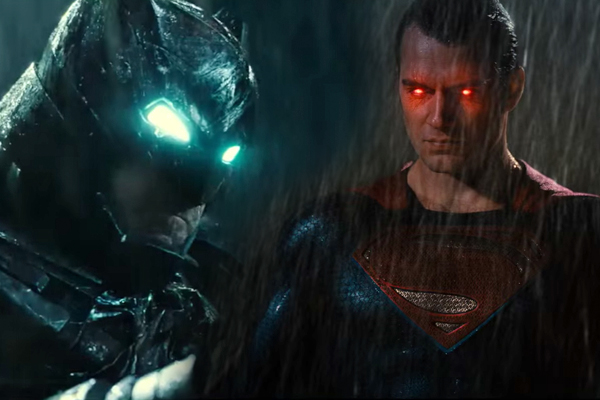
It's here. After two-and-a-half years that have encompassed controversial casting, title changes, release date shuffling, one of the most divisive marketing campaigns of recent years and cries of major studio worries, Batman V Superman: Dawn Of Justice has been unleashed on the world. And it's as bad as all the sceptics feared.
With big movies like this it's usually hard to pin the blame on one person - moviemaking is a highly collaborative process and all manner of production issues can have an impact on the final product (it's still unclear who was really behind the incompetent-on-all-levels Fant4stic). However, this dud appears to be all the fault of one man, a "filmmaker" lacking in all filmmaking skill and unable to balance what little creativity he has with studio mandates. That's right, Batman V Superman's failure is all on Zack Snyder.
I've already taken down the film in my full review, but now it's time to hone in on its biggest problems and look at just how much he messed this up.
Spoilers will be kept to a minimum - there are naturally going to be some discussion of the plot and in doing so some elements will be revealed, but I'm avoiding details.
Honourable Mention - The Trailers
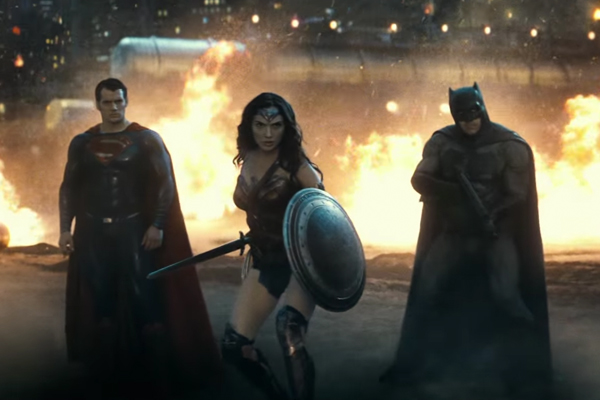
This isn't really the movie's fault, and to his credit Snyder didn't seem totally on board with the approach taken, but the marketing for Batman V Superman did it no favours; the third trailer revealed "surprise" villain Doomsday, and while the forth doubled back on that, it had its own share of extra footage too. That's bad enough and could have been summarised pre-viewing, but it's what happens after that really matters.
Without going into spoilers, the movie subscribes to the "One Shock" form of filmmaking - where most of the movie is spelled out in the marketing, but there's a big element kept hidden (see Han Solo's death, the Blofeld reveal or Jean and Scott being alive). While it doesn't have much of an impact on the film's quality itself, knowing pretty much every key beat makes it that bit harder to get immersed in.
13. The Story Structure Is Absolutely Horrendous
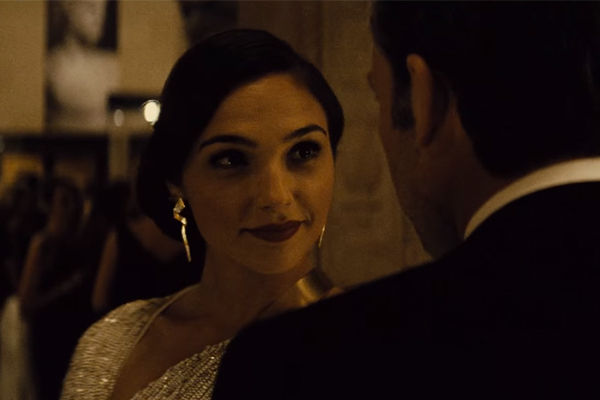
The intrinsic problem with Batman V Superman as a film is that it simply doesn't have a proper structure. From the very start, where we're treated to no less than four disconnected opening sequences (only one of which ultimately feels necessary), it's apparent that Snyder has too many plates spinning and is chucking out threads in a totally randomised order, and as we go along it only gets worse.
Sure, the story he's trying to tell isn't exactly that interesting, but he could have told it well; between obvious set-up, characters turning up in locations out of the blue and indiscernible time jumps it feels like a rough draft that isn't ready to be filmed, let alone released. Studio meddling? Disagreements between writer and director? Snyder surrounding himself with yes men? Whatever the case, the fundamentals of Batman V Superman as a story aren't there.
This doesn't just make for an exasperating experience; the poor writing and editing eventually starts to pick itself apart. At one point a character reveals in the space of twenty seconds half a dozen astounding facts that all could count as proper movie-defining twists by themselves, yet the movie has got itself into a position where it can spend no time on them and has to barrel forward, leaving you questioning whether it was meant to be a big reveal at all.
12. Few Of The Performances Leave An Impact
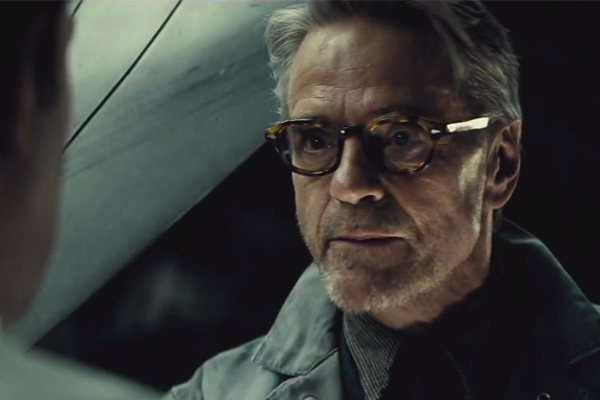
The cast for Batman V Superman is a very good collection of actors, and to their credit nobody's turn as a comic icon is an all out stinker. Still, it's a rather placid make up, and given that there's bits of each performance that really hit the mark, it's fair to blame bad direction rather than their care or interest.
Jeremy Irons is the main standout, able to deliver a cheeky emotive arc for Alfred in the short time he's given, and in the subject of fairness I will say that Henry Cavill steps it up from Man Of Steel, with Superman beginning to embody what Superman represents (even if his Clark Kent is just the glasses, with none of the nuance of Reeve).
Thinking on it, the worst of the lot is Jesse Eisenberg's Lex Luthor, simply because he's so one-track and his angle of villainy is so woefully inconsistent. But, once again, the bigger point is the actors are smothered by the movie.
Even Ben Affleck, who everyone decided before the film was going to be a perfect Batman, is merely OK. An older Bruce Wayne who's playboy and vigilante personas have almost merged, he's driven by coiled anger and looks the part in the action sequences, but the film is so tight on what becomes his mission against Superman it's impossible for him to really stretch his legs. Good, but we need to wait for The Batman to get proper Batfleck. Bale still rules.
11. It Gives Up On Being Man Of Steel Apology Halfway Through
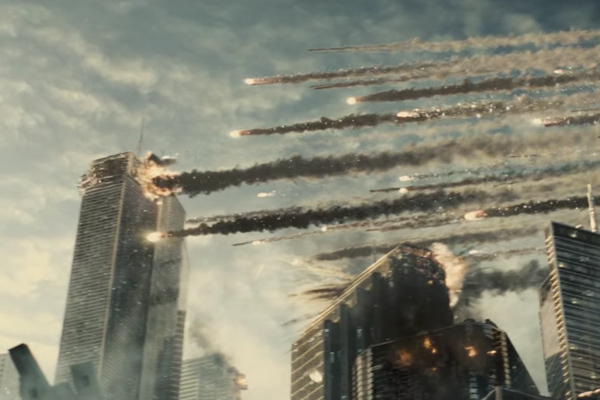
Because Man Of Steel was so divisive, the trailers for its sequel, especially in the early days of the marketing put a lot of effort in showing this was righting wrong; the teaser really leaned into the backlash against the presence of a city-levelling god and the Comic-Con trailer painted the Battle of Metropolis as Batman's key motivations.
This carries over into the movie at first, with Bruce Wayne's daring escapades during General Zod's attack really setting the scene. Or so you'd think - after about ten minutes this element is pretty much dropped; most of the Superman backlash comes from him being blamed for an entirely separate, much less interesting event that an eight year old could point out is clearly not his fault and Bruce's motivations are muddied by further complications. When the two finally come to blows, the previous movie may as well not have happened.
Not leaning on Man Of Steel - a movie that is better than Dawn Of Justice, but not by much - is fair enough; nobody wants to be reminded of past indiscretions while trying to look to the future. But don't start an apology and give up halfway through.
This completely disregard is compounded in the finale, which sees just as much destruction levelled on Gotham as Metropolis in the original, with only cautionary comments about how it's late at night, so the business district is mostly empty for respite.
10. It Ignores Its Best Ideas
Faint praise here, but there are some good ideas in Batman V Superman; isolated moments of smarts that show some real ingenuity, but are sadly ignored by the film. Some non-spoiler ones that really stuck out for me were Diana Prince wincing as an oblivious, self-aggrandising Lex made coy statements about Zeus and Bruce Wayne lamenting in the ruins of Wayne Manor how he's already older than his father, yet despite showing us the humanity beneath these icons, they were swiftly swept away, not used as later motivation or even given time to develop into a full character beat.
There's plenty more, and they're all treated in the same way. It's not like the film couldn't have taken the time to do them justice, it just doesn't seem to really know what its got, instead running other less interesting but still curious concepts (a hearing about Superman's autonomy) into the ground (and even then that's without ever really getting to the heart of the issue).
It's part of the bigger issue with the story, but the fact it runs throughout the film only goes to show how choppy everything is.
9. It Can't Craft An Ensemble
Between a villain, two main heroes, a side heroine and a handful of key supporting characters, Batman V Superman: Dawn Of Justice has an ensemble that just about rivals The Avengers in terms of size. And, all the seeding of future projects and "first time ever on screen" hype aside, it's the handling of the cast that hammers home just how much weaker than Joss Whedon's Marvel parallel this is.
There are three main character threads - Bruce, Lex and Clark - that are cut between in the first hour or so, but they each progress seemingly at random meaning that while there's balance, there's no coherence. Playing any plot by itself would reveal a jagged narrative with logic leaps and assumptions galore, while the key moments of interaction are messy. Bruce and Clark meet at a party, giving a chance for a verbal sparring match, but there's so much else going on with the characters that it doesn't gel, while the first encounter between the duo in their costumes comes out of nowhere and is over before the impact of what's going on can sink in.
Everything feels disconnected, like two or three different movies have been edited alongside each other; Wonder Woman is in the background of all this and her scenes not interacting with Bruce Wayne could happen just about any time. Justice League has a lot of issues to fix, but this is the biggest.
8. If There's An Attempt To Give Style Substance, It Doesn't Work

One thing I mused after the Final Trailer for the movie hit was that Snyder may be showing some actual creativity and was shooting scenes featuring the individual heroes differently, with Batman shot guerrilla style and Superman having a more grandiose feel, visually representing the character's different ideologies and adding another layer to their ultimate fight. This is kinda there a bit in the movie, to the point where some reviews cite the stylistic distinction between Gotham and Metropolis as the movie's main saving grace.
But, really, I just don't see it. The two cities feel pretty indistinct when we're in them - only the slums of Gotham or the towers of The Big Apricot give a sense of place and they're only in certain scenes - while Larry Fong has filmed things in a very standard manner no matter which character we're currently following.
It certainly doesn't look like Snyder's tried to do anything more than create comic panel-esque shots, something he's been doing for a decade now and has been the cause of the style over substance cries. And if he has tried to advance that, he's not succeeded
7. It Patently Misunderstands Audience Investment
A big part of the allure of Batman V Superman is, well, seeing Batman and Superman fight. That title is one of the easiest sells in cinematic history. However, not only is it a bit of a marketing lie (to that in a bit), it's the only thing that gets you invested in the showdown itself.
There's a game-changing point early on in the second act where a character reportedly disappears, but due to those editing issues is never actually offscreen for more than a couple of scenes at a time. As a result, when they make a triumphant return and other character's are overjoyed, as an viewer you're just left with a feeling of confusion; were we actually meant to believe they'd gone and, more importantly, should their return be an emotional highpoint?
It was at this moment something hit me; I don't care about these characters. Oh, I'm eternally interested in Bats, Supes, Wonder Woman, Lex et al, but these versions, through the various cases of poor handling I've already gone through, I didn't care about the people on screen, despite the film begging me to.
6. Batman And Superman Kill... A Lot
"I won't kill you. But I don't have to save you." With that one line Christopher Nolan somewhat unwittingly introduced a get-out clause that has had a toxic influence on all subsequent appearances of famous non-killers Batman and Superman. In the later instalments of The Dark Knight Trilogy, the Caped Crusader committed several acts that would most probably result in the victim being killed and was active in the death of Talia al Ghul and her truck driver, then Man Of Steel Superman was defined by his snapping of Zod's neck.
But those look morally clear compared to what's in Batman V Superman. Suggestive dream sequences aside (where this sort of thing can allow for an interesting assessment of the characters), throughout the film the duo are carelessly behind a raft of murders; Superman does it in his first scene and Batman barrels about in his Batmobile blowing up cars and tricking goons into shooting each other.
The "one rule" ethos is passingly raised too, so it's not like Snyder's presenting alternate versions of these heroes either; it's complete and utter oversight, a laziness to not commit to some of the character's most base traits. Comic accuracy isn't always need to make a great comic book film (see Iron Man 3), but this element is just too integral to miss.
5. It Constantly Relies On Hackneyed Filmmaking Tricks
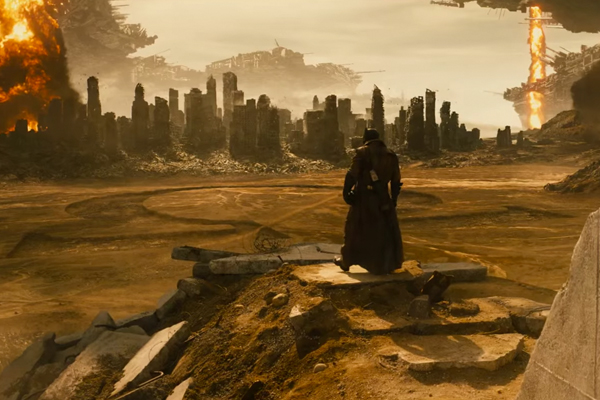
As if the film wasn't already scattershot enough, Snyder chose to bring in some well-worn filmmaking tropes into Dawn Of Justice that only serve to highlight his complete lack of skill bordering on incompetence; there are four dream sequences, two detailed flashbacks to things we saw earlier in the movie and a major plot development delivered through montage. Now there's nothing wrong with leaning on techniques like this - they are established because they can work - but the way Snyder employs them just comes across as insulting.
Each of the dream sequences is segued into as if it's real, leading to a "Oh, it was all fake" reveal that feels cheap, especially given how everyone of them features things so unrealistic they obviously don't fit in the world (and this is a world with rampaging Kryptonian mutants). The two flashbacks exist only to hammer home obvious reveals that only a passive audience member wouldn't get. And having what is meant to be such an important thread rushed over in two minutes means the late attempt at emotional involvement is further weakened. Thoughtless.
4. The Justice League Set-Up Is Atrocious
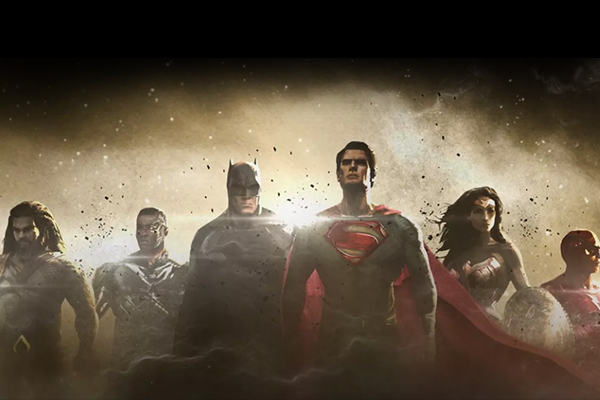
Batman V Superman is also the Dawn Of Justice, and thus has a few scenes that aim to lay the groundwork for DC's massive, Marvel-aping universe. And while it's not the worst title element (that's the "V"), it is an utterly perfunctory one.
I'm not going to elaborate on how these future stars fit into the movie, but it's tangential at best, with their scenes clearly part of a studio-mandated redraft and minimal effort made to ensure they fit. You could cut out everything pertaining to The Flash, Aquaman and Cyborg and not alter the bigger movie at all; in fact, it'd probably be a more focused piece.
Look, I get it - DC needs to build this world. But it needs to be a world, not this fragmented run of glorified trailers for movies years away from release. Marvel aren't exactly the most subtle with their seeding of future movies, but bar Iron Man 2 and the cave in Avengers: Age Of Ultron there is an effort to at least tie it into the plot.
3. Doomsday Is Nothing More Than Deus Ex Machina
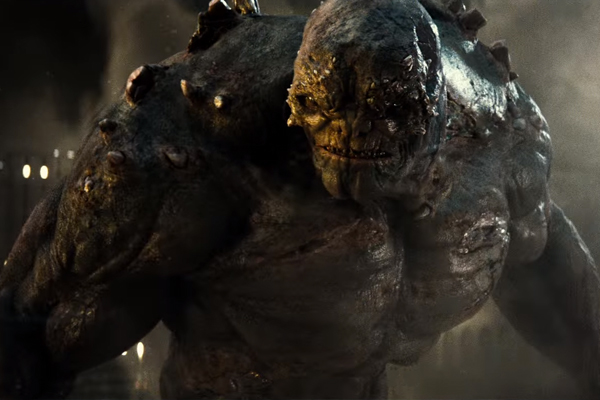
Mentioning Doomsday - in terms of his origins, impact on the plot and the fact he's in the movie at all - should have counted as a spoiler, but he's in the trailer, so is complete fair game. And what a mess he is.
I don't necessarily have a problem with him being a product of Lex Luthor experimenting with General Zod's corpse. It makes sense in the world (ish) and is a nice little meta parallel to the character's comic origins; he was created by DC with the singular purpose of killing Superman, and that's the exact reason why Lex has crafted his "devil". And that he could be best described as Dumbsday, looking to have the intelligence of a Lord Of The Rings cave troll, is likewise not a major issue; the important element is brute strength. He's also fairly well set up, teased throughout the movie's first half.
The problem is that in the movie he's for the most part an empty character used as a deus ex machina to bring the Trinity together, never becoming more than a grunt. There's a vague attempt to bring some of his key comic book traits to the screen, but they're disregarded a moment after they're raised, with characters explicitly ignoring things they've just learned as they take him on.
2. The Motivations For The Fight Are Laughable
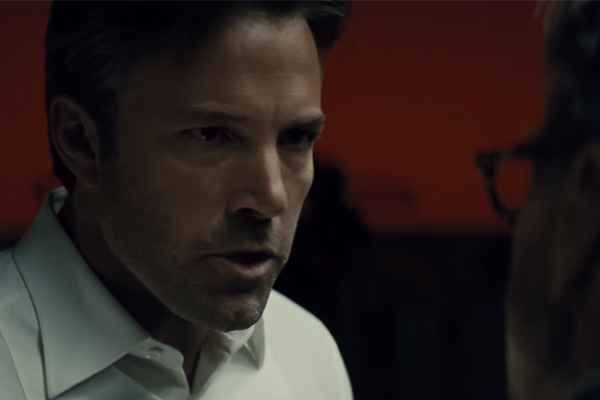
Although it seems like such an obvious concept, Batman and Superman have rarely come to blows in the comics. There's a plethora of reasons why this plot device hasn't been used, but the biggest has to be that finding a reason for them to fight that allows them to pick up the pieces after is so tricky it's not really worth the thrill. The main notable case is Frank Miller's The Dark Knight Returns, which loosely (very loosely) inspired the movie, and that was set well in the future.
Still, with almost three years to work on it you'd think at the very least Zack Snyder would have come up with a solid reason for what is, lest we forget, the title moment of the film. Ha, nope!
Batman's motivations are muddled by later events, but even his key driving factor only makes sense if we accept Bruce Wayne as a reactive moron. Superman's are harder to take serious, with everything in his stroy preceding the fight rendered moot by a couple of suddenly introduced factors. It's not helped by how "fight night" comes kinda out of nowhere, but that can't explain that, when they finally come face to face, neither character seems to want to be in the fight. And neither do the audience.
1. The Fight Is Nothing More Than A Playground Brawl
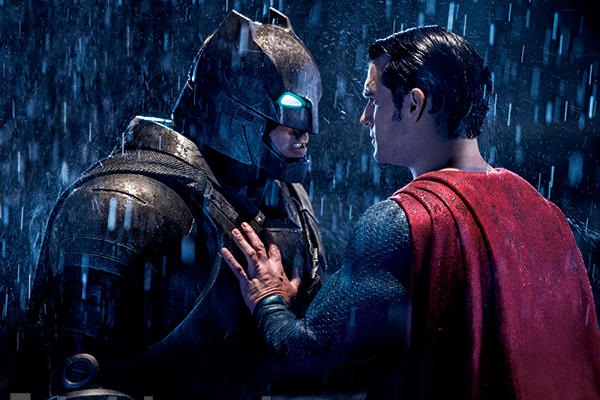
Zack Snyder can direct action. It's what made his name with 300 and remains the one thing he's universally praised for. So even if the reasons for the big versus are flippant, at the least he'd be able to craft a good sequence? Even bigger ha, even bigger nope!
There's about a minute of the sequence that works, presenting you with an unclear power balance and Batman using as many gadgets as his belt will hold. But it's sandwiched between a booby trap sequence that would have been laughable in the Adam West era and an extended sequence in a drab location that uses every contrivance in the book to keep the fight going and results in the "greatest gladiator match in the history of the world" becoming two people punching back and forth. There's no sense this is Batman or Superman being Batman or Superman - they're forced by the lazy writing to be restrained.
But what really hurts is the resolution. We all knew #WhoWillWin was a bit of misnomer, but no amount of Trinity team up images could have prepared me for how one-note the conclusion would be. It actually uses one of the "Oh, cool" moments I mentioned earlier, but doesn't take it anywhere interesting and leaves the whole film empty.
Like this article? Let us know your thoughts down in the comments.