Blonde Review: 7 Ups & 3 Downs
Andrew Dominik's Marilyn Monroe "biopic" is tailor-made to divide.

One of the most anticipated non-blockbuster films of the year is finally upon us - Andrew Dominik's Blonde, a fictionalised biopic of Marilyn Monroe that the filmmaker has been trying to get made for over a decade.
Dominik's bold, uncompromising adaptation of Joyce Carol Oates' 2000 novel is, predictably, going to polarise audiences, just as it has critics ever since its recent premiere at the Venice Film Festival.
From the outset, it's worth confirming that anyone craving a more down-the-line Monroe biopic would be advised to stick with the Michelle Williams-starring 2011 film My Week with Marilyn, because Dominik evidently has no interest in making that sort of movie.
Blonde is a challenging piece of work that's been dubbed both a masterpiece and offensive trash with equal enthusiasm.
As is usually the case, neither of the most passionate camps are quite on the money - it's neither as expertly crafted as you might hope, nor as Controversial as you've heard.
It's an interesting movie that gets more right than it doesn't, and will service adventurous, open-minded audiences while turning off those in the market for something more conventional.
But with that in mind, here's what Dominik doesn't get right...
Downs...
3. It's Messy & Wildly Overlong

Dominik is trying to cover a lot of ground with this movie, travelling all the way from Marilyn/Norma Jeane's (Ana de Armas) childhood through to her tragically untimely death, and even with a beefy 166-minute runtime, one suspects he ended up leaving a ton of material on the cutting room floor.
This is a long movie that feels long and gruelling, enough that some might wonder why such an inherently episodic piece of work wasn't released on Netflix as a more expanded mini-series instead. But alas, that's not Dominik's vision.
And while there is a heft of compelling dramatic material within Blonde, it also often reeks of filmmaker over-indulgence, given how aggressively Dominik - who also wrote the film - bashes the viewer over the head with the film's fairly straight-forward themes.
Though Dominik's direction is frequently exemplary, there are also moments that feel far too obvious and even ridiculous, such as a thoroughly daft moment at the Some Like It Hot premiere where Marilyn envisions the assembled press as ghoulish humans with digitally elongated mouths.
Elsewhere the camerawork sometimes verges on goofy and even pointlessly invasive - was there really much of an artistic reason to stage several shots from within Monroe's vagina?
The result is a film that sometimes feels like a parody of "arthouse" movies, and while it's laudable that Netflix gave Dominik the rope to make such a singular piece of work, it's also proof that unrestrained artists don't always know when to stop.
2. Ana De Armas Can't Shake Her Accent

Ana de Armas gives a richly dramatic performance as Marilyn, though there's one aspect of her performance that remains an unfortunate distraction, and that's her accent.
As many remarked since Blonde's first trailer dropped, de Armas has evidently struggled to drop her significant Cuban twang, despite working extensively with a vocal coach in an attempt to do so.
For the entirety of the film, her natural accent is still basically audible underneath her approximation of Marilyn, and in some scenes it's even clear that she's fighting hard to suppress it.
This sometimes runs the risk of pulling viewers out of scenes, yet at least the heightened feel of Dominik's film - mounted as more expressionistic than impressionistic - makes it less of a hindrance than it would be in a more typical biopic.
It won't bother everyone, but it does place an asterisk next to her otherwise committed performance.
1. It's Going To Piss A LOT Of People Off

Make no mistake, Blonde's sheer existence has already made a lot of people angry, and it will only continue to now that it's available on general release.
Even beyond the arguments about the ethics of dredging up Monroe's well-trod tragic life for another piece of "entertainment," Dominik's film basically goes out of its way to weed out those who might go in hoping for something more safe and familiar.
This is a film which refuses to shy away from the ugliest moments of her life - abuse both in childhood and as an adult in Hollywood, and being haunted by the memories of her aborted pregnancies.
Dominik literalises the latter by envisioning Monroe speaking to her own unborn fetus, in a scene that while not nearly as controversial as some outlets have suggested, is nevertheless transgressive enough to surely upset and frustrate many viewers.
It isn't a warm and cozy piece of work that fondly remembers the highs of Monroe's life - it's a film about abuse and its lifelong impact which some will unavoidably see as exploitative, and it's not an accusation which Dominik's film is easily able to fully sidestep.
These issues aside, though, Blonde offers a lot of cinematic nourishment if you're prepared to stick with it to the end. Here's what it gets right...
Ups...
7. Ana De Armas' (Mostly) Solid Performance

Though the aforementioned accent issues do take some of the shine away from Ana de Armas' performance - and likely knock her out of Oscar contention - she nevertheless turns in a transformative feat of acting well worth your attention.
This is certainly the most demanding of all the Monroe biopics material-wise, yet de Armas throws herself ferociously into Dominik's madcap vision and absolutely gives it her all.
She makes us feel the searing pain that seemingly dominated so much of Monroe's adult life, of a woman ever searching for contentment all while being chewed up by both the Hollywood machine and almost every single man in her midst.
No matter your take on the film as a whole, de Armas commits fully to it and, accent gripes aside, acquits herself well.
6. It's A Bold & Uncompromising Biopic

For as much as Blonde will repulse and irritate many, there are those who will appreciate it as the sort of bold, totally unique biopic that basically doesn't get made these days.
Dominik translates Oates' novel - again, a fictionalised biography - to the screen with an uncompromising brutality, with no stone being left unturned for the sake of "taste", for better or worse.
For much of its runtime, Blonde feels less like a dramatic "biopic" than it does a horror film, so effectively does Dominik depict Monroe as a prisoner within her own story.
It's an approach that won't work for everyone, but it is nevertheless refreshing to see a skilled filmmaker so thoroughly deconstruct the tropes of a typical biopic, detonating audience expectations in the process.
5. The Surreal, Dreamlike Visuals
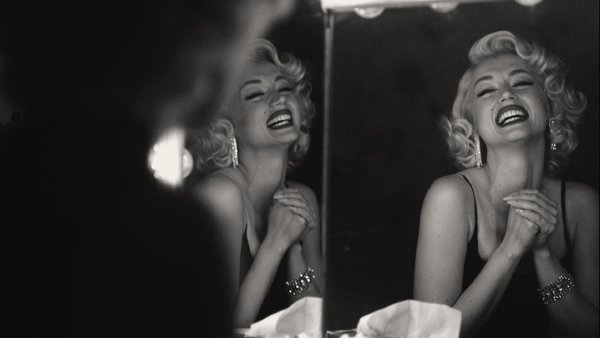
Despite the overpowering ugliness of what Monroe is subjected to throughout the film, this is a gorgeously mounted piece of work, courtesy of both Dominik's trained eye for compelling imagery and the fine work of his cinematographer Chayse Irvin.
The film is a basically dreamlike collage of focal lengths and aspect ratios, of colour and monochrome, creating a deeply elevated aesthetic which enhances the feeling that, indeed, we're watching something half-remembered - after all, Blonde never professes to be entirely factual.
Not all of the choices work, for sure, but there's a fascinating playfulness to the sheer sensory assault throughout. No tool in the box was evidently off-limits for Dominik, and while he sometimes goes overboard, this is a majestic-looking piece of work more often than not.
4. The Excellent Ensemble Cast
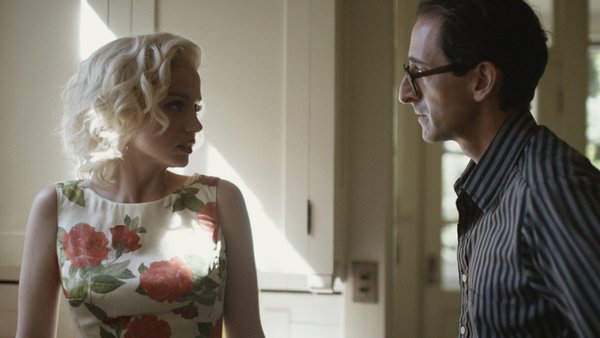
Though de Armas has understandably gobbled up the lion's share of the press attention for her performance, Dominik has stacked the ensemble cast with a bevy of terrific actors who totally rise to the occasion.
First we have the great Julianne Nicholson, who gives a brief but devastating performance as Marilyn's mentally ill mother Gladys Pearl Baker, while Bobby Cannavale is well-cast as Marilyn's second husband Joe DiMaggio.
Adrien Brody is meanwhile excellent as Marilyn's third husband, esteemed playwright Arthur Miller, and Xavier Samuel is slyly tragic as Charlie Chaplin's ill-fated alcoholic son and Marilyn's youthful lover, Charles Chaplin Jr.
There's not a single sour note among the ensemble, who give it their all in order to bring added flavour to de Armas' central performance.
3. Andrew Dominik's Fearless Direction

Again, Blonde won't be for everyone, but Andrew Dominik is to be commended for so aggressively staying the course where his vision for this story is concerned.
If nothing else, it feels like Dominik got to make exactly the film he's had in his head for all these years, and though Netflix reportedly toyed with having Dominik cut the film down into a more palatable form, he ultimately won out.
Even if the director sometimes goes over the top, this is a film replete with smart filmmaking flourishes.
As mentioned, Dominik reimagines Monroe's life as a horror film, using unsettlingly surreal imagery to convey Marilyn's dissociation from Norma Jeane, and in one sequence even literally having Norma Jeane "conjure" Marilyn before heading onto set.
Dominik also effectively weaponises the male gaze to demonstrate how Monroe was objectified throughout her life and career, for while the film contains its fair share of nudity, little of it is shot and framed for titillation.
Right up to Blonde's terribly sad ending, Dominik is doggedly invested in demonstrating the duality of Marilyn/Norma Jeane, and while he gets no points for subtlety, his willingness to provoke the audience is exciting and refreshing in its own way.
2. The Stunning Period Detail
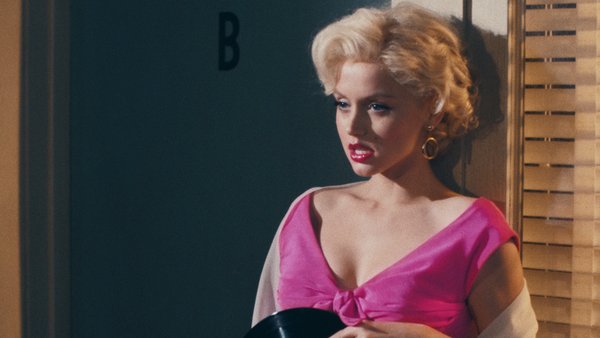
In addition to the robust cinematography, this is a mesmerising film from a general crafts perspective. The production design, to approximate the various time periods depicted throughout Monroe's life, is basically immaculate and impressively places us right there alongside Marilyn.
Then there's the costumes, which are probably the film's best shot at snagging itself even a single Oscar nomination.
The wardrobe department has done an exemplary job of kitting de Armas out in the distinctive, eye-popping threads we'd expect to see Marilyn wearing.
This all combines expertly for several sequences in which de Armas either recreates iconic moments from Monroe's life - such as the famous flying skirt photograph - or is digitally inserted into Monroe's movies, most notably Some Like It Hot.
Though Dominik was ultimately working with a relatively modest $22 million budget, he evidently allocated his resources in all the right places, ensuring this is a ravishingly produced piece of work that appears to accurately recall its setting.
1. Nick Cave & Warren Ellis' Stirring Musical Score

Dominik's regular collaborators Nick Cave and Warren Ellis return to score Blonde, and as expected they do much of the film's heavy lifting where mood and atmosphere are concerned.
Though much of the film veers off to ironically deploy pre-existing music - such as Monroe's "Bye Bye Baby" shortly after she has an abortion - Cave and Ellis' original score lends undeniable weight and gravitas to Marilyn's tragic journey.
Leaping from unsettling to ethereal and finally devastatingly sad, Cave and Ellis' compositions are typically excellent, especially during the movie's final stretch as Monroe's life comes to an all-too-soon end.
Yet throughout, their work bolsters the film's dynamic soundscape and accentuates the beautiful - and often beautifully ugly - visuals.