Cannes 2013: 10 Incredible Performances That Ruled The Festival
 After hundreds of films have screened in competition slots, in special screenings and in sidebars, Cannes film festival is drawing to a close. There may be a few films yet to screen, but at this stage of the festival, the collected producers, hacks and cinephiles tend to make their way back home, so it seems an appropriate time to explore some of the highlights of the festival. Inevitably, not all of Cannes' chosen films are great - they are chosen on artistic merit or intrigue rather than quality quite often, and the festival programmers like to offer something new, as well as some provocative inclusions ever year. The performances in those sorts of films can be great, but with so many great casts on show this year on the Croisette, it shouldn't be too much of a shock to see a strong representation of known names in this list. Honourable mentions must go to John Goodman, who threatened to steal every scene he was part of in Inside Llewyn Davis, as well as both Takao Osawa and the deliriously creepy Tatsuya Fujiwara from Takeshi Miike's under-appreciated Wara No Tate (Shield Of Straw.) Likewise George Mackay from the excellent sidebar film For Those In Peril will no doubt find his agent busy with offers after his lead performance in Paul Wright's skinned knee drama. But now on to the winners. Here we go with the ten biggest and best performances from this year's Cannes film festival...
10. Robert Redford - All Is Lost
 Robert Redford knows all about the rigours of acting - at more than 70 years of age now, he's seen a fair few testing roles - but few performances could have taken as much out of the actor as his heavyweight but subtle turn in solo movie All Is Lost. Playing an unnamed sailor, clearly unsuited to sailing alone (so laboured are his actions and so painful the wrestling with the sea,) Redford is a picture of a leading man, even stripped of the rather helpful tool of speech. He spends almost 100% of the film, in which his character is lost at sea and suffers an almost comical series of unfortunate events, without uttering a word (aside from a couple of well-placed and well-deserved expletives and a short prologue voice-over) and remarkably his performance doesn't suffer. The character lacks a backstory, and so familiar is Redford, and so sympathetic his character, that it's hard not to see the character as Redford himself, battle-worn from his long career, making a final stand against the inevitable slow march to death. That adds a touch of pathos to the character, even if it isn't conscious, and the final evaluation that he is worth watching alone and silent for so long is the most fitting tribute there could be. Read the full All Is Lost review here.
9. Octavia Spencer - Fruitvale Station
 This won't be the first time Octavia Spencer has attracted favourable attention after offering an eye-catching role in a hugely important film, after her successes with The Help, but that doesn't make her performance in Fruitvale Station any less noteworthy. Spencer plays Wanda, the pious mother of central character Oscar (played by Michael B Jordan,) who is clearly anxious for her son, after his time spent in prison, and for his young family. She is one of his grounding voices of reason, the anchors that keep him from allowing the animal side of his character, which is hinted at briefly, to resurface and drag him away from his aspirations to be a better man. For the most part, Wanda steps in and out of the narrative offering a glimpse of Oscar's normal family life, and of what he could live every day if he can get himself back on his feet and away from criminal influences. Her presence in those scenes is homely and authoritative, particularly during one heated confrontation with her son in prison, but it is when the events of that fateful New Year's Eve take a turn for the worst that her performance shines. As Oscar lies in hospital, Wanda takes centre-stage, putting down the angry protests of his friends, and asking for hope instead and prayers, and her fervent hope is a touching note to the inevitable, known tragedy, and it is easily one of the defining moments of the entire film. Read the full Fruitvale Station review here.
8. Marine Vacth - Jeune & Jolie
 Cannes loves a bit of controversy, and this year was no different, with unsimulated lesbian and gay sex scenes, ripe Oedipal symbolism, and this, Francois Ozon's portrait of the sexual awakening of a 17 year old girl, played by newcomer Marine Vacth. There's no prize for guessing how Ozon wants us to enjoy his star (who is in fact not as young as the character) as even the first shot invites us to look down the lenses of a pair of binoculars, spying on a sunbathing Isabelle (Vacth) as she takes off her bikini top, forcing us into the position of complicit voyeurs immediately. From there on, Vacth plays the melancholic sex kitten (a curiously French creation) to perfection, offering an innocent surface image for her home life, with a sultry temptress bubbling beneath the surface, who isn't afraid to flirt with her stepfather for provocation, or her shrink. She is the walking nightmare of all mothers of teenage girls, and the assured performance of Vacth goes a long way to making Isabelle a more interesting character than the object of the collective audiences' affections. Read the full Jeune & Jolie review here.
7. Bruce Dern - Nebraska
 With black and white treasure Nebraska, Alexander Payne has achieved character greatness again, offering an intelligent and occasionally hilarious portrait of familial and individual dysfunction that delighted the Cannes audience in its Competition berth. There will be some strong whispers emerging that Nebraska might sneak the Palme d'Or, and I would happily offer my own endorsement: it was easily one of the most enjoyable films that screened over the entire festival, and probably second only to Behind The Candelabra. A lot of that enjoyment comes down to the film's central performances. The entire cast is nailed on for the roles, from Devin Ratray as a villainous cousin, to Stacy Keach as a threatening old friend to Woody, but it is the family at the centre of the narrative who wins the most plaudits. And at their head is Bruce Dern, aged remarkably for the role by a tousled hair-style and a physical performance that conveys exactly Woody's vulnerability as well as his obstinate pride. He is great as the bull-headed alcoholic, and could well pick up some awards attention for the role, which is multi-layered and intriguing, as we are allowed to peel away some of the skin of his demeanor to reveal a hidden story that offers even more enrichment. Read the full Nebraska review here.
6. Rob Lowe - Behind The Candelabra
 Just edging out Matt Damon is shameless scene stealer Rob Lowe for Behind The Candelabra, which many may have been surprised to see play in Competition, but which was a delightful experience, and is the film I personally am looking forward to seeing again once back on Terra Firma. Lowe plays Dr Jack Startz - reknowned plastic surgeon who transforms both Liberace (Michael Douglas) and his young lover Scott Thorson (Matt Damon) and then, as part of his make-over, gets Thorson hooked on his magic California Diet pills that start the spiral that takes the wheels off his life. The film just about ignores the urge to make Liberace and Thorson, or their harem of supporting characters into irredeemable caricatures, and instead offers a touching human drama with a grandiose backdrop, but in Startz, director Steven Soderbergh clearly had some fun. Since the timeline of the film, Startz has been discredited as a dangerous practitioner, and took his own life, leaving a notorious reputation, which Soderbergh uses to create a figure of ridicule, thanks to Lowe. Lowe's doctor is a walking plastic surgery obsession, face pulled so tight he can't blink properly or drink without his face forming a humorous confused look that had the audience in Cannes in stitches. To his credit, Lowe plays the character fairly straight, though Soderbergh's direction generously allows him some lingering time to milk the appearance jokes, and he is a true example of sparse use of characters adding to their impact. Read the full review of Behind The Candelabra here.
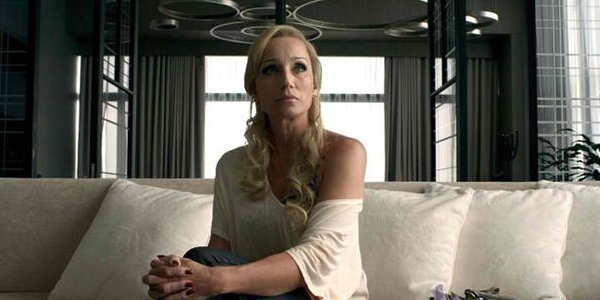
5. Kristen Scott Thomas - Only God Forgives
If you have read my review of Nicholas Winding Refn's Only God Forgives, or my follow up proclaiming the five reasons you will definitely hate it, chances are you know how I feel about it. In short, I found it to be a self-indulgent, anti-entertainment experience with a comatose performance by Ryan Gosling and few genuinely redeeming factors. But having said that, only shining light in the whole sorry affair was the performance of Kristen Scott Thomas, criminal matriarch of the central family, who heads to Hong Kong to seek vengeance for the death of her eldest son, and Gosling's brother. Considering how sparsely developed the other characters are, having someone like Scott Thomas turn up and offer a performance of real substance, as well as disarming profanity and a vicious streak is a massive boon for the stuttering art project. She is skin-crawlingly provocative at times, hinting at some sort of incestuous relationship with both her sons (she hilariously discusses their penis sizes with a prospective girlfriend of Gosling's) and she is one of the only characters in the entire film that makes you feel anything at all. Read the full Only God Forgives review here.
4. June Squibb - Nebraska
 I have already extolled the virtues of one of the stars of Alexander Payne's Nebraska, and given how strong the cast is on the whole (props must also go to SNL vets Will Forte and Bob Odenkirk) it's hard to resist the urge not to stuff this list with them. But one name that could not be left off is June Squibb, who plays Kate Grant, long-suffering wife of Woody, the film's leading man. She is introduced as the typical downtrodden wife, annoyed at the frivolous idiocy of her husband, and his repeated attempts to escape the family home to get to Nebraska to claim his million dollars, but as the film unveils and Kate becomes more of a key player, she unveils a side that would give Kristen Scott Thomas a run in the profanity stakes. Kate is obnoxious and outrageous, protected by her age and her faith, and happy to rip everyone she ever knew to catty shreds, liberally doling out insults in a cemetery towards the gravestones, and gleefully showing a former suitor what he missed out on with hilarious disregard. She is the perfect balance to both Woody, who is vulnerable and broken, and Will Forte's David, who is sensible and sensitive, seguing from outrageous tinker to doting mother/wife in a split second. She is the most joyous part of a very, very good film. Read the full Nebraska review here.
3. Michael B Jordan - Fruitvale Station
 Without a strong and charismatic lead performance, Ryan Coogler's emotional and entertaining tragedy would not have worked, but luckily the debut director was able to call on Chronicle's Michael B Jordan to play his lead. The performance is far more layered than you might immediately suspect: we are introduced to Oscar as a fairly typical young hood, locked in an argument with his girlfriend over infidelity, and we quickly learn he has lost his job, and has a recent record of jailtime. But we also see touches of Oscar's redeemed humanity - when he tries to sooth a dying dog, and in his frustration at not being able to fully escape the influences that have derailed his life - and the perpetually bubbling undercurrent of emotion makes the performance a joy to watch. At times we see the animal in Oscar almost rear its head - when he is told he can't have his job back, when challenged by a fellow inmate in prison and then fatally, when the same prisoner appears on the outside on New Year's Eve on the train outside Fruitvale Station. it is the balance between this side of the character, and his duties as father, son and lover that make it a complex and engaging portrait. Read the full Fruitvale Station review here.
2. Oscar Isaac - Inside Llewyn Davis
 Prior to picking up the lead role in the Coens' excellent portrait of a failing 1960s folk singer, Isaac hadn't seen many leading role opportunities come his way, building a reputation in supporting roles and turning heads along the way (such as his performance as Standard in 2011's Drive.) But given the opportunity to shine, Isaac found his star power to play the titular "hero" for the Coens, balancing Llewyn's vulnerable side with his creative persona and his many, very obvious wounds. He could have become a stereotype of the couch-surfing musician, ungrateful and unsuited to integration into society, but instead Isaac offered a nuanced, emotionally engaging performance, which is helped entirely by some excellent musical performances, and the film rides high on the back of his performance. Others come and go in the film to try and steal his thunder - including eye-catching turns by Coens favourite John Goodman, and Garrett Hedlund, who play almost mystical wandering minstrel types he meets on the road, but ultimately Isaac keeps Llewyn front and central, generously allowing those characters to flourish, but never to steal his thunder. It's a star-making performance from the actor, and hopefully he can now make the step up on the back of the film's inevitable success. Read the full Inside Llewyn Davis review here.
1. Michael Douglas - Behind The Candelabra
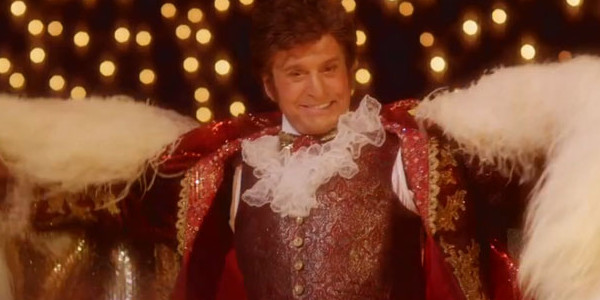 In some ways, it is a major shame that Steven Soderbergh had to take his Liberace biopic to HBO, since neither the director nor the stars will be able to enjoy the Academy Awards attention that could well have come off the back of it. But HBO offered greater creative freedom, and who is to say that the film would have turned out so well, if it had gone through a studio as initially planned. There is no doubt Douglas' performance as the flamboyant musical icon deserves that kind of lauded praise - while there was no doubt some temptation to play the pianist as a pantomime caricature, Douglas instead, thankfully, chose to offer a note perfect celebration of the man. As a result, Douglas' Liberace is a wonderful contradiction - a man bound by conflicting desires to be both father and lover to Scott Thorson, to have intimate friends, and still enjoy the isolating limelight, and to be committed but also sexually promiscuous. He is a broken soul in many ways, and Douglas allows us to see the human behind the candelabra and the ostentatious costumes, while never dropping the grotesque mask that confirms who removed from "normalcy" Liberace and his younger lover were. Hopefully, Douglas will be rewarded for his performance here at Cannes, and if not, it's likely the TV Awards bodies will, because the performance is a powerhouse one that is both entirely enthralling and oddly sympathetic. Read the full Behind The Candelabra review here. Which performances from Cannes are you most looking forward to seeing? Share your own picks below in the comments.