Captain America: The Winter Soldier - 10 MCU Mistakes It Repeats

Those common Marvel Cinematic Universe tropes we hoped wouldn't make an appearance...
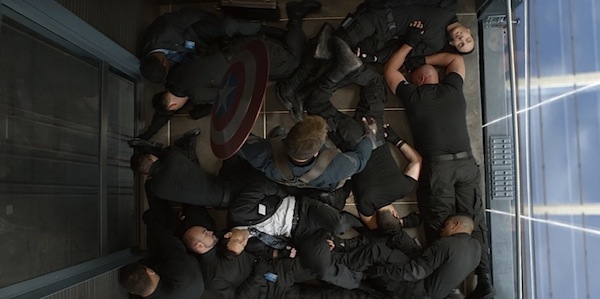
Patriots assemble! Captain America: The Winter Soldier, the ninth film in the Marvel Cinematic Universe canon, is out today in the UK (it will hit US cinemas on April 4th - not long to go, guys!) This long awaited sequel, following last year's Thor: The Dark World, returns to our screens as an explosive, espionage-charged thriller, with all the quips, in-jokes, and references you'd expect from a movie about a man who dresses up in red, white and blue and hurls a shield at his enemies. For the most part, then, we can confirm that Captain America: The Winter Soldier delivers on all fronts: it's funny, action-packed and relentlessly paced (our review here). That's not to say it's perfect, though. In all the ways that The Winter Soldier successfully trumps Thor: The Dark World's sense of meandering placeholder, and manages to provide fans with a movie that feels both natural to the established Marvel universe, whilst justifying its existence as a standalone movie, it also repeated a few of the nagging tropes that have become so frequently associated with films in the MCU canon. Here, we've attempted to highlight 10 of the most obvious - and reoccurring flaws - that have made their way into Captain America: The Winter Soldier, starting with... The following article contains major spoilers for Captain America: The Winter Soldier.

10. Weak Villains

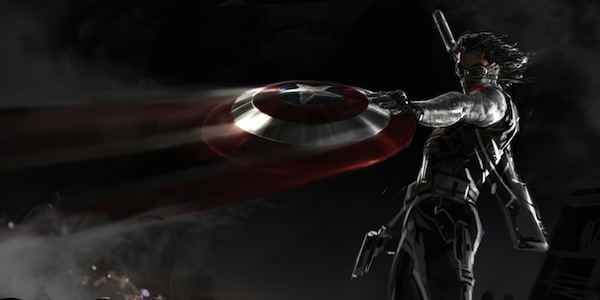
As much as it hurts, it must be said that Captain America: The Winter is - as with so many MCU ventures - lacking in the intriguing villain department. Think back to any MCU movie aside from those that feature Loki as the main antagonist, and you'll notice a running trend - the MCU rarely seems able to get this right, and The Winter Soldier is no exception. So our villains this time around are Bucky Barnes, who is the Captain's former ally, also frozen and awoken 70 years later, and Alexander Pierce, a S.H.I.E.L.D. executive with a hidden agenda and ties to HYDRA. In the case of Barnes, the eponymous Winter Soldier, we have a villain who has been brainwashed and is therefore boring. He's a physical match, but there's no personality on show - he's just a shadow, a cardboard cut-out. Though we understand that he has to kind of be like that because the plot requires him to be serious and deadly and under orders, it also means - like Malekith from The Dark World - that he's kind of forgettable, too. Robert Redford's Pierce is equally frustrating: he's literally a template "rich businessman" with a hidden agenda. Yawn.

9. Failure To Take Risks

In the first half of The Winter Soldier, something monumental happens. Or, at least, something seemingly monumental happens. Nick Fury, returning for the sixth time as played by Samuel L. Jackson, is ambushed by assassins in what is perhaps the film's best and most memorable scene. He escapes (just barely), squashing our suspicions that this sequel would be the movie to kill of the iconic S.H.I.E.L.D. boss. And then, suddenly, in the next scene, Nick Fury is sniped from afar by the Winter Soldier himself. He dies on the operating table. Is put in a body bag. "Did they really just kill Nick Fury?" everybody said to themselves upon witnessing this. "Was that really what happened? Wow, Marvel. Props to you. Nobody expected that at all." Alas, the fact that - two thirds into the movie - Marvel backtrack on their decision to kill Nick Fury, further proves that the MCU is a place where risks aren't taken lightly - or at all. Fury is alive (of course he is), and though it would have been sad to see him go, it would have been more interesting to explore the effects of a real death, injecting the MCU with some well-needed dramatic weight.

8. "Factory" Aesthetic

The MCU movies are, quite literally, coming at us from a sort of factory - one by one, along a conveyor belt manned by Kevin Fiege, whose overarching influence you can feel imposing - and restricting - every entry. That's not to say that Captain America: The Winter Soldier - or any of the other MCU movies, for that matter - are ugly or visually lacking. The action scenes here, for example, are the best yet. It's more to do with the fact that Marvel are clearly hiring directors - aside from the likes of Joss Whedon - who don't have any renowned auteur-like implications. Think on it: Marvel wants all its MCU movies to "feel" the same, but it's impossible for them to be shot or helmed by the same director. So Marvel and Fiege are set upon hiring TV directors who are used to working in - for lack of a better term - "basic" aesthetic styles, like Alan Taylor and the Russo Brothers (who directed this movie), to ensure that there's no noticeable difference between the look and feel of each installment. Thus, the sense that these movies are factory-like and lacking in personality extends to this flick: the Russo Brothers are clearly being "guided."

7. Find Out... In The Next Installment!

One of the things that everybody clearly loves about the MCU is the fact that they tease what we can look forward to seeing in the next installment. In other words, each movie exists - primarily - to entice viewers towards the next chapter in the MCU saga. That's the point of having this shared universe in the first place, after all. After a while, though, it's become apparent that plot points - of the mysterious and enigmatic kind - are being drawn out to such ridiculous levels, when in any other normal movie we'd have the answer to our questions in about 90 minutes. Take Black Widow, for example. Here's a MCU character who makes her third appearance in The Winter Soldier, and it's hinted at all throughout the flick that - finally - we're going to learn a bit more about her origins and history. Remember, this is the third time we've encountered this mysterious lady, so already we're pushing it in terms of the "why don't we know something about her already?" By the end of The Winter Soldier, though, we STILL don't know anything about her seemingly shady past, despite the fact that the movie talks it up in droves. Kind of annoying. So whereas there are certainly plot points and reveals that genuinely do deserve to be teased over and over again in order to highlight their importance in future installments, some things just aren't worth dragging out for so long... and a bit of Black Widow backstory really is one of them.

6. Arbitrary Romance

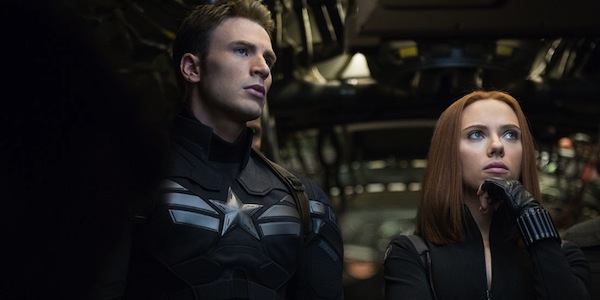
It might seem nitpick-y to suggest that the romantic plotline hinted at throughout The Winter Soldier - between the Captain himself and Black Widow, no less - shouldn't have ended up in the movie, because we all like a bit of flirty banter, don't we? Thing is, though including another arbitrary romance plot seems harmless, it also complicates a cinematic universe that is already super complicated as it is. "Hasn't Black Widow got a thing with Hawkeye?" we find ourselves pondering as our protagonists spend every free moment amping up the sexual tension. In a singular movie, this would be fine, but here there are implications. Because now we have questions regarding the nature of Black Widow's romantic interest in both the Captain and Hawkeye - who will they have her flirting relentlessly with next? Bruce Banner? He doesn't have a love interest right now, so why the heck not? Without trying to sound Grinch-like, then: the MCU already has far too many arbitrary love stories. Though the banter between Black Widow and the Captain was entertaining to watch, we do have to wonder: what, ultimately, is the point?

5. Too Much To Do In One Movie

There's no denying that - with every movie that Marvel pile onto their MCU - there's an increasing sense of self-implosion. That's not to say that the MCU should cease to exist, or that there's no hope for future installments - simply that, the more films that get made, the more there is to do in each and every one. And although Captain America: The Winter Soldier does an admirable job on "stand-alone" movie terms, it also suffers because it's forced by association to do so many things that a regular movie - or a regular sequel - simply isn't. So whereas The Winter Soldier does work as a solo adventure, it's also super apparent that this movie has a crippling weight on its shoulders from start to finish. Because it doesn't just have to advance Steve Rogers as a character and protagonist, The Winter Soldier also has to introduce new characters, give screen time to the reoccurring ones (without skimming over them but also without lingering on them too much), make reference to the first Captain America movie, make reference to The Avengers, set-up plot points for The Avengers 2... are you exhausted yet? Fact is, there's so much ground to cover, that it's actually rather impressive that Captain America: The Winter Soldier genuinely has space for a plot of its own. It's a tribute to the associated filmmakers (and the writers) that they managed to pull off a movie that it so inherently reliant on so many others movies, but where does it all end?

4. It Has Nothing Much To Say

Say what you will about The Dark Knight Rises, but it at least had something to say about the state of the world we live in - something that pretty much every MCU movie has avoided doing ever since Iron Man came our way in 2008. Whereas that movie did have some things to say with regards to the war on terrorism, there's been a noticeable lack of substance to more recent installments like The Avengers, Iron Man 3 and Thor: The Dark World. And what, ultimately, is the point of any motion picture if it doesn't take a particular viewpoint on its subject matter? Obviously Marvel have their reasons for avoiding taking any one stance on the themes they briefly attempt to touch upon in The Winter Soldier - the majority of their movies are purposely broad, of course, as to appeal to the widest audience haul as possible. But it's a shame that, when dealing with subjects as topical and interesting as government surveillance - or concepts as controversial as "is it right to kill people who are going to commit crimes in the future?" -that the discussions are capped. Topics are alluded to, probed weakly, and then subsequently abandoned.

3. Unnecessarily Overcomplicated Plot
For what is essentially a movie derived from a comic book, Captain America: The Winter Soldier's storyline is still far too complicated - technical jargon flies around like it's nobody's business, with references to all sorts of plans and initiatives that existed or will exist one day, whilst there's never a really a true sense of what the story is "about." Yes, we roughly know what's happening, but faced with writing down a brief synopsis of the events that occur in the movie -- and for what reason - many would be stumped. Relentlessly-paced? Yes. A bit of a mess, too? Absolutely. It's bizarre how complicated some of the plots for MCU movies actually are, and it's interesting to ponder how they end up so convoluted and aimless. Take Iron Man 3: what was the actual story? What was the villain after? Why? Or Thor: The Dark World: why was everything happening? What was the actual storyline in its simplest terms? These questions are hard to answer because MCU movies tend to get caught up webs of plot points and isolated scenarios: we move fast, almost as if the writers are hoping we'll be too distracted to notice the lack of actual story.

2. It Squanders Its Chances To Be Truly "Different"

Granted, for much of its runtime, Captain America: The Winter Soldier does feel a bit different to the MCU movies that have come before: there's a sense that the filmmakers, at least, tried to imbue it with its own special tone - that of the '70s political thriller (and they even brought Robert Redford in to hit that point home). Ultimately, though, it fails to differentiate itself from any other movies in the MCU because it can't help - over the course of its narrative itself from embracing all the same narrative stepping stones. It goes from feeling unique to feeling samey very quickly. This goes back to an idea proposed earlier in this article regarding the MCU factory and its template-like stories. Simply put, even this movie, which had the potential to break free of the constraints of the MCU whilst embracing them at the same time, falls back on a familiar story template at around the halfway mark. A plot that at first feels unique eventually gives up and once again descends into "here's a sh*t load of exposition, broken up at random intervals by some awesome set-pieces, followed by an insanely explosive climax" territory. Speaking of which...

1. Overblown Finale

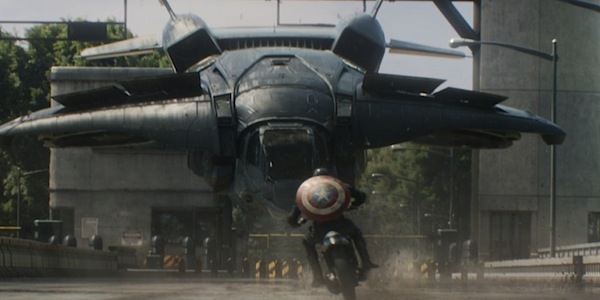
Either because Marvel are merely trying to cater to the expectations of the sorts of people who seek out blockbuster movies about costumed superheroes fighting crime in a big way, or because explosions and fire and massive things getting blown up seems like a genuinely good way to end all MCU movies, it has to be said: the overblown finales are becoming a bit tiresome, and it's been feeling that way ever since Iron Man 3. After all, the Battle of New York - featured at the end of The Avengers - was so overblown (in a good way), that it's proved impossible to beat. There's nothing wrong with a big, fiery finale, of course: it's sort of what you agree to when you buy a ticket to a blockbuster. And though there's certainly nothing inherently terrible about the finale in The Winter Soldier, it's a shame that the filmmakers felt they needed to go down this route again (three gargantuan helicarriers the size of the one featured in The Avengers, shooting and blasting at one another, whilst Captain America battles The Winter Soldier from inside). Because for most of its runtime, this had been more cerebral, low-key action thriller. Yes, explosions and bullets filled the screen, but the special effects seemed minimal (or as minimal as possible for a movie in this vein). To go from small, well-rendered set-pieces to a huge, CGI-clad finale that literally tries to be three times as big as any overblown finale we witnessed in Iron Man 3 or Thor: The Dark World, felt like a sort of betrayal of all the good things that The Winter Soldier had done up until that point. No, it didn't ruin the movie, and yes, it was fun to watch. Still, it's obvious that a far quieter, more intimate finale would have sufficed. Like this article? Agree or disagree? Let us know in the comments section below.

Contributor
Contributor

Articles published under the WhatCulture name denote collective efforts of a number of our writers, both past and present.