Christina Ricci: 8 Roles That Have Defined Her Career

Former child star and enduring Goth icon turned 36 today!
12th February 2016 marks the 36th birthday of Christina Ricci. For the many readers who watched the actress grow up on screen (or, for that matter, grew up with her), this news is doubtless enough to leave one feeling very old. Yes, it€™s been almost 26 years since Ricci first lit up screens as the daughter of Cher and younger sister of Winona Ryder in Mermaids, and the decades since have seen her endure not only as a successful actress, but also as a poster child for generations of Goths, emos and doubtless many other €˜alternative€™ sub-factions we might name. Ricci has arguably never quite achieved the level of mainstream success her many admirers had once expected, and yet in a sense this seems only fitting, given she has built her career on playing figures who do not quite fit in with the mainstream: outsiders, misfits, troubled souls, those who have faced hardship in many forms €“ but who, crucially, have endured. It hasn€™t all been plain sailing; like any jobbing actor, she€™s also taken her fair share of roles that were a bit beneath her. This being the case, not all the films mentioned hereafter necessarily represent Ricci at the height of her powers, but they may all be counted as her most memorable work, and above all the work which best represents her career thus far (in descending chronological rather than preferential order). There may be ups and downs, but when she's on form, Christina Ricci does very good work indeed...

8. Wednesday Addams €“ The Addams Family (1991), Addams Family Values (1993)

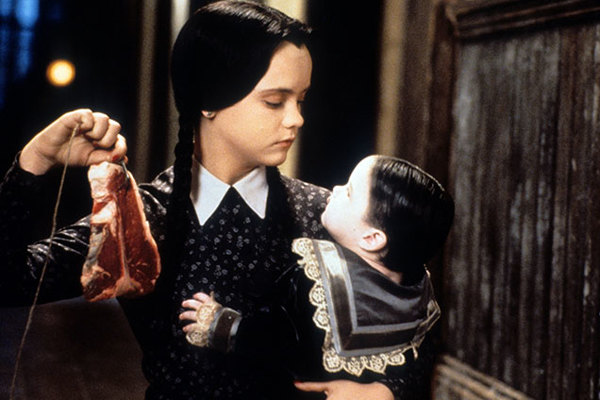
It€™s the role that made her at age 11 €“ and even a quarter of a century later, it seems very unlikely Ricci will ever escape its shadow. Still, at the end of the day there are far worse things to be remembered for than completely stealing the show from under the noses of the considerably more seasoned grown-up actors in the Addams Family movies. Those old enough to remember when director Barry Sonnenfeld€™s The Addams Family came out in 1991 will likely recall that, despite the presence of the esteemed Anjelica Huston, Raul Julia and Christopher Lloyd (all of whom did excellent work as Morticia, Gomez and Fester), all anyone seemed to be talking about on release was this amazing little girl playing Wednesday. Where most child actors specialised in just being adorable, this one was astonishingly cold, blank and emotionless, with the odd flash of unmistakeable sadism, suggesting the beginnings of a complete sociopath. And she was absolutely hilarious with it. It€™s hard not to feel a little bad for Pugsley actor Jeremy Workman who, despite sharing most of his screentime with Ricci€™s Wednesday, was almost entirely forgotten after the two Addams Family movies. Still, there€™s no denying that it€™s Ricci€™s magnetism which makes the scenes with the Addams children easily the most memorable moments in the films €“ and small wonder that the internet went crazy in late 2015 over what proved to be a Photoshopped image of the long since fully-grown actress dressed up as Morticia.

7. Kat €“ Casper (1995)

Having been established as a child star, it was perhaps inevitable that Ricci would struggle to land further roles of quite the same calibre as Wednesday Addams. But of the family movies that followed €“ others including 1995€™s Now and Then, and 1997€™s That Darn Cat €“ Casper is the one that sits most comfortably among Ricci€™s overall body of work. While undeniably cute and kid-friendly, the Steven Spielberg-produced film based on the popular cartoon character tackles the thorny subject of mortality in a fairly unflinching manner. As Kat, Ricci is the daughter of Bill Pullman€™s parapsychologist James Harvey, who moves their small family unit into an old haunted mansion when he€™s hired by Cathy Moriarty€™s greedy heiress to rid her inherited property of its spectral inhabitants. While ostensibly a far sunnier character than Wednesday, there€™s still a darkness at Kat€™s heart given that she and her father are both grieving the loss of Kat€™s mother some years earlier €“ something which neither of them have ever truly come to terms with. Director Brad Silberling€™s film is loaded with sight gags and CGI-aided spectacle, yet there€™s still a contemplative element to proceedings, as Kat€™s new friendship with the forever young Casper goes some way to helping her through the grieving process. We don€™t have too many children€™s films in which the young leads discuss what it feels like to die, and Ricci handles the scenes with a maturity that betrays her years €“ something which would be true of many of her roles which followed in the late 1990s...

6. Wendy €“ The Ice Storm (1997)

Ang Lee€™s adaptation of Rick Moody€™s novel gave Ricci far and away her most mature role to date. As an ensemble piece exploring the secrets and lies of a seemingly idyllic middle class family, it€™s easy to view the film as something of a dry run for Sam Mendes€™ 1999 breakthrough American Beauty, and by setting the action against the revelations of the 1973 Watergate scandal and the heavy winter storm which hit New England at the time, these intimate domestic dramas are lent an epic, near-mythic quality. Ricci€™s Wendy Hood is a precocious young teenager, tentatively exploring her burgeoning sexuality with the sons of her parents€™ friends (one of them being Elijah Wood), but with an unfortunate habit of being caught in the act. The stern admonishments she receives both from both her own father (Kevin Kline) and the mother of the boys (Sigourney Weaver) underline the hypocrisy of the adults, given the two of them are in engaged in affair which the children might very well be aware of. Having not long since been passed over for other high profile young female roles in Interview with the Vampire (which went to Kirsten Dunst) and Lolita (which went to Dominique Swain), Ricci has reportedly said The Ice Storm was the first time she€™d been cast in a role she€™d really wanted to get. She stands proud amongst a very illustrious cast including Joan Allen and Tobey Maguire €“ and the image of her offering herself to Elijah Wood whilst wearing a Richard Nixon mask is not easily forgotten.

5. Layla €“ Buffalo 66 (1998)

As Ricci hit legal adulthood, so too did the considerably more grown-up, considerably less Hollywood roles come flooding in. These included a profanity-laden leading role in black comedy The Opposite of Sex, and a noteworthy supporting role in Terry Gilliam€™s cult adaptation of Fear and Loathing in Las Vegas. But actor Vincent Gallo€™s directorial debut proved to be perhaps her most unconventional work up to that point, and arguably the role which most cemented her as an adult (as well as providing a mini-Addams Family reunion thanks to the casting of Anjelica Huston). Some might reasonably argue this particular role doesn€™t warrant mention as a definitve role, given how little Ricci seems to have been given to work with: we hear her name only once, and learn little to nothing of who she is. Ostensibly, Layla serves little function than to facilitate Gallo€™s Billy Brown, a flaky, motor-mouthed ex-con who abducts her on a whim to pose as his wife at an uncomfortable reunion with his parents. Layla might also be classed as an early example of the now painfully over-familiar indie movie trope of the manic pixie dream girl (only without so much of the €˜manic€™): she serves purely as the male lead€™s means of redemption, with no real development of her own. Also, given Ricci had only just about turned 18 at the time, it€™s not hard to find Gallo€™s camerawork creepily voyeuristic at points, despite the absence of nudity. All this being said, if we can accept the film on its own terms as a grimy, working class fairy tale, then there is plenty to enjoy in Buffalo 66. There€™s a wonderfully dreamlike quality to the film, it boasts one of Ricci€™s most iconic looks, and despite the overwhelmingly downbeat narrative, its ultimate message is one of hope. Given that Ricci herself is the embodiment of this hope, it€™s hard to look too unkindly on the film overall.

4. Katrina €“ Sleepy Hollow (1999)

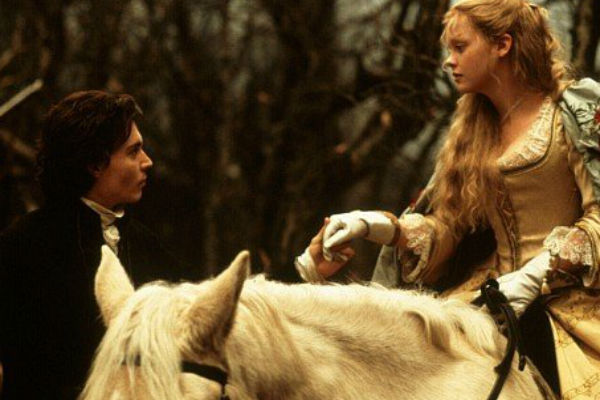
This, for our purposes, is another potentially problematic entry on our list. Most Tim Burton fans would surely agree it€™s one of the director€™s finest, most distinctive films, and it€™s equally easy to mark it as a career turning point for Johnny Depp as his first attempt at a distinctly unconventional action hero; a trope he would later revisit to considerably greater impact in Pirates of the Carribbean. So yes, we can comfortably call Sleepy Hollow a great Tim Burton movie and a great Johnny Depp movie; whether it€™s so great a Christina Ricci movie is rather more open to question. I think it€™s fair to say that Ricci was far from ideal casting as the nobleman€™s daughter and white witch Katrina Van Tassell. She never seems entirely at ease in the role, at least in part because she isn€™t called on to do much but evoke a conventional feminine ideal; not really what she specialises in. Worse yet is the age difference between Depp and herself; somehow she looks even younger than she did in Buffalo 66, and given Depp is some 20 years older than her (and had known her since she was 9), there's an undeniable ick factor. As such, the love story angle is largely downplayed (we never even see the two of them kiss), and stands out as one the most poorly executed elements of an otherwise hugely engaging movie. Again, though, it€™s hard to look too unkindly on Sleepy Hollow or Ricci€™s performance in it. Yes, it€™s another somewhat underdeveloped two-dimensional love interest, but the actress€™s innate likeability still shines through. I would certainly argue that Katrina can be classed as one of her definitive roles, though perhaps not for the nicest reason; as it stands to emphasise that, by and large, Hollywood has never quite known what to do with her (see also her subsequent subpar roles in subpar horror movies Bless the Child and Cursed). Nor would Hollywood quite know what to do with her next definitive work...

3. Elizabeth €“ Prozac Nation (2001)

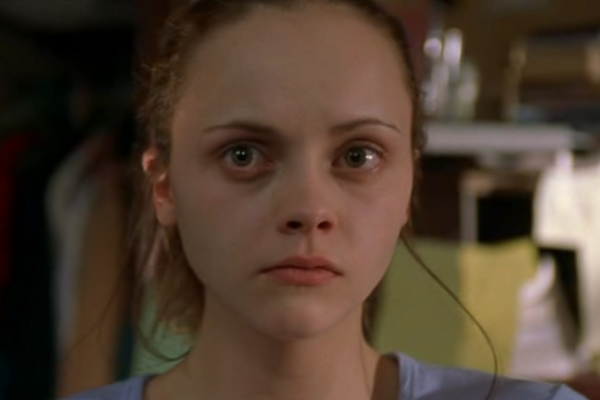
This should have been the role that elevated Ricci to full-on leading lady status. An adaptation of Elizabeth Wurtzel€™s best-selling memoir detailing her struggles with depression, it seemed to have all the elements in place for an awards season darling, and also saw the actress take on producer status for the first time. Yet in most territories, the film wound up sitting on the shelf for a few years before being sent direct to DVD with little aplomb in 2005, and if it's remembered at all by film culture at large, little tends to be mentioned beyond Ricci's first nude scene. It€™s widely reported the key reason Miramax sat on Prozac Nation so long was down to fears over how to sell it. This was due partially to controversial remarks made by Wurtzel herself about 9/11 (which occurred only a few days after the film€™s premiere at Toronto International Film Festival), but also because of overriding concerns about how unsympathetic a protagonist she proves to be in the film. It€™s certainly true that Ricci€™s Elizabeth is frequently very hard to like: she€™s constantly cruel to her loved ones, regards them with unwarranted suspicion and contempt, and places huge demands on them whilst giving very little of herself in return. However, none of this is accidental; it€™s all very true to the realities of living with depression, both for the one suffering the affliction, and those who care for the afflicted person. The situation often appears hopeless, and even with medication there are no easy solutions and happy endings; the best anyone can hope for, it seems, is just to get by. Prozac Nation does not sugar-coat any of this, and in not shying away from the unsavoury elements of her character, Ricci gives possibly her boldest performance €“ and the actress€™s magnetism is once again enough to keep the viewer invested, despite Elizabeth€™s often deplorable self-sabotaging behaviour.

2. Selby €“ Monster (2003)

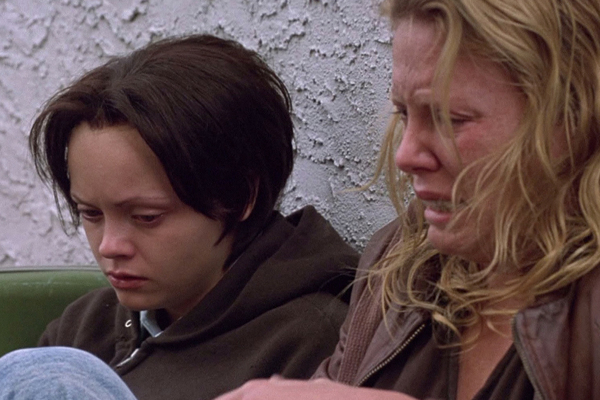
Film history was quick to relegate Ricci to €˜also-ran€™ status in Patty Jenkins€™ drama based on the real life murders of Aileen Wuornos, in which she plays second fiddle to the unrecognisable Charlize Theron€™s Oscar-winning central performance. However, in Selby (a fictionalised take on Wuornos€™ lover), Ricci gets to portray another social outcast €“ an insecure young woman, alienated from her religious family because of her sexuality. It€™s not at all surprising Theron got all the attention: her role is of course the most vital, and her physical transformation is undeniably remarkable, whereas Ricci is unmistakeably Ricci. Again, the part might be boiled down to mere love interest €“ it€™s only her love for Selby which keeps Aileen grounded in reality, before her paranoia drives her to kill again and again. However, Selby has quite the journey of her own to make, asserting her independence from her family though her relationship with Aileen €“ and continuing to love her even as their situation grows ever more dire. Theron may well drive the film, but it wouldn€™t have quite the same level of heart without Ricci.

1. Rae €“ Black Snake Moan (2006)

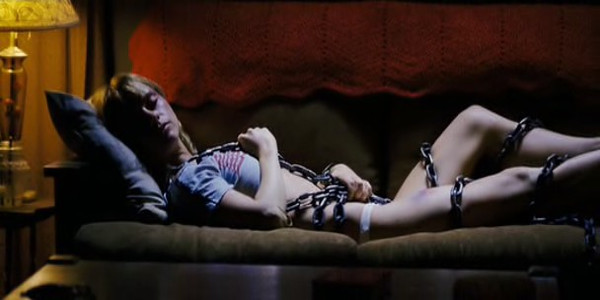
This was arguably Ricci€™s last truly great film role before she turned her focus to television with Pan Am and The Lizzie Borden Chronicles. In many respects it takes her over similar territory as Prozac Nation, as her role is that of a deeply troubled young woman whose past traumas manifest themselves physically and psychologically €“ but this time around, rather than mere depression, it€™s also nymphomania, which of course is a considerably easier sell. Craig Brewer€™s film is certainly a provocative mix, given it sees Samuel L Jackson€™s recently divorced deep south blues guitarist Lazarus find Ricci€™s Rae lying beaten by the side of the road in nothing but a pair of panties and a tiny t-shirt (bearing the Confederate flag, we might note). Lazarus then takes her into his care - only to wind up chaining her up after he comes to believe she has the devil in her. Unsurprisingly the film€™s marketing chose to focus on this element, suggesting a sleazy grindhouse flick; but while the film is not without its share of sleaze (it€™s certainly one of Ricci€™s most sexually explicit roles), at heart it€™s a surprisingly tender film about finding redemption through friendship, faith and music. Ricci again portrays a woman attempting to make peace with her own demons; this time, however, she is equally involved in helping Jackson€™s character do likewise, as well as her PTSD-afflicted soldier boyfriend Justin Timberlake. As with Prozac Nation, there€™s no easy happy ending suggesting that all obstacles have been overcome, but there is the hope that the characters will get by with one another's help.

Contributor
Contributor

Ben Bussey hasn't written a bio just yet, but if they had... it would appear here.