Coen Brothers: Ranking Their Films From Worst To Best

There are other American masters, but few hold a candle to the consistent brilliance of Joel and Ethan Coen.

New York Magazine film critic David Edelstein said it best as preface to a 2007 article: "Writing about the Coens - and mining their oeuvre for Big Ideas - is a sure way of looking like an ass." Their films are simultaneously straightforward and arduously-intricate, enjoyable in the casual moment while encouraging deeper analysis. Attempts to elicit answers from the brothers regarding any messages or meanings to their movies are met only with smiles and shrugs. In short, even a "bad" film from Joel and Ethan Coen will be able to make your head hurt. One thing is for certain: even a bad Coen Brothers film is good, and the distinction "Worst" is used only in relation to the rest of their filmography. Their first feature, the thriller Blood Simple, came in 1984, and since then the brothers have enjoyed strings of successful movies. They won an Academy Award for Best Original Screenplay in 1996 for Fargo and a whole truckload of Oscars for No Country for Old Men in 2007, and after 16 features people only seem to want more. Throughout their canon, the Coens use things again and again: actors (Frances McDormand, Steve Buscemi, John Goodman), wide-open sets (from Minnesota to Texas), and notable stylistic trademarks (the use of animals, sudden spurts of violence). Despite this, the recycling of these always feels fresh and untouched. Somehow, though many of their movies are nearly entirely devoid of anything resembling a plot, the Coens always manage to make compelling cinema. There are other American masters, but few hold a candle to the consistent brilliance of Joel and Ethan Coen. Because of this consistent care in their movies, ordering their films in terms of greatness is almost an exercise in futility - I expect, and welcome, criticism in the comments section below. All of their films are worth watching, but there are a few times when the Coens have outdone even themselves. Without further ado, these are the films of the Coen Brothers ranked worst to best. Enjoy!

16. The Ladykillers (2004)

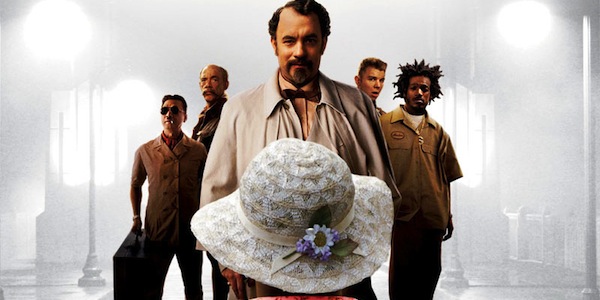
Again, even a poor effort from the Brothers Coen results in a better film than 90% of what your local cinema is churning out in a given year. The Ladykillers remakes the 1955 Alec Guinness film of the same name, putting Tom Hanks in the lead role and setting the tale in the Deep South. The plot moves along, filled with typical Coen zaniness and snappy dialogue, but the casting of Hanks just seems at odds with everything. A good example is in the directing duo's frequent use of repetition in their scripts; like "We're not a bank, Jerry" from Fargo, and "Not counting the mezzanine" from The Hudsucker Proxy; phrases that don't accrue any humour unless they're repeated with comedic timing that only the Coens could manage. In The Ladykillers, Hanks attempts to deliver "This is most irregular" several times throughout the course of a conversation, but it never feels like he's saying it at the right moment.

15. Intolerable Cruelty (2003)

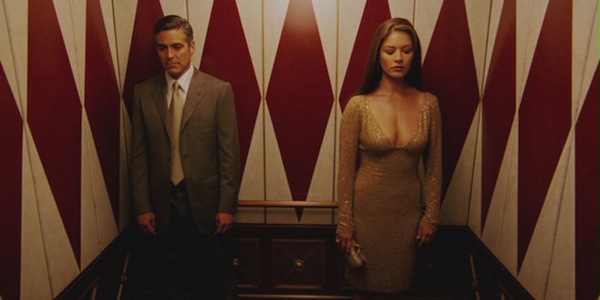
Often interchanged with The Ladykillers when discussing the distinction of Worst Coen Movie, Intolerable Cruelty pits George Clooney's womanizing Miles against Catherine Zeta-Jones's jilted Marylin in a romantic revenge comedy. It's a serviceable effort filled with standard Coen trademarks. Of particular note is a great opening sequence featuring Geoffrey Rush, as well as a line of dialogue about the colour of a salad, that's probably the most memorable quote of the entire film. Ultimately though, it's difficult to remember much from this movie, which is definitely at odds with the rest of their films. Most Coen scenes sear themselves into your head, but there are few from Intolerable Cruelty that do so.

14. Burn After Reading (2008)

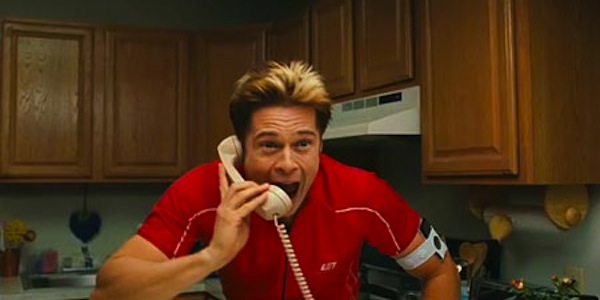
An A-list leading cast including Coen-regular George Clooney and first-timers Brad Pitt and John Malkovich? Yes. Hilarious turns from standard Coen collaborators like Frances McDormand and J.K. Simmons? Yes again. A wave of hype for the film following the much-lauded No Country for Old Men? Yes, yes, yes. Despite all of these working pieces, Burn After Reading is still missing something - there's more too 'good' than the absence of evil. It's a fine film and a fine addition to a sterling canon, and one could go so far as to deem it a spiritual cousin to The Big Lebowski when considering the high levels of oddball off-the-wall character moments. But fine acting from Clooney, Pitt and McDormand still fails to make the viewer care about them or their tired efforts in the same way we care about someone like The Dude.

13. The Man Who Wasn't There (2001)

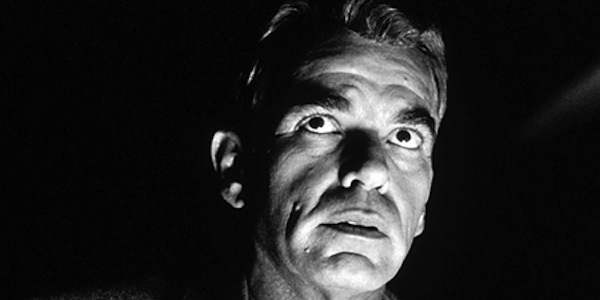
Few American directors have been able to genre-hop the way the Coens do. Like Miller's Crossing and The Hudsucker Proxy before it, The Man Who Wasn't There took a well-established genre - in this case film noir - and simultaneously paid tribute to it whilst flipping it on its head. Billy Bob Thornton stars as the titular man who isn't there; a small-town barber who feels cheated by the society around him. In typical Coen fashion, he decides to take action against said society, and in typical Coen fashion it all blows up in his face. Thornton is supported by an excellent cast including Frances McDormand and the late James Gandolfini, all of whom are framed in moody black and white by cinematographic-deity Roger Deakins. The Man Who Wasn't There tends to be a film that people skip over for one reason or another, but if you've yet to see it, we highly recommend you remedy that immediately.

12. True Grit (2010)

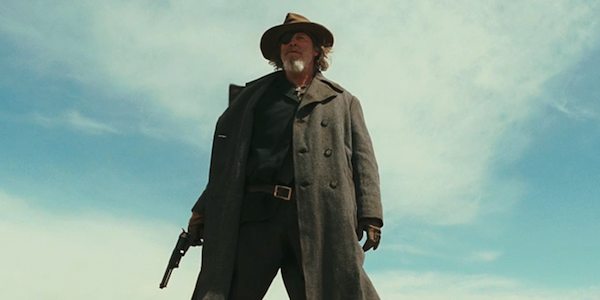
John Wayne won an Oscar for his portrayal of Rooster Cogburn in the original True Grit in 1969, and I imagine that most actors wouldn't want to follow an Oscar-winning performance playing the same role in a remake. Jeff Bridges ain't most actors though, and under the direction of the Coen Brothers he's nothing short of brilliant. True Grit is slow, and I don't say that as a criticism. A good Western takes its time, with perhaps the most notable example being the famous opening sequence of Sergio Leone's Once Upon a Time in the West, which relishes in every breath and moment. True Grit does the same - albeit to a lesser extreme than Leone's Westerns did - and the film is paced quite nicely. There are a few moments when the humour gets in the way of the tension of the story, but overall the Coens succeed in making True Grit feel like a remake that - unlike most other Hollywood remakes - is actually necessary.

11. Blood Simple (1984)

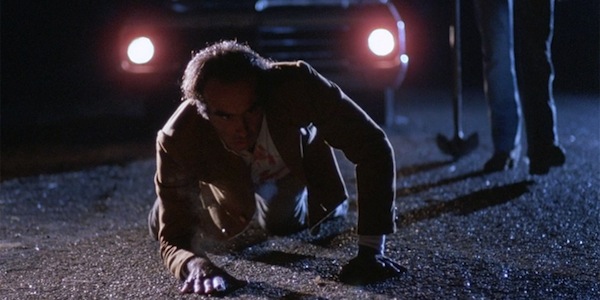
The haunting debut film from the Brothers is Blood Simple, and it surely is a sign of good things to come - shadowy lighting, memorable and motivated characters, flash-bang violence and a script as tight as a snare drum. On some of the theatrical posters the film is subtitled as "The thriller", not to be confused with 'a' thriller, which hardly seems to do Blood Simple justice. The film also features one of the most innovative shots in any Coen flick. Midway through the film, the camera crawls slowly along a long grimy bar. A drunk barfly sleeps facedown up ahead, and when the camera reaches him it goes up and over, landing on the bar on the other side and continuing its path. This is brilliant self-aware cinema, and it's part of the crackling debut film from the future masters.

10. The Hudsucker Proxy (1994)

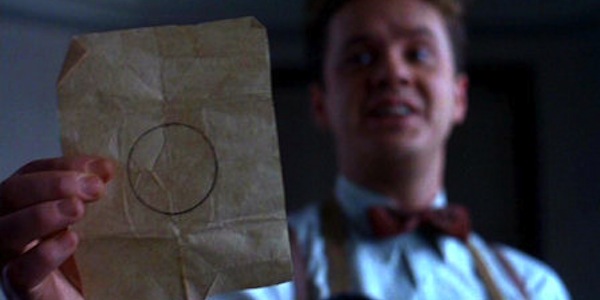
An homage to the screwball comedies of the 1930s - and, really, just a screwball comedy in its own right - The Hudsucker Proxy also ended up being the closest the directing duo ever came to making a family-friendly film. When Waring Hudsucker (Charles Durning) plummets 45 stories (counting the mezzanine) from the top floor of Hudsucker Industries, a hapless inventor is installed as CEO in his place by a scheming board member (Tim Robbins and Paul Newman, respectively). The film did poorly, but several scenes rank up there with the finest excerpts from the Coen filmography, including the breakneck sequence where Hudsucker puts into production their rather unique 'swinging-loophole-hoopmaster-ringaround' (you'll see).

9. Inside Llewyn Davis (2013)

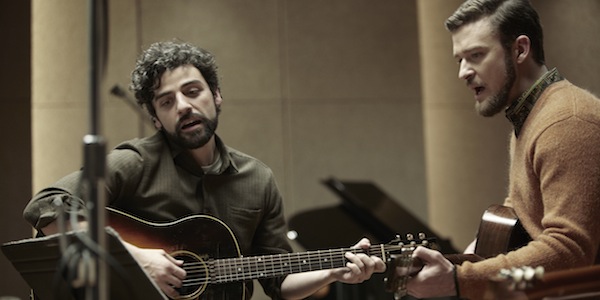
The most recent addition to this list stars Oscar Isaac as the luckless - but not heartless - Llewyn Davis, a singer-songwriter navigating the folk scene of Greenwich Village in the early 1960s. Isaac isn't exactly a newcomer, but it's safe to say that Davis is his breakout role. He's nothing less than great in this film; the real star though, is his music. The Coens aren't afraid to let us hear an entire song, from beginning to end, complete with nervous introduction beforehand and a patter of applause at the end, and sometimes we even see Llewyn play the same song he played earlier in the film. Everything surrounding these songs is fresh hell and hard times, devoid of luck and kindness, made harder by our hero's blunt pride. But during the songs we get inside Llewyn Davis and really know what he's all about.

8. A Serious Man (2009)

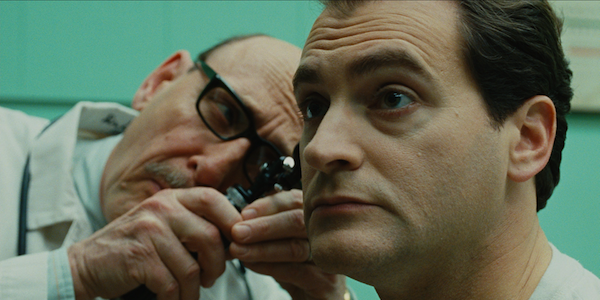
The Coens put out four films in four years from 2007-2010, one of the most productive periods for them so far. The third of those four was a little film called A Serious Man; 'little' in that the film starred no big-name actors (unless Richard Kind is big-name), was released in a limited capacity in the United States, and has received a relatively subdued response from critics and audiences compared to the rest of the films in the Coen oeuvre. But make no mistake we're getting into dangerous territory on this list in that any of these films could easily top your Best Of Coen Brothers list, and A Serious Man is a delicious marvel of simple and unadorned filmmaking. Not many directors have so many films that could truly be considered their best work, a testament to the consistent greatness and freshness of Joel and Ethan. A modern take on the Book of Job, A Serious Man stars Michael Stuhlbarg as Larry Gopnik. Larry's life is plodding along until one day his wife leaves him, his kids ignore him, his job is threatened, his brother and his neighbours are nuts, and the rabbis he turns to for help and wisdom provide neither. But "Things aren't so bad. Just look at that parking lot."

7. Miller's Crossing (1990)

I mentioned genre-hopping in the entry for The Man Who Wasn't There (.13), and Miller's Crossing was the film that immediately leapt to mind when writing that phrase. A perfect example of niche-filmmaking in that a director could easily spend their career making the likes of Miller's Crossing over and over again with a few changes in cast and scenery. Martin Scorsese has been accused of as much, and while that may be a little harsh, Scorsese certainly has made a living and a reputation in mob and mafia movies. But once is enough after Miller's Crossing, both for gang life and for the Prohibition Era, at least for a while. The dialogue absolutely crackles throughout this film, with the best of it delivered by Gabriel Byrne in the greatest performance of his career. His Irish fixer Tom Regan is at the center of the conflict between rival gangs, and his loyalties are further tested by femme fatale Verna. The symbolism in Miller's Crossing is also some of the best of any film in the Coen canon; mainly the black fedora. Tom's dream about foolishly chasing his hat in the wind, the repeated times he's beaten and his hat falls off of his head, and his comment about the thing being "just a hat" are all intriguing. His words say more about his character than any action sequence in the film; his world is the real world, a hat is a hat, and if you expect someone to be the type of person who'd double-cross you, you're probably right.

6. Raising Arizona (1987)

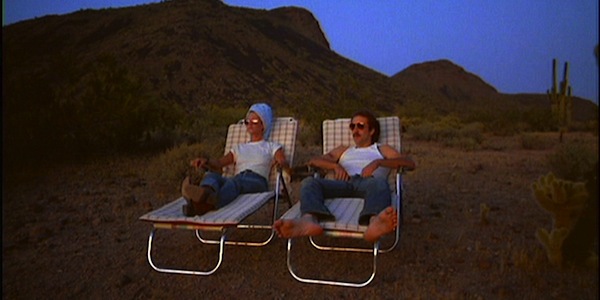
Despite his reputation for controversial (read: consistently awful) acting in films that are divisive among fans and critics (read: consistently awful), Nicolas Cage does have a few high points in his career. One of those is Raising Arizona, the sophomore effort by the Coens, in which he plays the manic H.I. to hilarious effect. Ex-con H.I. and his ex-cop wife Ed (Holly Hunter) are unable to have children, so they simply swipe one of the quintuplets from the titular Arizona family. While they attempt to keep secret their babynapping, escaped convicts and filthy bounty-hunting bikers accost H.I., Ed, and Junior for their slice of the pie. The first instance of a trend that would continue throughout their careers, the Coens follow a dark and serious thriller (in this case Blood Simple) with an over-the-top comedy, showing just how versatile and hungry for fresh ideas the directing duo can be. Raising Arizona would doubtless be counted as their most zanily hilarious film, if not for...

5. The Big Lebowski (1998)

The cult film to end all cult films, a movie showing that sometimes, there's a man for his particular time and place, and there's a man who fits right in, and sometimes, well, sometimes there's a man. The absurdity of The Big Lebowski defies explanation. Bowling, soiled rugs, the porn industry, Nazis (excuse me, nihilists), White Russians galore, all come together and hang loosely from a thin plot that meanders and never really finds resolution. Plot has never been important to the Coen Brothers, and nowhere is that more apparent than in The Big Lebowski. This film is great because of the characters. The Dude and his supreme laziness, Walter and his perspective, Donny and his ability to be "out of his element", even the bit players are memorable in this movie. Though he doesn't have much screentime, the late Philip Seymour Hoffman puts in some of his most humorous work as Brandt. His guided tour of the Lebowski study would be a throwaway scene under any other director - here, it becomes one of Hoffman's most memorable scenes in his entire filmography.

4. Barton Fink (1991)

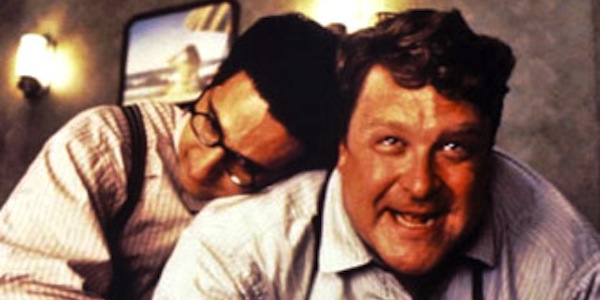
Legend has it that the Coens suffered a mental block during the making of Miller's Crossing, so they took three weeks off to write another project. The entire script came together from start to finish inside those three weeks, and the following year the Coens put it into production. That project was Barton Fink, and it ended up being one of their tightest, weirdest and greatest films. John Turturro stars as meek but idealistic playwright Barton, enticed to Hollywood and the world of screenwriting after a successful stage production. He arrives in Los Angeles and stays at the Hotel Earle, and it's here that most of the film takes place. The Earle - which is, again, a building - has more character than most film protagonists played by actual people. The smoky lobby, the stupid palm trees, the patterned carpet, the thin walls and peeling wallpaper, the printed painting on the wall (above, behind Barton's head) - all of it feels stuck in time. But as good as Turturro is and as hypnotising as the halls of the Earle are, it's John Goodman's performance as Charlie Meadows/Karl Mundt that vaults Barton Fink into greatness. Goodman has played hundreds of characters in his lifetime (at the time of writing, he has a whopping 137 acting credits to his name on IMDb), and while Walter Sobchak and James P. "Sulley" Sullivan are certainly memorable, Meadows/Mundt is something else. Like the greatest of creations from the Coens, his character defies logic but begs interpretation and analysis - this dichotomy is at the heart of Barton Fink and, by extension, at the heart of all fiction writing.

3. O Brother, Where Art Thou? (2000)

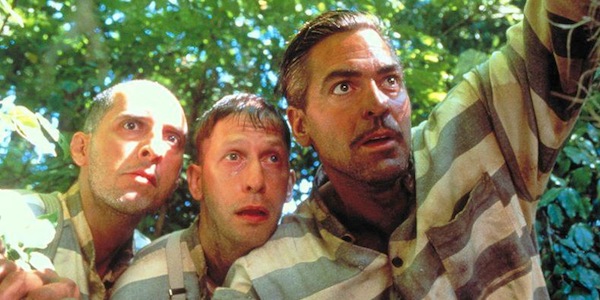
While Barton Fink represents the height of frustratingly oblique, decadent, symbolic storytelling, O Brother, Where Art Thou? goes a long way to representing the opposite. Hung loosely off of Homer's Odyssey, one would think that such a film would easily get bogged down in symbolism, allegories, complex words and things, becoming more like Barton Fink in the employment of said tropes, but not so. The Coens, as they always do, get bogged down in the right thing: people. Ulysses Everett McGill, played by George Clooney at his most manic, escapes a chain gang with Pete and Delmar, played by John Turturro and the slackjawed Tim Blake Nelson. The ensuing romp is equal parts treasure hunt, fugitive flight, and just going wherever the wind takes them. There is a montage not long after the escape that captures a beautiful kind of free-spirited living, "steeped in old-timey tradition" of the American heartland. Though many try, few films capture that feeling - and O Brother manages it with a montage, no less. Apart from all of that, O Brother boasts one of the greatest film soundtracks of all time. "Man of Constant Sorrow" is the obvious hit, but Chris Thomas King's rendition of the Skip James classic "Hard Time Killing Floor Blues" plays into that free-spirited feeling I described in a simple scene where the fugitives sit around a fire at night and discuss what they'll do with their respective shares of the treasure.

2. Fargo (1996)

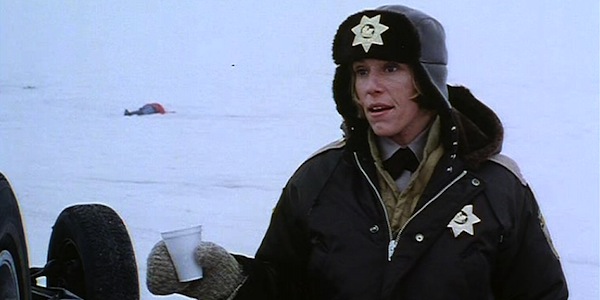
Fargo is the reason this list and a thousand others like it exist at all. Their early films are all strong - again, even a "poor" Coen Brothers film is probably going to still be one hell of a movie - but Fargo was perhaps the first indication that Joel and Ethan Coen could be true masters of the form. Set in the wide, empty spaces between civilised North Dakota and Minnesota, this film contains everything audiences would come to recognise and love about the directing duo, everything from regional accents, wrinkle-faced minor characters, to sudden spurts of violence and pure, plain plotlessness. Most Coen films can be described as "the one about the guy who tried something illegal to cheat the system and it blew up in his face", but Fargo knocks that out of the park. And takes it further too: there is an incredible amount of visual storytelling in Fargo, enhancing the story told through the characters and the violence. The shot of the spinning shower curtain rings during the frantic kidnapping scene is brilliant on its own, but the mirror shot of the still rings when Jerry returns home later tells him - and us - so much. Steve Buscemi's Carl burying a case of money and then looking both ways along the unending fence, or Jerry arriving to see his father-in-law shot dead and not moving except to pop the trunk - they're small moments, but they give the larger film foundation on which the characters reach such realistic heights. A television show adaptation of Fargo is currently in production, news which has met with various moans about the purity of the movie and so on and so forth. This here author was one of those moaners, but Fargo the film is really about the characters and not the plot, and if the show sticks to that, then there are a number of directions it could take. It is a dangerous thing to attempt to recreate lightning in a bottle though, and the Coens certainly crafted something that couldn't be duplicated when they made Fargo.

1. No Country For Old Men (2007)

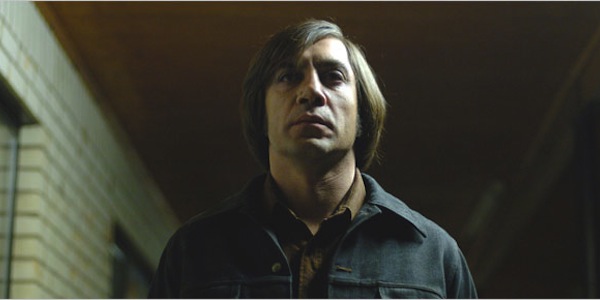
The year 2007 was a great year for American cinema thanks to two instant classics; both of them stark and intense examinations of the darker side of the soul. The first was Paul Thomas Anderson's There Will Be Blood; a colossal film which featured a towering performance from Daniel Day-Lewis. The second of these was the twelfth film directed by the Coen Brothers, and the haunting chimera that is No Country for Old Men is their finest achievement on many levels. The meeting between writer Cormac McCarthy and filmmakers the Coens is perfect. McCarthy, who is nothing short of the greatest living American author, frequently toys with the US-Mexico borderlands in his novels; the most notable examples being the aptly-named Border Trilogy and his 1985 masterpiece Blood Meridian. If I haven't given myself away as a massive McCarthy fan, I'll confirm that now, but out of ten novels even I admit No Country for Old Men may be the weakest one. McCarthy actually wrote it as a screenplay first, before transforming it into a novel where it sort of languished on shelves as readers picked up his decidedly more popular book The Road. Then the Coens got ahold of it. The Brothers even said that it took two of them to write the script for No Country for Old Men because one of them had to hold the book open - that's how perfectly McCarthy's conversations fit into a Coen film, themselves being connoisseurs of film dialogue. Thematically too, both McCarthy and the Coens seem obsessed with what makes America America, and this kinship is momentous enough that when Llewelyn Moss (Josh Brolin) crosses the border into Mexico, it's the only time a character in a Coen Brothers movie ever sets foot outside of the United States. McCarthy aside, the Brothers are in full control here. The acting is masterful from Brolin and Tommy Lee Jones, and especially from Javier Bardem whose Anton Chigurh is the greatest film villain since Hannibal Lecter - but the Coens manage so much with so little throughout the film. The shot of the peanut wrapper unfolding itself on the countertop, like that of the spinning shower curtain rings from Fargo, is a shot that no other director would be bold enough to include. The ending of No Country has been the cause of much controversy, which is in truth another point in favour of the film. Any movie can stir up conversation, but this is a conversation that lasts to this day. No Country for Old Men will continue to do that, and Fargo, Barton Fink and A Serious Man will too, as whatever the Coens do next will almost certainly start a new conversation too. What are your favourite Coen Brothers films? With so many great films to choose from, a case could be made for most of them to fall at number one. Agree? Disagree? Let us know in the comments below.

Contributor

Matt is a writer and musician living in Boston. Read his film reviews at http://motionstatereview.wordpress.com.