20 Horror Movie Endings We Almost Got
These WTF alternate horror movie endings almost made it to the screen.
There's arguably nothing more important about a movie than its ending - filmmakers can make many, many mistakes over the course of a film, but it's absolutely imperative that it sticks the landing and sends audiences away satisfied with how it all wrapped up.
A strong finale can elevate a good movie to greatness, but a poorly executed climax can obliterate everything good that led up to it.
And so, it's little surprise that filmmakers and studios often agonise over how to end their movies, with constant redrafting of the script, test screenings, and even reshoots if said screenings raise issues.
Horror is no different from any other genre in this regard, and so many of your favourite horror films had their endings re-conceived during the production process, for better or worse.
Perhaps the original ending was too confusing, or maybe it was deemed too much of a downer, and so these more palatable finales were cooked up instead.
In some cases, we can't help but pine for what might've been, while in others it's clear that the filmmakers made the right call...
20. Jim Dies - 28 Days Later

During production of 28 Days Later, a total of four different endings were conceived, three of which culminated in the demise of protagonist Jim (Cillian Murphy).
Two, which were fully filmed, saw Jim succumb to his gunshots wounds sustained during the climax, while a third had Jim undergo a blood transfusion with the infected Frank (Brendan Gleeson) in order to save his life at the cost of his own.
The latter never went before cameras because both director Danny Boyle and writer Alex Garland felt that it lacked plausibility - and they were right.
While the endings where Jim dies of his injuries and Selena (Naomie Harris) and Hannah (Megan Burns) are left to go on without him are certainly believable and befit the movie's generally bleak tone, not every grim film needs an equally grim ending.
There's something to be said for the more hopeful theatrical finale in which Jim, Selena, and Hannah are shown to be living a more peaceful existence at a remote cottage in Cumbria.
Plus, had Jim not survived, he of course wouldn't have been able to make his long-awaited return in the recent 28 Years Later: The Bone Temple and its upcoming sequel.
19. Laurie Exiles Herself - Halloween Ends
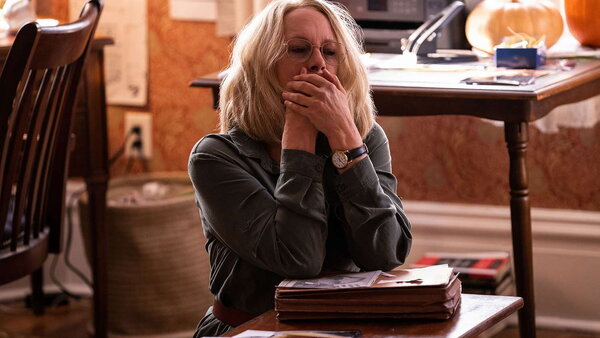
Halloween Ends was an incredibly divisive finale to the mainline Halloween franchise, though at least committed to giving Michael Myers (James Jude Courtney) a concrete death from which he couldn't return, after being fed into an industrial shredding machine by Laurie (Jamie Lee Curtis).
In the aftermath, Laurie reunites with her estranged granddaughter Allyson (Andi Matichak), writes a memoir, and resumes her romance with Deputy Hawkins (Will Patton).
But director David Gordon Green actually shot several endings for the film, including one in which Laurie's act of killing Michael causes her to become imbued with his dark killing instinct.
And so, because Laurie realises that Michael's essence is now part of her, she decides to exile herself for the rest of her life to basically prevent his spirit from infecting anyone else.
Curtis said that it was "too dark and too profound to satisfy the hunger of this 40-year journey," and she's absolutely right - this would've made an already intensely polarising film even more contentious.
18. Jill Survives For A Sequel - Scream 4

Scream 4 boasts one of the strongest killer reveals in the series, with Sidney's (Neve Campbell) cousin Jill (Emma Roberts) taking up the Ghostface mantle in an attempt to become a famous Final Girl just like Sid.
Jill dies at the end of the film of course, as is tradition, but writer Kevin Williamson later revealed that he originally planned something very different and incredibly envelope-pushing for the franchise.
In the initial Scream 4 ending, Jill actually survived and got away with her crimes, leading into a fifth film where Jill was indeed "the new Sidney" while at college.
However, Jill was then forced to spring back into action after someone figured out what she did and started killing off her college friends.
While a cliffhanger ending would've definitely been a risky gambit for a Scream film, Jill is such a brilliant character that it also would've been fascinating to see her arc continue across two movies.
17. The Xenomorph Kills Ripley - Alien

The Alien franchise would've been incredibly different if Ridley Scott's original ending actually went ahead.
Though in the final movie protagonist Ripley (Sigourney Weaver) defeats the xenomorph and lives to fight another day, Scott's initial plan was basically the total opposite of that.
The first draft of the script had Ripley be killed by the xenomorph, before it imitated Dallas' (Tom Skerritt) voice to send out a distress call in the hope of luring in more victims.
Yeah, it goes without saying that this would've been absolutely terrible.
Not only would it have deprived the world of Aliens, which cemented Ripley as one of cinema's all-time great heroines, but the voice-mimic distress-call nonsense sounds wildly goofy and totally out of the step with the rest of the story.
Thankfully, this ending was tossed out during the drafting process and we ended up with the vastly superior finale where Ripley blasts the xenomorph into space and enters stasis with the Nostromo's pet cat Jones.
16. Franklin Blackmails Linda - Send Help
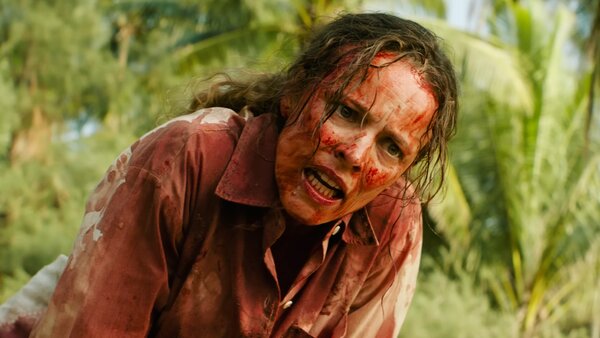
Send Help is one of the year's most absurdly entertaining horror flicks, and concludes with Linda (Rachel McAdams) killing Bradley (Dylan O'Brien), the a**hole boss she's been stranded on a desert island with following a plane crash.
In the blackly funny epilogue, we learn that Linda has become a rich and much-loved celebrity, framing herself as the only survivor of the plane crash and writing a best-selling memoir to that end.
But the film originally ended with an additional, even darker implication, with Linda's superior Franklin (Dennis Haysbert) attempting to blackmail her by implying that he knows that she killed Bradley and also his fiancée Zuri (Edyll Ismail), who chartered a boat to search for him.
Though this ending stopped short of showing the outcome of this exchange, it certainly creates another tantalising wrinkle in the story, with Linda perhaps having to get her hands dirty one last time to secure her future.
But there's also a neatness to the theatrical ending that proves decidedly more crowd-pleasing, so it's easy to see why Sam Raimi cut it.
15. Katie Is Shot By The Cops - Paranormal Activity
Paranormal Activity ends with a possessed Katie (Katie Featherston) killing her partner Micah (Micah Sloat), throwing his corpse across their bedroom, and then lunging towards the camera, before a title card reveals that her whereabouts are unknown.
But the film originally had a much smarter and more unnerving ending - albeit one which placed a ceiling on any franchise potential.
In this ending, Katie also kills Micah, after which a friend discovers the carnage and calls the cops. The police arrive to find a catatonic Katie holding the knife, just as she snaps out of her possessed state.
At this moment the attic door violently slams on its own - clearly caused by the demon - spooking one of the cops and causing him to accidentally discharge his gun, killing Katie. The End.
This is such a brilliantly cruel ending, the demon playing one last trick on Katie, but considering it would've required a sequel to focus on entirely new characters, it's also easy to see why Paramount insisted on re-shooting a more conventionally sequel-baiting final scene.
14. The Russian Zombie Battle - World War Z

It's no secret that World War Z went through an absolutely hellacious post-production process, with the majority of the film's original third act being cut and replaced with something entirely new.
Originally, the finale saw protagonist Gerry Lane (Brad Pitt) flown to Russia where he was drafted into an army to fight zombies, leading to an epic battle in a snow-covered Red Square against the undead horde.
Gerry then makes contact with his wife Karin (Mireille Enos), who is revealed to have struck up a relationship of necessity with a soldier (Matthew Fox) to keep her family safe, at which point Gerry begins his journey back to the U.S. to liberate them. The End.
Ultimately it was felt that the battle painted Gerry as too much of a "warrior hero" and the wife's storyline with the soldier was too messy for a big-budget horror blockbuster, and so Lost's Damon Lindelof was hired to cook up a new ending.
This revised finale, shot at considerable expense, ditched the wife subplot and opted for a more pared-down climax in which Gerry discovers a way to outpace the zombies in a WHO facility in Cardiff.
13. Tree Dies For Good - Happy Death Day
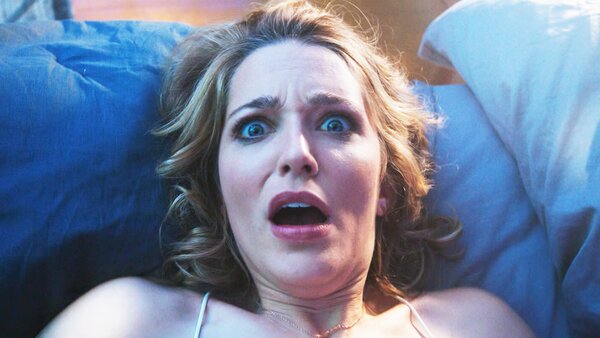
Happy Death Day is a whole ton of fun - a deliriously entertaining riff on both time-loop movies and slasher flicks, in which Tree (Jessica Rothe) finds herself re-living the same day again and again leading up to her grisly murder.
In the theatrical ending, Tree deduces that the real killer is her roommate Lori (Ruby Modine) and dropkicks her out of a window to her death, finally freeing her from the deathly time loop.
But the original ending went on further, as after Tree deals with Lori, she's being cared for in hospital when she's suddenly approached by the wife of Gregory Butler (Charles Aitken), the professor she was having an affair with.
Butler's wife injects Tree with an overdose of pain medication, killing her, with the implication being that this kills Tree for good.
Test audiences quite understandably hated this, feeling that Tree had earned a happy ending after going through so much turmoil, and so the filmmakers went back and shot the sunnier finale we got.
12. Everyone Has Self-Blinded - Bird Box
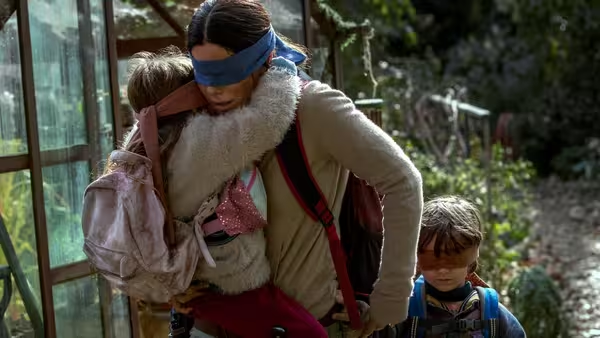
Netflix's Bird Box climaxes with Malorie (Sandra Bullock) and her surrogate children reaching the safe community hidden in the forest, where survivors apparently live peacefully without threat of the entities that compel anyone who looks at them to kill themselves.
It turns out that said community is situated within a former school for the blind, where hundreds are living safely from the creatures - a genuinely hopeful ending.
But the screenplay original drew more faithfully from Josh Malerman's source novel, where it's revealed that some of the people living in the community intentionally blinded themselves in order to avoid ever seeing the creatures.
Even though it's stated that people no longer resort to such methods, it still makes the ending that much more bittersweet.
But director Susanne Bier preferred to steer things in a more optimistic and hopeful direction as aligned with her worldview, while still staying mostly true to how the novel wrapped up.
11. Erin Gets Shot In The Head - You're Next

Adam Wingard's brilliant You're Next ends with Final Girl Erin (Sharni Vinson) killing the last of her attackers, her duplicitous boyfriend Crispian (A. J. Bowen).
But far from a happy ending, this act is witnessed by a cop who believes Erin to be the aggressor, and promptly shoots her in the shoulder.
The cop then enters the house, where he falls prey to the axe trap Erin set up to fend off her assailants.
Yet Wingard also shot a decidedly bleaker, not remotely darkly comedic ending in which the cop straight-up shoots Erin in the head after seeing her kill Crispian.
While it absolutely makes sense that a twitchy American cop would shoot first and ask questions later, it would've also been an overwhelming bummer of an ending considering how much of a badass Erin showed herself to be throughout the film.
The more grimly amusing theatrical ending felt more tonally appropriate while also leaving the door open for a sequel which, sadly, has yet to nor probably ever will materialise.
10. Birds On The Golden Gate Bridge - The Birds

Alfred Hitchcock's The Birds ends in a highly unconventional manner for both a Hitchcock film and a horror movie released in the 1960s, given that it eschews the expected resolution entirely.
Rather than have Mitch (Rod Taylor), Lydia (Jessica Tandy), and company find a way to triumph over the murderous birds, all they're able to do is flee Bogeda Bay while the birds are in no way dealt with, their violent behaviour is never explained, and it remains to be seen what will become of humanity.
Yet Hitchcock's original ending went even further hammering in the hopelessness, as when the Brenners complete their drive to San Francisco, we were supposed to see birds covering the Golden Gate Bridge.
As for why this was never shot? In the 1960s, without the advanced effects techniques of today, it was considered a practical nightmare to find a way to execute the shot of the bird-covered bridge, and so Hitchcock went for this more subdued, arguably creepier denouement.
9. Stu Is Actually Alive - Scream 7
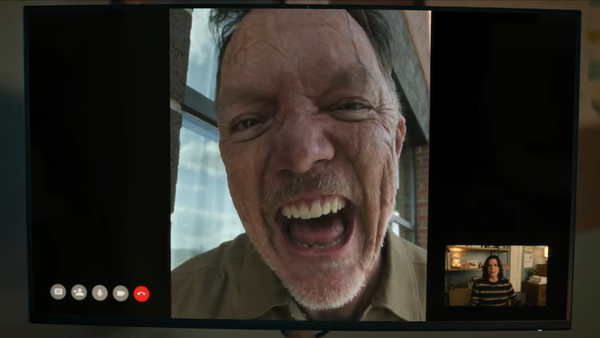
When it was first announced that Matthew Lillard would be appearing in Scream 7, fans were split down the middle on the prospect of his killer Stu Macher potentially still being alive - after having a massive CRT TV dumped on his head at the end of the first film.
But of course, as many suspected it turned out that Stu is indeed dead and his likeness was simply being used as an AI deepfake to taunt Sidney.
Yet this wasn't the totally concrete plan during shooting, as Lillard recently revealed he actually shot a cheeky post-credits stinger in which Stu is shown watching TV and revealed to be alive for real.
According to Lillard, he convinced director Kevin Williamson to shoot the scene, but when test audiences reacted negatively to it, it was removed.
For his part, Lillard blames the audience reaction on the decision to test-screen the film without credits, meaning that the stinger was awkwardly placed immediately after the final scene of the film.
But c'mon - that TV was huge, there's no way Stu survived. Just let it go.
8. Paxton Kidnaps The Businessman's Daughter - Hostel
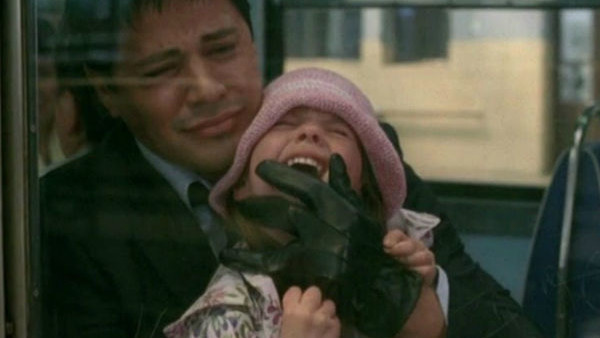
Eli Roth's hella-nasty Hostel concludes with hero Paxton (Jay Hernandez) following a Dutch businessman (Jan Vlasák), who is a member of the Elite Hunting Club, into a train station bathroom in Austria where he slits his throat.
Roth's original ending - which is misguidedly included in his Director's Cut - made a far darker implication, though, as the businesssman is accompanied by his young daughter as he heads to the bathroom.
When he returns, he finds that his daughter has gone missing, just as it's revealed that Paxton kidnapped her by forcing her back on the train without her father.
While it remains ambiguous what Paxton plans to do with the child, the basic issue here is that it doesn't make a lot of sense.
Even if Paxton just wants to get this poor girl away from her monstrous father, how far is he conceivably going to get with a screaming child onboard a train?
Give it about 30 seconds before a bystander alerts the authorities and it's Game Over.
The theatrical ending is just much tighter and more satisfying without getting bogged down in implausibilities.
7. Stefani Locks Herself In Iris' Cabin - Final Destination Bloodlines
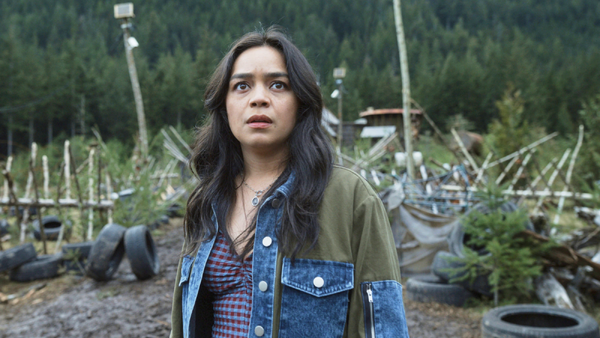
Final Destination Bloodlines ends in much the same way that just about every other film in the franchise does - the put-upon protagonists think they've evaded Death's grasp, but of course it comes back to claim them in supremely grisly fashion.
In the final scene, Stefani (Kaitlyn Santa Juana) and her younger brother Charlie (Teo Briones) believe they've defeated Death after Stefani drowned and was resuscitated.
However, they're then informed that Stefani was technically never dead because she was revived before cardiac arrest occurred, after which a train carrying timber derails, crushing the pair to death.
But Bloodlines originally had a far more interesting ending, in which Stefani decides to follow in the footsteps of her grandmother Iris (Gabrielle Rose) and confine herself to her granny's fortified cabin.
Iris exiled herself in order to keep Death's plan at bay and ensure the safety of her bloodline, and Stefani intended to do the very same, comfortable in the knowledge that as long as she's alive, Death can't come for Charlie.
It certainly would've been an intriguingly bittersweet, left-field ending for a Final Destination movie, but according to co-director Adam Stein, it was decided that this simply wasn't a crowd-pleasing enough way to close out the movie.
Understandable, but the ending we got was just so utterly pedestrian by comparison.
6. Everyone Dies - Dawn of the Dead (1978)
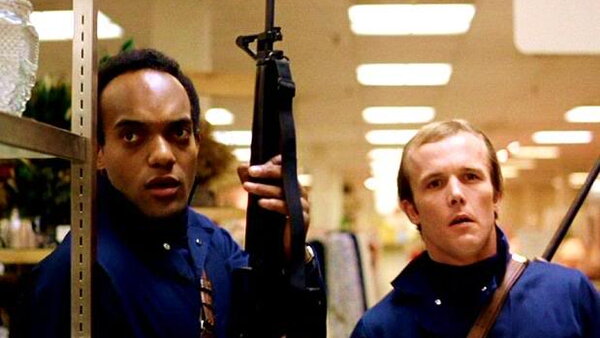
George A. Romero's seminal zombie film Dawn of the Dead ends with survivors Peter (Ken Foree) and Fran (Gaylen Ross) meeting on the roof of the mall, where they fly away in a helicopter to parts unknown.
Given that the pair have limited fuel, it's hardly much of an upbeat conclusion, but at least there's some faint sliver of hope that they might find a way to survive.
No such luck in Romero's originally written ending, though, where Peter and Fran lose all hope to the extent that Peter shoots himself dead and Fran follows up by sticking her head into the path of the helicopter's rotor blades.
Worse still, the end credits would show the helicopter's rotor blades quickly stopping, implying that even if Peter and Fran had flown away, they wouldn't have gotten far on their available fuel.
But Romero was ultimately talked out of such an unrelentingly bleak ending, opting instead for one that at least allows for the possibility of hope.
5. Chris Gets Arrested - Get Out
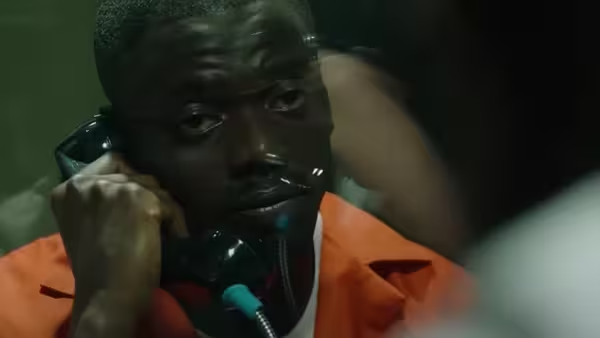
Jordan Peele's Oscar-winning, all-timer horror Get Out ends with Chris (Daniel Kaluuya) managing to escape the Armitage family's grasp with the help of his ride-or-die buddy Rod (Lil Rel Howery), who drives him away from the mayhem.
It's hardly a fist-pumping crowd-pleaser as it goes, but in the very least Chris avoided being killed or immediately captured, the audience being left to ponder what happens to him as the end credits roll.
But Peele's original ending was far more of an overt downer, where Chris kills Rose (Allison Williams) and is arrested, after which Rod visits him in prison.
Peele intended for this ending to reflect the realities of racism, and while it's probably not too far off what would happen to Chris in the real world, Peele quite smartly decided that a more ambiguous ending that provided more hope for Chris was the right call.
Needless to say, Get Out's original ending was enough of a bummer that it may well have prevented Peele from nabbing that Best Original Screenplay Oscar.
4. Esther Lives - Orphan
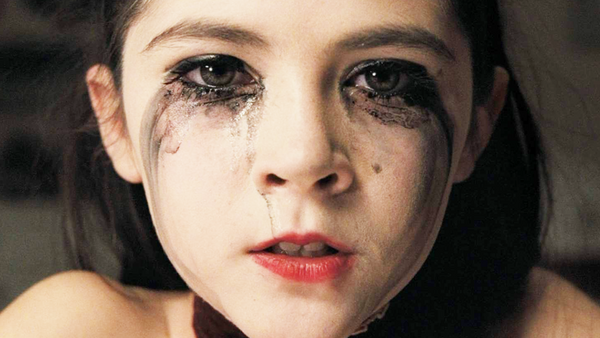
2009's absolutely unhinged Orphan drops the all-timer reveal that the vicious "9-year-old" Russian girl Esther (Isabelle Fuhrman) is actually a 33-year-old Estonian woman with a hormone disorder who poses as a child in order to quite literally get away with murder.
But her latest adoptive mother, Kate (Vera Farmiga), turns the tables on Esther in the climax, kicking her in the face and snapping her neck along with the perfectly-placed one-liner, "I'm not your f**king mommy!"
Esther is quite unambiguously dead, her corpse left to sink into the icy water below, but an alternate ending was also conceived where Esther calmly walks back to the family home, reapplies her makeup, and acts sweet and innocent just as the cops arrive.
It's certainly a fun ending which reinforces the entire premise of the film, that nobody would ever suspect an adorable child of murder, but let's be real - that neck snap is just too damn satisfying to deny.
3. Sophie's Failed Sacrifice - Lights Out
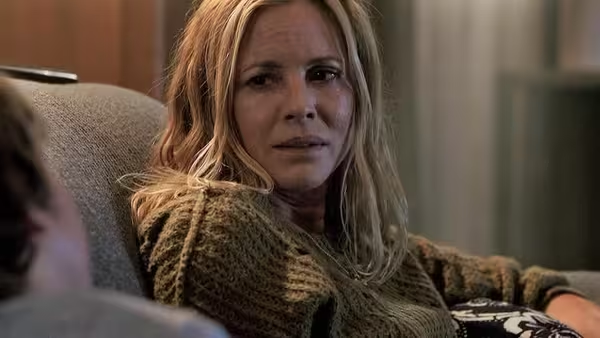
David F. Sandberg's feature debut Lights Out was generally well-received by both critics and audiences, though did receive some pushback for the perceived messaging of its ending.
Protagonist Rebecca's (Teresa Palmer) mentally ill mother Sophie (Maria Bello) realises that the malevolent entity known as Diana (Alicia Vela-Bailey) has tethered itself to her depressive state, and so she shoots herself dead in order to free her daughter from further torment.
Many felt that this ending inadvertently promoted the idea that depressed people are better off just doing away with themselves - a reading which Sandberg, who has himself struggled with mental health issues, was troubled by.
He went on to explain that the ending originally saw Sophie shoot herself only for Diana to return regardless and take control of Rebecca's half-brother Martin (Gabriel Bateman), forcing Rebecca to battle and defeat Diana for good.
But this ending was scrapped after test audiences felt that it made Sophie's sacrifice feel entirely in vain - hence the change.
Sandberg was basically boxed into a "damned if you do, damned if you don't situation" here and tried to make the best of it.
2. Nikki Kills Herself - Obsession
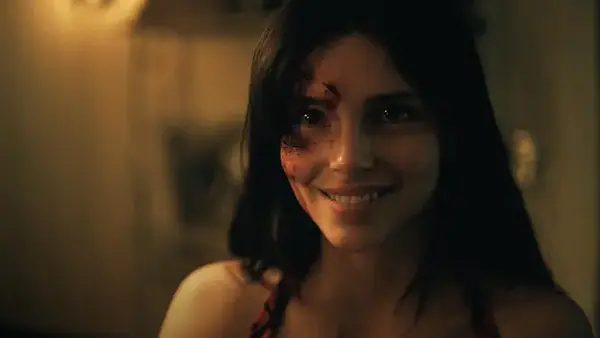
Obsession features one of the cruellest endings in recent horror movie history, as after Bear (Michael Johnston) realises the only way to stop Nikki's (Inde Navarrette) obsessive rampage is with his own death, he takes a fatal overdose of oxycodone.
However, Bear ends up chickening out and attempting to vomit up the pills, just as Nikki breaks her own One Wish Willow, compelling him to exit the bathroom, at which point he swiftly dies from an overdose.
A devastated Nikki then prepares to shoot herself, but Bear's death of course frees her from his wish, returning her to full consciousness as she screams in terror at the human carnage surrounding her.
But Curry Barker's original written ending was decidedly more Romeo and Juliet-esque, with Nikki simply shooting herself dead.
However, during filming he allowed actress Inde Navarrette to shoot a single alternate take where Nikki survives, and with his father urging him that this ending was ultimately more disturbing, Barker decided to use it.
1. It Was All A Hoax - The Last Exorcism

The Last Exorcism just might be one of the most underappreciated found footage films of the 2010s, even with its slightly disappointing ending.
Though it initially appears that the "possessed" farm girl Nell (Ashley Bell) is really just a traumatised young woman, this ends up being a fake-out, with the final sequence showing Nell giving birth to a demonic baby.
At this moment, preacher Cotton Marcus' (Patrick Fabian) faith is restored and he runs towards the chaos with a cross, all while filmmakers Iris (Iris Bahr) and Daniel (Adam Grimes) are killed by the cult.
But shortly after the film's release, Daniel Stamm claimed that he "f**ked up" the ending, noting that the main reason he signed on to direct the film was because of the bolder, edgier ending in the original script.
The original ending, which was fully shot, was an epilogue in which Marcus' church has gained thousands of new followers after he was the first person to ever capture a demon on film.
Stamm intended for the ending to leave audiences wondering whether the entire movie was a marketing ploy cooked up by Marcus to enrich himself, but when Lionsgate acquired the film they felt this was too confusing for a mainstream audience and so it was cut.
It's certainly a clever and interesting idea - far more so than the conventional ending we got - but it's also easy to see how it could've thrown normies for a loop.