Crimson Peak: 8 Reasons 2015's Biggest "Horror" Is A Massive Disappointment

Guillermo del Toro should know better.
"Beware of Crimson Peak," snarls a ghost at the start of Guillermo del Toro's latest exercise in creepy production design. At the time I had no idea that it wasn't just a warning to Mia Wasikowska's Edith Cushing (a warning that, because this is a movie, goes totally and completely unheeded), but to the audience too - beware of Crimson Peak, it's not as good as you were expecting. So yeah, the most high-profile horror of 2015 (I think we can safely say that Paranormal Activity has cycled back round to niche again) isn't great. It has elements that are certainly impressive, as you'd expect from a much lauded-director, but not enough to come together to make anything more than a sub-par whole. I wasn't as hyped Crimson Peak as much as some - del Toro's Hollywood outings have never grabbed me in the way they have others - but, when we're dealing with a movie with this much alleged talent behind the scenes, that it turned pretty bad still makes it a major disappointment. I've already layed into the film in my main review, but there's so many more elements of Crimson Peak that have left me thinking that I just have to go into it in a bit more depth - here are the eight reasons it's 2015's biggest let-down. Warning: mild spoilers.

8. The Scary Parts Feel Out-Of-Place
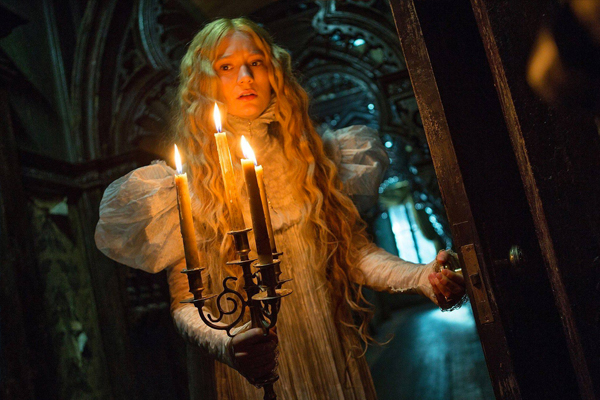
I already made a big point in my review of how del Toro repeatedly points out to the audience that Crimson Peak isn't a horror in some thinly veiled meta-commentary - in the words of Edith, this "story with a ghost in it" is really only using the ghosts as "a metaphor for the past" and is in fact "a love story". Now it is a smart move to make clear to the audiences that this movie, advertised as a sh*t-your-pants fright-ride, isn't actually that. However, it also accidentally highlights a major lack of focus - while there are scary bits in Crimson Peak, they don't really slot into the rest of the film. There's elements within them that add to the plot and overall tone (although that doesn't quite work - more on that later), but for the most part they're like action sequences in a sub-par adventure flick; requisite padding. There's nothing necessarily wrong with making a dark and brooding film in a haunted house that isn't a horror, but if you are going to do that and still steer into the genre tropes you need to make sure that the scary moments are not only, well, scary, but ensure they work well within the greater picture. Given that you've already got all the building blocks of a horror, that shouldn't be as difficult as it looks here.

7. The Plotting Is Incredibly Predictable
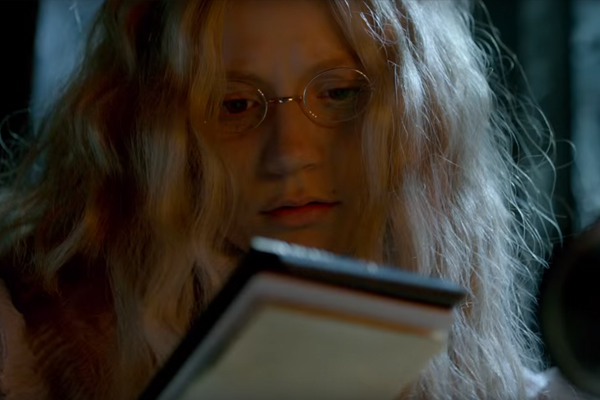
It may not be immediately obvious, but describing Crimson Peak not as a horror, but a "love story" is actually giving away the emotive conclusion of the whole thing. Although that is really just a crack in the door compared to the massive hole in the ceiling of the director giving away the movie's ending in incredibly obvious manner. Early on Edith is described by another rich American family as Jane Austen due to her dying a spinster, but she would rather be compared to Mary Shelley as "she died a widow". Tom Hiddleston's character's doomed before he's even appeared on screen. And that's just the start; the introduction of each key participant lays out their future in a similar way, and several key MacGuffins are alluded to in the most wink-wink nudge-nudge way. It's all very cheesy and while sometimes it's subverted (Edith's father isn't killed by the constantly-shown razor), it all strikes a very odd tone. On top of this forced dialogue elements, there's also some very obvious exposition scenes, which endlessly repeat plot points and drop faux-foreshadowing that defy any descriptions of this being a "grown-up" film.

6. The Style Is Best Described As Gothic Camp
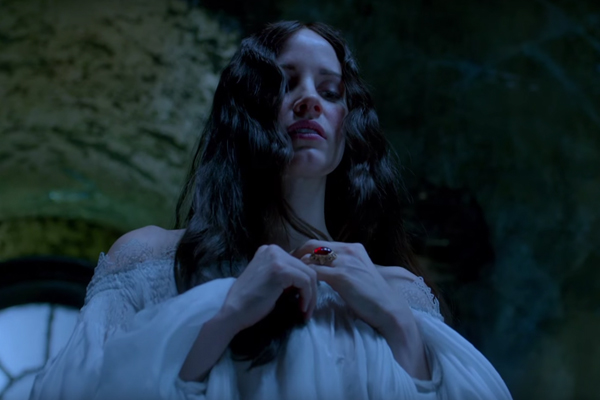
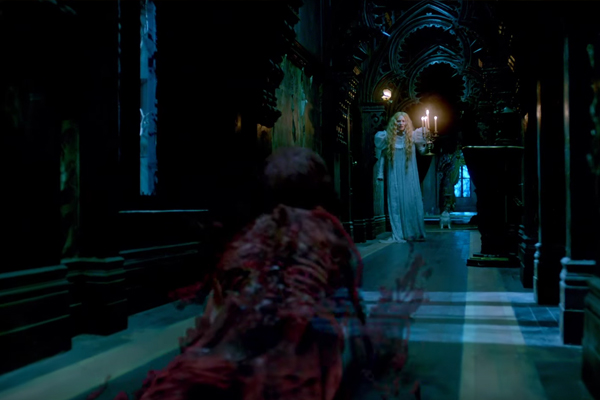
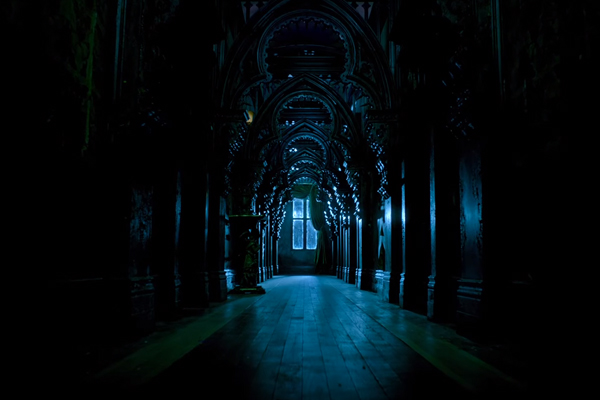
Tim Burton was probably the worst thing to happen to gothic design. Often cited as the master of the style, he approaches it with the awareness of a moody teenager; while he gets the angles and general structure of it, there's typically an added silliness or air of whimsy (in the case of Edward Scissorhands, he even juxtaposes it with bright and cheerful order). It's a style, but label it full gothic greatly cheapens any other work attempting it properly. Del Toro, on the other hand, is someone who gets it, and for all its other mistakes Crimson Peak shows that; Allendale Hall is a proper gothic structure, with long, dark corridors and expansive-yet-restrictive halls consisting of overly-emphasised curves and spikes making for an immediately imposing creation. But while visually he's on point, when it comes to the overall tone there's still a jarring contrast; an underlying campness runs through the film, turns several moments (particularly in the high-tension finale) silly. This is somewhat innate in telling a Victorian tale, but the more offbeat elements of style are, if anything, amped up here, making for a film that feels rather different to how it looks.

5. The Bizarre Use Of The Ghosts

The ghosts in Crimson Peak are metaphors for the past. Or rather, they're meant to be - along with it not being a horror, that's one of the not-so-subtle parts of Edith's meta-explanation of the film. And good thing she says that, because if I'd not heard that I'd have just assumed they were plot devices. Yup, while they may be used for genuinely chilling moments, the ultimate purpose of the ghosts in the story is to push Edith along in her discoveries, near the end literally pointing her towards the next big twist. That would be fair enough (well, a bit annoying given the laziness, but bearable) if there hadn't been such a clear insistence that there was a thematic purpose to the spirits. Being from the past (which, due to the linear passage of time, is the only place ghosts can come from outside of the mind of Christopher Nolan) doesn't mean that the spirits immediately become all-encompassing embodiments of it. The furthest the film obliquely goes is making them symbols of the Sharpe siblings' former indiscretions, which is a pretty tepid notion.

4. There's Some Glaring Continuity Errors
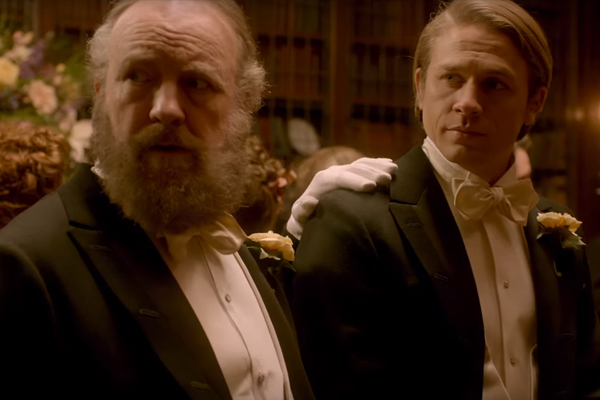
One of the worst things to comment on when discussing a big budget release is basic filmmaking slip-ups - whether down to a messy production or an assumption that people won't notice, it means a movie has failed on a very fundamental level. It was a big problem with Fant4stic - terrible sound mixing, shoddy CGI and Kate Mara's magic wig - and while Crimson Peak doesn't come anywhere close to that, there's too many prevalent mistakes in here to not mention. In the early, America-set scenes, at multiple points there's clearly two separate takes edited together - in an over-the-shoulder shot Mia Wasikowska talks without opening her mouth and during the dance Charlie Hunnam's Dr. Alan McMichael manages to teleport next to Edith's Dad in the space of a single cut - and while things are better when we get to England, it's the sort of basic structural mistake that a film of this level from a talented filmmaker, particularly one whose reputation is built on its visual style, shouldn't be making.

3. The Jump Scares Are Of The Ineffective Kind (And Overused)
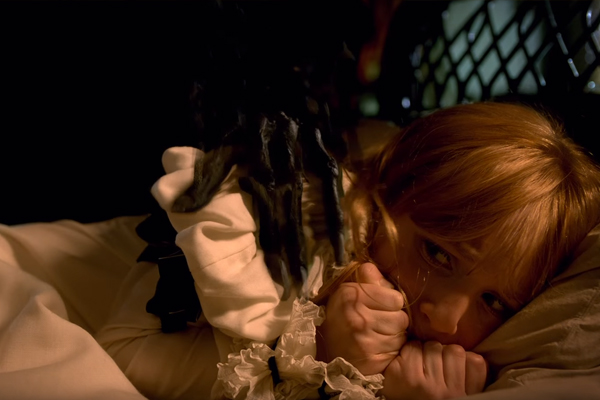
How do you make a jump scare that little bit more effective? Why add in a big thumping note on the score, of course. That appears to the wisdom of every run-out horror franchise and, it turns out, Guillermo del Toro too. Now I get why filmmakers use this trick - in the immediate moment there's few things scarier than a jump shock and you want to mine that feeling for all it's worth. But being accompanied with a big boom rarely helps accentuate it, especially in more sudden jolts; your audience is just as likely to devolve into laughter as screams in an attempt to calm themselves, ruining any of the built-up tension. Crimson Peak's jump scares aren't quite that ruinous, but thanks to the audio beats still become rather ineffective distractions. Oddly enough, look to none other than M. Night Shyamalan to see it done right; in The Visit there's a totally unsignalled jump scare that is so utterly horrifying you're stuck in the cinema seat petrified, unable to even consider a laugh. And now I've just realised this year M. Night made a film better than Guillermo... Oh dear.

2. There's Random Time Jumps (And Other Cases Of Poor Pacing)
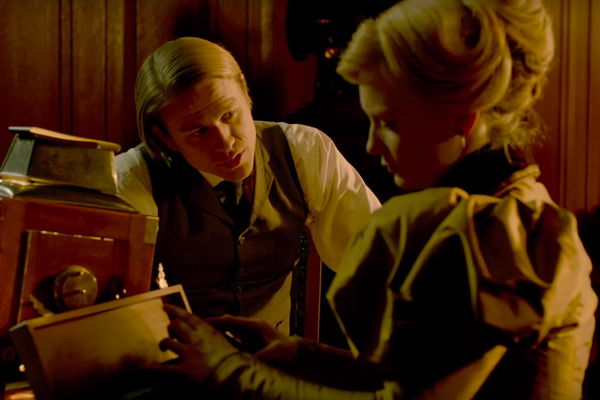
Even without the obvious foreshadowing and "wait, what" continuity errors, the opening of the film feels rather sloppily constructed. We meet Edith, follow her trying to flog her book and meeting Sir Thomas, who she falls for because, well, he's Tom Hiddleston and it all looks like we're heading along on the creepy path set out by the trailer. And then all of a sudden she's visiting Dr. McMichael to talk about his previously unmentioned fascination with finding ghosts in the real world. Wait, what? Where the hell did that come from? Yeah, Crimson's Peak plotting is really rather confusing, with scenes coming out of nowhere and several massive time jumps that randomly advance Edith's terror or Lady Lucille's creepiness. Things get particularly bad around Dr. McMichael; everything to do with Hunnam's character feels rather out of place, as if he was inserted into an already finished script so del Toro could offer the Son's Of Anarchy actor another movie role in lieu of the never-happening Pacific Rim 2. He pops up randomly throughout the middle act in various states of curiosity complete independent of whatever's happening over in England. When so much of the film feels like it's going for a rather operatic storytelling approach, this scattershot structure really drags it down, making having any idea what's going on (and, with the overly obvious dialogue, knowing what the characters know) impossible.

1. It's Ultimately Rather Generic

Pacific Rim is a blockbuster with robots punching monsters. Yes, it's directed by Guillermo del Toro, but it's a blockbuster with robots punching monsters first. So for every moment of practical creature effects or compositioned CGI fight scene, the ultimate feeling coming out of it is that you've seen a blockbuster with robots punching monsters. But because of that name in the end credits it's been regarded as some pinnacle of popcorn entertainment, with people (apparently) clamouring for a sequel. I'm not saying that it's anything close to a Transformers flick - this is the product of an artistic director - but just that, at the end of the day, it's an average blockbuster with, yes, robots punching monsters. Crimson Peak is very similar to that - it's a haunted house story that forgoes ghost chills in the third act for a "more rational" near unkillable crazy person hacking away at the hero with a knife. There's a competence to some elements and visually it's creative, but when you boil it down what you're watching is neither a novel idea nor an existing one well-executed; it is, for lack of a better word, generic. Oh, but it's an original project directed by Guillermo del Toro, so five stars and back-pats all round. Have you seen Crimson Peak? What did you think? Share your thoughts down in the comments.

Contributor
Contributor

Film Editor (2014-2016). Loves The Usual Suspects. Hates Transformers 2. Everything else lies somewhere in the middle. Once met the Chuckle Brothers.