David Lynch’s 22 Strangest ‘Otherworld’ Characters

13. Glinda The Good Witch: Wild At Heart

€˜If you€™re truly wild at heart, fight for your dreams. Don€™t turn away from love.€™ Although Wild At Heart contains a vast amount of weird and wonderful characters, only one of them feels truly €˜otherworldly€™: Sheryl Lee€™s Glinda The Good Witch. She only appears briefly at the film€™s conclusion, and it is unclear whether she is simply a figment of Sailor€™s (Nicholas Cage) imagination, but she seems to hold a similar role to that of The Grandmother earlier in the list. She is, as her name suggests, a truly €˜good€™ figure that offers Sailor very clear advice about following his dreams and his heart. Her role in the narrative, then, sees her effectively encouraging him to go back to Lula (Laura Dern), granting the audience the happy ending that they desire. This theme €“ a glorious, brightly-lit conclusion in which characters seem to be granted the idyllic, beautiful ending that they desire €“ occurs in many of Lynch€™s films, from Fire Walk With Me to Inland Empire, and the appearance of Glinda The Good Witch embodies this.

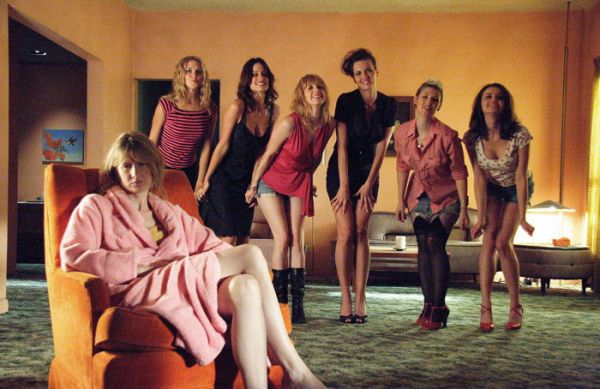
12. The Whores: Inland Empire

€˜You gotta swing your hips now€€™ Midway through Inland Empire, when all audience comprehension has dissipated, Nikki/Sue is joined in her new home by a group of prostitutes (€˜The Whores€™) listed in the credits as Lanni, Terri, Lori, Chelsi, Sandi, Dori, Kari, Salli, Tammi, Roxi and Mandi. These women appear and disappear frequently, seemingly dependent upon the lighting in the house, and deliver surreal and often humorous sketches that entertain Nikki/Sue. Although their role is never made clear (there is a trend developing here€), they certainly seem more aware of what is going on than the hapless Nikki/Sue. They are also critical to two of the most memorable scenes in the film. In the first, slouched on the sofa, one prostitute murmurs €˜You gotta swing your hips now€™ before clicking. Lynch then cuts to an overexposed shot of The Whores €˜swinging their hips€™ in time to Little Eva€™s €˜Locomotion€™. They €˜jump up€™ when the lyrics tell them to and vanish. It is an utterly bizarre and unexpected moment and stands out even in a film that is full of such occurrences. In the second, Nikki/Sue is on Hollywood Boulevard, seeking clients with The Whores, when she is stabbed in the abdomen with a screwdriver. The Whores€™ horrified screaming, as well as their panicked retreat down the Walk Of Fame, makes the sequence even more terrifying than it should be €“ especially given that, up until that point, they had been portrayed as decidedly unemotional and distanced.

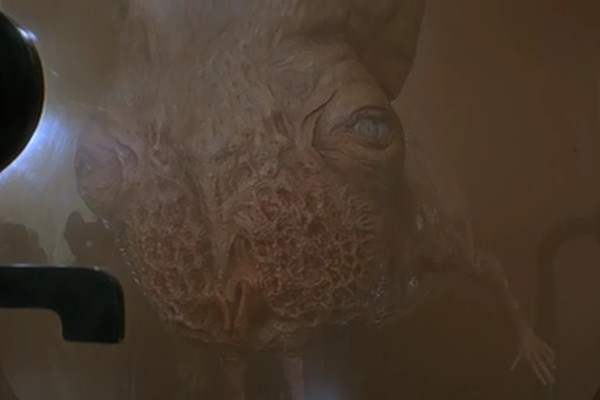
11. Edric, The Guild Navigator: Dune

€˜Navigators, who the spice has mutated over four thousand years, use the orange spice gas, which gives them the ability to fold space.€™ Lynch€™s adaptation of Frank Herbert€™s Dune is certainly flawed, but it contains many moments of outstanding visual beauty and ugliness. While its science fictional setting could lead to the conclusion that every character is €˜otherworldly€™, one stands out as particularly removed from the norm: Edric, The Guild Navigator. Edric has €˜the ability to fold space€™ with its mind due to its consumption of mass quantities of the drug spice, and its appearance in Dune is perhaps the most shocking moment of the film. It is a vast slug-like creature, resembling a heavily malformed foetus, housed in a moving glass case. It speaks to Emperor Shaddam Corrino IV (José Ferrer) with the same otherworldly knowledge that defines so many others in this list €“ knowledge granted by the spice, and paid for with the depreciation of its human form.

10. Black Lodge Inhabitants & Angels: Twin Peaks/Fire Walk With Me
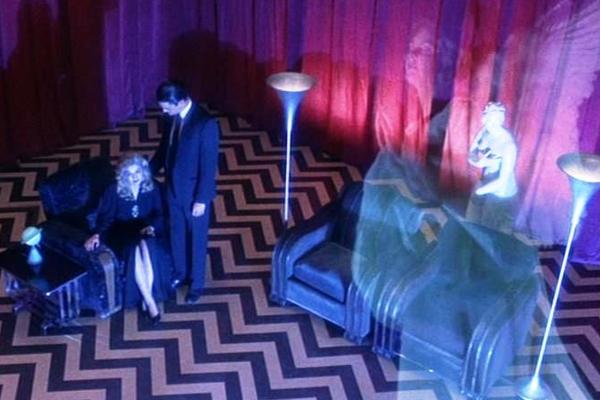
€˜The angels wouldn€™t help you, because they€™ve all gone away.€™ The aforementioned Black and White Lodges are home to a host of different characters, many of which only appear on screen very briefly. There is the meeting above the convenience store in Fire Walk With Me, which features a Jumping Man in a Pinocchio mask (Carlton L. Russell) and characters credited solely as The Electrician (Calvin Lockhart), Woodsman (Jürgen Prochnow) and Second Woodsman (David Brisbin). These characters were presumably to be developed further in the never-made sequel films. There are also the doppelgängers of Leland Palmer (Ray Wise), Dale Cooper (Kyle MacLachlan) and Laura Palmer (Sheryl Lee) in the show€™s finale, each of which seems to be an evil version of their real world selves. There is even the appearance of vocalist Little Jimmy Scott, singing his show-stopping rendition of €˜Sycamore Trees€™. But perhaps the most fascinating (beyond the more €˜major€™ figures discussed later in this list) are the angels in Fire Walk With Me. Laura speaks openly to Donna about how the angels have left her to fend for herself, an occurrence that is highlighted when her guardian angel vanishes from a painting in her bedroom. When BOB captures Laura at the film€™s conclusion, fellow abductee Ronette Pulaski€™s (Phoebe Augustine) angel comes to her rescue. Laura€™s does not appear and she is murdered. However, on her arrival in the Lodge (whether it is the Black or White one is unclear), her Guardian Angel does arrive to guide her to the peaceful afterlife, and she is finally rewarded with a beautiful happy ending.

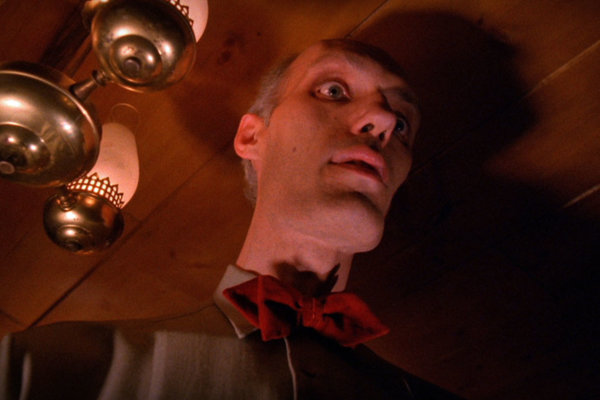
9. The Giant: Twin Peaks

€˜The owls are not what they seem.€™ Undoubtedly one of the most recognisable figures on this list is another Lodge inhabitant, The Giant (Carel Struycken). Introduced in the opening episode of Twin Peaks€™ second season, he has become one of the symbols of the weirdness that defined the show. First appearing to the incapacitated Agent Cooper and offering clues about Laura Palmer€™s murder, he is a semi-regular figure throughout season two. Much like The Tremonds/Chalfonts, The Giant seems to be trying to help Cooper €“ but his abstract clues and unexplained motives render him highly ambiguous. Who is he allied with? Is he from the Black or the White Lodge? He clearly knows a lot more than he is letting on, so why is he being so cryptic? Regardless, there are several things that are known about The Giant. He is an inhabiting spirit, with his host being the elderly Room Service Waiter that discovers Cooper after he has been shot (played by Hank Worden). He warns Cooper quite clearly that Annie Blackburn (Heather Graham) should not enter the Miss Twin Peaks contest. Oh, and he granted the show two of its most famous catchphrases: €˜The owls are not what they seem€™ and €˜it is happening again€™.

8. The Cowboy: Mulholland Drive

€˜You will see me one more time if you do good. You will see me two more times if you do bad.€™ The Cowboy (Lafayette Montgomery), one of Mulholland Drive€™s most iconic characters, is quite clearly an employee of the all-controlling Mr. Roque (much like the Castigliane brothers portrayed by Angelo Badalamenti and Dan Hedaya). Yet he differs from Roque€™s other cronies because of his otherworldly comprehension of what exactly is going on. The eyebrow-less figure reminds other characters, as well as the viewer, that €˜I€™m driving this buggy and, if you fix your attitude, you can ride along with me€™, as if he is completely in control of the events that are being shown. He even tells director Adam Kesher that he will see him again either once or twice, depending on his actions (although The Cowboy does appear two more times in the film, it is left up to the viewer to decode whether he is seen once or twice more by Kesher). The Cowboy€™s outfit is never explained (but then again, neither are the often strange appearances of other characters in this list), but he certainly seems to be a controlling force in the story €“ much like The Bum. He is present when Betty/Diane wakes from her sleep near the end of the film, and is indeed the one that rouses her from her slumber and forces the narrative to take its most violent and unexpected shift.

7. The Mystery Man: Lost Highway

€˜We€™ve met before, haven€™t we? At your house... As a matter of fact, I€™m there right now€ Call me €“ dial your number.€™ While Lost Highway is a divisive film, drawing accusations of misogyny as well as criticisms about its narrative style, there is one element that draws nigh-unanimous praise: Robert Blake€™s creepy Mystery Man. Dressed all in black and featuring large prosthetic ears, white makeup and dark eye shadow, The Mystery Man is evocative of terrifying characters such as Death in Ingmar Bergman€™s The Seventh Seal and Nosferatu in Murnau€™s classic film of the same name. He is decidedly out of place visually in Lost Highway which, despite its carnival of monstrous figures, is predominantly inhabited by €˜normal looking€™ people. The Mystery Man is quite clearly in charge of the narrative of the film, to the extent that he is capable of manipulating space, time and technology €“ and does so frequently. He first appears superimposed over the face of Renee (Patricia Arquette), and subsequently materialises across the timelines of various different characters. His exact role, however, is encapsulated in his name: he is a mystery. There is one scene featuring The Mystery Man that stands out as one of Lynch€™s finest ever moments. Any fan of Lynch will already know the one. The Mystery Man introduces himself to Fred Madison (Bill Pullman) at a party by reminding him that they have met before €“ €˜at your house, don€™t you remember?€™ He is referring to the aforementioned superimposition. When Fred does not recollect the meeting, The Mystery Man tells him that he is at his house €˜right now€™. Fred€™s disbelief is intensified when he is told to €˜call me €“ dial your number€™. Fred phones his own home, and The Mystery Man €“ still standing in front of him €“ answers. The Mystery Man at the party and his voice on the phone laugh in tandem, generating a truly uncanny moment of Lynchian brilliance.

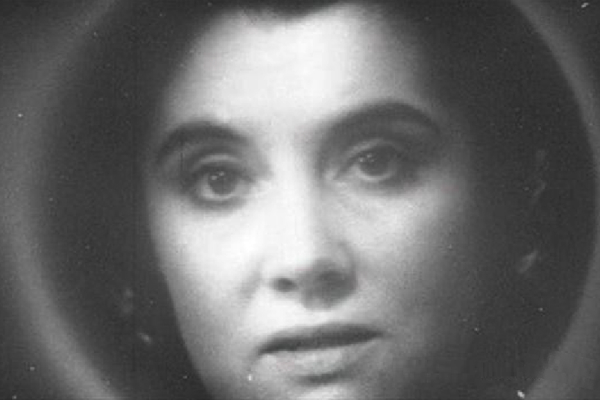
6. John Merrick€™s Mother: The Elephant Man

€˜Nothing will die. The stream flows, the wind blows, the cloud fleets, the heart beats. Nothing will die.€™ Another angelic otherworld figure that graces Lynch€™s stories, and one of the earliest, is John Merrick€™s (John Hurt) Mother in The Elephant Man. There is no doubt that Merrick adores his deceased Mother (Phoebe Nicholls), whose demise is portrayed stunningly through the film€™s opening montage, and she is treated as a goddess throughout his conversations about her with other characters. It is implied that Merrick€™s Mother watches over her son at all times, and is incredibly proud of how beautiful his humanity is. She sees through his physical ailment and appreciates the good person beneath. In effect, she represents all that is good in the world €“ in contrast with the dark, seedy Victorian figures that mistreat and abuse Merrick throughout his life. Eventually, she provides Merrick with the freedom and happiness that he has long sought but never found. As he commits the ultimate sacrifice, sleeping on his back in the knowledge that doing so will kill him, he does so understanding that his angel, his Mother, is waiting for him in Heaven. It is one of Lynch€™s most truly heart-breaking emotional moments.

5. MIKE/The Man From Another Place: Twin Peaks/Fire Walk With Me
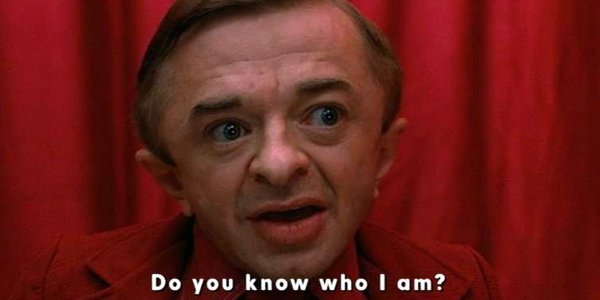
€˜That gum you like is going to come back in style.€™ No list of Lynch€™s otherworldly characters could be complete without including perhaps his most well known: MIKE from Twin Peaks (Michael J. Anderson). Also referred to as The Dream Man and The Man From Another Place, MIKE is an inhabiting spirit from The Black Lodge that possesses the one-armed Phillip Gerard (Al Strobel). His Black Lodge form is that of a dwarf dressed in red who dances to Angelo Badalamenti€™s infamous soundtrack while speaking backwards (with his voice then reversed by Lynch in post-production). His first appearance is in Twin Peaks€™ oft-cited third episode, when Cooper dreams about a red room and a dwarf that provides cryptic clues about Laura Palmer€™s death. At that point in the story he seems like a mere dream figure, but his significance grows as the series unfolds. The clues he offers, such as €˜that gum you like is going to come back in style€™ and €˜she€™s filled with secrets€™, are among the show€™s most quotable €“ but much like those of The Giant, they are unclear enough to raise questions about MIKE€™s motives. MIKE returns late in season two, prominently figuring in Cooper€™s descent into The Black Lodge and in Laura€™s dreams in Fire Walk With Me. He is revealed to have a passion for killing matched only by his partner BOB (discussed later in the list), which leads to the ultimate question: can this dancing, backwards-speaking otherworldly dwarf€™s clues be trusted? Or are his motivations far darker than he is letting on?

4. Bondar The Magician & Club Silencio Inhabitants: Mulholland Drive
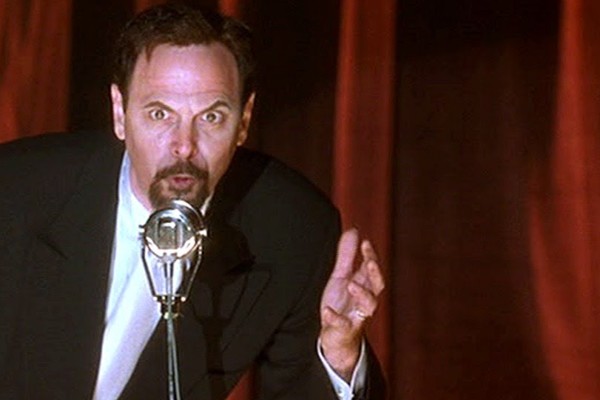
€˜No hay banda! There is no band! Il n€™est pas de orchestre! This is all a tape recording. No hay banda! And yet we hear a band! It is€ an illusion!€™ Described by many as Lynch€™s greatest ever sequence, the Club Silencio scene in Mulholland Drive is the ultimate work of beauty, darkness and mystery from a director that specialises in all three. Betty (Naomi Watts) and Rita (Laura Elena Harring) arrive at the club late at night, where they watch Bondar €“ AKA The Magician €“ perform a routine that summarises many of the themes outlined here. With music playing in the background, Bondar (Richard Green) repeatedly shouts €˜No hay banda! There is no band€ And yet we hear a band!€™ Interpreted by many as being a statement about narrative realism in cinema (everything is €˜an illusion€™), it can also be seen as evidence that Bondar is yet another otherworld character that recognises the narrative mechanisms at play in Lynch€™s films. He is reminding Betty of the fact that none of what she is experiencing is real, coercing her into waking from her fantasy (much like The Cowboy). The scene reaches its climax with Rebekah Del Rio€™s performance of €˜Llorando€™ (a Spanish version of Roy Orbison€™s €˜Crying€™), during which she collapses with the tape recording continuing to play in the background. This further amplifies the illusive nature of the performance. Notably, there is also an enigmatic woman with blue hair sitting in the club€™s gallery throughout the scene. She utters the film€™s final word: €˜silencio€™ €“ but who she is, exactly, is yet another Lynchian mystery.

In this post: 
David Lynch
 
Posted On: 
Contributor
Contributor

Articles published under the WhatCulture name denote collective efforts of a number of our writers, both past and present.