Dawn Of The Planet Of The Apes New Trailers - 8 Things We Learned

July 11th can't come quickly enough!
Matt Reeves' Dawn of the Planet of the Apes is one of our most anticipated films of the year, and for good reason. 2011's Rise of the Planet of the Apes managed to reboot the stagnant franchise while successfully reinvigorating our excitement in the science fiction tale. Dawn hits theaters on July 11th, and 20th Century Fox has been impressively patient with the film's marketing campaign. Until now, we've seen a teaser trailer (released five months ago), a few images, and a couple viral videos, but no substantial plot details or clear picture about what Reeves has in store for us. Thankfully, that's about to change, as two new full-length trailers have been released, an "Official" trailer and an "International" trailer. They finally give us a real glimpse at the newest chapter in this franchise, and plenty to dissect. Check out the trailers here: https://www.youtube.com/watch?v=3sHMCRaS3ao https://www.youtube.com/watch?v=hVXYl1URtmY The film looks fantastic, and should hopefully surpass our expectations when it finally hits cinemas. Until then, let's take a look at what we've learned from these plot-heavy trailers.

8. The Setting

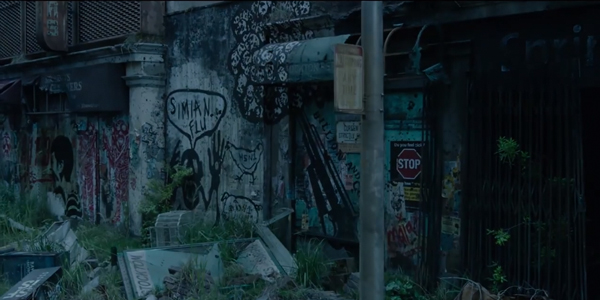
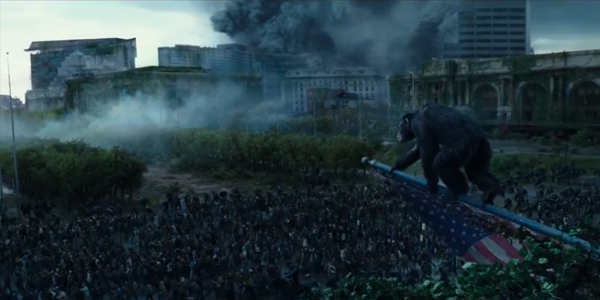
The placement of this story within the respective Planet of the Apes timeline is interesting, because it's taken a big jump in time from the first film. Dawn takes place eight years after Rise, after humanity has been all but wiped out by the "Simian Flu." The first movie featured the very beginnings of this story, as apes were just starting to evolve. That film left off at a place far and away from the "apes have taken over the world" period of the story. Interestingly, Matt Reeves has decided to skip the years that followed, and jump ahead to the point where apes have basically taken over the planet, with some human survivors struggling to stay hidden and stay alive.
Also worth noting is the fact that humans and apes have lived a very different eight-years. The humans spent four years fighting the virus, then another four fighting each other. During that time, the apes continued to evolve and grow in numbers, and as the trailer suggests, now "live in peace."

7. The Apes Are Learning And Speaking
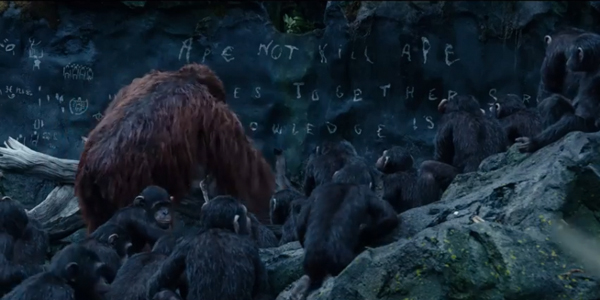
One of the greatest and most memorable moments of Rise of the Planet of the Apes was when Caesar first spoke, yelling, "NO!" to a petulant and abusive human teen. We knew that his intelligence and self-awareness had improved with the experimental drugs James Franco's character had given him, but the ability to speak was a huge leap in his evolution. Picking up eight years in the future, Caesar can speak a bit better and appears to be teaching the other apes how to read and write. We see the orangutan from the first film in front of a school of chimpanzees with writing on the walls, and Caesar speaks several times to both the humans and his ape compatriots. Luckily, Reeves has kept the story grounded and realistic, in the sense that apes aren't speaking fluently and acting human-like just yet. That means this movie won't feature a bunch of scenes with animals talking to each other, which from an audience standpoint would be a bit too unrealistic to connect to. This slow-burn approach to the apes' evolution is far more interesting. Caesar speaks in slow spurts, as if he's really concentrating on what to say and how to say it, leading to the most memorable line from the new trailers: "Apes. Together. Strong!"

6. James Franco's Cameo

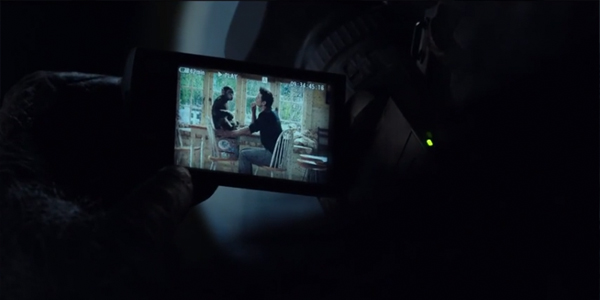
A couple weeks ago it was revealed that James Franco had a cameo in this film, though he himself had no idea about it. Many wondered if his character had died off with the rest of humanity, or if he had somehow survived the Simian Flu and would reappear in the franchise somewhere. While we won't know the answers to those questions until the film hits theaters, we do get to see Franco's cameo in the trailers. Caesar is seen visiting his old home in San Francisco, where he finds a video camera with some footage of Francho teaching him sign language. It's a touching little scene that reminds us of how far things have come since the first film. The footage Caesar's watching is bright and colorful; a stark contrast to the muted colors and dreary tone of the film he's currently in. It's also a reminder of where Caesar came from, and the love he had for humans before things got out of hand. Judging by his character in the first film, Caesar didn't ever want to wipe out humanity, but was frustrated by them and wanted to find a way for humans and apes to live peacefully. Something, it looks like, he's trying to accomplish again.

5. Apes Didn't Know There Were Still Humans
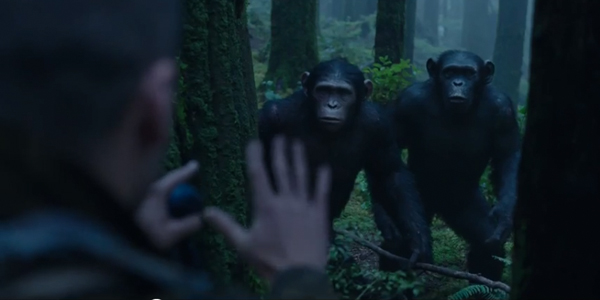
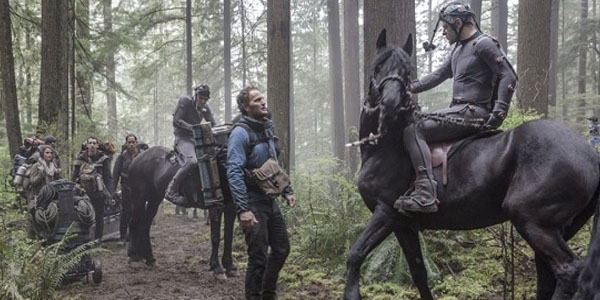
One of the early scenes in the trailer features two apes walking through the forest, who stumble upon a group of humans. The apes look just as surprised as the humans do, suggesting that maybe they didn't know that there were still some of them left on Earth. The fact that they've lived in peace all this time would suggest that they've simply stayed away from their homo sapien enemies. Even Caesar himself looks stunned when he and the rest of the apes come to see what's going on. This reunion of warring species kicks off the film's larger plots, and ultimately leads to all-out war.

4. Dark, Post-Apocalyptic Tone

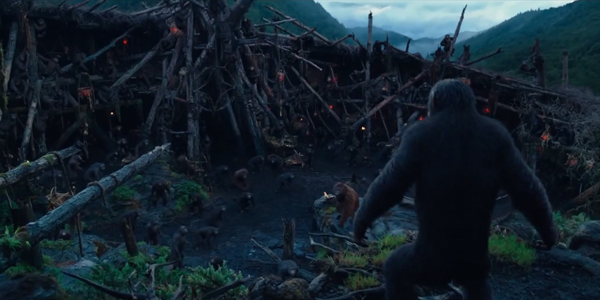
Dawn of the Planet of the Apes looks far different than its predecessor, both tonally and cinematically. Things are much darker and more bleak this time around, thanks to a muted color palette and post-apocalyptic imagery. We see several shots of a San Francisco overrun with vegetation, the human factions living in bleak, broken buildings. The forests surrounding the city look to have gotten even bigger, and all of the shots within them look cold and damp. Even the home of the apes, buried within and built into the woods, looks like a harsh and hyper-natural environment. This is all in stark contrast to the contemporary and sheen world of the first film, only driving home the fact that the planet no longer belongs to us. As humans disappear from the world, the buildings and objects we leave behind begin to become artifacts of a bygone civilization. This is an effective, if not familiar, way to convey the gravity of the situation at hand, and a perfect way to visually convey how much the world has changed since the first film.

3. The Apes Have Societal Rules

As the apes evolve they are, ironically, becoming more human-like. They not only read and write, but are learning to speak and even perceive the world differently. They have even developed societal rules, as witnessed by the aforementioned school led by the orangutan. On the wall we see phrases spelled out, like "Ape not kill ape," "Ape together strong," and "Knowledge is power." We see apes riding on horseback, and females holding baby chimpanzees and wearing accessories made from pieces of wood. They've even mastered the art of creating fire and building structures. These things are all expected advancements for the intellectually evolved species, but still a nice touch that shows how far they've come in the eight years since their revolution.

2. Not All Humans Agree

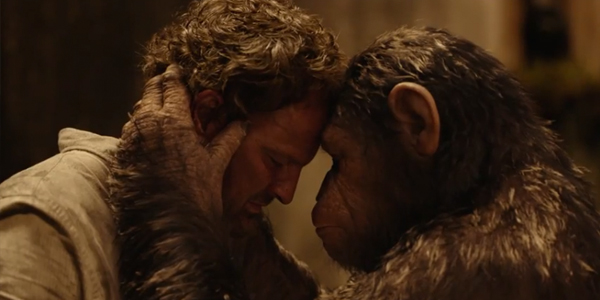
Considering the "Simian Flu" wiped out almost all of humanity, it would make sense that people would hate the apes. However, it should be noted that we have yet to fight them, yet, and have instead spent the last eight years fighting the virus and then waging war with one another. During this time, it appears that we've payed little attention to the apes, as their numbers continue to grow and their intelligence continues to increase. Things appear to change now that the human characters have stumbled upon the ape colony. We see humans sitting around a campfire, Kerri Russel's character telling Kirk Acevedo not to blame the apes for the Simian Flu. It was, in fact, created by humans in a lab, not by the apes. However, Acevedo's character doesn't agree, asking, "Who the hell else am I gonna blame?" This raises interesting questions about the film, and suggests that not all humans view the apes the same way. Some are more accepting of them, like Russel and Jordan Clarke's characters, who are seen talking and socializing with the apes. It appears that Clarke even grows close with Caesar, as the two are seen embracing one another. This has a very Dances With Wolves feel to it, suggesting that the oncoming war may not just be fought between man and ape, but include some warring human factions as well.
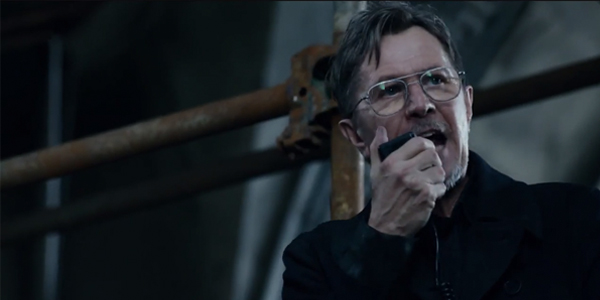
Gary Oldman's character appears to be the big antagonist here, not believing for an instant that the apes can be trusted. "They're animals!" he yells, obvioulsy frustrated by the fact that Clarke feels he can reason with them. Later on, we see Oldman's character on the front lines of a battle, firing shots from a machine gun at what we can only assume are opposing ape fighters. That means this story will have a dynamic element to it, and won't be the Apes Vs. Humans movie many of us suggested. Which, honestly, is far more exciting than that movie, especially since we know where this story ultimately leads.

1. War!

As expected, it looks like the film builds up to all-out-war between the apes and humans. One could wager a guess that the battles in San Francisco are the final set piece in the film, and that Jason Clarke's efforts to live peacefully with Caesar and the apes are in vain. One character we see glimpses of here is an ape named Koba, played by Toby Kebbel. Early details about the movie suggest that Koba (who was seen in Rise of the Planet of the Apes as an angrier, more unstable test subject than Caesar) and Caesar will become enemies here. Odds are that Caesar is the more peaceful of the two, trying to find a way to coexist with the humans he once loved, while Koba, who was treated far worse by men than Caesar was, wishes to wipe them out.
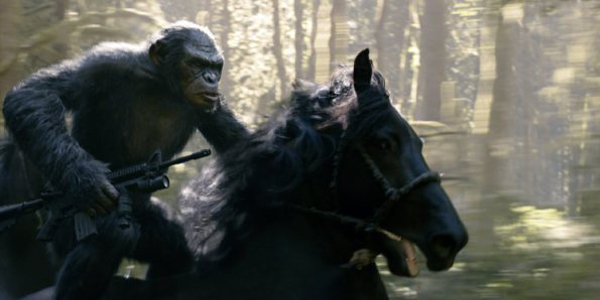
We see a brief shot of Koba standing next to a very large gun and a lot of ammunition, as well as riding on horseback with an automatic rifle in his hands. That means we'll have warring factions within both the human and ape populations; Jordan Clarke vs. Gary Oldman, and Caesar vs. Koba. Who will come out on top, and which warring faction withing that species will prevail? We'll just have to wait until the film arrives on July 11th to find out. What did you think of this list? Did you notice anything else in this trailer that we didn't? Sound off in the comments below, and be sure to follow me on Twitter for more news and articles about the film as its release draws near!

Contributor
Contributor

James is a 24 year old writer and filmmaker living in Portland, OR. He attended college for graphic design and writes for various sources on the web about film, television, and entertainment. You can view all of his work on his website, www.thereeljames.wordpress.com