Detroit Review: 7 Ups & 3 Downs
The feel bad film of the year.
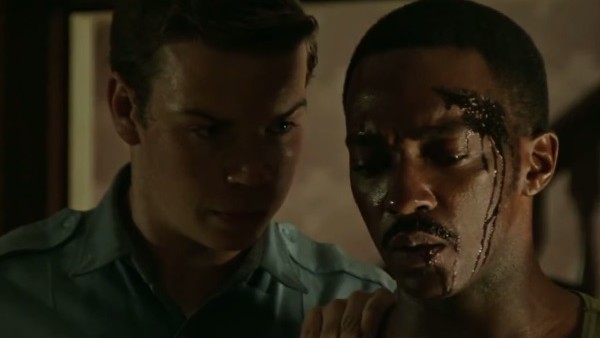
Amid the summer's slew of $200 million blockbusters, Kathryn Bigelow's Detroit is a refreshing change of pace, a rigorous docudrama that aims to capture the very real terror that unfolded during Detroit's 12th Street Riot in 1967.
True to form, Bigelow has turned in yet another bracingly intense, immensely compelling drama that's an absolute must-see for serious film fans, even if you might want to have something happy lined up to do afterwards.
The film definitely has its issues, but the Best Director-winning filmmaker's fierce commitment to her subject and meticulous eye for detail makes this the most uncommonly accomplished of movies based on real events. It certainly didn't deserve to bomb at the box office, that's for sure.
Whether it performs well as a fringe Best Picture candidate or gets swept under the rug for releasing before Oscar season truly kicks off, Bigelow has delivered an exceptionally well-mounted historical drama that'll stay with you for a long, long time...
Downs...
3. It's Not As Good As Kathryn Bigelow's Last Two Movies

It's certainly not a damning indictment against the film to say that it's not quite up to the same five-star standard of director Kathryn Bigelow's two previous films, the Best Picture-winning The Hurt Locker and Best Picture nominee Zero Dark Thirty.
While Detroit itself may very well end up being nominated for the big one, it just doesn't feel quite as tight as those movies overall, in part due to its sprawling nature and Bigelow and screenwriter Mark Boal's clear struggle to find a definitive end-point for this story (while Zero Dark Thirty in particular seemed much more confident and definite in this regard).
Again, though, this is still a great movie any way you cut it, but if you've got sky-high expectations from the director's last two films, you might want to just drop them down a peg.
2. Not Enough Anthony Mackie
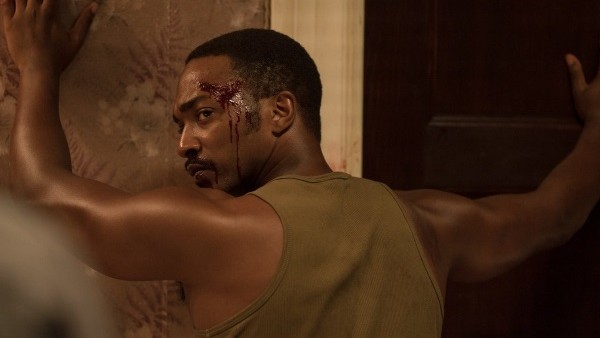
Despite appearing prominently in Detroit's advertising, and his face being one of the few splashed over the posters, Anthony Mackie actually isn't in the movie that much at all.
He doesn't show up until about an hour into the film, and his role is rather minimal, getting a few standout scenes opposite Will Poulter but basically disappearing out of the movie for long stretches before suddenly re-appearing every now and then.
Considering how fantastic an actor Mackie is, and how interesting his character here is, it's a shame he's one of the lesser-utilised name actors in the entire project. More of him is rarely, if ever, a bad thing.
1. It's A Little Bloated
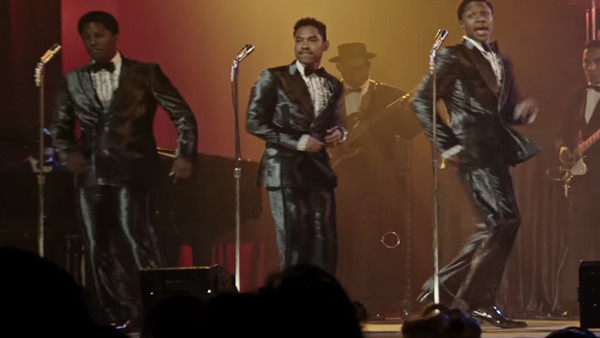
Though Kathryn Bigelow is no stranger to meaty run-times, what with Zero Dark Thirty clocking in at 157 tightly-packed minutes, she doesn't quite make the best use of Detroit's 143 minutes, and it's fair to say that several sequences end up feeling a little on the bloated side.
The subplot involving R&B group The Dramatics feels especially overdone, grinding the film to a halt several times throughout, and had these scenes been trimmed down by a few minutes each, it would've done a world of good for the overall pacing.
Sure, Bigelow's working with a huge canvas here and she shouldn't just rush from set-piece to set-piece, but if she could've shaved about 10-15 minutes off, it would certainly feel a little more persuasive on the whole.
And now that the criticisms are out of the way, here's everything that worked in this must-see movie...
Ups...
7. Will Poulter's Oscar-Worthy Performance
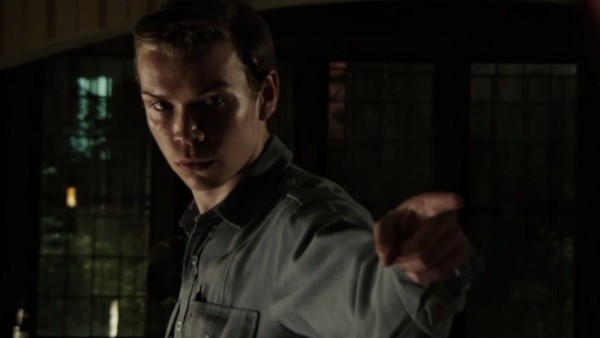
If you still have any doubts about Will Poulter as an actor, you can pretty much cast them aside after watching his performance in this movie as a racist Detroit cop who assaults the Algiers Motel and accosts the predominantly black residents within.
Poulter may have ultimately missed out on playing Pennywise in the upcoming It, but he plays a thoroughly convincing real-life monster here, a remorseless psychopath who puts the Algiers' unlucky denizens through a night of abject Hell.
Poulter is legitimately terrifying in a part many probably assumed he was miscast for, wringing every ounce of physical and emotional intimidation out of it, and if he ends up earning a Best Supporting Actor Oscar nomination next year or even an outright win, it will be extremely well-earned. Bravo.
6. It's Infuriating & Important

If you don't leave this film feeling completely infuriated at the racially motivated violence and subsequent injustice that was allowed to transpire, you must've fallen asleep before it started, because in any apparently empathetic, forward-thinking society, seeing such blatant abuse of any human is a naturally horrifying experience.
Depressingly, though, the racial tensions depicted are still enormously relevant in 2017, as made evident by the current political climate, and so while Detroit is first and foremost a historical document, the mere existence of the Black Lives Matter movement proves just how much irrational hatred persists against blacks half a century later.
To that end, Bigelow taps into the audience's righteous rage and lets them feel it, which helps the film feel so damn visceral.
5. Kathryn Bigelow's Intense Direction

Unsurprisingly, Kathryn Bigelow directs the Hell out of this film, creating a tightly immersive experience that makes the viewer feel right there with the people caught in the middle of the riots.
With extensive use of handheld cinematography, Bigelow's film frequently looks like a documentary on the subject, pulling in close on its subjects amid immensely chaotic circumstances.
The portion of the movie set in the Algiers Motel is especially well-wrought, with Bigelow exemplifying the claustrophobic nature of the siege and slow-bleeding it for maximum suspense, evoking the feel of a horror movie as much as a gritty historical drama.
Again, it's not quite as assured as her work on her last two movies, but still head and shoulders above what most of contemporary Hollywood is putting out right now.
4. The Incredible Ensemble Cast
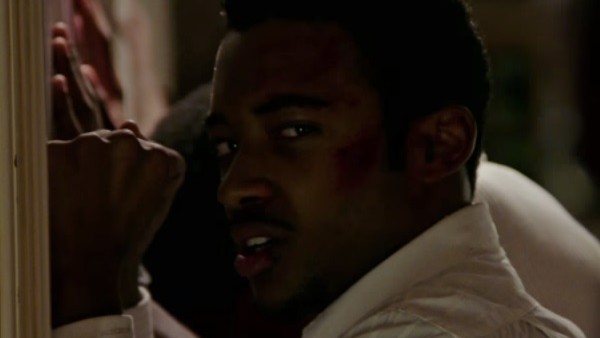
Simply put, this film has one of the year's best ensemble casts, and it's all the more impressive because there are as many astonishing performances from little-known actors as there are from name performers.
Will Poulter has understandably earned the lion's share of the praise so far, but as singer Larry Reed, relative newcomer Algee Smith also gives a remarkable performance that damn-near matches him.
Then there's typically reliable work from John Boyega, Anthony Mackie, Jason Mitchell, Jack Reynor and John Krasinski, not to mention the litany of small bit-parts from actors you won't necessarily recognise, but will damn sure appreciate.
From the most seemingly insignificant roles to those at the forefront, Bigelow's casting is totally immaculate, and only further contributes to the film's overall feeling of authenticity.
3. The Astonishing Sense Of Time & Place
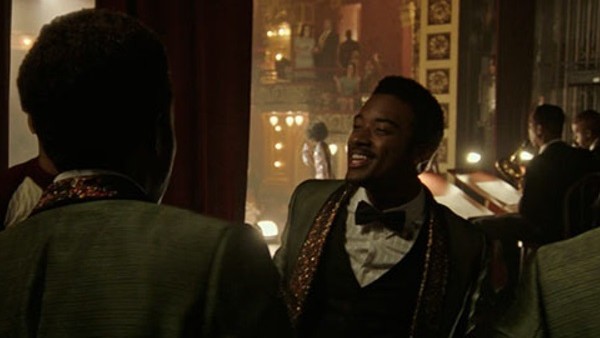
Bigelow has a habit of meticulously researching her films, and so it shouldn't surprise anyone that her depiction of the 1967 12th Street Riot never feels anything less than a totally believable dramatisation.
While a closing title does state that some elements were re-created from eyewitness testimony due to facts that were never conclusively proven in a court of law, it's easy to give Bigelow and Boal the benefit of the doubt given their past successes, and the cold, respectful detachment with which they treat the scenario.
From first minute to last, it feels like the viewer is dropped into 1967, and from Bigelow's documentary-style camerawork to the incredible period detail, she doesn't put a single foot wrong in this regard.
2. The Blistering Sound Editing

Of all the Oscars that Detroit is most likely to be nominated for, Best Sound Editing just might be the safest bet.
This is an incredibly loud film at times, especially during the riot and assault sequences, and the sound effects feel terrifically punchy while also sounding never less than totally realistic. There aren't any over-exaggerated explosion or gunshot sounds, thankfully.
The occasional shotgun blasts in particular have wince-inducing impact, no doubt exacerbated by Bigelow's tense direction, contributing to an overall effort that wholly convinces of the sheer terror that took place that night in the Algiers Motel.
1. John Krasinski's Jaw-Dropping Cameo

The Office's John Krasinski briefly shows up in the movie's third act as a slimy lawyer defending some of the corrupt police officers involved in the incident at the Algiers Motel, and though his appearance is incredibly jarring at first, he ultimately more than proves himself as a mighty dramatic talent.
As a woefully aggressive lawyer who continually shuts the victims down when they're on the witness stand in court, Krasinski is impressively convincing as a slimy douchebag, and makes it easy to forget about the more charming characters he's typically known for playing.
Granted, this isn't the first time Bigelow has cast a famed TV comedian in an against-type part, what with Chris Pratt playing a SEAL Team member in Zero Dark Thirty. She knows what she's doing, and it works perfectly in both cases.
What did you think of Detroit? Shout it out in the comments!