Disney/Fox Merger: 8 Disastrous Implications It Has For The MCU
On second thoughts, maybe we like the MCU as it is...

Although initial reactions to the potential Disney/Fox merger were emphatic in their enthusiasm, the weeks since have seen more tempered responses make their way into full view, and rightly so.
While the idea of having the X-Men team up with The Avengers should, on the surface at least, sound really appealing, there are a whole raft of consequences that would accompany a Mickey-themed takeover of 21st Century Fox. Lest we forget, the House of Mouse - in this current moment at least - controls the two biggest cinematic franchises on the planet in Star Wars and the Marvel Cinematic Universe. Adding the further cherries of the X-Men and the Fantastic Four, so to speak, would exponentially increase their box-office clout.
Without prophesying the monopolisation of the entertainment biz as we know it, there is something to be said about the ever widening net of Disney's influence on the pop-cultural sphere. For the MCU specifically, there's also a lot to be said about the potential merge, especially in regards to what it means for its future, and for Fox's superhero slate thus far.
No one’s arguing that seeing The Avengers, X-Men and Fantastic Four together wouldn’t be exciting - it would be - it’s just that, when you think about it, the negatives vastly outweigh the positives.
8. It Would Mess With The MCU's Current Plans
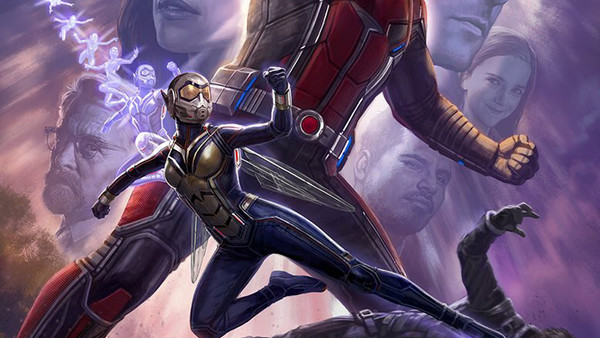
With the next twenty MCU projects reportedly mapped out, it's obvious that Marvel have a major game plan in mind for the future. It's been the case since Iron Man debuted in 2008, and while it's a Marvel Method not everyone has rallied to, there's no denying the formulae of cameos, after-credits sequences and Easter Eggs have engendered Disney's premier universe with a certain kind of 'must watch' quality.
The introduction of the X-Men and the Fantastic Four would, however, threaten to derail the MCU's blueprint for success, forcing Marvel to adapt in order to accommodate even more of their icons to maximise their films' financial potential.
That's easier said than done, especially if the post-Infinity War landscape is as planned out as Marvel purport it to be, and while an injection of both the Four and the X-Men would undoubtedly go down a treat with fans, there's no getting away from their disruptive qualities.
Marvel could certainly improvise if they had to, and indeed, the Fantastic Four would serve the universe well, but there's just too great an X-sized headache to ensure a smooth transition takes place, if one even happens at all.
7. A Ruck Of Forced Cameos

Further to this X-based disruption, Marvel would have to bend their back to realign their future efforts to accommodate their newest arrivals. The easiest way to do this? Why, cameos and Easter Eggs aplenty, of course!
There's nothing wrong with a good cameo; Logan's First Class appearance lived up to that title perfectly, and Nick Fury's ending lecture in 2008's Iron Man was very much the game changer it was held to be. It's just that, despite cameos working in some respects (Doctor Strange's Ragnarok appearance made plenty of sense), they can prove to be distracting.
If Marvel were to ramp up their efforts to retrofit the X-Men et al. into the MCU, the frequency of these scenes would increase exponentially, distracting from the proceedings of a given movie and providing further ammunition to the franchises many detractors.
It's not the worst thing that could happen to the MCU - not by a stretch - but it would feel contrived to see all these new characters drop in out of nowhere.
6. The Fantastic Four Might Not Even Be Included

Of all the worst things about the potential Disney/Fox merger, the fact the Fantastic Four might not even be joining undoubtedly hurts the worst.
Although Fox are very much associated with Marvel's first family, having produced all three of their full cinematic releases to date, there is a discrepancy with the rights. You see, while Fox own the distribution rights to the fab four, the production rights fall under a different group, namely Constantin Film. While Disney's absorption of Fox would prohibit Constantin from producing a profitable FF venture, there's nothing - in theory - to stop them from making a vanity project to hold onto the license, ala Roger Corman's now notorious nineties Four flick.
Considering that the most appealing thing about the potential merge was seeing the Fantastic Four in the MCU, along with the Silver Surfer, Galactus and the rest, it's a consequence Disney quite literally can't allow, and yet potentially could, if the deal fails to proceed amicably.
The FF should really be with the House of Mouse at this point, especially since Fox have proven time and again that they don't get the license. They can keep the X-Men, frankly- we just need Reed, Sue, Johnny and Ben.
5. The X-Men Are Better Off With Fox
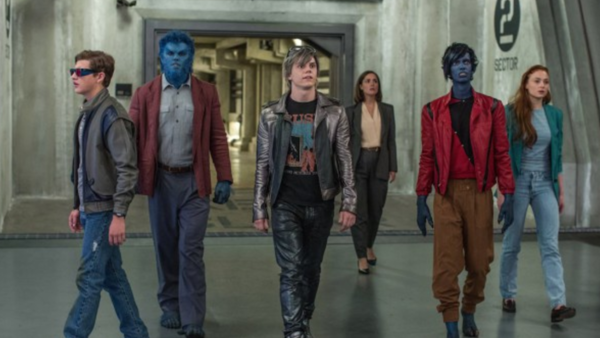
Although X-Men: Apocalypse didn't offer the greatest signifier of the X-Men's onscreen resurgence, it's plain for all to see that - in 2017 - Fox have done the mutants right.
X-Men: First Class, Days of Future Past, Wolverine, Logan and Deadpool have all intimated as much, marking the X-Men out as the innovators in the genre, dishing out R-ratings like nobody's business and deploying history to flesh out a universe audiences are still getting to grips with. Add to that a duo of fantastic X-Men TV shows in The Gifted and Legion, and you have a strong a case as any that the X-Men are actually better off with their current parent company, than the House of Mouse.
That might be a bitter pill for most Marvel fans to swallow, but it's true - right now, the X-Men are in the greatest state they've ever been, spurred on by an R-rated resurgence that's afforded them a boatload more creative freedom than any Marvel project could possibly hope to have, save for the Netflix series.
If the MCU were to impact negatively upon the X-Men, a cloud would hang over it for the rest of its existence. Granted, it's a storm Marvel could weather, but criticisms would almost certainly cross into the mainstream if it were the case.
4. There's No Way To Alter The Lore

The actual logistics of implementing the X-Men into the MCU are anything if not difficult, owed in part to the fact Marvel Studios already came up with an explanation for Scarlet Witch and Quicksilver.
In the comics, Wanda and Pietro are the daughter and son of Erik Lehnsherr - the master of magnetism himself - Magneto. They're mutants, much like their father, but with them both having had stints as Avengers, Marvel were well within their rights to use them in the MCU, sans the mutant backstory. The in-house explanation, per se, is that the twins were given their powers by Baron Strucker's personal infinity gem.
It fits the universe nicely, even if the original comics explanation is a fan-favourite. The problem with introducing mutants, then, lies in the way Marvel have built their world. It wouldn't make sense for homo superior to exist within the MCU because we'd have heard about them already, and while a spontaneous event like the Terrigen Mists (the comics event that created new Inhumans in 2015), could work much the same for mutants, it would feel at odds with the wider connotions that surround the X-Men in the first place.
Put simply, it gives Marvel a headache they don't need, and a cast of characters they wouldn't know what to do with in the first place.
3. Marvel Studios Need The Competition

Competition begets quality; it's how the world works.
While it's fair to say that Fox haven't always produced a fancy rebuttal to Disney's superhero features, the company have very much done so in the last few years. They might've even done more, in fact, popularising R-rated superhero films and asking big questions of the genre in doing so. Logan and Deadpool are both testaments to that, and while there's little chance we'll see the House of Mouse option an R-rated comic book film in the future, we have seen that dynamic emerge on the small-screen, with shows like Daredevil, Jessica Jones and Punisher portraying the mature roots of their source material with an almost infectious enthusiasm.
The problem with Disney absorbing Fox lies in the fact the company will have one less competitor to learn from. Warner Bros. certainly don't look like they'll be providing lessons anytime soon (apart from Wonder Woman), and while we have seen mature depictions of Disney's recent acquisitions - exemplified best by Rogue One - behind-the-scenes drama and creative fallout seem to be a common occurrence, both in Lucasfilm and at Marvel.
This isn't to say that Fox aren't prone to studio interference either - quite the opposite. It's just that, when you look at Logan, Deadpool, and the more recent X-Men films, you can tell that filmmakers have been allowed to execute their vision in full, unencumbered by the requirements of a shared universe.
The simple fact is Fox dare Disney to be better. Without that outlet, where does that leave the genre?
2. How It Would Affect TV

By far one of the most surprising - and indeed worrying - things about 2017 has been regarding the future of Disney's Marvel TV shows.
What at first looked like a fairly safe and secure environment in Netflix now looks set to be raised to the ground altogether, with Bob Iger et al. moving their Marvel properties to a streaming service of their own make, along with Pixar, Star Wars and the rest.
Apart from the sheer fact that, y'know, audiences are sick of subscribing to more streaming services as it is, Disney's designs on TV would further place Fox's own series in jeopardy. That means Gotham, a DC work, could get scrapped - as could Lucifer - but also that The Gifted and Legion could leave as well. We still don't know what'll be permitted on this new streaming service, or even if any new Marvel characters are in line for a series either, and while it's likely to provoke a massive restructuring of Disney's small-screen projects regardless, the departure of Fox's shows would be a massive shame for all concerned.
The rise of the studio's X-Men TV series have largely paralleled that of their big-screen counterparts, and while Legion or The Gifted are yet to pick up an audience as big as S.H.I.E.L.D., Daredevil or the rest, they exemplify the talent currently residing at the network. To lose them would be a real tragedy.
1. A Lack Of Creative Freedom

Irrespective of however you feel about the MCU, it's fair to say that its construction hasn't always gone down as smoothly as Disney would've perhaps hoped.
Edgar Wright famously departed Ant-Man due to creative difference with Marvel Studios, as did Patty Jenkins during production on Thor: The Dark World, with the director then going on to direct the year's most important comic book film, Wonder Woman, shortly thereafter. The same has been the case at Lucasfilm, with Gareth Edwards' Rogue One purportedly enjoying a torrid production before Disney ultimately stepped in to make reshoots, and of course, no one could forget the franchise's most recent departure, with Ron Howard stepping in to rescue Phil Lord and Chris Miller's much-maligned Han Solo spin-off.
While there's no denying Disney's approach has yielded success (bar perhaps that first Thor sequel), it doesn't make for particularly wholesome reading. Fox, on the other hand, have been comparatively better, with Tim Miller the only recent departure, and even then that came at the behest of Ryan Reynolds.
While it would be presumptive to argue that Disney will never venture into R-rated territory, it stands to reason that a film like Deadpool would never have been made had it been pitched with the MCU in mind. The same goes for Logan, which stands today as one of the finest efforts in the genre, and a strong contender for awards season too, should the Academy eschew their anti-comic bias.
No one's going to turn down seeing the X-Men or the Fantastic Four in the MCU - of course not - but, at the end of the day, audiences stand to lose far more from a merger, than they would gain.
How do you feel about the Fox/Disney merger? Is an X-Men/Avengers crossover a price you're willing to pay? Be sure to let us know in the comments below!