Dunkirk Review: 8 Ups & 2 Downs
A war movie like no other.

Christopher Nolan's Dunkirk is finally here, arriving of course on the tidal wave of hype that accompanies any Nolan movie these days. Critics so far have been effusively praising the director's ambitious war film, and though general audiences are likely to be a little more divided on it, it's definitely another technically mesmerising addition to his filmography.
Is it as exciting or epic as Nolan's Dark Knight series, or as ingenious as Inception? Absolutely not, but given the subject matter it doesn't really need to be, and as far as recent entries into the genre go, Dunkirk is absolutely one of the best and hardest to shake. Above all else, it once again shows Nolan's filmmaking sensibilities evolving, and as such it's fascinating to consider where he might go next.
So, how are the movie's Oscar chances? Who stands out among that giant ensemble cast? And what's Hans Zimmer's score like? It's time to find out...
Downs...
2. There's Minimal Character Development

Likely to be the most consistent complaint about this movie is its rather minimal approach to character development. Indeed, the majority of the film's characters aren't even named during the movie, and in an attempt to make a more streamlined film, there's almost nothing in the way of expository backstories or insights into the lives of these men away from the war.
While on one hand this does indeed result in a more taut and sparing movie free from many of the genre's storytelling cliches, it also means that audiences may struggle to become fully invested in their plight.
Sure, the attempt to survive an almost impossibly Hellish scenario should be something that just about any human being can relate to on a primal level, but in writing most of the characters as total blank slates, it's also likely to prevent many viewers, especially more casual cinemagoers, from getting fully emotionally involved in what's going on.
How much of an issue this is will vary wildly between audiences, but it'll surely be the one big issue coming away from Dunkirk.
1. No, It Isn't Christopher Nolan's Masterpiece

There's been a lot of excited pre-release chatter about Dunkirk being the best movie of Nolan's career and, indeed, the masterpiece he's been working towards over the last two decades.
As immersive and technically astonishing as it is, it is neither a full-on masterpiece nor even remotely Nolan's best film. Though the economic storytelling and lack of melodrama does seem to show Nolan maturing somewhat as a filmmaker, this still doesn't reach the level of stylistic audacity and emotional involvement that, say, Inception or The Dark Knight mustered prior.
Even something decidedly "smaller" like Memento is arguably a much better film overall, but considering that Nolan hasn't yet made a bad movie in his career, and this is certainly leagues ahead of The Prestige and Interstellar, it "only" being great shouldn't feel like such a bad thing.
And now the complaining's all out of the way, here's everything that Nolan got right...
Ups...
8. The Incredible Structure & Editing

Though the marketing seemed to suggest that Dunkirk is in fact a fairly straightforward war film, Nolan has actually concocted a rather fiendish spin on the genre, with an ambitious, almost Pulp Fiction-esque structure which attempts to sustain the movie's action and suspense for its entire run-time rather than leave all the good stuff to the end.
While this has the potential to confuse audiences who aren't expecting it or not fully paying attention, thanks to Lee Smith's excellent and probably Oscar-winning editing, Nolan judiciously cuts between the land, sea and air segments to create a virtually non-stop thrill-ride.
Some might see the structural approach as unnecessary for such an inherently riveting and urgent story, but it nevertheless does a fantastic job further differentiating the film from the glut of other war movies out there.
7. Hans Zimmer's Relentless Score

Hans Zimmer re-teams with Christopher Nolan once again to provide Dunkirk's score, which is destined to be remembered for its pulsing, ticking clock.
Though the entire movie isn't set to a metronome as some earlier reports suggested, the ticking sound is present in some form or another for large chunks of the film, and Zimmer does a fantastic job milking its anxiety-inducing effect.
Overall it's probably not one of Zimmer's best scores for Nolan or otherwise, and absolutely not one of his most memorable, but it is viscerally effective in a way that some of those are not, and steers away from the cloying sentimentality that characterises the musical scores of many war movies.
6. Christopher Nolan's Oscar-Worthy Direction

It's a major point of annoyance among Nolan fans that he hasn't been nominated for a Best Director Oscar despite being arguably worthy for at least The Dark Knight and Inception.
Well, that's probably likely to change with Dunkirk, and while it's in part due to Nolan's maturation as a filmmaker, it's undeniably also because he's tackling a much more Academy-friendly movie this time.
The crusty old Oscar voters don't much care for Batman or sci-fi, but they'll struggle to ignore Nolan's accomplishments in a genre they love. Even if there are complaints to be had about the minimalism of the script, it's very difficult to argue with the technical precision of Nolan's work behind the camera, especially considering how much of the movie was achieved practically.
Most other filmmakers would've taken the cheaper, easier option of CGI, but Nolan persisted with his vision of a more visceral and immersive war movie, and he totally pulled it off.
5. The Excellent Ensemble Cast

There isn't really any one single standout performance in Dunkirk, and it's fair to say that it probably won't be getting any acting Oscar nominations because the characters are too sparse, but overall, the ensemble does fantastic work all the same.
Mark Rylance, Cillian Murphy, Kenneth Branagh, Tom Hardy, Jack Lowden, Fionn Whitehead and yes, even One Direction's Harry Styles, all deliver terrific performances, steeped in the adrenaline-surging horror of war, and effortlessly eking its very real, human cost.
Again, it's no one actor's movie, but it could very well end up getting some love for its ensemble from the Screen Actors Guild, and even if not, Nolan has again re-affirmed his gift for directing A-list actors on a tremendously ambitious scale and scope.
4. The Intense Sound Editing & Mixing

A word of warning: this is a very, very loud movie, but to the same token it deserves to be seen on the biggest, loudest screen you can find. From first minute to last, the soundscape is alive with gunfire, the terrifying screech of enemy bombers, and of course, Hans Zimmer's score.
It's probably just as well that the movie has minimal dialogue, because the other sounds are so intense and overwhelming that it's tough to hear what's being spoken a lot of the time anyway.
Thankfully this is much less problematic than it was in Interstellar, which was frequently criticised for its sound mixing. Instead, the sheer loudness of the movie helps cement the abject, messy chaos of the scenario, and it's an absolute joy to behold.
3. It's Got The Best Dogfights In Cinema History

There is one aspect of the movie that easily soars (sorry) about everything else: the aerial dogfights between Tom Hardy's character Harrier and the German opposition.
Nolan shot these scenes practically for the most part, mounting IMAX cameras on actual planes in order to capture the images, and the difference it makes compared to the usual digital solutions is literally jaw-dropping.
The in-the-moment immersion is staggering, and these air-based interludes do a fine job of breaking up the grounded combat a little, while also having a direct impact on it.
If you're on the fence about catching the movie in IMAX, it's absolutely worth it for these sequences alone.
2. It's Superbly Paced
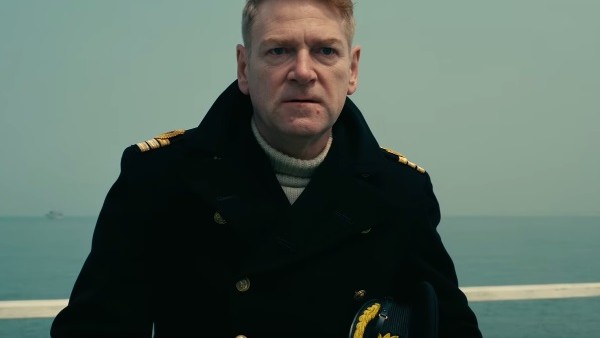
There was a lot of surprise when it was revealed that Dunkirk clocks in at just 107 minutes in length, when going by the length of Nolan's more recent blockbusters, it was pretty reasonable to expect somewhere in the 140-160 minute range.
While for many films this would signal major worry (such as the already-dubious The Dark Tower recently confirmed to run just 95 minutes), it was much easier to accept in Nolan's case considering his experience at this level of filmmaking, and his insistence that the movie was always conceived as a lean suspense film rather than a portentous war epic.
For those fed up with this summer's glut of two-hour-plus tentpoles, here's one that doesn't even break 100 minutes by the time the credits roll, scripted, edited and directed for maximum efficiency in terms of presenting an enthralling experience without a lot of the typical, arbitrary baggage.
The film is essentially one giant set-piece compartmentalised, with small bursts of respite in-between to let you catch your breath. It's so refreshing to see the bloat cut away, especially by a director who once made a near-three-hour Batman movie.
1. The PG-13 Rating Isn't An Issue
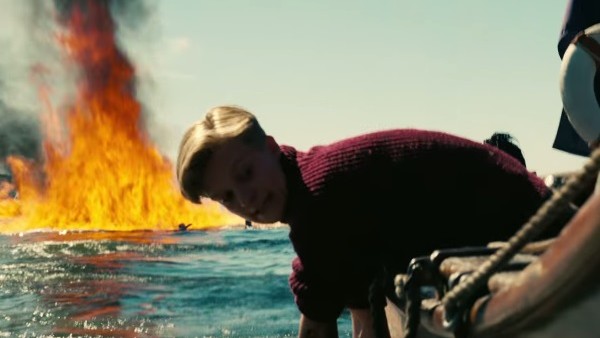
If there's any director who could swing an R-rated, $150 million war movie, it's surely Christopher Nolan, but he surprisingly decided to shoot for a PG-13 instead, and while this was met with a lot of pre-release skepticism, it actually works pretty well for the most part.
Yes, the absence of blood is peculiar when you think about it in retrospect, but honestly, the in-the-moment action is so gripping that you'll probably not even think about it.
Nolan doesn't let up on the grimness all the same, cleverly using suspense and implication to paint an utterly horrifying depiction of war that likely won't escape your mind anytime soon.
Sure, it's not Saving Private Ryan, but trying to out-Spielberg Spielberg in that regard is a fool's errand, and Nolan was clearly more interested in making a suspense piece rather than an ultra-realistic gorefest. The movie doesn't miss blood for the most part, and that's a major testament to Nolan's directorial skill.
Now watch our video review...
What did you think of Dunkirk? Is it Christopher Nolan's true masterpiece or not? Shout it out in the comments!