Every Decade Of Cinema - Ranked
From Nosferatu to Avengers: Endgame, Hollywood has come a long way.

As far as art forms go, cinema is fairly recent. Music has been around for thousands of years, as have sculpting, painting, writing, and poetry. Film has only been around since the very tail end of the 19th century. The earliest surviving movie is Roundhay Garden Scene, a 1.6-second silent film from 1888.
Taking that into account, it's almost unreal how far the craft has come. In just under 150 years, movies have gone from silent, blink-and-you'll-miss-it shorts to dramatic masterworks like The Godfather and CGI extravaganzas like Avengers: Endgame. The disparity between then and now is hard to wrap your head around, and that's to be expected. As the art form evolves and new techniques are developed, it's only natural that the end product gets better and better.
In the last century, we've gotten exquisite pieces of filmmaking. In addition to the aforementioned Godfather and Avengers films, we've seen devastating war epics like Apocalypse Now and 1917; world-class superhero flicks like Logan and The Dark Knight; haunting pieces of horror perfection like The Exorcist and Hereditary; and many, many others.
What decades stand out as having the best? That's very, very subjective, but let's have a look.
11. 1910s

Notable films: The Birth of a Nation; The Homesteader; The Vagabond; The Immigrant; Intolerance; Tarzan of the Apes; Frankenstein.
These were the early days of film. In WWI, the European film industry was destroyed. Meanwhile, the American film industry relocated from New York to California, setting up shop in LA.
WB released their first film in 1918, and United Artists was formed in 1919 (the brainchild of Charlie Chaplin, D. W. Griffith, Douglas Fairbanks, and Mary Pickford). Chaplin appeared in over 70 films this decade.
D. W. Griffith garnered praise as one of the most influential directors of his day, pioneering the feature-length film. He also directed one of the most consequential, reprehensible films of all time: 1915’s The Birth of a Nation. This was the film that partly led to the resurgence of the Ku Klux Klan in the United States, gifting them not just the idea for their white hoods, but an enthusiastic reception among white Americans who lauded the film. It’s a shame that this is the most famous film to come out of the decade.
On the bright side, Oscar Micheaux became the first Black man to produce and direct a film when he debuted The Homesteader in 1919.
10. 1920s

Notable films: Metropolis; The Cabinet of Dr. Caligari; The General; The Phantom of the Opera; Nosferatu; Battleship Potemkin; The Gold Rush; The Man Who Laughs; Nanook of the North.
This was the era of horror, rom-coms, and swashbuckling adventure. This was the era of Charlie Chaplin, Lon Chaney, Buster Keaton, Greta Garbo, and Joan Crawford.
In the twenties, Hollywood was still in its infancy, but had started branching out, trying to attract an international audience. Hollywood films had gone from short "two-reelers" to full-length features, a style - as previously mentioned - that was pioneered by D.W. Griffith.
It was during this era that the Studio System emerged, with MGM and Paramount leading the pack, financially. Other notable studios were 20th Century Fox, United Artists, Warner Bros, and Universal. The twenties also saw the rise of Picture Palaces, large urban theaters complete with orchestras.
Talkies were developed between 1926 and 1927, allowing filmmakers to focus more on dialogue and less on physicality. Of course, the addition of sound gave rise to musicals.
Another touchstone: the Academy of Motion Picture Arts and Sciences was formed in 1927.
9. 1940s

Notable films: Citizen Kane; Casablanca; The Maltese Falcon; The Treasure of the Sierra Madre; It's a Wonderful Life; The Great Dictator; Bambi; The Philadelphia Story; Pinocchio; Dumbo.
The 1940s didn't start off on a promising foot for the film industry. After the attack on Pearl Harbor, overseas markets were lost. However, the film industry adapted by producing documentaries, reels, shorts, and feature films to aide the war effort (read: propaganda). Films became more realistic, a sharp turn from the escapist trend of the Depression-ravaged thirties.
After the war, the rise of suburban housing and the increasing popularity of television cost the film industry tens of millions of dollars in revenue. People were staying home watching TV, rather than going into the city to watch movies. What's more, movie studios were forced to sell off their theater chains after the Supreme Court found that owning both studios and theaters violated the Sherman Antitrust Act.
Despite the testy climate of the day, Hollywood managed to put out what many critics to consider to be the greatest film of all time: Orson Welles's Citizen Kane. A more subtle pro-war film - Casablanca - also burst onto the scene, solidifying itself as a quintessential forties masterpiece.
8. 1930s

Notable films: The Wizard of Oz; Gone with the Wind; Bringing Up Baby; Frankenstein; Snow White and the Seven Dwarfs; Little Caesar; King Kong; A Star is Born; All Quiet on the Western Front; It Happened One Night; Modern Times; Mr. Smith Goes to Washington; Dracula.
The 1930s are widely considered to be the beginning of the Golden Age of Hollywood. As the thirties rolled in, so too did economic strife in the form of the Great Depression, and political strife in the form of fascist governments rising up in Europe.
Films became pieces of escapism, offering people a way out of the hardship in which they found themselves. Swashbuckling adventure films became a hot commodity, their spectacle enhanced by innovations like Technicolor and Kodachrome. Horror films also took off, reflecting a growing sense of dread and uncertainty.
The thirties saw the rise of some of the most famous names in film history, with people like Errol Flynn, Bela Lugosi, Boris Karloff, Ginger Rogers, Katharine Hepburn, Fred Astaire, Cary Grant, and Clark Gable taking their place among the Hollywood pantheon.
This decade also saw the rise of the Hays Code, which heavily restricted what sort of content movies could feature.
7. 1950s

Notable films: Godzilla; Ben-Hur; Creature from the Black Lagoon; The War of the Worlds; Vertigo; High Noon; 12 Angry Men; The Searchers; Seven Samurai; Rebel Without a Cause; Singin' in the Rain; The Day the Earth Stood Still; Lady and the Tramp; Old Yeller.
The 1950s marked the beginning of the golden age of science fiction. Cold War paranoia brought about a surge in science fiction films, many of which pondered the immeasurable destructive capabilities of science (specifically science gone wrong, often due to human error). Films like Godzilla, The Day the Earth Stood Still, and Them! reflected these sentiments.
The 1950s also saw actors like John Wayne and Marlon Brando at career highs, starring in Westerns like The Searchers and dramas like A Streetcar Named Desire.
On the presentation front, the fifties saw filmmakers trying to outdo the recently-popularized television, which they feared would siphon viewers away from cinematic fare in favor of small screen stories, which could be viewed from the comfort of their living rooms. The widescreen format (a la Cinemascope) became incredibly popular, lending an air of grandeur to historical epics of the day.
6. 1960s

Notable films: Lawrence of Arabia; Psycho; Dr. Strangelove; The Good, the Bad and the Ugly; The Graduate; West Side Story; The Great Escape; Butch Cassidy and the Sundance Kid; To Kill a Mockingbird; Rosemary's Baby; 2001: A Space Odyssey; Doctor Zhivago; Planet of the Apes; Spartacus; Easy Rider.
The 1960s - specifically, the latter half of the decade - marked the beginning of the New Hollywood era, which would blossom into a full-on industry revolution by the 1970s. Demographics changed; the new audience was younger, more affluent, and better-educated than the audience that preceded them. They were gravitating towards Japanese and Italian cinema, which were picking up steam in the U.S.
The economic slowdown of the 1940s and 1950s left studios willing to experiment and take risks. As such, studios became less directly involved, allowing the director to assume more of an authorial role and get hands-on with a project. This artistic freedom was only bolstered when the Hays Code was abolished in 1968.
Comedy-dramas, Spaghetti Westerns, and psychological horror films took off. Science fiction films utilized greater special effects, with elaborate sets built to simulate outlandish, otherworldly environments. This was an era of innovation and experimentation.
5. 2000s
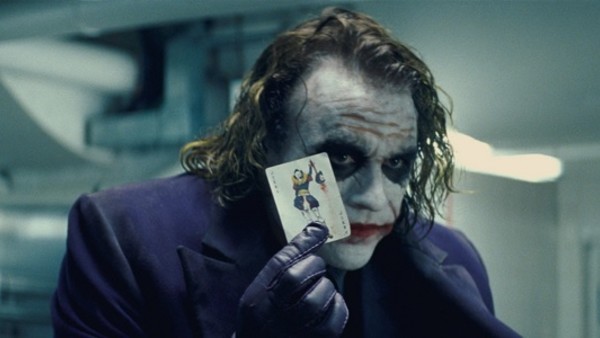
Notable films: The Dark Knight; No Country for Old Men; There Will be Blood; Iron Man; Tropic Thunder; Pan's Labyrinth; Spirited Away; Children of Men; Up; Brokeback Mountain; The Incredibles; The Lord of the Rings; The Departed; District 9; Napoleon Dynamite.
We can't talk about the 2000s without talking about the rise of the comic book film. Sure, it wasn't quite the decade of the MCU, but this is when the MCU made its debut. Moreover, this is when comic book films became big box office fare. Yes, there were some stinkers (Daredevil and Catwoman), but between the X-Men films, Sam Raimi's Spider-Man trilogy, the fledgling MCU, and the first two Nolan Batman films, the comic book genre was legitimized in a way that it never had been.
What's more, fantasy films (like Lord of the Rings and Harry Potter) took pop culture by storm, while foreign language films - such as Crouching Tiger, Hidden Dragon, Apocalypto, and The Passion of the Christ - found widespread appeal.
This also the decade that saw traditional animation overtaken by computer animation, with films like Shrek, The Incredibles, and Monsters, Inc. becoming some of the most highly-regarded in their genre.
4. 1980s

Notable films: Back to the Future; E.T.: The Extraterrestrial; Star Wars: Episode V - The Empire Strikes Back; The Shining; Raging Bull; Raiders of the Lost Ark; Top Gun; The Terminator; Die Hard; Predator; Blade Runner; Stand By Me; The Goonies; The Breakfast Club; Gremlins; Batman.
Here we have the decade that impacted current pop culture like no other. This is the era that made nerd culture cool. This is the era of the blockbuster. This is the era of Michael Keaton's Batman, of E.T. and Indiana Jones of Back to the Future and Ghostbusters.
Science fiction boomed with The Terminator, Mad Max, Star Wars, and Blade Runner. Fantasy blossomed with The Princess Bride and The NeverEnding Story, while sword and sorcery films like Conan the Barbarian, Beastmaster, and Red Sonja gave an edge to the fantastical realm of cinema. Horror was revolutionized with films like The Shining, The Evil Dead, Friday the 13th, Aliens and A Nightmare on Elm Street.
Then, of course, there were coming-of-age teen comedies like Ferris Bueller's Day Off, The Goonies, and The Breakfast Club.
3. 2010s

Notable films: Avengers: Endgame; Avengers: Infinity War; Mad Max: Fury Road; The Wolf of Wall Street; Joker; Knives Out; Parasite; Lady Bird; 12 Years a Slave; Moonlight; The Social Network; The Irishman; 1917; Get Out; Hereditary; Lincoln.
THIS is the decade of the MCU. Save for 2011, Marvel had at least one movie in the top 10 highest grossing films every year - 16 in total! In 2012, 2016, 2018, and 2019, they had THE highest grossing film of the year. Let's not forget that little nugget about them putting out the highest grossing film of all time, either.
It was a great decade for Disney, all-around. Disney had at least one film in the top 10 highest grossers each year. In 2016, every one of the top five was a Disney joint. They had seven in 2019.
But enough about Disney. Comic book films in general got a lot of love, both from fans and from the Academy. Joker? Logan? Black Panther? Forget about it!
What about prestige films like Lady Bird, The Irishman, and Roma? They weren't necessarily box office hits, but they provided us with some of the most thoughtful, human stories audiences had seen in years.
2. 1990s

Notable films: Goodfellas; Dances With Wolves; Forrest Gump; The Silence of the Lambs; Jurassic Park; The Matrix; Pulp Fiction; Groundhog Day; The Shawshank Redemption; The Lion King; Toy Story; Terminator 2: Judgement Day; Saving Private Ryan; Unforgiven.
Remember when I said that the eighties influenced pop culture more than any other decade? Well, the nineties might give it a run for its money. The only reason the eighties got the edge is because they didn't go to the nineties in Hot Tub Time Machine, nobody throws nineties parties, and Stranger Things isn't set in the nineties. The nineties didn't give us "Thriller".
But the nineties DID give us Pulp Fiction, Jurassic Park, and Goodfellas. They DID give us The Lion King and Forrest Gump. The nineties saw figures like Jackie Chan and Jet Li come to the United States. Action movies like Con Air, Point Break, and Mission: Impossible still hold a place in the hearts of millions.
The nineties also saw the Disney Renaissance, which would ultimately make them the global conqueror that they would become in the 2010s. Even 20-something years removed, Beauty and the Beast, Aladdin, The Lion King, Pocahontas, Hercules, Mulan, and Tarzan still stand as some of Disney's undisputed best.
1. 1970s

Notable films: Apocalypse Now; The Godfather; Close Encounters of the Third Kind; The Exorcist; Alien; Star Wars: A New Hope; Jaws; Taxi Driver; Rocky; One Flew Over the Cuckoo's Nest; Monty Python & the Holy Grail; Blazing Saddles.
Here we are. The decade that made movies what they are today. As previously mentioned, the repeal of the Hays Code launched a revolution that saw directors liberated, able to bring us their visions in a way that they had never been before.
New Hollywood embraced darkness, realism, and violence in a way that films to that point hadn't. Films like Apocalypse Now, Taxi Driver, and The Godfather rose from the ashes of Old Hollywood, ushering in a beautiful new era.
Horror grew into a powerhouse, with Rosemary's Baby, The Omen, The Texas Chainsaw Massacre, Halloween and The Exorcist (THE horror film) robbing millions upon millions of film-goers of their sleep.
This is the decade that gave us Jaws and Alien. Arguably more significant, however, was the debut of Star Wars - THE blockbuster.
This is the decade of Martin Scorsese, Francis Ford Coppola, and Steven Spielberg. This is THE decade for film.
Watch Next
Quz: How Well Do You REALLY Remember The Godfather?
