Every Marvel Comic Book Movie Ranked From Worst To Best
11. X-Men: Days Of Future Past

Forcing two different timelines of the same movie franchise together should never produce anything like positive results, so when Bryan Singer came back to the X-Men series after Matthew Vaughn rescued it with First Class, there was no way his plan to do Days Of Future Past could possibly work.
The cast would be too big, the performances too wildly different to mesh and the timeline so convoluted that a coherent narrative would be impossible. But astonishingly, it worked and Singer managed to transform one of X-Men comics' most brilliant but also most taxing comic book arcs into a truly great film.
Days Of Future Past is a picture of perfect balance, taking a huge number of working parts and directing them into a pristine narrative machine that even has space for new characters and exhilarating set-pieces. That the film managed to find that control is testament to how brilliant Bryan Singer's work was on it.
Hugh Jackman and James McAvoy are particularly great, Peter Dinklage is thoroughly unlikeable and Evan Peters' Quicksilver is a revelation, but even more than the performances, the film thrives because of its story-telling. The stakes feel real, the drama is claustrophobic and there is a personal element that defies the huge scale of the project. That contradictory intimacy is chiefly why it all works.
10. Spider-Man

Considering how his trilogy ended, Sam Raimi's start to the Spider-Man franchise was a stunning achievement, particularly since his only real forays outside of supernatural film-making had been something of a mixed bag. But Raimi had proven in his horror film-making that he knew genre-film-making as much as he knew characterisation.
The decision to give him the opportunity to stretch his film-making vocabulary reaped hugely entertaining results, and his horror background actually helped with his character build for Willem Dafoe's Green Goblin.
While X-Men opened the floodgates for summer blockbuster comic book movies, Spider-Man refined the model with a new, more mature approach to action for the post-9/11 world. It was more brutal, but balanced with a New York parochial pride that added a cathartic string.
Tobey Maguire is excellent as the relatable geek hero, setting a superhero archetype in the process and forming a likeable foundation for Raimi's traditionalist approach to the material that focused smartly on the core of the character. And while Dafoe's Goblin looks silly, the performance is still one of the best in the entire genre.
9. The Avengers

The Avengers (let's not mention the silly, unnecessary retitle in Europe) marked the confirmation that Kevin Feige's Phased approach to story-telling was a success, so it's probably one of the Marvel supremo's favourite points in the MCU. It took all of the strands established in the Iron Man movies, Thor and Captain America (less so The Incredible Hulk, of course) and tied them together in an ensemble that delivered on the necessary spectacle as well as suiting the huge billing.
There are issues with it - particularly in the third act when the Chitauri are dropped in to manipulate the escalation - but Joss Whedon captured the spirit of Marvel's premier team as well as introducing hints of complexity to the backstories of each character to prick further interest.
Instead of it just being two hours of the heroes teaming up for hero shots and action, Whedon introduces Tony's arrogance and superiority complex, Cap's man-out-of-time alienation, Hawkeye and Black Widow's history and the Hulk's split personality, which all made for substance to back up the spectacle organically.
The Avengers defines what blockbuster event movies have become, and rather excitingly set a precedent for Marvel that insists they outdo every Avengers film with what comes next.
8. Avengers: Age Of Ultron

It might ultimately go down in history as the film that forced Joss Whedon out of the MCU, but the work that almost broke him shouldn't be over-looked because of that sting in the tale. He again ramps up the action, offering a spectacle that improves on The Avengers in almost every way at the same time as further probing the complex character dynamics and smaller details that made its predecessor so memorable.
The genius of the film comes in Whedon's exploration of what keeps the characters together as well as what separates them, probing at the dynamic and pushing it to its limits to find out how a group of such colourful, extreme characters could ever co-exist. The hand-grenade that achieves that is James Spader's excellent, hammy Ultron - with assistance from Scarlet Witch's powers of suggestion.
Spader is deliciously over-the-top (something cynics absolutely didn't appreciate), channelling and amplifying every darker aspect of Tony Stark's personality (on which he feeds) so he's effectively a charismatic, evil Frankenstein's monster. As scene-chewing goes, it's a masterclass.
And beyond the personal stories and the emotional moments (like Quicksilver's surprisingly affecting death), Ultron has some quite stunning spectacles from the Hulkbuster battle to the Sokovia ascension.
7. Iron Man 3

After Iron Man 2 disappointed, Marvel's decision to bring in Shane Black for the post-Avengers threequel was an inspired move. Every trope he'd built his writing and directing successes on were perfectly suited to Tony Stark's story, and his team-up with Drew Pearce on writing duties delivered a nostalgic action spectacle that is far more than the Mandarin controversy it's unfortunately remembered for.
The film soars when it explores Stark's struggles with heroism and personal demons, and the addition of a PTSD subplot added even more complexity - introducing the idea of the true cost of heroism that would play such a big part in Civil War's narrative.
The bromantic relationship between Tony and Rhodey is pushed far better than in Iron Man 2, and it's those personal elements that make the impressive action sequences and the humour all the more successful. Aldrich Killian also deserves credit as a great villain, even if the spectre of the Mandarin twist is a little distracting from it.
6. X-2

After the impressive debut of Bryan Singer's X-Men team, he took advantage of the freedom afforded by not making an origin movie to to delve more into the characters, focusing again on Hugh Jackman's Wolverine as the emotional heart of the civil rights-led story.
Brian Cox comes in as a truly compelling villain with personal conflict driving his desire to eliminate mutantkind and the introduction of the idea of a "who watches the Watchmen" thread was as innovative as it is over-tired in the genre today.
Having won the role of Wolverine comparatively late in production for X-Men, the sequel saw Hugh Jackman really blossom into the role. He looks more suited to the character after more chance to work out and he had worked on developing an angry vulnerability to run beneath his violence. It's something of a shame that his rise to prominence cost so much to Cyclops, but the right character won in the end.
The film also adds excellent new elements in Cox and Alan Cumming's tender, charming Nightcrawler, but its success comes down to refinement in all of the central roles. Both McKellen and Stewart add more depth, Jackman is more confident and Rogue more interesting (even if Halle Berry's Storm is a little poor) and it all feels like Singer really finding his groove.
5. Captain America: The Winter Soldier
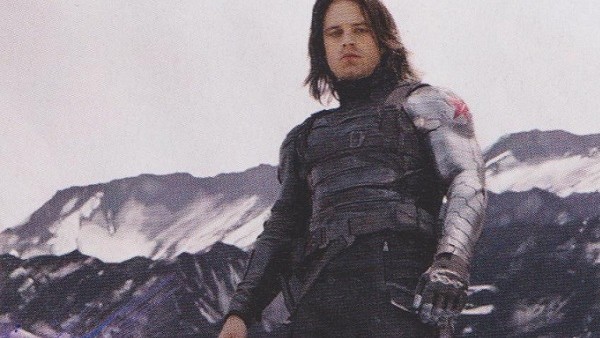
It may have been a shame that Marvel were pretty much forced to advance the timeline of Cap's history to bring him up to the modern day, the decision to hire the Russos (to that point most notable for You, Me & Dupree) and turn the sequel into a 1970s political intrigue movie was inspired.
The Winter Soldier is probably the best written film in the entire MCU, exploring not only those nostalgic thriller vibes but also adding a beating emotional heart that would play out to conclusion in Civil War. And everything about it is better than its predecessor: Chris Evans is even more regal and convicted, but the seeds of doubt visibly creep into his precise sense of duty, and Sebastian Stan's Terminator like Winter Solider is his perfect foil.
Despite world-ending shockwaves and huge death machines in the sky,The Winter Soldier soars highest when it is most invested in personal conflict and when it embraces the inherent claustrophobia of its chosen inspiration points. How bold to do all of that as well as focusing so overtly on politics - the thing that basically killed The Phantom Menace.
4. Logan

Who could ever have guessed that an R-Rated soft adaptation of Old Man Logan would end up being the greatest X-Men movie?
Logan had a lot riding on it, not least because it represented Hugh Jackman and Sir Patrick Stewart's last stands as two of the best characters in the entire franchise, but it achieves its objectives and more. It is as devastating as it is exhilarating, as satisfying in its conclusion to Logan's arc as it is mournful at the loss.
And it's braver and bolder than any X-Men movie before it, stripping out almost all of the comic book movie tropes and instead becoming a revisionist Western in the oldest tradition, taking in the inspiration of Shane, Unforgiven and The Wrestler and mashing it with a thoroughly modern, thoroughly brutal R-Rating that delivered more gore than has ever been seen in this genre.
But it's more than just gore porn: it has more heart than any of its predecessors and the intimate exchanges between characters (usually when one of them is dying) are undoubtedly the high-points of James Mangold's towering achievement.
3. Captain America: Civil War

Like Days Of Future Past and Logan, Civil War should never have worked, and that suspicion was partly down to the iconic status of the source material. In the end, it turned out that the Russos' decision not to purely adapt the comic book event and to instead focus on a far more personal story was their shining grace.
On paper, the film would have too many working parts, with the original Avengers' squad swollen by new additions, a new villain to set up and actually make us care about and a heavy political story taking in civil rights, Big Brother style surveillance anxiety and issues of trust and family. That it worked is great, that the result is exceptional is just plain stunning.
The film opens with a bang (literally), and almost every element is handled masterfully, to the extent that the superfluous fan-baiting elements - such as Spider-Man and Ant-Man appearing for pretty much no reason - still deliver beyond what they organically earn.
The stakes are simultaneously world-changing and claustrophobically intimate, anchored by an excellent script and a delicious ambiguity that makes actually choosing a side difficult. And despite all of the accusations levelled at Marvel for their apparent inability to create compelling villains (even in their best films), Zemo is a great addition and far better than any grand pantomime figure could ever have been.
2. Guardians Of The Galaxy

When it was first announced, it's probably fair to say that Guardians Of The Galaxy was met with a tide of confused apathy: the galactic ensemble weren't exactly the most famous of comic book properties and even to those in the know, they weren't hugely popular.
Back then, the film was the prospect of seeing a tree, a raccoon, a WWE wrestler and the slightly chubby guy from Parks And Recreation in a Star Trek clone. Zoe Saldana looked like the only sure thing, with even James Gunn a non-mainstream name. But by God, he caught lightning in a bottle.
The cast is as incredibly balanced as it looked silly from the outside, and the cocky chemistry between the team works because they all have two levels (or more). Each of them is a broken toy with deep historical emotional wounds (aside from Groot, whose mystery is the key to his heroic sacrifice working so well), and they're beautifully well written.
Okay, so the villains are a little limited, but it almost feels like too strong a presence would have distracted too much from the build of the team, and Lee Pace does well with the material.
And of course, the soundtrack has grown to have a life of its own.