Every Pixar Movie Ranked From Worst To Best
Now with added Dory.
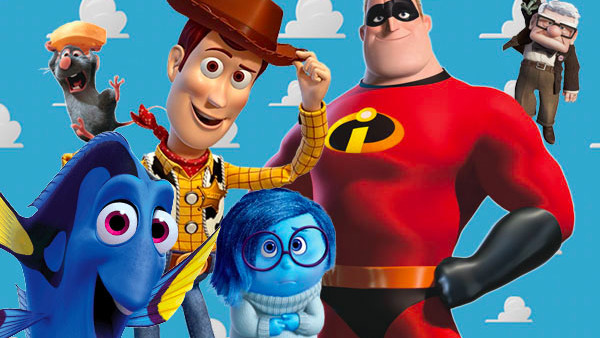
Just as certain film fans take great pleasure in predicting that the comic book movie bubble is just about to pop, there's a curious sub-culture of death clock watchers falling over themselves to herald the day Pixar's streak ends.
In truth, there have already been blips but then as everyone with even half an interest in Pixar will tell you, a bad Pixar film is still better than the majority of other studios films. They're a success story increasingly hamstrung by their own successes, with an ever raising level of expectation that means they impossibly have to exceed themselves every time.
Luckily, the pressure hasn't crumbled them and the company continue to make films built on the same principles of story, character and emotions. That makes spikes and troughs of quality rare things, and means the debate over which is best and where the others rank a uniquely intriguing prospect.
With Finding Dory now added to the ever-increasing pile, now is the perfect time to restart that debate...
17. Cars 2

By any other standard, Cars 2 would probably still be classed as a reasonable animated yarn, but on the pixar spectrum is the embarrassing idiot brother. And worse, the film seems only to exist (as does its impending follow-up) because of the improbable merchandising income earned on the back of the original.
The first Cars might have some universal truths to it, which helped catch the attention of the adult audience, but Cars 2 seems to have been almost universally dismissed as one only for the kids. In Pixar terms, that's almost unforgivable, but then that's the agenda here from tail to bumper.
It might be greedy to ask for every Pixar film to be perfect and universally appealing, but when the cynical grab for toy money is this obvious, it's just distasteful.
16. Brave

Let it be noted that the jump between Cars 2 and Brave is as vast as a Highland peak, because this is not a bad film at all.
Curiously, Brave doesn't actually feel like a Pixar movie as much as a Disney Princess one in a different medium. Perhaps it's because it's a fairy tale - and you'd usually expect that to come from the Mouse House - or perhaps it's because it doesn't appear to have a modern (or futuristic setting): either way, it simply doesn't quite fit.
That's not to say that the agenda deserves to be criticised: the story is actually a good one (important as well as entertaining), and the scope to show off the advances in environmental design was to be cherished. It's just that it's all a little conventional and there's not enough of an adventurous spirit, considering that seems to be a central theme.
15. Cars

If you've seen Doc Hollywood, you don't need to see Cars, but there is something to be said for Pixar's fish out of water - or racecar out of competition - comedy that has arguably the most easily distinguishable moral code of all the films.
The characters are mostly great - even if Mater's increasingly importance in the sequels and spin-offs was painfully inevitable - and there's something very classically exciting about the race sequences that are part Cool Runnings and part Days Of Thunder.
And while the film tends to get lumped in with the sequel as not for adults, there's far more mature material here than in the follow-up. It's also genuinely funny, which goes along way.
14. Monsters University

There's a lot to be said about Monsters U's attempt to shake up the formula established in the first film: the frat element (which basically brings together the more harmless points of Animal House and Old School) with the excellent characters introduced in the original.
Unfortunately, the charisma of Mike Wasowski can't make up for the trade-off that has removed Boo from the equation, sanitised the previously terrifying Randall and undone Sulley's arc in the first movie.
By the time that movie ends, he's vulnerable, more in touch with his relationship with lesser friends and co-workers and has abandoned all bravado. And while his reinvention as a jock and the jigsaw pieces of how he and Mike ever became friends are welcome, they can't quite compete with the perfectly compact and charming story of Monsters Inc.
13. The Good Dinosaur
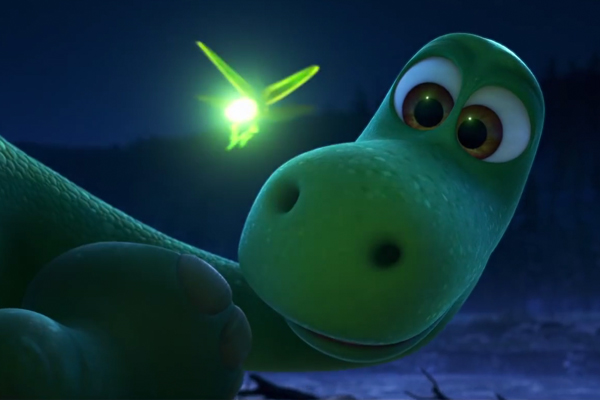
There's a very good chance that the newest Pixar film released might well be the most stunningly beautiful of them all: the environments are sweeping and gorgeous and the effects work that has gone into making them photorealistic (particularly in terms of flowing water) is astonishing.
The only problem is that the substance and the story can't quite match up to the visuals - probably because of the elongated production that saw a hard reset after wayward direction and the adoption of a brand new story.
Yes, there are some absolute gut-punching emotional moments - at least three genuine tear jerkers - but it's all very familiar. There are significant parallels to be drawn with The Lion King, The Jungle Book, and Finding Nemo, and the fresh twists come from the Western and frontier film genre.
But that lack of originality aside, the film is still very entertaining: it has soul for what it lacks in complexity and it's still pushing on for a four star film.
12. A Bug's Life
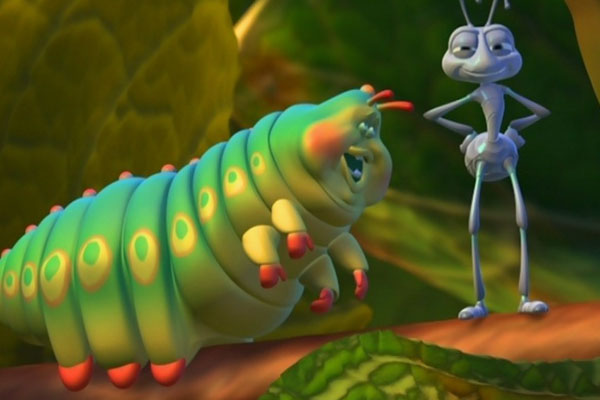
As with most Pixar greats, A Bug's Life borrowed its genetics from other classic films: in this case Seven Samurai, Galaxy Quest and The Three Amigos were the most obvious reference points. But in their irresistibly charming way, the studio reinvented the story in so stunning effective a way that the parallels look more like homage than cynicism.
Released in the same year as Woody Allen's Antz, the epic of miniature proportions is similarly character focused, dealing with issues as weighty as individualism and civil and social responsibility as well as hierarchical power systems. On the way there's also a romp through despotic political regimes and a flirtation with Pixar's friend Death, but it's all done with such clownish amiability that it never strays into preaching.
And in Hopper, A Bug's Life also boasts one of the most memorable villains in al of Pixar's work.
11. Ratatouille

More so even than Cars, Ratatouille proves the old suspicion that there wasn't anything Pixar couldn't make utterly charming and entirely watchable. After all, who would have thought that the story of a self-taught gourmet rat who takes over a kitchen in Paris and dazzles everyone with his skills would have been anything other than horrifying?
That it works is mostly thanks to the charm of the two central characters - both rat and human - as well as a brilliant vocal performance by Patton Oswalt, and a film stealing cameo by Peter O'Toole's twisted food critic.
The film is like an emotion poem: as with The Incredibles' nostalgia and The Iron Giant's devastating love and loss, Brad Bird soaks it in feeling (triumph, personal validation, love) to the point where eating at Remy's restaurant feels legitmately aspirational.
And there's still never been anything close to the quality of Anton Ego's soliloquy denouncing critics in a Pixar film (or any film) since. While it could have felt like the self-serving whinging of a director decrying harmful criticism, it actually comes off as a beautifully intelligent call for the sanctity of the artist. In a kids' film!
10. Monsters Inc

In the run up to release, the marketing of Monsters Inc was focused heavily on the technological advances that made animating individual strands of hair possible. How far we've come.
Monsters Inc is essentially Uncle Buck with horns and fur. The culture clash dynamic is a beautifully simple thing, but set in Pete Docter's genius universe where the monsters in your closet are there for work to harvest their world's main energy source familiar becomes inspired.
It helps a lot that the voice cast was so perfectly picked. For Billy Crystal Mike Wasowksi was a second bite at the Disney cherry, having turned down Timon in The Lion King. John Goodman is vocally the opposite of everything Crystal brought to the table: more regal, more fearsome and more assuredly warm. And then the decision to use the real sounds of Mary Gibbs to capture the adorable Boo - the run-away star of the show - was the cherry on top.
9. Toy Story 2

It feels like something of a betrayal to have a film as good as Toy Story 2 in as lowly a sounding place as 7th, but the playing field isn't exactly normal when it comes to something like Pixar. So high is the benchmark that the grades between films become incredibly small.
Toy Story 2 actually outdoes its predecessor in a couple of ways: Stinky Pete is a more fully rounded villain than Sid, Woody is distinctly more complex and more likeable and "When She Loved Me" is undoubtedly the franchise's best (and most devastating) song. Plus we get to see Buzz's arc come full circle as he sees how ludicrous his programmed behaviour was.
The animation also looks better than the original thanks to the tumbling advances the company was making at the time. And the fact that the film has a 100% rating on RottenTomatoes is its own indication of quality.
8. Finding Dory

With twelve years between the two films, Finding Dory shouldn't have worked at all. Nor should it have been so great considering it's basically just a retread of the first story with new characters ported in and a new environment.
But thanks to the push of Dory - easily the first film's best character - and a great new dynamic between her and newcomer Hank (Ed O'Neill), the familiarity isn't fatal at all. It's comforting, if anything.
Dory is an emotionally affirming (and occasionally devastating) trip inside yourself, exploring that aching, perpetual fear of abandonment, the joy of family and belonging and the spirit of adventure that Pixar is so fond of. It's another labour of love - and beautiful as a result - and it belongs right up with the best.
7. The Incredibles

For many, The Incredibles was the point when Pixar grew up. Having employed only Pixar family members for the first five films, John Lasseter brought in Brad Bird - one of the rare times a single credit has been given to a director - and the result was genius.
Employing the same retrofuturist nostalgia he would later bring to the under-appreciated Tomorrowland, Bird injected the perfectly timed post-superhero movie with a note perfect 1960s gloss while maintaining a sort of timeless modernity.
In truth, The Incredibles doesn't feel like a Pixar film in the same way those that preceded it did: it's a wild departure in form and tone, but it has the same dutiful commitment to story and character, and it's easily one of the coolest films on the entire slate.
The fact that it's taken until now to get a sequel is a disgrace.
6. Finding Nemo

Having spent years preparing - including going on actual underwater expeditions - it's no surprise that Pixar's animation for Finding Nemo was so on-point. But making good-looking oceanic environments was only ever half of the story of success - the rest came down to characterisation.
Opening with explosive, raw trauma, Finding Nemo effectively plays like Alice In Wonderland underwarer. In one thread, Marlin - voiced wonderfully by Albert Brooks - follows the white rabbit (or the blue, forgetful rabbit in this case) through meetings with grotesques and oddballs. From the other end, Nemo effectively sits in the court of the Queen Of Hearts trying to avoid having his head cut off (or being shaken to death by pantomime monster Darla).
The entire thing is beautifully phrased and the dynamic between over-zealous father and brave, slightly over-confident son is as authentic as Pixar's family relationships have ever been.
5. Wall-E

Wall-E is quite the age-old love story. Boy meets girl. Boy falls in love with girl hopelessly. Girl doesn't quite reciprocate on account of being a robotic sentry unit sent to Earth to check for fertility indicators in the soil and air by an over-zealous autopilot system with an ulterior motive.
It could easily have starred Ginger Rogers and Fred Astaire...
All jokes aside, the film is relatable despite the alienness and heart-warming despite the initial starkness precisely because it works on the same premise as those romantic classics. It's about something as small as wanting to hold hands at the same time as something as big as saving the entire world. And both the character designs and the environments are stunningly beautiful, even after the apocalypse.
Yes, it does sag as soon as Wall-E goes off planet and it suddenly becomes an intergalactic version of The Biggest Loser, but it doesn't sag very far at all. And it's only noticeable because the opening is so good.
4. Toy Story
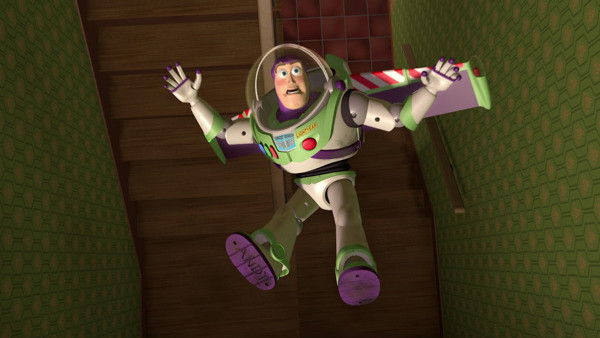
Toy Story is based on something incredibly simple: an irresistible What If that must have occurred to every child who ever played with a toy. On a grander scale it explores existential anxieties and philosophical quandaries, but the grain it grows from is as simple and universal as wondering whether the world is still there when you blink.
The art and success of the film is all about the layers John Lasseter added to that premise. The story isn't just concerned with the issue of toys being alive, it's more interested in what would happen if they were as flawed, as neurotic and as desperately seeking validation as we are.
So we get a spaceman who suffers a crisis of identity, a malicious cowboy struggling with replacement anxiety and a host of other childhood favourites basically reimagined as outpatients of a psychiatric ward. And thanks to perfect casting from top to bottom, their flaws are entirely ignorable in favour of their charms to the point where they feel like genuine family members.
3. Inside Out

It was inevitable at some point that Pixar would dispense with the limiting constructs of narrative and just start making films purely aimed at getting you in the feels.
Again, it's a story based on a great big charming What If: imagine your brain was run by little people who bled their emotions into your actions and growing up was about them finding balance. Yes the concept might again have been borrowed from somewhere else, but Disney remade fairy tales for decades and nobody raised an eyebrow.
The story of Joy and Sadness' road trip back home also took on a classic framework (used the same year in The Good Dinosaur of course) and is utterly charming. And front and centre of the success is the reimagining of the psyche as if it were designed by Willy Wonka populated by characters with almost visceral charisma.
At the end, the film also does what even Toy Story 3 wasn't brave enough to: killing off a childhood friend callously to remind us all that we basically murdered our imaginations when we grew up, and adding the extra sting that it's a necessary part of maturing. Monsters.
2. Up
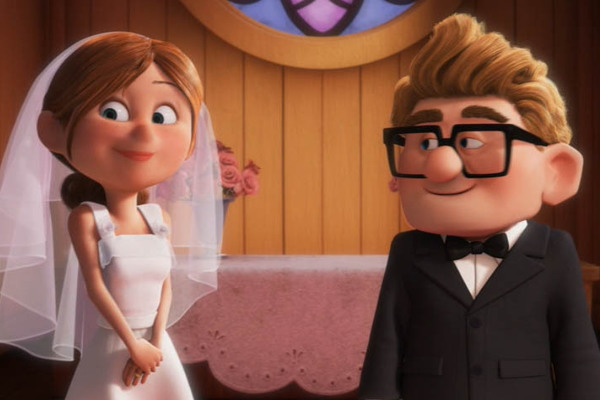
About 75% of Up is a great film: the story of a cantankerous widower forced to coexist on a road trip with an attention seeking, slightly bumbling pre-teen. Again it's about getting home and the steps on that journey throwing up weird and wonderful characters, but it's most successful because of the relationship of Carl and Russell, which is broken from the off.
It's the other 25% of the film that elevates the film beyond simple greatness. The opening ten minutes is some of the most devastating and beautiful film-making ever and the emotions are off the chart. But it's not just the montage that matters: the backstory provides balance and poignancy to Carl's demeanour and frames him as something other than a caricature.
And then when you find out slowly that Russell is the way he is because of an absent father you get a second gut punch that makes the need for their blossoming relationship to succeed singularly important.
1. Toy Story 3

It's rare that the third film in any trilogy would be classed as its best, but for it to happen with Toy Story - which had to be rescued last minute from a purgatory of made-for-DVD Disney sequels - is as stunning as it is brilliant.
Shorn of most of its original supporting cast (who have all, devastatingly, been thrown out or given away), the threequel plays out like one long mortality anxiety nightmare. The toys are all on the verge of being forgotten - a fate crueller than death as Jessie's song in number 2 confirmed - as Andy grows into adulthood, and it's like watching a beloved old relative digging his heels in on the way to the retirement home.
That shot where they accept death in the incinerator is just horrible.
While there are some fears that the 4th film will add a sour note of over-extension, there's enough charm left in the tank and the characters remain welcome enough to warrant it. Just as long as they don't follow through on their threats and actually kill off one of the main characters, because that would be too much to take.
Which of Pixar's films is your favourite? Share your ranking below in the comments thread.