Film Theory: How IT Explains The Secret Of The Shining
Pennywise at the Overlook?!

Well before Quentin Tarantino, Marvel Studios and Pixar made shared universes the most fashionable thing in Hollywood, Stephen King was busy building a world (well, several worlds) of terrifying stories that were subtly woven together, often in ways that weren't immediately obvious.
As well as tying the mythology of the Dark Tower into lots of his stories, the horror master set many around five fictional towns in Maine - including Derry, the town terrorised so memorably by Pennywise in It. Characters recur throughout his books, but It seems to have special significance, as if it's a sort of epicentre. It ties together with The Stand, Children Of The Corn, The Dead Zone, The Shawshank Redemption, Christine, The Tommyknockers, Dreamcatcher, 11/22/63 and Mr Mercedes in various ways, but no links are quite as interesting as how it is related to The Shining.
And beyond a merely superficial tie, what if It actually offers an explanation of the events in The Shining? What if the evil that haunts Jack, Wendy and Danny Torrance is actually the same manipulating malevolent entity that tries to kill the Losers Club? What if Pennywise hangs out in the corridors and mysterious rooms of the Overlook Hotel? There's evidence to suggest that could be true.
So how could It's infamous clown-shaped terror explain what happens in The Shining...?
6. They Happen In The Same Universe
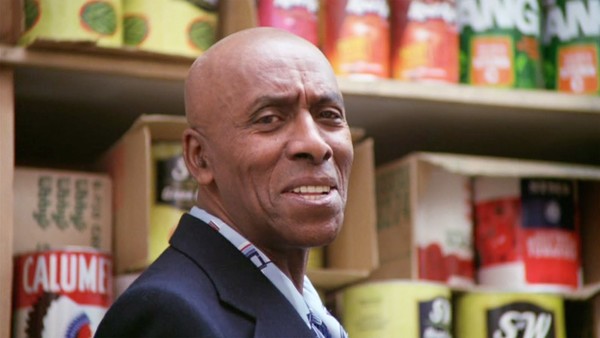
Evidence is obviously a key thing when setting out theories like this and as a starting point, we know that The Shining and It happen in the same universe. They're linked by the presence of Dick Hallorann, who obviously plays a major part in The Shining as another character who possesses Danny's powers.
He's also mentioned in It as an Army cook who was present when Derry nightclub "The Black Spot" was burned down by the Legion of White Decency in 1930. Thanks to his powers, he was able to save the lives of other clubgoers, including Mike Hanlon's father. He is also capable of seeing It in one of its varying forms while remaining sane as an adult.
The fact that he plays a part in both stories should really say something.
5. It Feeds On The Torrances' Fears
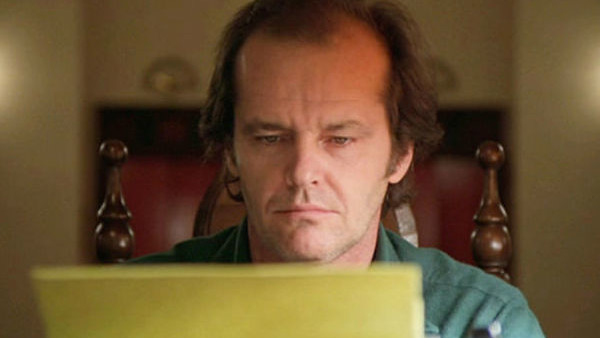
Obviously, the key element of It's relationship with its victims is how it feeds: it inspires fear in them as a sort of flavour enhancer - the idea of fear "salting the meat". And while It is associated primarily with feeding on children, it will feed on any human, it just so happens to find that children are easier to manipulate and prey on.
But that's not true in The Shining, because in Jack Torrance, It is presented with a far more simple target than Danny. He comes there already vulnerable, having lost his teaching job because of his alcohol dependence and drug abuse, injured his son in a rage and on the verge of being left by his wife. He teeters on the edge of his worst fears - of being abandoned by his family and seeing his career go to ruin. In short, he's already seasoned well for It.
And as his fears take him over, It manipulates him into doing his dirty work - killing his family, to get more victims in one fell swoop, which in itself inspires a further escalation of Jack's conscious fears. It turns him into everything he feared he would be and drives his family away, making him an even more delicious potential meal.
Not only that, It scores a double success by using Wendy's fears - that Jack cannot be turned away from his path that leads to him being a monster - against her too. Ultimately, she resists as her fear that more harm will come to Danny trumps her owbn crippling fears, but it could go either way right up to the end of the film.
4. None Of The Overlook Haunting Is Imaginary

So what evidence is there in The Shining that there genuinely is something physical behind the haunting? Some readings of the text draw a direct parallel between Jack's mental condition and the Overlook's powers - as if it is his lost grip on reality that manifests as the hotel's ghosts.
But any reading that fundamentally relies on a solely psychological explanation (or a supernatural analysis that says Jack WILLS evil visions into being) misses the fact that a purely physical entity has to be behind the attack on Danny in Room 237.
Everything else could be explained as being Jack's doing or a simple haunting, but the fact that Danny emerges from Room 237 with a bruised neck confirms something physical attacked him. There was a tangible force there to attack him. An It removed from his father's influence.
And then there's the fact that a spectre of Grady opens a locked door for Jack. Ghosts can do a lot of things, but mastering locks isn't one, even in Stephen King's world. Again, something physical explains that.
3. The Storms

It's a smaller point, but it's interesting that It's arrival coincides in Derry with a huge storm while the Torrance's arrival at the Overlook is also met with a catastrophic snow storm. It's almost as if the inclement weather isn't only designed to isolate victims but also ominously reflects the volatile situation coming along with the arrival of the malevolent force.
In both stories, the weather is a portent of doom, as if Nature itself is reacting to It's hunger for fear.
So how doesn't It win against Danny Torrance as it doesn't against the Loser's Club?
2. Why IT Doesn't Win

In both cases, It doesn't win (at least not in the way It wants to): the children survive. There's a theory that suggests the reason for that is the Losers Club and Danny sharing The Shining, and there are some compelling thoughts on that front (not least because they mostly share a history of abuse), but you'd think it would be more explicit in the text, given how willing King always was to explore the links in his characters and stories.
More compelling - and based on more evidence - is the fact that the malevolent forces in both cases are undone by simple acts of resistance. Danny's supernatural powers are incidental, it is his strength of will that defies the Overlook as it attempts to possess him and it's only then that the hotel turns to his father instead to kill him.
In It, the Losers Club do what It's other victims could not - they fight back, which defies It's reason for choosing to attack kids in the first place.
It's probably true to say that their past experiences of abuse gave them the foundation to show that resistance (just as it helped Danny), but assuming the Losers Club have The Shining too seems a little out of place. Fundamentally, It feeds not only on fear but on control and manipulation (which are the end results of the fear it inspires), and having the children act in rebellion is ultimately what undoes it.
That link between the ends of It and The Shining is far more important than anything supernatural and offers proof of their link.
1. The Wider It-Verse Theory

There is of course, the theory that It is the driving force behind every haunting in Stephen King's literary universe: that his subtle influence shapes every one of those famous ghost stories. So we may be looking at a shared universe in even more complex ways than just shared locations, characters and mythology. What if King created an It-verse?
We already know Pennywise appears in other King novels too. it's mentioned in Gray Matter, 11/22/63, and Insomnia and in Dreamcatcher, we see a memorial to victims lost in the 1985 Derry storm that takes place at the end ofIt, which has "PENNYWISE LIVES" scrawled across it. And slightly more tenuously, in The Tommyknockers, a character driving through Derry thinks he sees a clown staring out of a sewer drain. And while that sighting contradicts It having to go away for 27 years (since it's set two years after It), who's to say that the exile isn't just a clever ruse by It that allows it to go elsewhere to feed?
What do you think? Share your reactions below in the comments thread.
Read Next: