Frozen: 8 Reasons Why Prince Hans Is Actually Disney's Lamest Ever Villain
8. His Entrance Lacks Impact

-->
-->
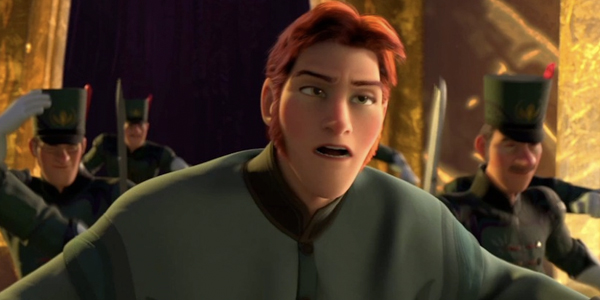
A great villain captures your attention from the first second that they appear on screen, and there have been some outstanding examples from Disney's evil-doers over the years. Within seconds of riding onto the scene in The Hunchback Of Notre Dame we see the wicked Frollo holding a baby Quasimodo over a well, ready to send the malformed newborn to his death; Scar is first viewed hunting and then taunting a harmless mouse, and Ursula oozes menace the second that Ariel enters her lair. The most powerful entrance by a Disney villain, though, belongs to Sleeping Beauty's Maleficent, who storms into Princess Aurora's christening amidst smoke and green fire, and instantly transforming the happy scene into one of horror, cackling away madly as she dooms Princess Aurora to her tragic fate. In contrast, in Frozen, we get a cutesy scene where Hans and Anna stumble around on the docks together like love-drunk teenagers. Given that Hans has not been revealed as the villain yet such an approach is probably forgivable, but the scene where Hans' evil side is finally revealed does not pack any real punch, either. Everything is set for a wonderful reveal gloomy lighting, emotional music, a desperate Anna - but he merely shrugs his shoulders, explains his motivations to Anna as matter-of-factly as he can, and then leaves her room to let her die. It's a stunningly nonchalant moment, and really misses the chance to introduce us to Hans' dark side in a meaningful way that would build his villainous mythos. That was the time for Frozen's villain to reveal himself in all his malicious glory, but the underwhelming execution instead just left us cold.
7. The Link To The Main Character Is Too Weak
-->
-->
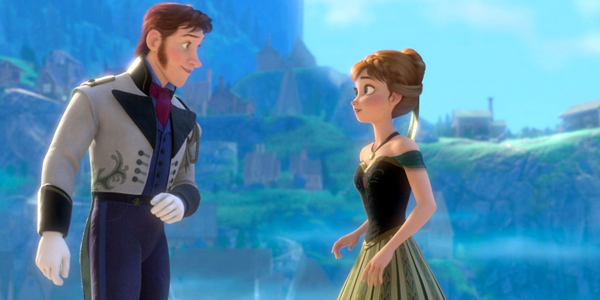
Villains are strongest when they have a solid link to the main character: Scar is Mufasa's brother and Simba's uncle, creating the intriguing situation of a family at war with itself. This is a trope that is often seen in classic stories think Snow White, or in Hamlet upon which The Lion King was based and which plays on the feelings of family rivalry that so many viewers experience in their own lives. Other links in Disney films include that of the cruel guardian/mentor (Frollo to Quasimodo), the jealous suitor (Gaston to Belle), the corrupt advisor (Jafar to Jasmine and the Sultan), and the outcast troublemaker (Maleficent and Ursula). Frozen's Prince Hans, on the other hand, has no strong link with the protagonist Anna. Sure; they were engaged at one point, but that was after a one-day romance that was sneered at from the start, even in the notoriously uncycnical Disney universe. The lack of gravitas in the formative moments of their relationship mean that when Hans reveals his true nature it carries no real emotional heft; he is simply a guy who has taken off a handsome mask to reveal an ugly face underneath. We don't feel sad, we don't feel scared - we barely even know the guy. If Anna and Hans' romance had been mature and fleshed out then it could have stood for a devastating turn of events, but the link between the characters is so lightweight that it's really difficult to care too much.
6. The Voice Acting Is Unmemorable

-->
-->
Voice actors are some of the most overlooked performers in the entertainment industry, but their talents are essential for bringing animated characters to life. This is especially important for villains, who often draw so much of their power and personality from their voice, making animated characters seem like something that the viewer can genuinely fear. In The Lion King, Scar was given his majestic tones by Jeremy Irons perhaps one of the few people on the planet who could have stood tonsil-to-tonsil with Mufasa's James Earl Jones, and earlier Disney villains weren't short on quality voice talent, either. Renowned actor George Sanders voiced Shere Kahn in The Jungle Book, giving the tiger a sense of sophistication through his rich British accent, and Eleanor Audley voiced both Cinderella's Lady Tremaine and Sleeping Beauty's Maleficent, helping to breathe life into characters whose roles were generally very limited in the stories upon which the films were based. Santino Fontana provides the voice of Hans in Frozen. As an actor who has been nominated for a Tony Award for best leading actor in a musical there is no doubt that the man can carry a tune, but his voice lacks the personality necessary for an animated villain to have any presence. The best voices in animation are ones that are imitated ad nauseam, and more often than not these are the villains: consider just how many people have aped Gaston's famous ode to himself, or uttered the Evil Queen's immortal lines in front of a mirror. Will people be quoting lines said by Hans in decades down the track? It seems very unlikely.
5. His Evil Scheme Is Lame

4. He Lacks A Defining Song

3. He Doesn't Have Any Unique Powers

2. The Final Fight Is Too Brief

When all is said and done, the majority of stories end with one last battle between good and evil.
Despite their standard G-rating, some of film's best final fights can be found in Disney cartoons. Consider Simba and Scar tangling atop Pride Rock, Jafar morphing himself into a giant Cobra, Gaston hunting Beast, or a behemoth-sized Ursula trying to drown Prince Eric. The granddaddy of them all, though, has to be in Sleeping Beauty, where Prince Philip throws down against Maleficent to reach his beloved; not content to just attack him with giant thorns and thunderbolts, Maleficent summons "all the powers of Hell" and transforms into a huge dragon, trying to overwhelm Philip with snapping jaws and dark fire. Even when she has been stabbed through the heart she keeps coming, desperate to devour him and collapsing a cliff in the process. It is a thrilling scene, and despite being over fifty years old has lost none of its power, as can be evidenced in the way that it was paid homage in the recent Disney film Enchanted. The final fight in Frozen is notable not for its power, but rather for its brevity. Hans swings his sword at Elsa once and then the whole thing is over. Earlier action scenes in the film (example: Elsa versus the Duke of Weselton's men, or Sven, Anna and Olaf running away from Elsa's snow monster) are energetic and visually interesting, but the final fight is a non-event. This is especially jarring as the film seemed to have Hans and Sven on a course to battle each other at some point (with Hans being Anna's false love and Sven being her true), yet this never eventuates.1. His Actions Yield No Real Consequences
