Gerald's Game Review: 7 Ups & 2 Downs
Stephen King's controversial novel hits Netflix.

If the recent release of the hugely successful It has left you craving more cinema from the mind of the legendary Stephen King, you need look no further than your Netflix account, because an adaptation of King's extremely controversial 1992 suspense novel Gerald's Game is out now on the streaming platform.
Enjoying strong reviews so far, the Mike Flanagan-directed, Carla Gugino-starring psychological horror is a major credit to Netflix's fast-growing Originals line-up, an exceptionally well-crafted genre film that would've been a fine fit for your local multiplex.
While so many Netflix Originals feel quickly churned out to mixed results, this King adaptation has been meticulously crafted to largely disorientating effect and doesn't just feel like a TV movie starring famous people.
It feels like an honest-to-God work of cinema, albeit one you can watch from the comfort of your bed. Just make sure you're not eating when you watch it, though, because you will almost certainly regret it...
Downs...
2. There's A Totally Unnecessary Subplot
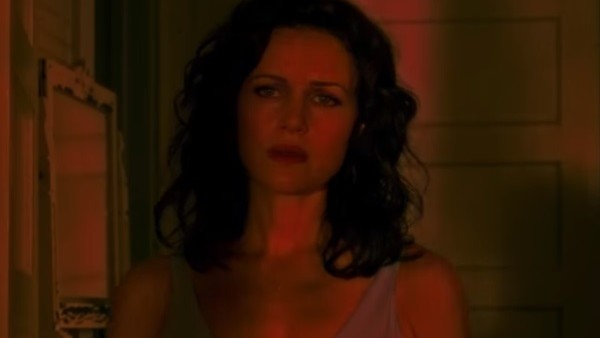
Because apparently having Carla Gugino handcuffed to a bed for 100 minutes isn't enough to sell a movie, the film does also feature a number of subplots to keep things chugging along.
While for the most part these interludes actually do work (especially the flashbacks to Gugino's character's youth), there's one that sticks out like a sore thumb and honestly feels like it belongs in a totally different movie.
Stephen King fans will probably know exactly which element of the plot this is, adding another level of his very particular brand of insanity, when the film was already doing plenty damn well without it.
Nevertheless, it's a distraction every time it shows up, and feels like it was included solely to do the source material "justice" rather than because it actually worked on screen.
1. The Ending Doesn't Quite Work
For about 90 minutes of its runtime, Gerald's Game is a ferociously taut thriller that makes the most of its cast and single setting, but it unfortunately can't quite stick the landing.
No spoilers here, but once the main bulk of the narrative is tied up, there's an epilogue of sorts tacked on that feels like glorified cutting room floor material.
This ties back to the aforementioned pointless subplot, which figures heavily in the film's denouement, and ends the story on a bizarre, off-kilter note that clashes with the more simplistic focus of the rest of the movie.
Thankfully these issues don't detract too much from what is for the most part a sizzling thriller, so here's everything that works...
Ups
7. Carla Gugino & Bruce Greenwood's Excellent Performances

For the majority, Gerald's Game is a two-person show, with Carla Gugino's Jessie spending most of the film tied to a bed after a sex game goes wrong and her husband, the titular Gerald, dies of a heart attack.
Gugino, a terrific actress who hasn't had too many starring roles throughout her career, resolutely rises to the challenge of commanding the screen for the majority of its runtime. Selling the terror of the scenario and effortlessly easy to root for, it simply proves she's deserving of more high-profile parts.
Then there's Bruce Greenwood as Gerald, who dies early in the first act, but returns throughout as a taunting manifestation in Jessie's mind.
Greenwood, who cuts a far more impressive physique than you probably ever expected, is deliciously salacious and provocative as Jessie's kinky husband, and like Gugino, it's nice to see him having such a front-and-center part.
6. Mike Flanagan's Suspenseful Direction
Mike Flanagan is one of the most impressive on-the-rise horror filmmakers of the last few years, with the likes of Oculus, Hush and Ouija: Origin of Evil making him one of the most reliable and consistent young directors in the genre.
Gerald's Game just might be his best work to date, with Flanagan clearly being left to his own devices by Netflix to make exactly the movie he wanted to.
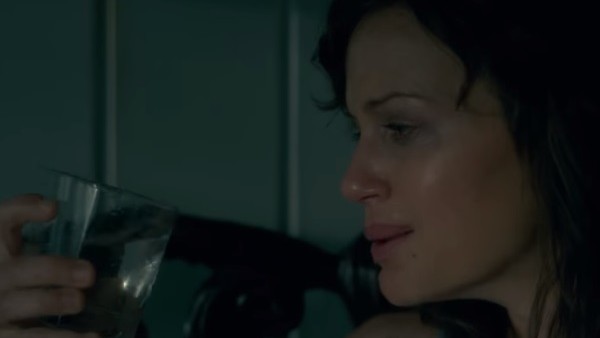
Flanagan does a fantastic job milking Jessie's desperate scenario for every drop of suspense it's worth, be it trying to reach her mobile phone with her foot or grabbing a glass of water to stave off dehydration.
The deliberate pace and generally low-key approach pays off dividends in terms of creating a consistent layer of suspense and intrigue.
5. The Tone Is Perfect
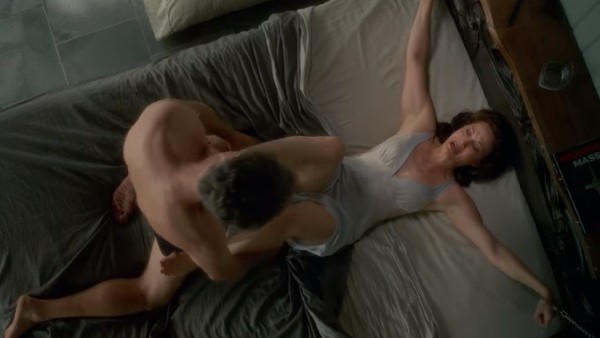
Nailing the right tone for a movie like this can't be easy, but Flanagan (who also co-wrote the movie) has done a great job finding a keen balance of light and dark.
Yes, there's a lot to wince at here, but Flanagan doesn't forget to exploit the inherent ridiculousness of the scenario, with some well-placed dark humour preventing things from getting quite too dour or morbid.
Granted, sometimes you'll probably end up laughing nervously at the twisted nature of King's tale, but it all helps take the edge off a story that might otherwise be too unbearably lurid for its own good.
4. It's Twisty & Psychologically Complex
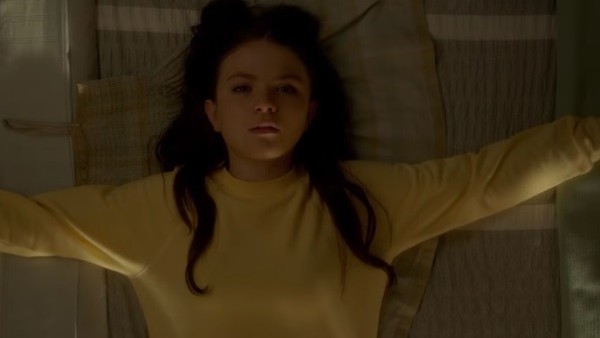
With its lack of jump scares, (mostly) restrained approach to gore and lack of CGI monsters, the film derives most of its terror and intrigue from the psychology of the situation, which is clever, nuanced and deeply disturbing.
For one, the film examines the nature of marriage, love and sex in near-satirical fashion, but far more prominently, it explores Jessie's problematic youth through a series of incredibly unpleasant flashbacks.
Though these sequences could easily have been hopelessly simplistic, they actually inform Jessie's current scenario in a genuinely interesting way.
And that's without mentioning all of Jessie's hallucinations, seeing both herself and Gerald talking to her as she remains chained to the bed. It's all totally bonkers, but it slots together extremely well and never feels too ridiculous or daft for its own good.
3. The Unsettling, Minimalist Sound Design
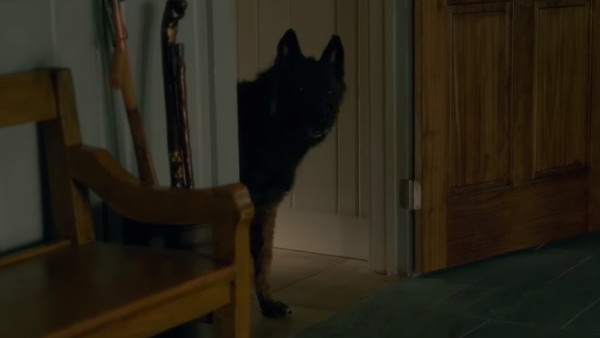
One of the most remarkable things about the film is its scaled-back, minimalist approach to sound. There isn't much in the way of a musical score throughout, as would probably be demanded by a conventional movie studio, with the silence only emphasising Jessie's isolation.
The sound editing, though, is absolutely superb, and while giving away the movie's more grotesque moments would be a crime, the use of sound during these moments is incredibly gnarly to say the least.
Had the movie come with a bombastic score, they no doubt wouldn't be as shocking and repulsive as they are. If you're able to watch the film with headphones, definitely make sure that you do.
2. It's Really, Really Messed Up

Anyone who's read King's book will know quite how intensely screwed up this story is, and now Netflix subscribers will get to see it for themselves.
Make no mistake: Flanagan hasn't shied away from the more disgusting aspects of the novel, particularly one unforgettable scene that's going to have many gagging and turning away from the screen.
That's just the physical, visceral aspect: there's also the aforementioned psychological issues to sift through, ensuring that though Gerald's Game isn't exactly a pleasant date movie, it is extremely effective as a stomach-churning experience, which is presumably exactly what was intended.
1. It's One Of The Better Stephen King Adaptations

And finally, though The Dark Tower disappointed just about everyone back in August, the last month has been a pretty good time to be a Stephen King fan.
After It blew everyone away a few weeks ago, King fans now have another hugely successful adaptation to savour, one that honestly might be one of his best to date, certainly in terms of his strict horror works.
Fingers crossed that Netflix actually promotes the film rather than just quietly dumps it and never speaks of it again, because it absolutely deserve to be seen by as many people as possible.
Needless to say, with King's novella 1922 due to hit Netflix next month, it looks like the streaming platform could be a safe haven for the author's more low-key works.
What did you think of Gerald's Game? Shout it out in the comments!