Glass Review: 5 Ups & 5 Downs
The best and worst of M. Night Shyamalan.

After almost two decades in the making, the climactic entry into M. Night Shyamalan's most unexpected superhero trilogy is finally among us.
And though the Oscar-nominated filmmaker appeared to be regaining his critical favour following back-to-back hits in The Visit and Split, Glass is sadly yet another ding for the divisive director.
To be completely fair to the movie, it's certainly not among the worst efforts of his career, but probably sharing the closest DNA with The Village: an ambitious and mysterious film which takes some bold chances that don't really pay off.
Shyamalan deserves mild credit for not taking the most predictable path possible, but the end result is ultimately an unsatisfying hodgepodge of half-developed ideas elevated by the (mostly) strong performances of the cast.
With its inevitable box office success, Glass shouldn't do much damage to Shyamalan's career, though if you were hoping it would cement the director's creative renaissance, prepare to be left wildly underwhelmed.
If you go in with appropriate expectations, however, there are certainly things to enjoy here. But first, the downs...
Downs...
5. The Messy & Contrived Plot

Easily the biggest problem with this film is its script, for though Shyamalan is a filmmaker bursting with interesting ideas, he rarely manages to parlay them into a fully coherent whole.
From a contrived opening sequence which sets the rest of the movie in motion, you really have to just roll with Shyamalan's general reliance on coincidences and characters wilfully holding the idiot ball for the sake of the plot.
Though there are some meaningful additions to Unbreakable's mythology, the film does a pretty clumsy job following up Split, fundamentally re-shaping the dynamic between Kevin (James McAvoy) and Casey (Anya Taylor-Joy) to miscalculated and arguably even problematic ends.
It's clear that Shyamalan had a million different ideas swirling around in his brain for Glass, yet the overall feeling is that he just grasped a few at random and threw them in a blender.
The end result is a thoroughly sloppy film that frequently invites the viewer to question its already slippery internal logic.
4. Bruce Willis Is Totally Wasted

Perhaps the biggest question surrounding this movie pre-release was the presence of Bruce Willis, who hasn't really acted like he cared since 2012's Looper, and who many feared would just phone in his performance here.
Though Willis actually doesn't just sleepwalk his way through Glass, the depressing reality is that he's also not really given much to do at all, maintaining a low level of energy throughout and suffering from a fatal lack of character development.
A lot has changed in David Dunn's life since Unbreakable, but Glass pushes him to the periphery for large chunks of its runtime such that he's rarely explored with much depth or intrigue.
While Kevin was always going to be the star of the show, it's frustrating that this is the best material Shyamalan could come up with for the supposed hero of this trilogy.
3. The Sluggish Second Act

The middle-act of Glass is set almost entirely within the penitentiary where Kevin, David and Elijah (Samuel L. Jackson) are being held, and though it does prove intermittently entertaining, it's also poorly paced and just a bit redundant.
Much of this portion of the film revolves around Dr. Staple (Sarah Paulson) deliberating with the three men about the nature of their "delusions", except because the audience knows that these three men truly are super-powered, it ends up ringing totally hollow dramatically.
A few minutes devoted to this would've been fine, but scene after scene digs into it, in turn bloating the runtime out to an unnecessary 129 minutes.
The elongated second act also feels like an attempt to keep the budget low, confining the three actors to a single location and rarely featuring them together.
Willis in particular suffers in this portion of the film, perhaps because Shyamalan's $20 million budget would only stretch so far.
2. The Dialogue Is Frequently Terrible

Shyamalan's strength has never really been crafting strong dialogue, and that holds firm in Glass.
There are so many clunky, dunderheaded lines in this film, and though the cast tries their damnedest to make them all work, the robotic abundance of exposition may well leave you chuckling if not rolling your eyes.
The writer-director also doubles down on over-explaining the film's themes, literally having numerous characters point out what a scene means within the context of comic book lore.
Oddly, though, apart from a few sparse lines from Staple hinting at pop-culture's general obsession with superheroes these days, Shyamalan doesn't even bother confronting how the genre has changed since the release of Unbreakable. It wouldn't have been subtle, but at least it would've been interesting.
This is proof perfect that Shyamalan could really do with getting himself a writing partner capable of cutting through all the heavy-handed dialogue.
1. The Ending SUCKS
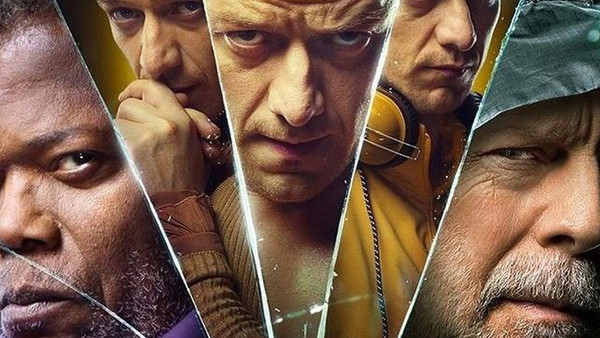
No spoilers here, but prepare to be left shocked (in a bad way) and underwhelmed by how Glass wraps up.
Despite the promise of an epic, super-powered showdown, the film concludes on a baffling whimper that, while expectation-defying, commits a cardinal sin and does one of the few things Shyamalan just wasn't capable of getting away with.
There are neat ideas there, for sure, but most of the focal characters don't have their arcs paid off in satisfactory fashion, leading the audience to wonder exactly what Shyamalan intended to imply in the film's goofy final moments.
Expect the film to have its defenders who will praise the filmmaker for committing fully to a singular vision, but it's just a shame that vision seemed hell-bent on leaving as many people as disappointed as possible.
Glass sadly isn't a fitting follow-up to Unbreakable and Split, then, but it's also nowhere close to a total bust. Here's everything that actually works...
Ups...
5. James McAvoy's Incredible Performance

To the surprise of just about nobody, James McAvoy steals every scene he's in as Kevin Wendell Crumb aka The Horde, expanding on his brilliant Split performance by presenting far more of his two-dozen different personalities to the audience.
Seeing McAvoy switch between several personalities in the same shot is a magnificent testament to his acting chops, to say nothing of his physical commitment to making The Beast every bit as terrifying as his name implies.
Even when the material falters, McAvoy's work is beyond reproach, even if he's sadly unable to keep the film afloat when it crumbles to mush in the third act.
It's certainly not the sort of performance (or really, the sort of movie) to win major awards, but McAvoy gives a world-class performance in a film that doesn't really deserve him.
4. The Clever Unbreakable Callbacks

As Shyamalan confirmed before the release of Glass, he includes a couple of deleted scenes from Unbreakable in the film, employed to impressive effect to lend further context to the characters of David and Elijah.
These sequences are seamlessly spliced into the newly shot footage and don't just feel like cheap nostalgic tricks, while another moment later on seamlessly re-inserts one of Unbreakable's most iconic moments, resulting in a shockingly clever callback.
Though Glass isn't a worthy Unbreakable sequel overall, these small moments are certainly crowd-pleasing ones, and see Shyamalan temporarily making the most of his pre-established lore.
3. The Twists Are Sometimes Effective
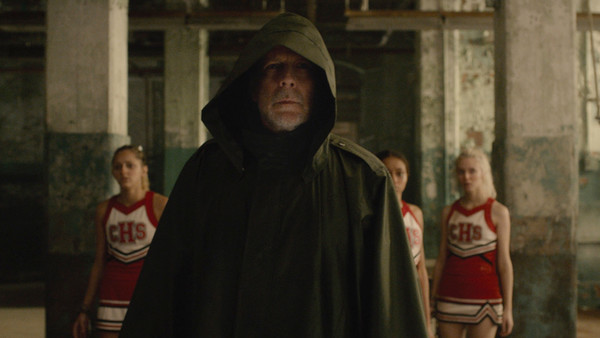
Again no spoilers here, but it won't be much of a surprise to learn that Glass is a film jam-packed with twists and turns.
Though not all of them work and some verge on the wrong side of silly, most of them are thankfully more low-key than a typical Shyamalan mind-blower.
There's one third act reveal in particular that's really quite effective, re-contextualising a prior event through a new lens in a way that deepens the central character dynamics.
It proves that while Shyamalan does go back to the "gotcha!" well a few times too many in Glass, he's still not beyond coming up with a diverting, well-executed reveal that trades shock value for emotional gratification.
It's just a shame there wasn't more of that throughout the movie.
2. The Solid Supporting Cast

In addition to McAvoy, the vast majority of the movie's cast not called Bruce Willis is actually pretty well-served here.
Though it's disappointing that Samuel L. Jackson is basically a supporting cast member due to being sidelined for half the movie, he reprises Elijah Price's eccentricity with delicious vigour when the time finally comes.
Also especially praise-worthy is Sarah Paulson, who makes Dr. Staple an intriguing, ambiguous foil for the three central characters, taking full advantage of her natural dramatic gravitas.
Elsewhere it's nice to see Spencer Treat Clark reprising the role of David's son Joseph, while Charlayne Woodard is once again a charming fit for Elijah's mother, and Anya Taylor-Joy tries her absolute hardest to make even the more questionable aspects of Casey's role convincing.
That's the thing: pretty much everyone here is really trying, so it's extra disappointing that the end result isn't more enticing.
1. West Dylan Thordson's Musical Score

And finally, credit is certainly due to returning composer West Dylan Thordson, who delivers an evocative and memorable musical score.
While Thordson surprisingly doesn't make much use of James Newton Howard's iconic Unbreakable theme aside from a few quick teases, the leitmotif of a ticking clock certainly helps ramp up the tension at pivotal moments, not unlike Hans Zimmer's score for Dunkirk.
Though Thordson hasn't come up with anything as enduring as Howard's work, it's still a rock solid build on his Split score and one of the film's easy stylistic highlights.
What did you think of Glass? Shout it out in the comments!