Godzilla Review: 10 Reasons It Missed The Mark

It's still better than the 1998 version!

Godzilla, the most famous giant lizard monster in all of popular culture, first debuted back in 1954 when Japanese production company Toho used the skyscraper-sized behemoth as an allegory for the devastation caused by nuclear weapons. The film - now cited as a classic of Japanese cinema - was followed by a series of sequels (27 to date); some good, some bad, some downright laughable. And then, in 1998, Hollywood decided it was time to unleash the beast for themselves to terrible results. A critical flop, the movie felt like an epic missed opportunity. Now, sixteen years later, Godzilla returns our screens in a movie directed by Gareth Edwards, who showed audiences that he knew a thing or two about massive creatures with his debut feature, the aptly titled Monsters. Starring Aaron Taylor-Johnson and Bryan Cranston, the latest movie to tackle the Godzilla myth is a visual treat, and offers fans some of the most rousing sequences in the canon's mythology thus far (read our review here). Unfortunately, it's also something of a mess; for all that's good about Godzilla, it's a largely disappointing film. Join us, then, as we take a close look at 10 reasons why the latest Godzilla movie failed to meet our high expectations. Hey, at least it's better than the Matthew Broderick version (but what isn't?). Please note that this article contains major spoilers; read on at your own risk.

10. Not Making Bryan Cranston The Main Character

Bryan Cranston makes everything better. This is a generally accepted fact. And it's true to say that Godzilla might have proven to be a little more riveting - and a lot more human - had the filmmakers opted to make his character, Joe Brody, the main character, instead of a secondary one. Not only is Cranston (hammy as he is) the most appealing and sympathetic character in the film, he's also the one who provides it with its emotional core - it's his wife who dies at the beginning of the movie, and he wants to solve the Godzilla mystery as a result. Perfect! Instead, the filmmakers kill off Cranston at the end of the first act, giving the spotlight to his son, Ford, played by Aaron Taylor-Johnson (more on him next). The problem with this shift is that we've followed Joe, not Ford, through the film's opening sequence where an accident at his workplace - a power plant - leaves his wife dead; he's the one who sets the plot in motion when Ford comes to Japan to get him out of jail for sneaking into a quarantined zone. Quite simply, he's the driving force behind the film's events; the character we should have rooted for.

9. Bland Hero

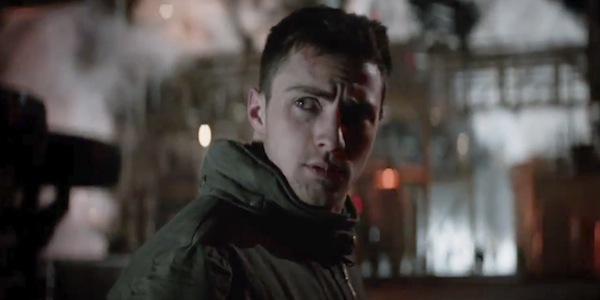
With Cranston's Joe Brody out of the picture, then, the film firmly establishes that his son, Ford, will be taking on the role of protagonist. This might've been fine, had Ford Brody been interesting in any way, shape or form. There was potential, of course; having returned from the military overseas, Ford arrives home to see his wife (Elizabeth Olsen) and son, before he's suddenly whisked away again to Japan to move the plot along. But all we get to establish his "character" is a scene where he briefly tucks his son into bed, and then kiss his wife. Hm. At this point, it might have been interesting to explore Ford as a human being - you know, to give us something so that we might identify with him. Unfortunately, his character is about as developed as one of the buildings Godzilla knocks down in the climax. He's been branded with traits like "soldier," "father" and "husband" but has no discernible personality to go with them; he's like a template of an action hero character, and Taylor-Johnson plays him with all the enthusiasm of a shoe, like he's got better things to do. A terribly forgettable main hero!

8. So Much Exposition!

Perhaps the most disconcerting - and surprising thing - about Godzilla is the sheer amount of exposition that it attempts to drive home for two acts. The first act of the movie, in fact, is made up of only characters telling each other things for the purposes of the plot. After a while, you begin to think to yourself: "All this for a movie about a giant lizard that attacks things?" Which is to say, it's admirable that the filmmakers wanted to set up a mythology and reasons for Godzilla to exist, but did they have to convey that in scene after scene of people just talking plot? What's more, listening to Ken Watanabe and Sally Hawkins' scientist duo talk becomes so inane that the movie threatens to become actually boring. Watanabe, through what feels like sheer luck alone, manages to imbue his dialogue with a certain amount of gravitas ("We call him Godzilla" clings to a fun delivery - it also feels like it's in the wrong movie), but Hawkins has been noticeably shortchanged; her character might has well have been called "Sally Exposition." All she does is ask questions and clarify plot points - almost to the point of total parody.

7. Paper Thin Characters

And it's not just Taylor-Johnson, Watanabe and Hawkins who play paper thin, archetypical characters: everybody does. It's almost as if screenwriter Max Borenstein purposely set out to write a screenplay containing characters with absolutely no personalities for a dare: everyone just plays their job. We get "scientist," "other scientist," "soldier," "mean soldier," "wife," "kid," just like in a lot of generic blockbuster movies; the difference here is that you come away from the movie knowing absolutely nothing about any of them. Seriously: nothing. Sure, we know that Elizabeth Olsen's character is a nurse because she wears scrubs and we know that she loves her son because she looks like she does, but the movie never offers up anything else; she's a template, the sort of character any good screenwriter knows to avoid. What does she like? What are her fears? Ask these questions of anybody in the movie and you'll come up short. It's entirely possible that Godzilla's cast of characters are the most underdeveloped bunch in blockbuster memory; empty shells, every last one of 'em.

6. Not Enough Godzilla

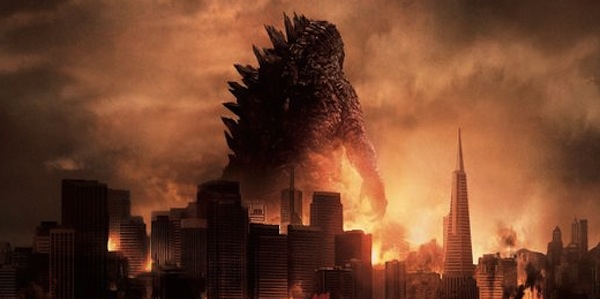
Perhaps the downright oddest thing about Godzilla is the lack thereof, almost as if the budget dried up unexpectedly before the filmmakers had rendered his scenes and only had enough money left to include the iconic beast for 10 minutes. Because that's all the time you really get with the eponymous creature. Instead, much of Godzilla is focused around that of the Muto (Massive Unidentifiable Terrestrial Organisms), a pair of flying cockroach creatures who awaken with plans to breed and cause mass devastation; Godzilla appears much, much later, almost in a cameo variety. It makes sense that the movie establishes an enemy in such detail, given the route that the director and screenwriter have opted for here - what doesn't make quite as much sense, however, is the way in which you feel like you learn a lot more about the Muto than you do Godzilla; almost as if the movie might have been better and more accurately titled "Muto: Godzilla For A Bit" instead, just for clarification. When Godzilla does appear, it's great, but for a two hour movie, roughly 10 minutes spent with the big man is highly disappointing, to say the least.

5. Tonally Inconsistent

Godzilla is a fairly difficult property to "update" to current movie-going tastes: where is one supposed to draw the line between seriousness and tongue-in-cheek? Is it better to shoot for one tone, or a bunch of different ones? Is it, in fact, completely futile to attempt to make a sincere Godzilla movie in modern times, considering the inherently goofy nature of the material? These are the questions that the filmmakers associated with the latest Godzilla must have asked themselves. Unfortunately, it doesn't seem like they came up with any answers. Which is to say: Godzilla tries desperately to be serious, but also flirts with the idea that, hey, this is Godzilla, so we can't be too serious, right? whenever things threaten to get too straight-faced. The problem with this is that the movie never knows how to react to itself. Is it self-aware? Are we supposed to find the situation funny? None of the characters are laughing or joking about the fact that a giant lizard is attacking San Francisco, so are we supposed to, despite the fact that we're tempted? All the inconsistency makes for a jarring filmic experience.

4. Messy, Overwritten Plot

The script for Godzilla is credited to one person, Max Borenstein, but we know that it was worked on by at least three other people, including Frank Darabont of The Shawshank Redemption fame. We bring this up because the movie feels exactly like it's the product of a committee in the same way that World War Z did; the plot doesn't gel like it's been derived from the mind of one person, but as though several human beings have thrown their two cents into the pile and everybody's ideas have been both compromised and taken into consideration all at once. So despite the fact that we have a plot about a giant lizard, we spend two acts establishing a backstory for no real good reason - it adds nothing much to the film, and yet the characters keep talking in circles about it. Then there's the ham-fisted political angles which the movie comments on and fails to expand upon (we learn that Watanabe's character's father probably died in Hiroshima, but it's never discussed further - so what?), and the bold, bombastic statements about humans not understanding nature, all wrapped in a messy, convoluted plot.

3. Godzilla's Motives Are Too Murky

The most interesting thing about this entry in the Godzilla canon is, quite simply, that Godzilla isn't really the bad guy; despite the fact that the trailers and our own expectations sort of conditioned us to believe that the lizard king would rise out from the depths of the Earth to unleash hell upon an unsuspecting human race, the movie treats him as a far more ambiguous character; by the end of the film, in fact, Godzilla is pretty much rallied as a hero. Annoyingly, the script doesn't deal with Godzilla as a "character" in any way at all; he's still a blank canvas. So Ken Watanabe's scientist spends much of the movie claiming that Godzilla must be left to fight against the plainly evil Mutos in order to "restore the balance." Okay... that's interesting, right? But how does Watanabe know about Godzilla's motives? Why aren't they expanded on? And why does Godzilla attack humans and smash skyscrapers in some scenes, only to reveal himself as a hero in the end? The blurry nature of Godzilla's motives seems like lazy screenwriting; why does he help us? He should have been made more compelling, not more confusing.

2. Abrupt Ending

Going back to that ending, then; when all's said and done, and Godzilla has lazer-beamed the head off of the final Mutos, he falls down, apparently dead. Ford is reunited with his family, the day is saved... and then Godzilla, covered in rubble, stands up, stomps over to the ocean, and dives on in, whilst a news channel overlay begs the question: "Is Godzilla The Saviour Of Our Times?" This feels like it's played with B-movie intentions, completely at odds with the rest of the movie. And then Godzilla slinks beneath the surface of the water, and end credits! It's not the worst ending of the world, but it does absolutely nothing to excite or provoke discussion. "Oh, so the human race realise Godzilla isn't all the bad" isn't enough to justify a good ending hook, because we already learned that 30 minutes ago - the movie told us that there might be more to Godzilla than meets the eye when he returned completely of his own accord to help mankind against the Mutos, after all. But once the final battle is done, the movie is over far too quickly; we don't even get to find out what happened to half of our main characters!

1. It's Just Not Enough Fun

Solemn. That's probably the best word to use to describe this movie. And although a bit of broodiness can often go a long way, given the right picture, Godzilla isn't perhaps the best movie to fall into this sort of mood; after all, a motion picture about a huge lizard knocking down skyscrapers and battling other equally gigantic monsters should convey a sense of fun... it should have you reeling with excitement, giddy to see what happens next. Sadly, Godzilla never really taps into those emotions; it's too sincere, too desperate to be taken serious for its own good. So what it could have used, really, is an added dosage of the fun factor; though parts of it are certainly enjoyable, coming out of the theatre it's all mostly forgotten. Granted, it's terrible, but even the awful 1998 version of Godzilla managed to have a bit of fun with the premise (though one could certainly argue it had too much fun). Finding such a balance in a movie of this nature is hard, of course, but Pacific Rim - which clings to any equally ridiculous plot - managed to create a sense of fun. With Edwards' flick, they fun times are simply few and far between. What do you think? Let us know in the comments section below.

Contributor

Sam Hill is an ardent cinephile and has been writing about film professionally since 2008. He harbours a particular fondness for western and sci-fi movies.