Golden Globes 2021 Review: 8 Ups & 6 Downs
This year's Golden Globes was part-disaster, part-triumph.
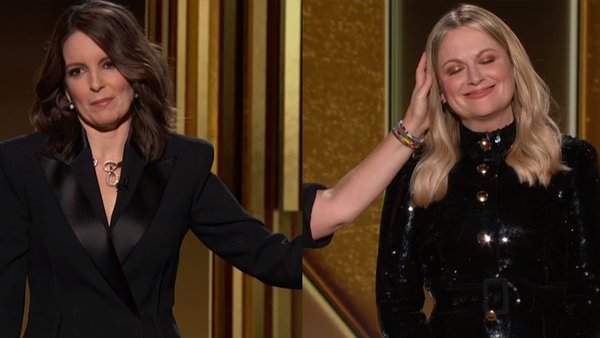
Above all else, this year's Golden Globes ceremony is likely to go down in history as its strangest yet.
The ongoing pandemic naturally made a conventional jam-packed awards show impossible, forcing producers to pivot to a hybrid of socially distanced in-person presentations and video links to nominees in their homes.
Unlike the Emmys, which sent professional camera equipment to all nominees, the Globes was a decidedly more ramshackle affair, relying instead on Zoom calls and nominees' personal Internet connections, which unsurprisingly ensured the night ran anything but smoothly.
Dropped connections and poorly mixed audio was just the beginning of an exceptionally odd Golden Globes show, which with its more reserved tone and lack of booze-soaked acceptance speeches lacked a little of its typically grandiose lustre.
The winners list was meanwhile a wildly mixed bag of worthy victors, pleasant surprises, and baffling selections, and the night as a whole had an undeniably dour pall cast over it per a recent expose of the awards' voting body, the Hollywood Foreign Press Association.
Between dubious journalistic ethics and the revelation the HFPA hasn't had a Black member in at least 20 years, much of the night saw presenters and winners alike dunking on the Globes' lack of inclusion, underlining the ceremony's bafflingly high esteem in the industry.
Nevertheless, the Globes are an undeniably significant stop on the road to the Oscars, and if nothing else, the show suggested this year's Academy Awards are anything but sewn up...
Downs...
6. The Virtual Ceremony Is A Glorious Disaster
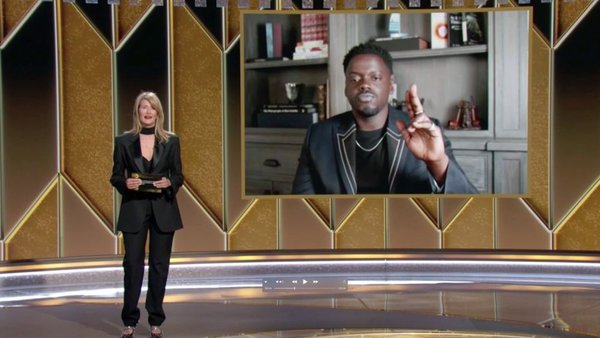
The major upside of this year's remote ceremony was that it allowed winners to celebrate their awards with their closest family members in tow, but the flipside is that the lack of a holistic, professional production gave the show a mangled, Frankensteined feel.
Things got off to a dodgy early start when Best Supporting Actor (Film) winner Daniel Kaluuya suffered from a dropped audio connection while attempting to accept his award.
The issue was fixed quickly enough, but this and other issues - namely so many nominees using their phones or low-quality webcams - made it painfully clear the Emmys had the right approach, by sending bespoke professional video equipment to every nominee.
It also didn't soothe the awkwardness that the producers so often decided to linger on the "losers" awkwardly watching the winner's acceptance speech.
Tellingly, the more traditionally produced elements of the show were more successful, namely having Tina Fey and Amy Poehler co-host from separate coasts, resulting in an amusing split-screen gag designed to give the impression they were in fact sharing the same space.
Overall it's safe to say that just about everyone will be all-too-happy to (hopefully) return to a more typical Golden Globes ceremony next year.
5. The Baffling Movie Actress Winners
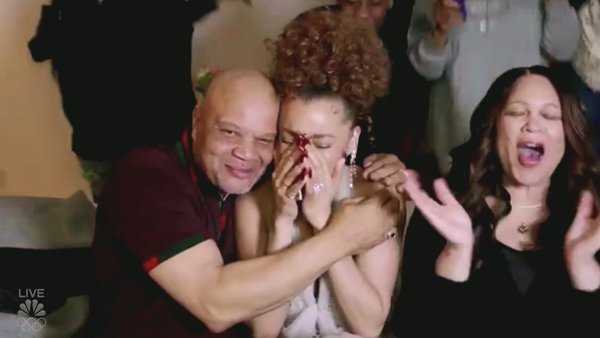
Though the HFPA awarded a number of truly deserving winners, their selections in all three cinematic actress categories raised many eyebrows among viewers.
For starters, Borat Subsequent Moviefilm's Maria Bakalova, the widely expected winner of Best Actress (Musical/Comedy), was beaten by Rosamund Pike for I Care A Lot. Pike's performance is rock solid, no question, but this really felt like Bakalova's to lose.
Next, Amanda Seyfried, whose performance in Mank has been a buzzed-about favourite all awards season, was pipped to the post for Best Supporting Actress by Jodie Foster's turn in The Mauritanian, a film whose major awards hype quickly cooled.
And in perhaps the most unexpected win of the entire evening, Andra Day scooped Best Actress (Drama) for The United States vs. Billie Holiday, beating out frontrunners Carey Mulligan (Promising Young Woman) and Viola Davis (Ma Rainey's Black Bottom).
This isn't to disparage Day's performance at all, but the film itself is so thoroughly mediocre that it actively works against her, such that it's tough to view her win as worthy compared to the more unqualified successes of Mulligan and Davis' performances.
4. The HFPA's Hollow Statement On Diversity
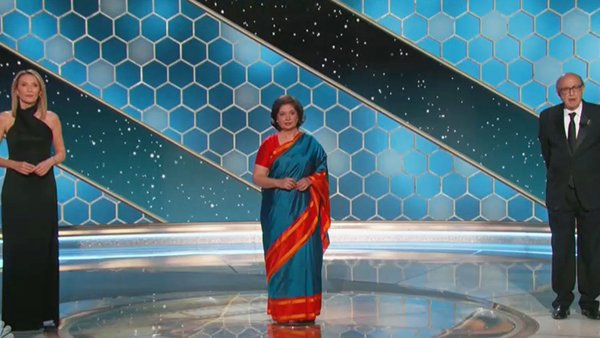
The HFPA themselves needed to address the recent concerns about the organisation's lack of diversity, and so president Ali Sar took to the stage with former president Meher Tatna and VP Helen Hoehne to promise that Black representation would be a priority moving forward.
Unfortunately it came off more as limp, reactionary lip-service than a genuine attempt to better the organisation's shaky standing, especially as Sar himself simply offered up the hollow platitude, "Thank you, and we look forward to a more inclusive future."
While there's little doubt the HFPA will introduce a few arbitrary Black members to their outfit before next year's ceremony, it'll take far more than that to believe the organisation is really interested in diversifying its membership.
3. Mank Gets Totally Shut Out

Despite being the most-nominated movie of the night, David Fincher's Netflix drama Mank failed to secure a single win from its six nominations, going home empty-handed in a result which might be foretelling its impending Oscars fate.
This year's extended awards calendar has made it tougher for films to maintain momentum, and it's becoming increasingly clear that Fincher's acclaimed drama is perhaps the worst-suffering victim.
Though Mank will likely be nominated for a slew of Oscars in a few weeks, its Globes performance may well be setting it up to become the perennial bridesmaid of this year's awards circuit.
Again, given that Amanda Seyfried seemed like a Best Supporting Actress lock not too long ago, the fact that her momentum has drained so drastically doesn't paint a hopeful picture for the film's ongoing awards chances.
2. The Cringe-Worthy Kenan Thompson/Maya Rudolph Skit
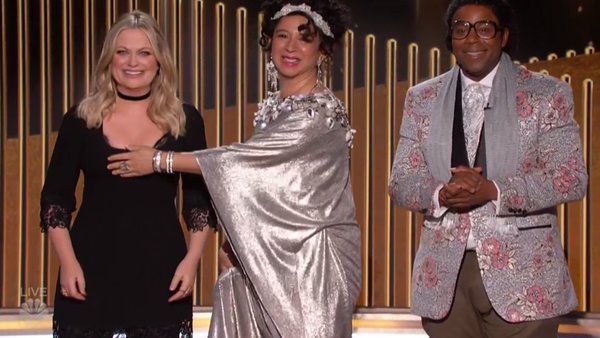
Comedy skits at awards ceremonies are always a wildly mixed bag, and this year's Golden Globes were no exception.
Sadly the low-point of the night saw Kenan Thompson and Maya Rudolph teaming up to perform a wildly over-extended bit where they parodied embarrassing, sloppy awards acceptance speeches, taking to the stage to accept the fictional "Least Original Song" award.
Unfortunately this parody of grandiose, boozy acceptance speeches forgot to be funny, and a joke about COVID being a hoax came off as rather tone-deaf given that the show's socially distanced live audience was comprised entirely of frontline healthcare workers.
Thompson and Rudolph are usually hilarious, but this felt like an SNL off-cut which never should've made it to air. Perhaps in a packed theatre full of celebrities it might've played better...
1. The Over-Eager Play-Off Music
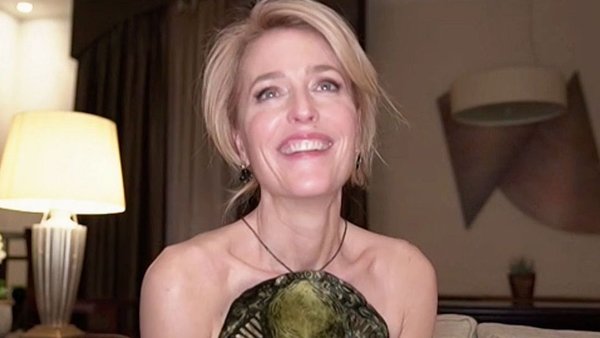
Perhaps the most common criticism of modern awards shows is the tendency for trigger-happy producers to play music in an attempt to usher winners off the stage when it's deemed that they're hogging the spotlight for too long.
This approach rarely goes down well during in-person awards shows and the effect is only amplified in a remote ceremony, where winners freely ignored the play-off music and, thankfully, went on as long as they needed to.
Nevertheless, the attempts to rush winners along felt especially egregious this year, with Nomadland director Chloe Zhao getting hit with the music mere moments into her Best Picture acceptance speech. Like, really?
All these notable issues accepted, though, the night certainly wasn't all bad, and it actually got plenty right. Here's what the HFPA didn't screw up...
Ups...
8. The Pleasant Surprises
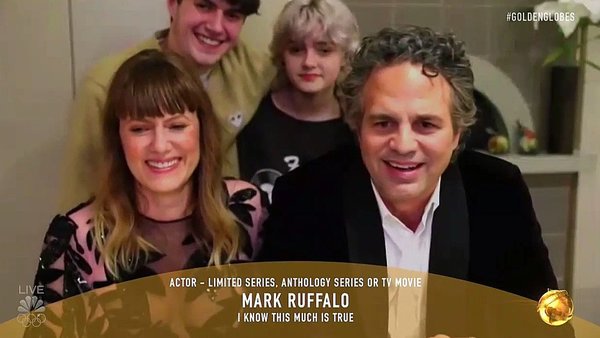
Though there were certainly some head-scratching surprises throughout the night, there were also some agreeably unexpected winners.
The night started out with Daniel Kaluuya winning Best Supporting Actor (Film) for Judas and the Black Messiah, an award which could so easily have gone instead to Sacha Baron Cohen for The Trial of the Chicago 7.
Next, John Boyega won Best Supporting Actor (TV) for his turn in the Small Axe episode "Red, White and Blue," when many had already pegged the category for either Brendan Gleeson (The Comey Rule) or Dan Levy (Schitt's Creek).
But the most fist-pumping surprise came for Mark Ruffalo, who won Best Actor (Miniseries/TV Film) for his sublime turn in I Know This Much Is True, beating out widely expected winner Hugh Grant for his fine work on The Undoing. That this was Ruffalo's first-ever Golden Globe win only sweetened the moment.
7. The HFPA's Lack Of Diversity Gets Called Out
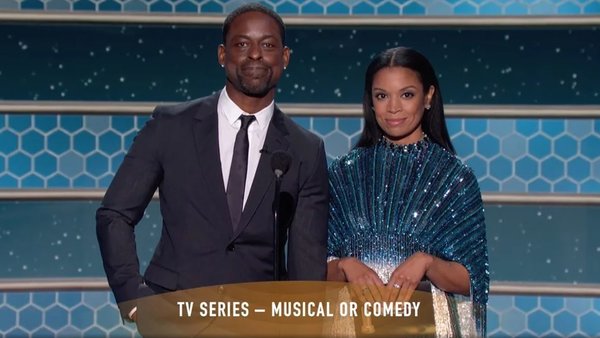
The undeniable theme of the night was the HFPA's lack of Black members, and so numerous presenters and winners took the opportunity to drag the organisation for their staggering lack of diversity.
In their opening monologue, Fey and Poehler themselves took the company to task, Fey saying, "Even with stupid things, inclusivity is important." Later, Sterling K. Brown opened his presenting speech by joking, "It's great to be Black at the Golden Globes."
Elsewhere, the likes of Sacha Baron Cohen, Jane Fonda, and Dan Levy all took notable detours to decry the HFPA's non-inclusive membership and some of the ceremony's more memorable nomination omissions, Levy memorably saying, "I hope that this time next year, this ceremony reflects the true breadth and diversity of the film and television being made today, because there is so much more to be celebrated."
6. Catherine O'Hara Wins Her First Golden Globe
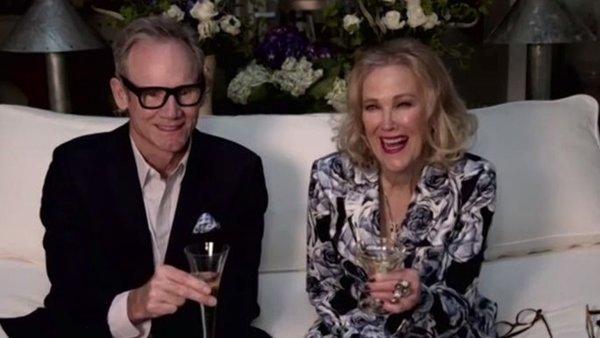
The Golden Globes were something of a victory lap for the Schitt's Creek crew, who last year made Emmy history by scooping all seven major awards in the comedy category.
Though the sitcom secured only two wins out of its five Golden Globe nominations, in addition to winning Best TV Series (Musical/Comedy) the great Catherine O'Hara won Best TV Actress (Musical/Comedy) for her performance as Moira Rose in the show's sixth and final season.
It's an especially poignant victory as it's inexplicably O'Hara's first-ever Golden Globe nomination and win, and O'Hara's fittingly irreverent speech saw her praise creators/co-stars Dan Levy and Eugene Levy: "They created an inspiring, funny, beautiful show in which they let me wear a hundred wigs and speak like an alien."
In an attempt at comedy which puzzled many viewers, O’Hara's husband Bo Welch also periodically blared fake applause from his phone in an attempt to drown out O'Hara's speech. Nevertheless, this was one of the most heart-warming wins of the entire night.
5. Strong Showings For The Crown & The Queen's Gambit
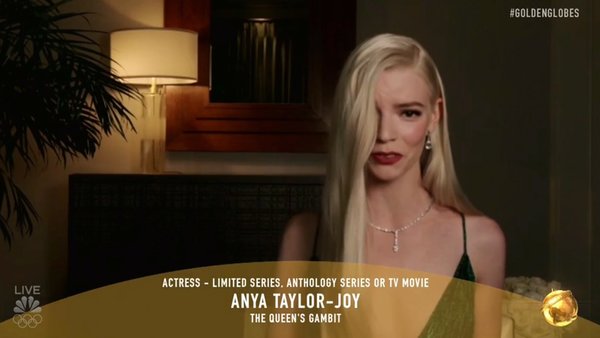
Two of 2020's most acclaimed dramas, The Crown and The Queen's Gambit, boasted exceptionally strong showings this year, dominating the dramatic TV categories and ensuring Netflix won the night with 10 awards.
The Crown won four of its six nominations, scooping Best TV Series (Drama) as well as Best Actor, Best Actress, and Best Supporting Actress (Drama) for Josh O'Connor, Emma Corrin, and Gillian Anderson respectively.
The Queen's Gambit meanwhile won Best Miniseries or Television Film, and star Anya Taylor-Joy scored Best Actress (Miniseries/TV Film).
Despite some rather underwhelming nominees in the dramatic categories this year, it's tough to argue with how thoroughly well-deserved these wins all were.
4. Jane Fonda's Cecile B. DeMille Award Acceptance Speech
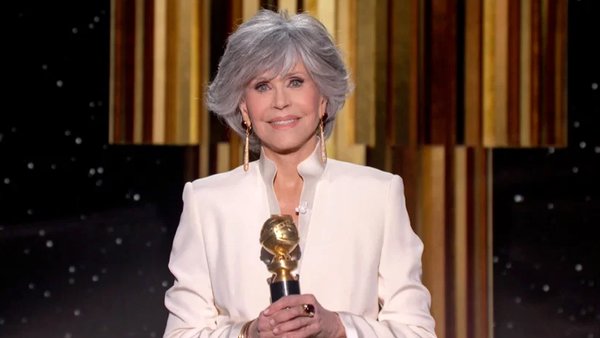
This year's recipient of the prestigious, honorary Cecil B. DeMille Award was none other than the inimitable Jane Fonda, who took to the stage and made the absolute most of her opportunity to address the world.
Fonda, a noted, lifelong activist, spent much of her speech pleading for greater diversity in the film industry, and though not calling out the HFPA directly, it didn't take much reading between the lines to appreciate the sentiment of her words.
Fonda's classy speech concluded with a call for Hollywood to stand up and create a welcoming space for diverse voices, rather than allowing the exclusionary status quo to endure:
"Stories - they really can change people. But there's a story we've been afraid to see and hear about ourselves in this industry. A story about which voices we respect and elevate - and which we tune out. A story about who's offered a seat at the table and who is kept out of the rooms where decisions are made. So let's all of us - including all the groups that decide who gets hired and what gets made and who wins awards - let's all of us make an effort to expand that tent. So that everyone rises and everyone's story has a chance to be seen and heard."
3. Minari Wins Best Foreign Language Film
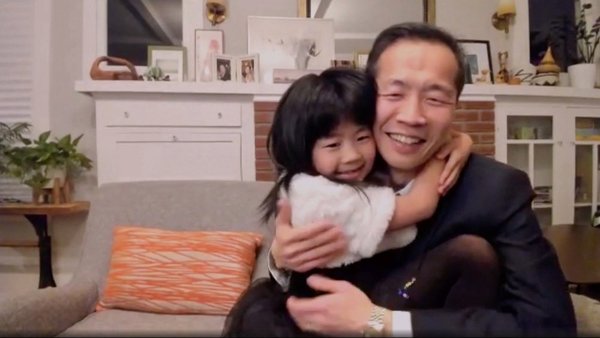
Many were left frustrated that Lee Isaac Chung's drama Minari failed to receive a Best Picture (Drama) nomination due to the Golden Globes' archaic rule against nominating films for both Best Foreign Language Film and Best Picture.
Yet the film nevertheless received a solid consolation prize when it scooped the former prize, leading to an adorable acceptance speech from Chung, carried out while his 7-year-old daughter clung to his neck and whispered, "I prayed! I prayed!"
As baffling as the Globes' ruling is against a film that was financed with American money and is for all intents and purposes an American story, at least Minari got its time in the spotlight, and should fare better where the Academy is concerned (hopefully, at least).
2. Chadwick Boseman's Wife Accepts His Best Actor Award
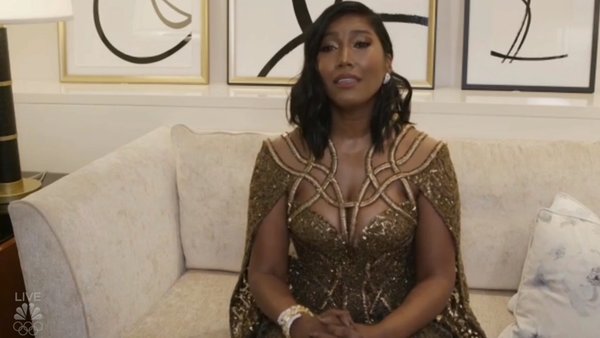
Without question the most heartbreaking moment of the night was Chadwick Boseman's posthumous Best Actor (Drama) win for his performance in Ma Rainey's Black Bottom.
Seeing a mere still image of the late Boseman's face among his fellow nominees remains a surreal sight more than six months after his untimely death, leading his widow, Taylor Simone Ledward, to accept the award on his behalf.
In a deeply moving acceptance speech, Ledward spoke of Boseman's strength and offered insight into what the man himself would've said had he been able to accept the award:
"He would thank God. He would thank his parents. He would thank his ancestors for their guidance and their sacrifices."
With every likelihood that Boseman will repeat with a posthumous Best Actor Oscar win in April, we'll presumably be seeing Ledward again soon.
1. Nomadland Wins Best Picture & Best Director
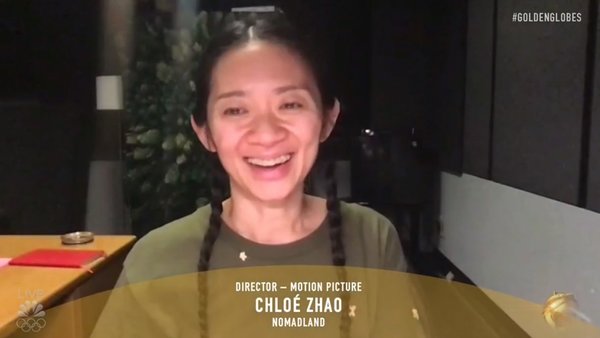
And while the big winner on the cinematic side was hardly much of a surprise, it was still great to see Nomadland scoop Best Picture (Drama) and Best Director wins.
Chloe Zhao's Best Director victory marks just the second time in almost 40 years that a woman has won the big prize, Barbra Streisand previously triumphing for Yentl back in 1984.
The win also made Zhao the first Asian woman to win Best Director at the Golden Globes, and also only the second Asian filmmaker ever after Ang Lee, who scooped wins in 2001 and 2006 for Crouching Tiger, Hidden Dragon and Brokeback Mountain.
Needless to say, Nomadland's status as the Best Picture Oscar frontrunner just got further entrenched, and it's becoming increasingly unlikely that anyone will derail Zhao's path to the Best Director award either. You love to see it.