Harry Potter: 10 Changes From The Books That Ruined The Movies
Did they even read the books before making the films?

With seven best-selling books and eight movies so successful they have the highest box office gross of any franchise in the history of cinema, Harry Potter stands as one of the biggest media series of all time. And with author J.K. Rowling continuing to publish short stories expanding on the world, and a spin-off, Fantastic Beasts And Where To Find Them, due to hit screens in November, it's fair to say it's not over yet.
From a purely cinematic perspective, however, the series is certainly one that's greater than the sum of its parts, with the inconsistencies and dull moments of individual films overshadowed by the ultimate grand scope and joy of seeing a trio grow from wide-eyed eleven year olds to full grown adults.
One of the biggest strengths is the source; Rowling is an incredibly competent storyteller and world-builder, meaning an adaptation of her work will, at the very least, have a great plot. Which makes it strange that the film-makers would ever want to deviate from them. Yet it's a practice they engaged in at many points throughout the series.
Today, we look at ten of those moments that were either changed or completely omitted for the big screen, that really hurt the quality of the Harry Potter movies in the process.
10. Grindelwald And Dumbledore's Past
The announcement that The Deathly Hallows would be split in two was music to many Potter fans' ears. Although it wasn't the longest book in the series, the final entry contained such a fast-paced plot chock full of exposition that greatly expanded the wizarding world and its past, that a doubled run-time meant there was time to explain everything.
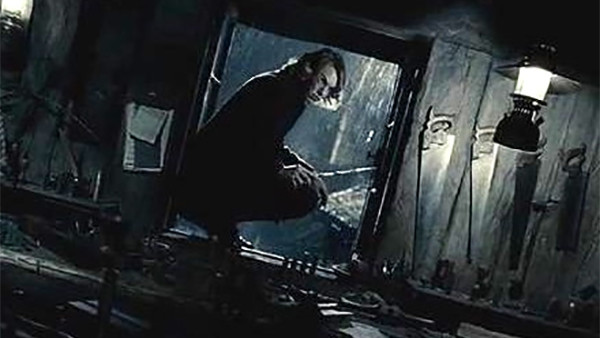
Oddly, some key elements were still totally overlooked. In the book, we learn about Gellert Grindelwald, a Dark Wizard almost as powerful as Voldemort, who had been friends with a young Dumbledore before an altercation led to the death of Albus' sister Ariana. Eventually defeated by the future-headmaster, but not before rallying an army behind him, Grindelwald's story gave reader's their first proper glimpse into the tortured past of Albus Dumbledore.
In the film, Grindelwald merely appears out of obligation, an obstacle between Voldemort and the Elder Wand, and of little significance to the plot. Ariana is likewise side-lined to allow more time for explosions. It's a real shame, although with Fantastic Beasts And Where To Find Them looking at the wizarding world of the early nineteen hundreds, we may still get a film properly exploring Dumbledore's past.
9. Peeves

This has to be the most egregious example of a character being overlooked in the whole series. Peeves the poltergeist is present in all seven books, throughout which he is always wreaking havoc. A more jovial side of the universe, his appearances (getting in the way of our heroes and once being a suspect in the plot himself) provide a change of pace to events.
Intended to be in The Philosopher's Stone, and portrayed by the late Rik Mayall, the character was cut in post production and was never thought of again as the series progressed. In what many view as an attempt to spite/challenge the film-makers J.K. Rowling increased the ghost's prominence in the plot, having him be essential in Fred and George's departure from Hogwarts.
Still, the movies never yielded, always finding a way around his inclusion. He's not necessarily plot essential, but when John Cleese can get fourth billing for playing Nearly Headless Nick, the absence of Peeves is a peculiar moment of negligence in the series.
8. The First Battle Of Hogwarts

The Half-Blood Prince is probably the best book in the whole series, expanding many key plot points that set up the finale while also giving the sixteen year old heroes some proper teenage angst. Unfortunately, much of what made the book so awesome didn't make it across to the big screen adaptation.
We'll expand on the biggest omission later, but for now let's look at the finale. The book ends with Harry and an injured Dumbledore returning to Hogwarts with what they believe is one of Voldemort's horcruxes, only to find the school has been secretly invaded by Death Eaters. In a shocking twist, Snape kills the headmaster and all hell breaks loose as wizards fight through the halls of the school. The film brings to the big screen all the plot, but none of the battle; the closest it gets is Bellatrix smashing glasses in the Great Hall. Sidestepping a massive fight may allow the film to quickly get back to the dead Dumbledore, but it all feels a little anticlimactic.
The scene being absent feels a little silly now. At the time, it was assumed David Yates didn't want to have two consecutive films end with a big fight in Hogwarts, but as the splitting of the final book means there's a film in the middle, we're left with the climax of Half-Blood Prince not being as literally explosive as it could have been.
7. Explosive Deaths

The Deathly Hallows: Part 2 came with several elements that the previous films hadn't contained. Most noticeably was 3D, a gimmick tacked onto the movie that no doubt helped its massive box office haul. The previous film, The Deathly Hallows: Part 1, was nearly in the format itself, but the rushed conversion reportedly didn't look up to scratch (the film is so dark, it's no surprise the dimming effect of those glasses made it worse).
Another strange thing it boasted was a new method of death: exploding. There's all manner of murder throughout the series but the most peculiar and unexplained is the sudden tendency for big villains to disappear in puffs of dead skin. Aside from being a confusing and poorly executed visual effect, this late-in-the-day style choice has a negative effect on the film's tone.
In the final book, the dead Voldemort is plainly described as Tom Riddle, the usage of his pre-Dark Lord name cementing how the evil is defeated. It would have been exciting to see this visually invoked, but instead we get his bizarre disintegration.
6. The Prophecy

Whenever turning a dense work into a brief two-and-a-bit hour feature, it's only natural some of the more meandering plot points would be simplified. As the longest of the books, this is certainly true of Order Of The Phoenix, although it does feel like the more middling teenage elements could have been toned down a little so more focus could be put on the prophecy.
The driving force of the plot (although in a twist of convention the audience and Harry don't realise until the third act), the prophecy foretold of a child who would be capable of defeating Voldemort: a boy, born at the end of July to parents who have thrice defied the Dark Lord. But it comes with a caveat that Voldemort didn't know; he chooses his adversary.
You see, not only Harry, but also Neville Longbottom, fit the description, with Voldemort unknowingly capable of deciding who his opposer could be; it's only going to Godric's Hollow that seals his fate. The film discards the bulk of the Neville chat in favour of foreshadowing a big final showdown between boy wizard and big bad. That's kinda good in the broad sense of the series, but leaves Order Of The Phoenix being another film all about set up.
5. A Shift Away From Lessons

The first three Harry Potter films followed a very rigid structure: Harry's at the Dursleys', Harry goes to Hogwarts, Harry has lessons, Harry realises something's afoot, Harry has more lessons, Harry stops an evil threat, Harry goes back to the Dursleys'. Simple, yet effective.
Goblet Of Fire changed that, not only making Voldemort a real and tangible threat, but also shifting the focus of the body of the story away from the usual rigmarole of lessons. This is pushed to the extreme in the film adaptation, where we only see one class from the entire year at Hogwarts: Barty Crouch Jr. as Mad-Eye Moody teaching about the Dark Arts, a scene that is completely essential to the plot.
There's plenty of other stuff going on in that year, what with the Triwizard Tournament and all, but it set a precedent. From this film onwards, lessons only ever appeared if they were totally essential to the plot later on, making the fact that Hogwarts is a school little more than a chance for a big exposition dump.
4. The Finale
The ending of Harry Potter is testament to J.K. Rowling's story-telling abilities. The Deathly Hallows ties together all the key plot threads from the previous six books, with the final battle between Harry and Voldemort not only being a victory of good over evil and love over hate, but the final step in Harry becoming a man.
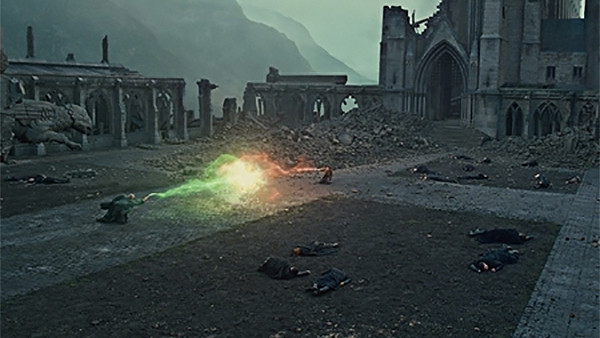
You see, it's not really a battle at all; right from the off Harry knows he's won. In the backdrop of the Great Hall, with the rest of the wizards watching, he reveals to Voldemort that the Elder Wand really belongs to him, and that any fight would result in the Dark Lord's defeat. The finale isn't just a case of who can swing their wand the fastest. The film portrays it a little differently, with a lot of whizz-bang action, followed by a rushed attempt to explain what just happened and... that's it.
The film even transplants the action to a deserted courtyard, which only serves to make it even less impressive. That this scene was so poorly mishandled in the finished film leaves us with the distinct impression that director David Yates really didn't know what he was doing with the adaptation; how can you split a book in two to give focus to everything, then skim over the most important part?
3. Lily's Eyes
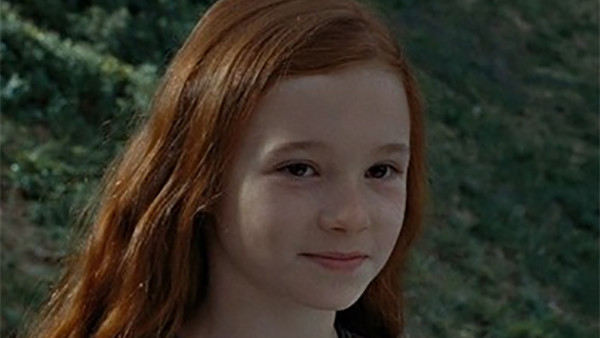
Some changes from the books work much better in communicating the story's message. When Snape dies in print, he merely asks Harry to look him in the eye, whereas on screen he additionally comments, "Harry, you have your mothers eyes," prepping audiences for a massive rug pull. Cut to five minutes later when Harry looks at Snape's memories and discovers the potions' master was in love with his mother all along.
It's an emotional twist, but also completely undoes one of the series' essential running themes; young Lily has the wrong colour eyes. That Harry has his mother's eyes was something commented on by all manner of characters throughout the series and is one of the biggest clues that Rowling knew the major story beats of her narrative from the very beginning. But at some point in the films it got messed up.
Daniel Radcliffe, blue-eyed in real life, didn't wear contacts to turn his eyes green for the role because ramming things in children's eyes isn't OK, even in Hollywood. Fair enough, but then when young Lily was cast in Deathly Hallows they chose an actress with brown eyes. Red heads with blue eyes aren't the most common, but for a massive blockbuster, a proper search is probably worth it. Most perplexing is that choosing a Lily with brown eyes still diverges from the book anyway - her's and Harry's eyes are meant to be green.
2. Forgetting Dobby For Four Movies

Splitting The Deathly Hallows, into two films may have allegedly allowed for more story to be told, but it wasn't devoid of issues. Chief among them was: how do you create two stories that adhere to the conventional three-act structure from a single story that has a clearly defined beginning, middle, and end?
The cynical follow on would be to say, "with great difficultly and questionable results", but to be fair to David Yates, he did a serviceable job in creating the illusion these were standalone entries. It's not perfect though, and that's most noticeable at the end of Part 1, which climaxes with the death of Dobby. You know, Dobby, that character who provided comic relief in that film almost a decade ago and hasn't been mentioned since.
It's the equivalent of having the finale of Return Of The Jedi be the sudden return of Jar Jar Binks; why is this the emotional focal point? A quick cameo at the start of the film doesn't really make the death less contrived. If the previous films had been smart, however, we could have spent much more time with Dobby; in the novels, Goblet Of Fire boasted a major subplot about the welfare of elves, while in Order Of The Phoenix it's him who tells Harry about the Room of Requirement.
1. Tom Riddle's Backstory

Remember when we said Half-Blood Prince was the best book in the series? The central reason why is because it's the book that finally gives us Tom Riddle's back-story, showing how Voldemort became the ultimate evil. So imagine our excitement when the film version looked ready to fully commit to it; the trailers put great focus on delving into Riddle's past.
And... it ended up being two scenes. One with a young Tom already so evil he'd make Damien uneasy, and another that had to be included to fill everyone in on the whole deal with horcruxes. Aside from these two fleeting flashbacks, there's no explanation put in to just who Tom Riddle really is.
While the changes on this list didn't improve the films, in most cases we kinda understand why they were made. Here the shunning of Voldemort's past in favour of the teenage romance that dominates the film seems nonsensical. Rowling's book gift wraps a series of memories that tell the story of the House of Gaunt - dominating patriarch Marvolo (whose ring became a horcrux) and his two children, the repressed mother of pure evil Merope and son Morfin, who would later be framed for Voldemort's murder of the whole clan - that would look brilliant on film, but the entire subplot doesn't even get a slight mention.
Aside from being a cool story, it provides an essential piece of the puzzle; the reason Voldemort can't feel love is because he was conceived while his father was under the influence of a love potion.
-
Did these changes ruin the movies for you? What do you make of the Harry Potter series in general? Head down to the comments and let us know.