Inspirationally Harry Potter is all over the place, with creator J.K. Rowling picking from pretty much every fantasy story ever. It helped create a world that for over a decade readers and viewers fell in love with. And rightfully so; for all the books simplistic writing and the films length it was a joy to be in that world of wizards and witches.
Rowling is always praised for creating a tight story light on plot holes and heavy planning. Now this is where I begin to take objection. Clearly elements of the story was planned ahead, but many of the worlds wider rules are clearly made up on the fly, leading to some pretty irritating discrepancies. This problem is only made worse by the films; with four directors over ten years, numerous problems arose that little effort was made to fix.
Here are ten of the biggest continuity errors in the Harry Potter series. All are present in the film series, but a startling amount come from the source material. Ready to bust open some plot holes? Alohomora!
Honourable Mention - Time Travel Worries
One plot hole commonly brought up about Harry Potter is the presence of the time turner; if the wizards were capable of time travel why didn't they just go back and stop Voldemort back when he was young Tom Riddle?
Well for starters, we dont know how far back you can actually go; maybe the turner has a limited reach. But more importantly, if youre asking that questions youre missing the point of the final act of Prisoner Of Azkaban. When Harry and Hermione travel back in time by a few hours they dont actually change anything - they were always there, hence how they got out of the situation in the first place. The saving of Buckbeak does admittedly confuse this, but given the multiple points towards the truth (Hermione makes the wolf whistle, Harry throws a stone at himself) its amazing anyone misunderstood it.
The Cursed Child's further complicated things, but each new time turner is distinct, so you can still assume the time loop rules of Hermione's original holds.
10. Who Tortured Nevilles Parents Depends On Who The Current Antagonist Is
Warner Bros. Pictures
What caused it: The film not explaining the wider world of the books.
Neville was a real joy for the fans of Harry Potter. Developing from a hardworking buffoon to someone as important to the world as Harry, he was the everymans wizard. The films played the character a little broader, having him be some much needed comic relief in the first few films before having to do a swift u-turn when Rowling completely changed his character in the books.
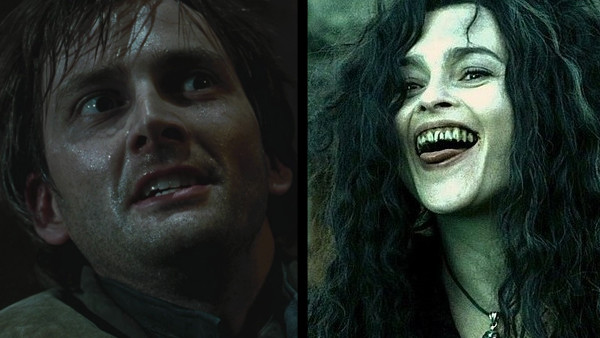
We learn in Goblet Of Fire that the reason he lives with his Grandmother is because his parents were tortured and killed by Death Eaters after defying Voldemort. The question the movie leaves us with it who actually did it. In Goblet Of Fire its stated it was Barty Crouch Jr., but in Order Of The Phoenix its switched to Bellatrix Lestrange, just so there can be some emotional history between the young characters and the much older villains.
The books imply it was a gang of Death Eaters including both of the above dark wizards, but the way the film shows it its almost like it was a lone killer. One line could have solved this.
9. Lavender Brown Changes Race So She Can Be A Love Interest
Warner Bros. Pictures
What caused it: Hollywood's fear of having a mixed race couple on screen.
For all the bloody hells (present to ensure the earlier films didn't get too low a rating in America) and Deathly Hallow cuts (still a terrible idea), Harry Potter for the most part remained pretty untouched by the overt pressures of the studio system. There was one change, however, that left fans of the book fuming; the recasting of Lavender Brown.
Lavender was a minor character in the book turned into an even more minor character in the films. She was played by two different actresses in Chamber Of Secrets and Prisoner Of Azkaban and had no lines, but the credits made it clear it was her. And theres where the problem starts.
She was originally a black character (and I hope not as a dimwitted response to her last name), but when her character was elevated to a love interest, her race suddenly switched. I wish there was some reasoning for this, but unfortunately its purely down to the studio thinking people in 2009 wouldn't buy a mixed-race couple. You can argue the two Lavenders are different characters, but that still leaves the question of where this new white girls been for five years.
8. Harry Couldn't See The Thestrals Even Though Hed Seen Someone Die
Warner Bros. Pictures
What caused it: The books, for no apparent reason.
In their second years and beyond, the students who survived a boat trip across a dangerous lake filled with mermaids and other monsters with only one chaperone get to travel up to the castle in magically led carriages. Except, as we learn in Order Of The Phoenix, they're actually pulled by Thestrals, bony, horselike things that apparently it's easier to keep all year round for an hour of action than, say, use magic.
Anyway, what makes these creatures particularly creepy is that you can only see them if you've seen someone die.
Which doesn't explain at all why Harry saw them as invisible before the fifth book; he's most well known for having seen someone die. We know Harry remembers Lily's death thanks to the recurring green flash he's had as a child. Do you have to know it was a death or have been affected by it? And even if you do, Harry still kinda fits into both categories.
The plot point was clearly introduced to hammer home how much Cedric's death had affected Harry, but when youre creating a massive hole to make emotion it isn't worth it.
7. Time Develops Without Any Bearing On The Real World
Warner Bros. Pictures
What caused it: The films and their continued marketability.
It's not fully revealed in the books until the Deathly Hallows, but the entire teenage adventures of Harry Potter are set in the nineties; we discover in that book Harry's parents died in 1980. The other books alluded to this - Dudleys expensive technology and the new Prime Minister in book six (then 1997) - but it clearly wasn't something the filmmakers paid much attention to.
That alone isn't a plot hole, rather a disappointing element of the adaptation. However, in not grounding the movie series in a particular time it's meant the outside world development doesn't add up. Each film seems to be set in the year it was made, which is an understandable decision until you realise the characters age seven years in the space of ten.
Yes, it's being a little pernickety, but when you're finding plot holes in a fantasy series you have to be. It's a simple production decision that was never corrected and the series feels a little less unified for it.
6. You Can Go Home For Christmas, Unless The Plot Demands You Cant
Warner Bros. Pictures
What caused it: The book.
One of the standout sequences of the first Harry Potter was the Christmas segment. With most of the students gone we were free to not only to have some development between Harry and Ron, but further explore his parents with the Mirror of Erised. Had Harry joined Hogwarts four years later he'd have found that much harder to do; the school would have been full of students.
Whereas The Philosopher's Stone set up most children go home for Christmas (reaffirmed by Order Of The Phoenix), in Goblet Of Fire they all had to stay for the Yule Ball, a celebration that happens on Christmas Eve. This is admittedly a rare occurrence - it was only due to the Triwizard Tournament - but why would a school that followed a logical holiday policy so far suddenly throw it out the window.
I think when coming up with the Yule Ball, Rowling placed it at Christmas to make the whole event more special and romantic, but completely forgot her previous term rules. With such erratic term times its not unsurprising the Ministry of Magic wanted someone to come in and sort it out.
5. James Comes Out Of Voldemort's Wand Before Lily, Despite Being Killed First
Warner Bros. Pictures
What caused it: The phrasing in the book and the unwillingness of the film to correct it.
Despite being the standout moment in the books up to that point, Voldemort's rebirth wasn't dealt with quite the same level of brilliance in the movie adaptation. Still, it was an entertaining moment that carried with it the necessary drama. And also a major oversight on Rowling's part.
When Harry and Voldemort duel, their wands join thanks to the identical phoenix feathers within them, causing Voldemort's wand to throw out the most recent people hes killed. We get Cedric (odd given it was Wormtail who killed him), the old man from Goblet Of Fires prelude, Bertha Jorkins (in the book a Hogwarts teacher) and eventually Harry's parents... in the wrong order.
The story has been told and retold over the series so you think it would have sunk in. James dies trying to take on Voldemort while Lily attempts to escape with Harry. Having him come out of the wand first was a big f**k you to the keen fans.
4. The Whole School Is Like The Room Of Requirement
Warner Bros. Pictures
What caused it: The movie's shortsightedness. Although the varying numbers of students which fans often complain about come from Rowling not being too bothered by it when writing the books.
We see Hogwarts properly in seven movies and throughout that time it never stays the same. Chris Columbus films for the most part stuck to the same model, but then along came Alfonso Cuaron, throwing out many elements from Philosopher's Stone and Chamber Of Secrets. Not necessarily a bad thing.
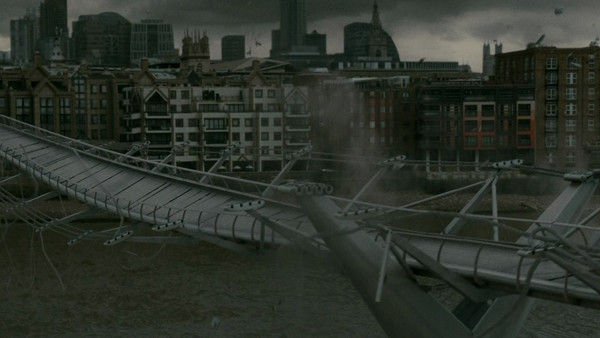
Adding in the covered bridge, clock tower and courtyard that would prove the centre of much action in later years (despite never appearing in the book), Cuaron pushed Hagrid's hut further from the school and overall increased the grandeur of the place. After his changes, the floodgates were open and subsequent directors Mike Newell and David Yates continued to add elements to the castle and grounds as they saw fit.
Obviously in the book Rowling was free to add and remove things as she pleased; you could just amend your imagination of the castle. In the films, however, we really needed some more consistency. It's not necessarily a bad thing; Hogwarts needed to be bigger for the events of the later books, but it's a tad lazy.
3. Harry Doesn't Have His Mothers Eyes
Warner Bros. Pictures
What caused it: Chris Columbus not subjecting an eleven year old to contact lenses/David Yates poor casting.
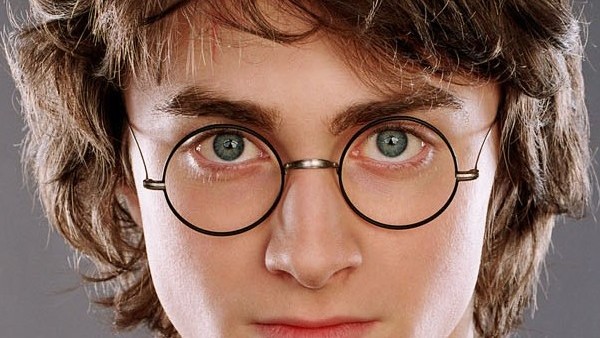
One of the most enduring lines throughout the entire series is also one of the most touching. While Harry clearly inherited much of James Potter's looks, he had his mother's eyes, something many of the older characters in the series pointed out. Except, as were coming accustomed to in this list, in the films he didn't.
Things first went wrong with the casting of Daniel Radcliffe, who has light blue instead of Harry' typical s green. Not wanting to force the child to wear contact lenses and special effects not quite good enough to successfully do it otherwise, Rowling conceded that eye colour itself wasn't important, but that the similarity to Lily was paramount.
But when it's importance became fully paramount, the films threw the point away. Snape's final words are about the similarity and yet in the exact sequence that follows it's clear Lily has green eyes as in the book, making eight movies worth of build up a waste; the eye similarity was integral in Snape's caring for Harry, after all.
Voldemort also had his eye colour changed from red to the more likable blue, but not as many people are bothered by that; he was a nasty piece of work either way.
2. Expelliarmus Is The Deux Ex Machina Spell
Warner Bros. Pictures
What caused it: Initially the films using the existing mythos to create new things, but ultimately the story developments defined by the book requiring it.
When turning what was a children's book into an action adventure, some changes clearly need to be made. Essential for Harry Potter was having an easy, go-to incantation that could be used a generic attack spell. The games had the right idea, inventing new spell Flippendo (only works properly if you really shout it), but the films struggled a bit.
The books had very specific spells, but also had the time to explain and be creative with them, something even the longest film didn't have. And thus expelliarmus, in the novels the disarming spell, became the general attack spell. An easy switch that annoyed fans, but didn't damage the series, right?
Wrong. When David Yates took over he reattributed many of the spells; stupify became the normal attack one and expelliarmus reverted to being the disarming spell. Coming after four films of the contrary its a rather major plot hole, but one that needed to be done to plug a much bigger potential problem, which forms the basis of the final error...
1. Disarming Your Opponent Gives You Their Wand, But Only In The Last Book
Warner Bros. Pictures
What caused it: It comes from the book, but I've no idea how Rowling let this plot hole exist.
One of Deathly Hallow's strongest plot points was the notion of wand ownership, specifically that if you disarm a wizard you gain power over their wand. This was well set up with Harrys visit to Ollivander's in the Philosopher's Stone and tied various throwaway moments throughout the series into the story's finale.
Shame it doesn't make an ounce of sense.
The theory only works if you take the final book (or final two films) on their own. Throughout the series we've seen countless characters disarm each other, either in battle or training, which means wands must be changing owners more often than Hogwarts changes its towers. When you add on the fact that when you disarm someone you get all their wands (how else did Harry get the Elder Wand?), there must be one wizard out there with hundreds of wands under his control. Why didn't Voldemort just try for that?
This hole has no solution; the rules are too broadly drawn and built around the plots events. If you have to mean to take the wand, then how does Malfoy gain control of the Elder Wand? And if you have to use a spell, how come Harry gains control of Malfoy's just by snatching it? For a series that was notoriously well planned (just look at Snape), this key element feels a tad made up.
Dont worry though - the movies threw out much of these wand ownership rules in favour of whizzing fireworks, so this is only really a problem in the books. Still infuriating though.
There you have it - can you believe those plot holes made it through a book and movie series? Do you have a solution to one, or another error we've missed? Have your say in the comments below.