Harry Potter: 15 WORST Plot-Holes In Wizarding World Movies
Has JK Rowling always been so sloppy? Yep.
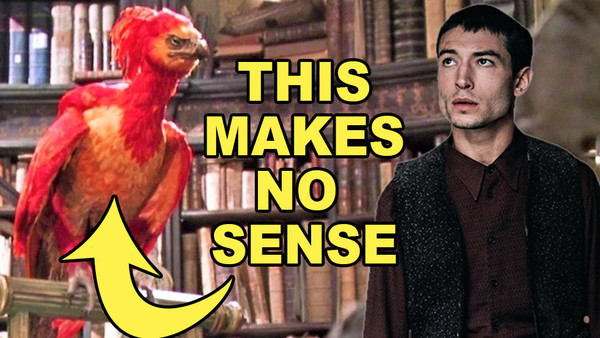
All of a sudden, people are beginning to talk about JK Rowling more like she's George Lucas than JRR Tolkien. After heavily revising and fleshing out her own lore over the years - including with the huge information dump that is Pottermore - she's now releasing material that directly contradicts things she's said or written in the past.
It's all well and good adding the details that Dumbledore is gay or Nagini used to be human, but when you start rewriting things to create plot-holes in your own beloved material, there's a problem. That counts doubly when those stories were ALREADY full of plot-holes in the first place.
In short, it's pretty fair to say that The Wizarding World is now more riddled with plot-holes than Hogwarts is with nargles...
15. McGonagall At Hogwarts?!

When fan service goes wrong, it's unforgivable. Particularly when it's thanks to a writer not paying attention to their own details, which is very much the case with the plot-hole opened by Minerva McGonagall's cameo in The Crimes Of Grindelwald.
We see her briefly at Hogwarts and she appears to be around her mid to late 20s or so, which makes absolutely no sense. She's appearing as a teacher at the school in 1927, despite the fact that she was born in 1935 (according to the bio now mysteriously deleted from Pottermore) and didn't start teaching at Hogwarts, in her own words, until 1956.
And before you say it might be a different McGonagall, the script confirms it's her (her mother's surname was Ross anyway).
Not only that, but it means that Dumbledore is presumably going to kick her out of a job, since he's been removed from his Defence Against The Dark Arts role and will become professor of Transfiguration.
14. How Does Expecto Patronum Work On A Boggart?
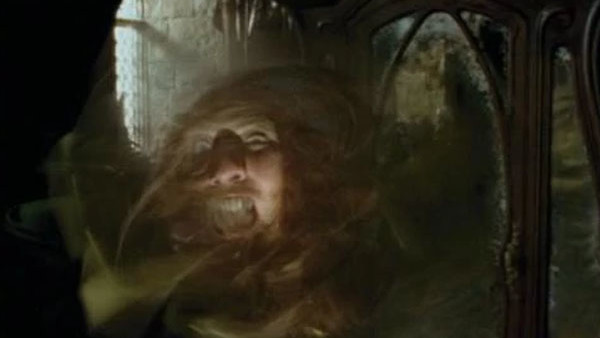
As established the first time we meet one, the only way to defeat a Boggart is the spell Riddikulus and an image from its target of something ridiculous to stop its powers of fear. It is then defeated by the laughter inspired, since it seemingly feeds on emotion.
With that established, how come in The Prisoner Of Azkaban, Professor Lupin uses a Boggart to train Harry to use the Patronus charm? At that point, Harry is crippled by his fear of the Dementors, so it makes sense that he'd benefit from some immersion therapy, but there's a problem: using a Patronus simple wouldn't work.
The Patronus charm would have no effect on a Boggart, since it's entirely the wrong spell and yet the boggart in that form is defeated when Harry successfully casts one. So what gives?
13. The Blood Oath

The introduction of the blood oath between Dumbledore and Grindelwald in the Fantastic Beasts sequel is a great way of making Dumbledore's reluctance to fight his former friend (and possible lover) only about residual feelings for him. It added a little more logic, establishing that the oath strictly forebade Albus taking up arms against the dark wizard.
But, when exactly did they take the oath together? The fact is, because of the three-way duel between the pair and Aberforth that led to the death of Ariana Dumbledore, the oath has to have been made after Ariana's death. Otherwise they could never have fought in the first place. However, after the duel, they weren't exactly on speaking terms, since Ariana was dead and Grindelwald immediately fled the country.
Also, the books establish that Albus and Grindelwald didn't see each other for decades after their duel (until they faced one another again), so there is literally no time for that to have happened.
Additionally, the Mirror Of Erised shows you your greatest desires, it doesn't show you a memory of the past, so how could Dumbledore use it like that? As if it was a pensive?!
12. Why Wasn't Neville Affected By The Dementors Like Harry?

In The Prisoner Of Azkaban, the first time we meet the Dementors is designed to establish them as a major secondary threat in the film series (even though they mostly disappear after that film, to be honest). To accomplish that, we got to see the torment they immediately caused in Harry as a result of him merely being NEAR one.
In the film's first act, we see the creatures stop the Hogwarts Express to search for Sirius Black and one boards to search the carriages. When it comes to Harry's carriage (and strangely tries to give him the fabled Dementor's Kiss for no apparent reason), he passes out, screaming and it's later explained that he's affected more by their presence because of the trauma he's been through.
If that's the case, how come Neville didn't react exactly the same way? He too watched his parents suffering an Unforgivable Curse (and arguably worse trauma since they were tortured to the point of dementia) and yet his emotional wounds didn't result in him passing out. Surely, given their similarities, you'd have thought JK Rowling would have WANTED to draw a closer parallel?
11. The Obliviate Doesn't Take

The entire mass-obliviate sequence at the end of the first Fantastic Beasts has some serious issues (like the countless people indoors who wouldn't have been directly affected by Frank's special rain) but the most concerning is the fact that it doesn't even work.
There's something to be said about the idea that love is so powerful that it stops obliviate from working on Jacob properly when he's cleansed by the rain, but it's never established nor referenced again. Instead, we're just expected to accept that he's the only one not affected by the magic simply because it's convenient to the plot (and to romantic ideals everywhere) that he isn't.
In the sequel, we're told that the poison spread by Frank only makes you forget bad memories, but that's not true, because we see at the end of the first movie that Jacob has baked creatures from his retained memories, including an erumpet, which basically tried to have sex with him. Surely he'd have forgotten that?!
10. How Can Moody See Through The Cloak?

When we meet Mad Eye Moody, it's established immediately that his magical eye can see through anything, including magical enchantments, even when it's worn by someone who is only impersonating Moody. It's so powerful, in fact, that it can see through the invisibility cloak that Harry wears at various times during the stories.
But how could that be possible? As a Deathly Hallow, the cloak is said to grant the user "true invisibility," which wouldn't exactly ring true if it was seen through with a simple, wizard-made eye. So how can Moody see Harry beneath it?
The only possible explanation is either that the charms on the eye are stronger or that the cloak's legend is incorrect, but in either case, this SHOULD have been established in the texts or the films. In the latter case, it would be way too reductive to the Deathly Hallows mythology and if the former, it should have been shown to explain just how powerful Dumbledore was (since it could be only him who made the eye with knowledge of the cloak).
9. The Niffler Magic Conundrum

There's a major pitfall that all prequel stories have to adhere to that way too many of them fall into: fundamentally you cannot establish lore or technology in the past which we know does not exist in the mainline present of the previous films. You can't invent a quicker means of travel in a sci-fi than the prequel's own future has shown possible at that point in time and you can't establish something that would be incredibly useful to resolve a situation in the future in a prequel. Because everyone will then wonder where that solution was during that event.
That specific issue arises in Fantastic Beasts 2 when Newt reveals another use of Nifflers: he shows that you can use gold to get the creature to map a crime scene, establishing (somehow, it's not really clear how) exactly what happened so the "detective" can then track anyone involved. It's clever and it's pretty key to the Crimes Of Grindelwald plot.
So where was this magical ability in the future when Sirius Black was wrongly accused of killing Peter Pettigrew? Wouldn't a lot of hassle have been saved if someone had got a Niffler in to map the crime scene and reveal that Black killed no-one and Pettigrew escaped? It's sloppy and now it means we're going to have to see the Nifflers all killed off to extinction for it to make any sense.
8. Harry And The Thestrals

A lot has been said about Harry's inability to see the Thestrals before Cedric's death during the TriWizard tournament and JK Rowling has even qualified how he's able to not see them. According to her, he hadn't processed Cedric's death by the time he boarded the carriages at the end of The Goblet Of Fire so couldn't see them and he'd not consciously seen his parents die, so he could be unaffected.
But that doesn't close the plothole at all, because Harry witnessed an even more traumatic death than a half-witnessed one or Cedric's. He witnessed one caused by his own hand: that of Professor Quirell.
At the end of the first book, Harry kills what's left of the Defence Against The Dark Arts teacher by touching (and melting) his face. It's a heinous moment for any child to go through and the suggestion that he wouldn't have processed that in the years following it is just ludicrous. Given that it related to Voldemort, he probably thought of little else.
7. Queenie Falls For Grindelwald's Tricks

Queenie is arguably the most powerful wizard in all of the Harry Potter films in terms of her use as a weapon. Yes, Harry is the chosen one, Voldemort and Grindelwald are supremely skilled and Credence is a bomb, but all are volatile and none are as purely gifted as her. Her value comes in the fact that she can literally read what anyone is thinking and feeling at any time: she could never be killed by anything wilful, in other words and could reveal all strategy to anyone seeking to use her gift to protect themselves.
That's why she's so important to Grindelwald and why he actively seeks to seduce her into his service. But it's also why she shouldn't have fallen under his influence.
The suggestion that Queenie's rage at her sister and Jacob abandoning her (even though Jacob would have been killed by Grindelwald's enchanted fire) lead her to him and cloud her mind is just stupid. Queenie should have been able to read the fact that Grindelwald was lying to her from the first moment he misled her into thinking he was making a world where she could marry Jacob. It just makes no sense that she'd miss that when she picks up on involuntary thoughts by Jacob.
6. Why Does Dumbledore Stop The Kids Getting Assistance

Albus Dumbledore was not a good mentor. He was wilfully guarded, dangerously impulsive and almost comically wreckless. He was also the main means by which JK Rowling could retain the threat to her central three characters in the Harry Potter books even as she'd built in useful support for them in the Order.
When the horcruxes are revealed to exist, Dumbledore insists that the three children tasked with finding them tell nobody about them. He does this with the suggestion that he's protecting them from anyone who might pass that information back to Voldemort, who could make plans to stop them. That much makes sense, but it absolutely doesn't make sense that he'd make them withhold the information from the members of the Order that Dumbledore himself chose as trustworthy and honourable enough to be in the Order in the first place.
Why did he all of a sudden no longer trust them? Wouldn't Lupin or Kingsley have been particularly valuable allies to the kids on their journey? You know, particularly after it was very obvious that Voldemort knew what was going on?!
5. Dentists Don't Exist?!

Dentistry caused a bit of an issue in the Harry Potter world, which could be down to either one plot-hole or an entirely different one.
In the series, Hermione's parents are dentists, but this causes confusion in The Half-Blood Prince as Professor Slughorn seems unaware of what dentistry is (he asks if that's considered a dangerous profession, completely oblivious). That seems to suggest that dentistry doesn't exist in the Wizarding World and is purely a Muggle concern, since Slughorn is hardly an idiot.
But then the Weasleys' magical clock that shows where the entire family are has "Dentist" on as an option in The Chamber Of Secrets...

And there's also a Surgical and Dental operator sign on one of the stalls seen along Diagon Alley from the very first film, so they seemingly do exist. So the plot-hole seems to be why Slughorn would simply have no awareness of what a dentist is when it's a perfectly normal thing in the Wizarding World.
Then again, why would dentists exist at all in the wizarding world when it's established in the books that the medical profession can merely fix teeth? Hermione reveals as much when she's been transformed back from the hex Malfoy cast at her, giving her fangs, saying that Madame Pomfrey didn't just reverse the curse, she actually did some real dentistry:
‘Well … when I went up to Madam Pomfrey to get them shrunk, she held up a mirror, and told me to stop her when they were back to how they normally were,’ she said. ‘And I just … let her carry on a bit.’ She smiled.
If that's the case, why would there need to be a surgical dentist at all?
4. Grindelwald Wasn't The Master Of The Elder Wand

At the end of the first Fantastic Beasts movie, Grindelwald is disarmed by Tina after his deception has been unveiled and the heroes watch him carted off by the MACUSA to be imprisoned, where we find him in the sequel.
In that sequel, the opening act sees Grindelwald handed his wand back by the treacherous Abernathy, after the MACUSA seemingly came into possession of it after the climax of the first movie. When he escapes, he's able to use the wand uninhibited as someone who wasn't the master of it would be and it's later confirmed in the Harry Potter movies that Dumbledore became master of the Elder Wand by disarming its current master - Grindelwald - during their duel.
Yet, how could Grindelwald be the master of the Wand when it's also established in the same Harry Potter movie that Voldemort himself wasn't the true master of the Wand because it was Malfoy who disarmed Dumbledore? With that logic established, the true master of the Elder Wand at the end of Fantastic Beasts is in fact Tina. And yet we got no reference to that at all.
3. Giant Romance

Here's a slightly more... biological concern from the Harry Potter films that definitely required SOME sort of explanation. Even though this was always primarily a kids' series and wouldn't ever have been able to include full-blown sex. Particularly between man and magical creature.
However, it needs to be asked: how the hell did Hagrid's father impregnate a full grown giant? What we've seen of giants in the films is pretty limited to Grawp, since they decided not to include them fully, and he's not exactly the most human or reasonable of figures. Sure, he's a kid, but his primitiveness is because he's a giant, not because he's in any way remedial.
That seems to suggest that a tiny, normal man was somehow able to seduce a terrifying, violent creature and then also have full sex with her. There are many, many questions here relating not only to seduction technique through to opportunity and - not least, at all - the actual mechanics of their sexual activity. Nothing could have fit.
It's not one we'd ever have gotten an answer to, to be fair, but it's still a fairly sizeable issue given that it's at the root of one of the series' most important characters. Hagrid might as well have been the result of the congress between an ant and a particularly angry boulder.
2. Credence's Twist Makes NO Sense
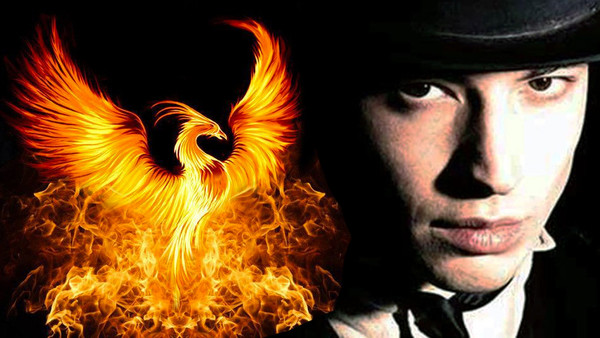
Right, so this is a more complex one, but it's worth sticking with. The twist in The Crimes Of Grindelwald establishes that the last surviving male of the Lestrange family was killed as a child in a ship disaster at sea. There's the first issue: that child WASN'T the last surviving Lestrange male because Bellatrix married Rodolphus Lestrange, who was both male, a Lestrange and alive.
That child was rumoured to be Credence Barebone, but it turns out that he was, in fact, Aurelius Dumbledore, a baby who was coincidentally also on the same ship journey in the carriage opposite, who was swapped with Corvus Lestrange when that unfortunate child's sister Leta couldn't take his crying any more.
So, that means that Albus, Ariana and Aberforth had another sibling, who was born around 1901 (the year of the ship disaster). Except that can't be true because Kendra Dumbledore died in 1899 and Percival had died in Azkaban sometime between 1890 and 1900. So who the hell were his parents? It could feasibly be that Percival had a second lover he impregnated, but since when did Azkaban allow conjugal visits?
And it's not like we can just say that the Aurelius twist is Grindelwald lying to manipulate Credence, because the phoenix issue confirms he's a Dumbledore. If he wasn't, the phoenix wouldn't appear to him. Something else has to be going on here, but that doesn't mean these plot-holes aren't still legitimate.
1. Why Didn't The Phoenix Appear To Credence Earlier?

And speaking of the phoenix issue: why exactly did the phoenix wait so long to appear to Credence/Aurelius. If he was born in 1901 and the films are set in the second half of the '20s, Credence has been abused by an over-bearing, violent adoptive mother for probably two decades.
He was beaten, indoctrinated, told to suppress his magical powers to the point that he became an Obscurial and forced to have a haircut that can only be described as heinous. Any of those single issues should have been enough for him to have been classed as "in need." So why didn't the phoenix appear to him at any point during his past? Why was him finding out his true parentage deemed a worthy enough time of peril to justify its belated appearance?
Shouldn't there have been a better explanation of the phoenix's appearance than just "it comes when it wants"?
Which other plot-holes belong on this list? Share your suggestions below in the comments thread.