The Hobbit: 10 Worst Changes Peter Jackson Made

For some, tinkering with a masterpiece is a crime. Not for Jackson...
The Hobbit was a masterpiece of a children€™s story: a fantastic story of courage, friendship, loyalty and greed. It also set the tone for Tolkien€™s subsequent magnum opus, the Lord of the Rings, and frankly it was a great tale that didn€™t need any changes whatsoever. However, Peter Jackson, thought better than that. By adding concepts from the appendices of The Return of the King, as well as ideas that were never in the original story in the first place, Jackson has taken a beloved Tolkien tale and created something else entirely. The decision to turn the much shorter story of the Hobbit into a trilogy was a questionable decision in itself, but there are more questionable decisions in the film's storyline, characters, and plot that are also impossible to ignore. This isn€™t to say that Peter Jackson€™s films are bad; far from it, in fact, but no film is above reproach or critique, and Jackson€™s works are not exceptional to this rule either. His decisions to put box office gains, and appealing to a more general audience ahead of staying as true to the source material as possible is the main reason why his films are being far more critiqued than his Lord Of The Rings trilogy...

10. No Explanation For The Eagles

The Eagles were important examples of Deus ex Machina in both the Hobbit and the Lord of the Rings stories. They were used as some sort of last resort to save the characters from impending doom, and appeared to be more or less all-powerful characters. One of the biggest criticisms of both of Jackson's film series is that there was no explanation for how the Eagles were used. The film saw Thorin€™s company dropped off on a rock of sorts, without offering any explanation. Yet those viewers who have never read Tolkien€™s book have often asked €˜why couldn€™t the Eagles just carry them far closer to the Lonely Mountain?€™ An explanation for this plot hole was given in Tolkien€™s book: The Eagles (who could talk, which was another important characteristic from the book Jackson omitted), and told Thorin€™s group that the closer they got to the dwellings of men, the more likely they were to get shot at by arrows. As such, they feared flying too close to wherever humans lived. None of this was explained in the films, even though Gandalf could€™ve offered one line to explain this, and a major plot hole could€™ve been covered. Instead, viewers were treated to more running and more attention to new characters (more on that later).

9. Putting More Emphasis On Radagast

In the original story, Radagast the Brown was only mentioned in passing, and did not play a major role in the actual story but The Hobbit films add unnecessary scenes to flesh out Radagast€™s character and lifestyle. He showed considerable empathy for small and cute woodland creatures, and went to great lengths to save a single hedgehog. It also didn€™t help his character that his head and hair were covered in bird droppings, which stems from the birds that lived under his hat. This went against the noble nature of the five wizards, and was clearly meant to portray Radagast as a sort of €˜unwashed hippy€™ who cares more about the natural world than his own personal hygiene. There was also a subtle attempt to shoe-horn a joke about smoking and calming the nerves. Whether this was a truly effective use of Rasagast€™s character, or just a subliminal message for the benefits of smoking certain things remains open to debate, but the added focus for the character was certainly unnecessary.

8. The Unnecessary Lesson In Politics

As fans watching The Desolation of Smaug were introduced to Lake Town, a.k.a. Esgaroth, the Master and his closest servant, Alfred, discussed political matters, such as inquiries, elections, and trouble-makers. Essentially, viewers were meant to interpret the Master as this corrupt yet inept leader who usurped power and did nothing for the common good, while his servant whispered falsehoods in his ear to convince the Master that his power was waning. However, this entire dialogue never took place in the book, and did not serve any greater purpose with respect to the film. It was meant to engage the target demographic and teach them the importance about criticism of authority and the possible corruptions of power. While this might€™ve been a noble endeavor on Jackson€™s part, it had nothing to do with Tolkien€™s original tale whatsoever. The Master and Alfred were insignificant characters in the original books, so giving more attention to them took the focus away from the central storyline. Furthermore, the Master€™s rivalry with Bard was explained well enough during Thorin€™s speech to the town; adding all of those scenes in which the Master went after Bard in any way he could were simply more examples of €˜political corruption€™ that was a subtext that The Desolation of Smaug didn€™t need.

7. Saruman And Galadriel At Rivendell

The Council of Elrond meeting at Rivendell was an element that took place during the events of the Hobbit, but not directly in the story, and as such, Saruman and Galadriel were not present in the Hobbit when Thorin€™s company arrived. The most interesting element of Saruman€™s presence was the tone of his character. His constant denial of the Necromancer€™s existence echoed his behaviour in The Fellowship of the Ring. As interesting as this was, it was something completely unique that was not created by Tolkien. By the time this scene took place, it was very clear that Jackson was stalling to add to the length of the film. As for Galadriel, her presence added even less to the story. Her only purpose was to side with Gandalf in his debate with Saruman, and in her departure hinted at a closer bond with Gandalf than originally thought. Though both Saruman and Galadriel were interesting characters, they did not belong in this story. They belonged in the Lord Of The Rings, where their actions impacted the plot in more significant ways. In Jackson€™s work, they were nothing more than tools for exposition into details that had nothing to do with the Dwarves€™ journey, and as fan service that was little more than distracting.

6. Galdalf At Dol Guldur

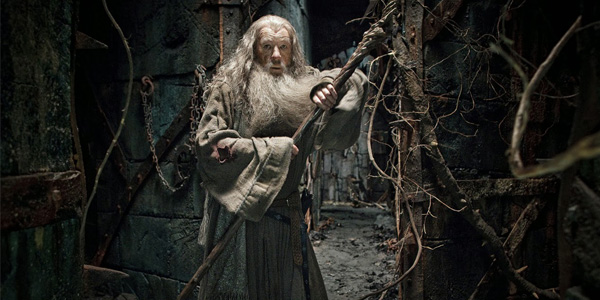
When Radagast mentioned the €˜Necromancer€™ and Dol Guldur, Gandalf acted incredulous, as if he had never heard of any such threat before. This was bizarre, considering that the evil that the Necromancer represented was the very force that Gandalf had been sent to Middle Earth to find. For him to not know what Radagast was speaking of weakened his character. As for his actual appearance at the fortress of Dol Guldur, this was yet another one of the new elements that Peter Jackson created. It appeared that it was included to provide an explanation for Gandalf not meeting the dwarves at the Lonely Mountain, but this was unnecessary; Gandalf disappearing and reappearing are part of his nature as Gandalf the Wandering Wizard. Though it did add a cliffhanger element for the upcoming third film, it was yet another deviation from the original text that took away from Tolkien€™s original work. The original story was good enough in itself by having Smaug as the primary antagonist; adding the element of the Necromancer (read: Sauron) was simply done to tie these films to the Lord Of The Rings. As if viewers really needed to be reminded of The Lord Of The Rings so much. The Hobbit was a story that could€™ve been just as good without so many connections to Tolkien€™s magnum opus.

5. It Takes Too Long To Start

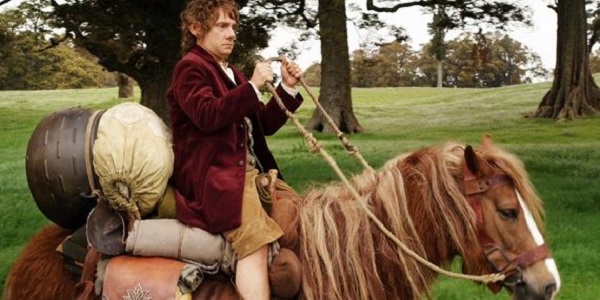
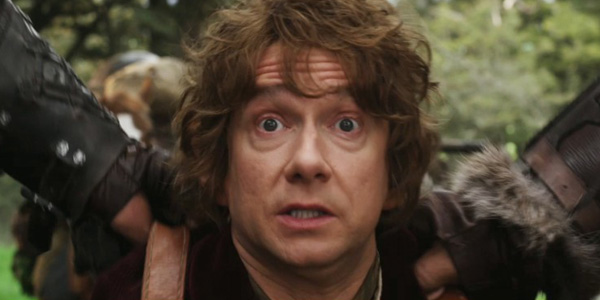
Just as The Return Of The King took such a long time to end, An Unexpected Journey took an incredibly long time to truly start. The first ten minutes discussed at length the history of Erebor and how Smaug took it for himself. Then, four more minutes added to simple, random conversation between Bilbo and Frodo (who also did not appear in the book). The arrivals of the dwarves were extended, and the encounter in Bilbo€™s house seemed to drag on forever, and by the time the actual adventure started, over forty minutes had gone by. And even then, there were added scenes and details that were not in the book that just seemed to waste time, such as when the company was betting on whether Bilbo would join them or not. This was one of the most notable criticisms that viewers and fans had towards the film. It seemed very clear that Jackson was trying to extend the beginning of the adventure as much as possible in order to properly stretch the story into three separate films. It was, all in all, a bad decision. More could€™ve been done instead to develop Bilbo€™s relationship with the company of dwarves, but instead viewers were treated to lame jokes and too much exposition in the first half of An Unexpected Journey.

4. Adding A Romance Storyline

Peter Jackson, being a man of common sense, knew that he was dealing with a demographic that needed more women to counter the all-male cast of dwarves, hobbits, wizards and other characters. This is why he created the character Tauriel, a female elf, played by actress Evangeline Lilly. Tauriel played the role of €˜female badass€™ who fought off vast swaths of enemies alongside her male counterparts. However, as the dwarves were being imprisoned, she slowly began to fall for Kili, one of the male dwarves. This led to a budding romance storyline that adds considerable length to the film and took away from the main story. Perhaps it was Jackson€™s way of shoe-horning a subliminal message on putting racial differences aside for the common good into the film. After all, it has been suggested that race-mixing in Middle-Earth is taboo, with one of the few exceptions being Aragorn and Arwen from the LotR series. As with other additions, Tauriel€™s presence took away from the core story, and added some unnecessary details to the film. Though it might€™ve been possible that the writers felt that adding a woman to the story would increase the amount of female viewers, this assumption ignores the fact that women enjoyed Tolkien€™s original, unaltered story just as much as men.

3. Azog And Bolg

In the book, Azog was described an orcish leader that bought against Thorin€™s family in the past, and his son Bolg didnot appear until the Battle of Five Armies at the book€™s climax. Peter Jackson went in a completely direction with the film, placing Azog as a major antagonist throughout the series. Azog the Defiler was added to introduce a revenge storyline into the films. Instead of having died long before the events of An Unexpected Journey, Thorin€™s company had to deal with an additional threat in Azog€™s constant pursuit. His presence added more violence to the story; from murdering his own soldier, to his alleged torturing of Beorn and other skin-changers. His sole purpose was to add more antagonists to a film that was catered to older audiences than the original book. Bolg, Azog€™s son, was introduced far earlier than in the original book. His role was minor, but he did battle Legolas in Laketown in what was one of the most pointless scenes in the entire trilogy. No one expected Legolas to lose in a battle against Bolg, and so this scene was completely unnecessary.

2. Adding Legolas

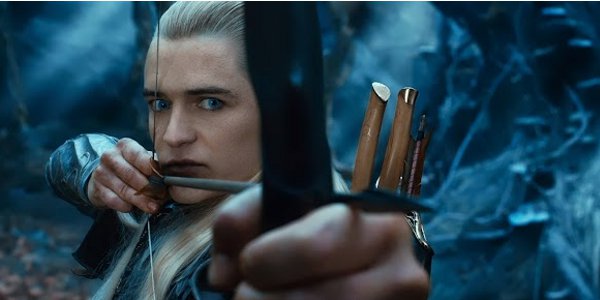
Although adding a female elf in Tauriel could€™ve been forgiven due to the virtually all-male cast of The Hobbit, the same cannot be said for adding Legolas. Legolas was introduced as the Elvenking€™s son, and harbored a distrust of dwarves. From his first speech lines, viewers could tell that this was a different Legolas from the Lord of the Rings. Though he was still the skilled fighter, he was always scowling and constantly showed hostility towards Thorin and his companions. It was especially bizarre to see Legolas, who seemed to have such a good relationship with Gimli in the Lord of the Rings, to be so much contempt for Thorin's company, which included Gimli's father. Furthermore, his involvement in the film added more time and unnecessary scenes to it. All he did was emphasize the distrust between elves and dwarves, which was something the Elvenking did well enough, and seemed to have romantic feelings towards Tauriel. Of course, he also took part in the added action sequences, which were completely unnecessary because they were not believable; everyone knew Legolas would survive any and every fight in this film series.

1. The Goblintown And Barrel Escape Scenes
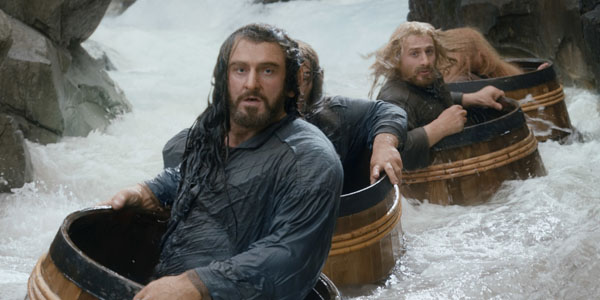
One of the most pivotal scenes in An Unexpected Journey, the escape from Goblin-Town scene, was one of the most dramatic changes that Jackson made. As Christopher Tolkien himself once said, €œthey eviscerated the book by making it an action movie for young people 15 to 25€. The extra-long scene seemed more like a video game than a film, and reached cartoonish levels of ridiculousness at some points. Thorin€™s company was literally surrounded by goblins, yet these were easily vanquished while the protagonists didn€™t suffer any injuries whatsoever. Moreover, the more outlandish parts of this scene, particularly the falling scaffold, truly demonstrated Jackson€™s approach of action and violence over keeping to the original story. As for the barrel escape scene in The Desolation of Smaug, it is a repetition of this same theme. Instead of simply floating down towards Laketown in sealed barrels, the Dwarves€™ escape is nearly thwarted by a sudden Orc attack. The almost completely CGI scene is one of the most un-realistic scenes in a story that did have a sense of realism to it. From open barrels not sinking after filling with water, to the dwarves€™ somehow perfect aim with weapons, to Bombur€™s own ridiculous defeating of several orcs, this scene just screamed over-the-top action. Though this was good for the film€™s pacing, there was no reason to add it. The film could€™ve simply had the dwarves escape in sealed barrels, thus shortening the eventual lead-up to the confrontation with Smaug, which was what viewers were waiting for in the first place. Ultimately, Peter Jackson took a short story written by Tolkien and made several unnecessary changes. He added too many new elements, extended pre-existing ones, and left fans waiting and waiting for the main storyline elements that made the original story great. In the end, the Hobbit films would€™ve been a much better story if it was condensed into a single film. What do you think of the Hobbit films? Share your thoughts below in the comments thread.

Contributor

Alexander Podgorski is a writer for WhatCulture that has been a fan of professional wrestling since he was 8 years old. He loves all kinds of wrestling, from WWE and sports entertainment, to puroresu in Japan. He holds a Bachelor of Arts degree from Queen's University in Political Studies and French, and a Master's Degree in Public Administration. He speaks English, French, Polish, a bit of German, and knows some odd words and phrases in half a dozen other languages.