How Close Are We To The 2015 Of Back To The Future?

October 21st, 2015: The day The Future officially begins.

The time has finally come - we are officially living in the future (so long as you set your calendar by excellent 80s movies, and why wouldn't you?) Back To The Future Part II made some pretty bold claims as to what the world would look like on the 21st October, 2015. This is usually the kiss of death that will open anyone up to be mercilessly mocked when the real future finally rolls around and it looks nothing like the predictions. So how does the classic sequel measure up? Actually, not all that badly. Hopefully we dress a little better than was predicted and we were mercifully spared the 18 Jaws sequels (although even Jaws 2 was a bridge too far to be honest), but now that the day has finally arrived, let's take a look at how our 2015 compares to the late-80s version of events?

8. Hoverboards

The hoverboard is basically how most of Generation X and Y judge our technological advancement. It doesn€™t matter how many smartphones you throw at the Millennials, all we want is a hoverboard. The good news is that we might be about to get our wish. The Hendo Hoverboard has been making waves in the tech world since 2014 when Kickstarter backers pledged over half a million dollars to make it happen. It has apparently taken us this long to figure you that the best way to make a board hover is to fit it with opposing magnets (as opposed to faffing around with fans and superconductors as we were in the past). Obviously, this means that the ground has to also be prepared with magnets, but these are definitely boards that hover so it counts. If you€™re willing to settle for style over substance, then you could always fill your hoverboard shaped hole with the segway-style wheeled hoverboards/scooters/whatever that are currently proving a the €œnext big thing€ with the early adopters (whether they€™ll go the same way as Second Life and Kony 2012 remains to be seen).

7. Wearable Tech

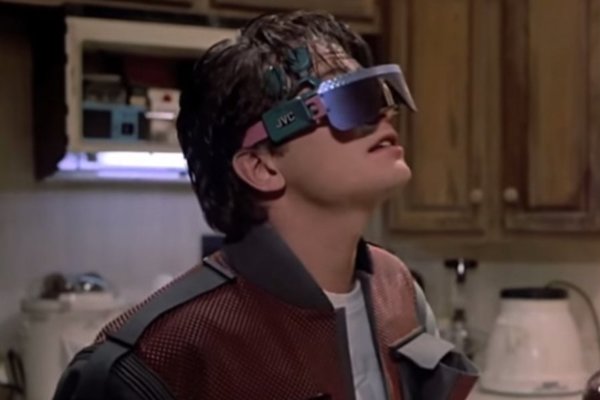
Say, those smart glasses look an awful lot like Oculus Rift, don€™t they? With the likes of Google Glass becoming less of a novelty and more of a way of spotting dickheads at 20 paces, and all manner of fitness trackers, smart watches and NFC enabled jewellery, wearing our technology is nothing out of the ordinary these days. Even if we aren€™t all wandering around in virtual reality specs just yet, consider the amount of time in your waking day when there isn€™t some kind of screen in your field of vision - for a lot of people this could probably be counted in minutes. The perhaps accidental prediction that the people of 2015 will spend more time staring at their devices than at their friends and loved ones feels pretty close to the mark.

6. Smart Homes

https://www.youtube.com/watch?v=5ztwns5PkJY The future McFly home is essentially the smart home that we€™re working towards today, albeit with a bit more Bakelite and some questionable decor choices, but the voice command, biometric access and identification and automated lighting all have a distinct whiff of the 21st century house. Whilst these technologies are still not as commonplace as they appear in the movie, we€™re certainly headed that way in the next ten years or so as we fill our lives and homes with technology ranging from the labour-saving Roomba to the selfie-taking fridge. BTTF resisted the urge to put a humanoid €œbutler bot€ in the homes of the 21st century in favour of integrated technology, and they were pretty much spot on. The smart home of the future, in lieu of Marvin the Paranoid Android, is likely to be device based, with several specialist systems for different tasks. This could take the form of swarm robotics, AI integration and remote control from your smartphone or wearables. Sounds futuristic, but the future is now.

5. Flat Screen TVs

Considering a TV in the 80s had roughly the same dimensions as a mini fridge, the predicted flat screen TV (with widescreen aspect ratio, no less) showing a multitude of channels feels amazingly modern. It€™s also unnecessarily huge and clumsily wall-mounted, a sure sign that you€™ve just entered the home of someone who works in middle management in 2015. These smart TVs are voice activated, something that is increasingly more common in the real world as everyone gets used to the fact that your tech is constantly listening to you on the off chance that you'll give it an instruction. Suppose that's better than gesture control, for which your tech needs to be constantly watching you. Now that we're entering the realms of 3D, curved screen and clear screened smart TVs, we can probably safely say that we have surpassed this particular prediction.

4. Biometrics

There€™s a lot of fingerprint scanning going on in BTTF and, whilst it€™s still not as prevalent in our 2015, biometrics are probably going to be a pretty prominent feature in our not too distant futures. Forget the days of remembering loads of different passwords, in the next few years, the only identification you're going to need is your own body. Many of us already unlock our phones with our fingerprints and things such as contactless payment wearables are bridging the gap to implantable versions and even biometric banking. A Toronto-based company called Bionym are even working on a wristband that uses your heartbeat for biometric identification, allowing you lock and unlock multiple devices (which could be anything from your phone to your car) through your own unique ECG signature. This is much harder to fake than something like a fingerprint, facial recognition or retinal scan and is therefore much more secure. Not to mention cool as all hell. So, yeah, biometrics are the future, and BTTF called it.

3. Flying Cars

https://www.youtube.com/watch?v=fCjsUxbNmIs You might have clocked that we don€™t have flying cars yet, despite this being one of the most persistent predictions made by futurists since the fricking Victorian era. But, with the likes of companies such as AeroMobil and Terrafugia we might be v e r y s l o w l y getting there. Terrafugia has gained approval from the Federal Aviation Association for its car/plane hybrid, The Transition, and AeroMobil have developed a prototype flying car that would fit into any standard parking space, takes regular petrol, and can be used on the road like any other car. So then, flying cars are a go, although the vertical take-off capabilities might have been a little optimistic. Unfortunately these are likely to be the domain of the rich and eccentric for quite a few years yet, but maybe one day in the next 50 years you€™ll get to experience the magical feeling of sitting in traffic suspended in mid-air as opposed to on the roads.

2. Where Are The Smartphones?

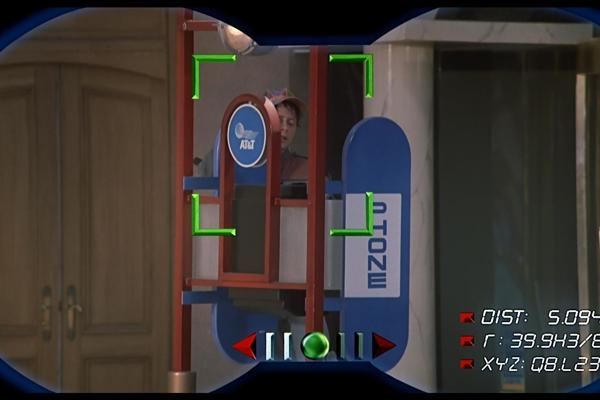
One of the most glaring omissions from BTTF is the obvious lack of smartphones, or even mobile phones of any sort. They even, rather sweetly, have Marty use a payphone at one point. Well you know, fair enough, you can€™t predict everything € apart from the fact that the mobile phone was definitely a thing in 1989 when the film was made. Motorola had already produced the first proto-mobile phone way back in €˜73 and the Motorola MicroTAC, by all accounts a modern mobile phone, was on the shelves in the same year as the film€™s release. The 2015 of BTTF isn€™t completely offline though and does feature video calling. Perhaps they thought that we would have already moved on from making audio-only calls like a bunch of peasants by now and, to be fair, they€™re not completely wrong considering that we could be a year or so away from being able to Facetime from our goddamn watches for god€™s sake. However, maybe we're just caught up in our own technology just like the makers of BTTF, but a future without something that looks even remotely like a smartphone doesn't seem likely to happen for some time.

1. Time Travel?

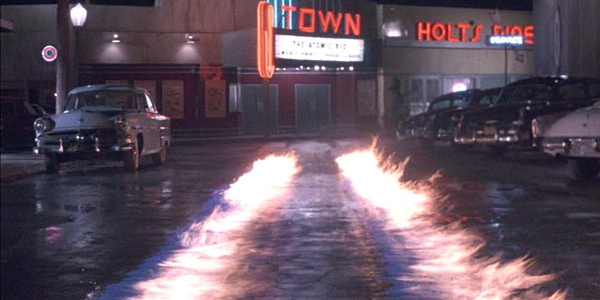
Okay, we€™ve talked about all that whizzy tech, but how about we get stuck into that big old elephant in the room: Time travel. Although, technically, time travel was invented in the 80s according to BTTF, but never mind that for now. We can always go back and give them the technology if we really want. What if I told you that time travel is possible? Sort of. Time is not as straight forwards as you might think (it€™s a bit more wibbly-wobbly). The passage of time isn€™t fixed and is influenced (broadly speaking) by two things: Your relative velocity and your proximity to a gravitating mass. This is a principle of relativity known as Time Dilation, making it technically possible for Doc Brown and co to travel from 1985 to 2015, so long as the DeLorean could hit some truly face-melting speeds (say, just below the speed of light). If you travel very, very fast approaching the speed of light, not only will you rack up a fine collection of speeding tickets, but time will pass much more slowly for you relative to the rest of the world. This is all great, but it€™s not the same as jumping in your DeLorean and jumping about time like a trampoline. However, because time travel isn€™t prohibited by any physical laws, there€™s nothing stopping us from harnessing this power in our future tech. That€™s forwards time travel, backwards time travel is a bit trickier and is still hotly debated by physicists. Some believe that it is straight up prohibited by the laws of causality, some say that it would be impossible to travel further back than the invention of the first time machine, and some say that you could travel back in time using wormholes (this involves a complicated process of creating a wormhole, attaching it to the back of your spaceship, dragging it around at lightspeed and then jumping back through it. Simple). Perhaps one of the biggest arguments against time travel is that we haven€™t met any time travellers yet. Professor Stephen Hawking once announced that he would be holding a gathering for time travellers. No one turned up. Were there any other predictions Back To The Future got right (or terribly wrong)? Share anything we missed down in the comments.

Contributor
Contributor

Writer. Raconteur. Gardeners' World Enthusiast.